
30 min 01 sec
Selling the Invisible: A Field Guide to Modern Marketing
Selling the Invisible offers a masterclass in service-based marketing. It explores how to build trust, establish a unique brand identity, and navigate the challenges of selling intangible promises rather than physical products.
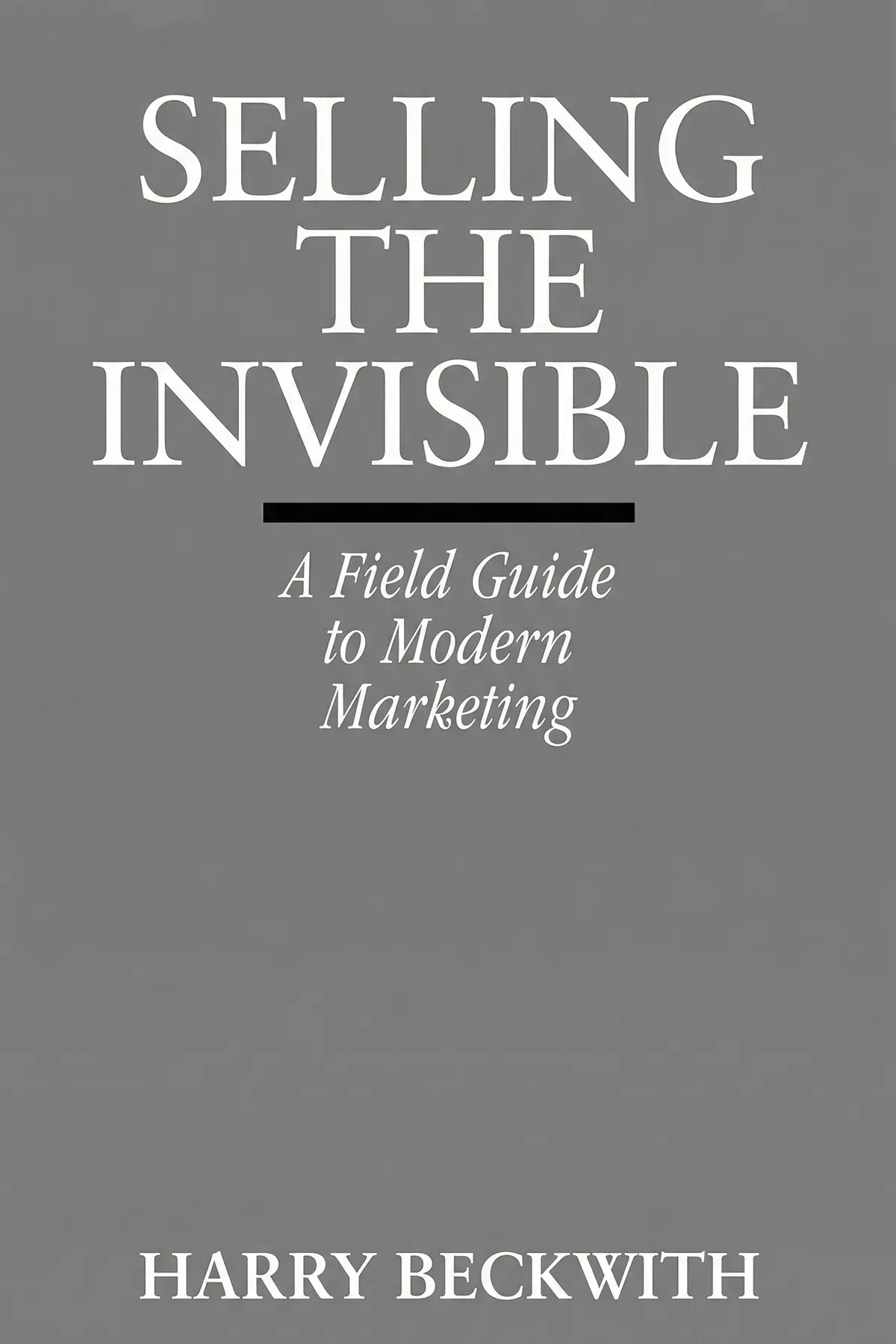
Table of Content
1. Introduction
1 min 48 sec
In the past, the pillars of the global economy were made of steel, concrete, and consumer goods. If you wanted to build a business, you manufactured something people could hold in their hands. But today, the landscape has shifted dramatically. We are living in an era where the most valuable things we buy are often completely invisible. We pay for expertise, for convenience, for security, and for experiences. This shift toward a service-dominant economy has changed the fundamental DNA of commerce, yet many businesses are still trying to use old-school marketing tactics to sell these new-school intangible offerings.
Selling the Invisible is a deep dive into the psychology of the service industry. It acknowledges that when a customer buys a service—whether it is a legal consultation, a haircut, or a software subscription—they are taking a leap of faith. They cannot test-drive the service in the same way they can a car, and they cannot return it if it doesn’t fit like a pair of shoes. This creates a high level of anxiety and uncertainty in the mind of the consumer.
To succeed in this environment, a business must stop thinking like a manufacturer and start thinking like a relationship manager. The goal of this summary is to explore how to bridge that gap. We will look at why the smallest details of your office decor might be more important than your billboard ads, why your pricing strategy communicates more than just cost, and how you can turn an abstract concept into a compelling story that customers can trust. By the end, you will understand that in the world of services, you aren’t just selling what you do; you are selling who you are and the invisible promise of what you will become for your client. Let’s explore the strategies that make the intangible impossible to ignore.
2. The Dominance of the Service Sector
2 min 55 sec
The economy is no longer driven solely by manufacturing; services now form the backbone of modern commerce and consumer satisfaction.
3. The Challenge of Intangibility
2 min 49 sec
Services are uniquely difficult to market because they cannot be seen, touched, or standardized like physical products.
4. Judging Quality Through Expectations
2 min 39 sec
Customer satisfaction is not a fixed metric; it is the gap between what a customer expects and what they actually receive.
5. The Power of Differentiation and Innovation
2 min 45 sec
To capture attention in a crowded market, a service must be distinct and bold, often prioritizing being different over being better.
6. Prioritizing Action Over Perfect Planning
2 min 36 sec
Obsessive planning can lead to paralysis; the most successful service companies are those that remain proactive and adaptable.
7. Adopting a Holistic View of Marketing
2 min 16 sec
In a service business, every employee and every client interaction is a part of your marketing strategy, not just your ads.
8. Understanding Irrational Buying Behavior
2 min 26 sec
Consumers are rarely driven by logic alone; factors like social status and brand familiarity often carry more weight than price.
9. The Importance of Focus and Positioning
2 min 28 sec
Success requires narrowing your business to a specific niche to clarify your value and stand out from generalist competitors.
10. Strategic Pricing as a Quality Signal
2 min 33 sec
Price is more than a cost; it is a communication tool that tells customers exactly how much you value your own expertise.
11. The Role of Branding and Storytelling
2 min 55 sec
A strong brand acts as an insurance policy for customers, while storytelling turns abstract services into relatable, memorable experiences.
12. Conclusion
1 min 51 sec
The world of marketing has fundamentally changed, and Selling the Invisible provides the roadmap for navigating this new terrain. We have seen that in a service-based economy, the traditional focus on the ‘product’ must be replaced by a relentless focus on the relationship and the customer’s perception. Because services are intangible, variable, and impossible to test-drive, every detail of your business becomes a marketing signal. From the way your employees answer the phone to the premium you set on your pricing, you are constantly sending clues to your customers about whether you can be trusted.
To leave you with a clear path forward, remember these three core pillars. First, quality is your most powerful marketing tool. You cannot effectively promote a service that doesn’t consistently exceed expectations. Seek out feedback, even when it hurts, and use it to refine your delivery. Second, embrace focus. Stop trying to be everything to everyone and find the one thing you can do better or differently than anyone else. A sharp focus creates a clear position in the mind of the customer. And finally, build a brand and tell a story. Give people a name they can trust and a narrative they can see themselves in.
Selling the invisible is not about trickery or empty slogans; it is about building a foundation of integrity and excellence so strong that the customer doesn’t need to see the product to believe in its value. By focusing on the human elements of trust, familiarity, and emotional connection, you can transform your service from an abstract concept into an indispensable part of your clients’ lives. The future of business is invisible—make sure yours is seen.
About this book
What is this book about?
The modern economy has undergone a massive transformation, shifting from a focus on tangible goods to a dominant service-oriented landscape. In this environment, the traditional rules of marketing—often built around things you can touch, see, and test—no longer apply. Selling the Invisible provides a specialized field guide for this new reality, explaining that when you sell a service, you are essentially selling a relationship and a promise of future performance. This summary breaks down the core philosophies of Harry Beckwith, emphasizing that service marketing is about much more than just advertising. It is about understanding human psychology, managing customer expectations, and ensuring that every single touchpoint of a business reinforces a consistent brand message. Readers will learn why being different is often more valuable than being better, why high-end pricing can actually be the safest strategy, and how to use storytelling to make the invisible qualities of a service feel real and reliable to a potential client. It is a guide for anyone looking to excel in the intangible world of modern business.
Book Information
About the Author
Harry Beckwith
Harry Beckwith had a highly successful career in marketing before transitioning into a role as a prominent speaker and consultant on sales and marketing. He is recognized as a leader in his field, frequently delivering lectures to executives at major national corporations and students at prestigious Ivy League universities. Beckwith is widely considered one of the most effective public speakers in the industry. He has authored five best-selling books, with Selling the Invisible and Unthinking being among his most celebrated works.
Ratings & Reviews
Ratings at a glance
What people think
Listeners find this marketing book to be an excellent read filled with strong insights and actionable tips, making it especially beneficial for service-oriented firms. The text is memorable and composed of brief chapters, with one listener mentioning that it acts as a business coach. They value the emphasis on value-based selling and regard it as an outstanding resource for marketing.
Top reviews
Cholada
Finally got around to this one, and it’s essentially like having a private business coach in your pocket. I love how the book focuses on the worried soul of the customer, reminding us that people aren't just buying a fix; they're buying peace of mind. The advice is remarkably practical for service companies, emphasizing that your brand is a promise you have to keep every single day. While some reviewers complain about the brevity, I found the short-form chapters refreshing in an era where most business books are 300 pages of fluff. It’s easy to remember and even easier to implement. Not gonna lie, I was worried it would be too dated to be useful, but the human behavior aspects haven't changed a bit since 1997. If you can ignore the lack of internet talk, you’ll find some of the most profound marketing insights ever put to paper. It’s about being personable and professional in a way that builds lasting trust.
Show moreEleni
Ever wonder why some people charge double while working half the time? This book explains the Picasso Principle in a way that finally clicked for me. It’s not about the hour you spend on the phone; it’s about the twenty years it took you to know exactly what to say in that hour. Value-based selling is the heart of this book, and it’s a message every freelancer needs to hear. The focus on knowing where to hammer instead of just the act of hammering is a brilliant way to reframe your worth to a client. I found the short, slogan-like chapters very easy to revisit when I need a quick hit of inspiration before a sales call. It’s less of a textbook and more of a field guide, just as the title suggests. While it lacks a chapter on social media, the advice on brand promises and honesty is more relevant than ever in our skeptical age.
Show moreEllie
This book is a masterclass in brevity. Beckwith manages to pack more wisdom into a two-hour read than most authors do in twenty hours of audio. The focus on selling the relationship rather than the skill is something every service provider should tattoo on their arm. I especially loved the section on how familiarity breeds business; it’s a reminder that being known is often more important than being the absolute best. The chapters are short, the points are sharp, and the advice is immediately applicable. It functions as a business coach that challenges you to simplify your message until it actually resonates. Some might call it dated, but trust and human connection never go out of style. It’s an excellent piece of marketing material in its own right, proving that you don't need a thousand pages to make a massive impact. Highly recommended for anyone looking to build a brand that people actually trust.
Show moreChatri
The chapter on pricing alone is worth the price of admission, especially the Picasso Principle about charging for the lifetime of experience rather than the minutes of labor. Beckwith’s writing style is incredibly direct, using short chapters that function almost like daily meditations for service-based entrepreneurs. I've been struggling to explain to clients why my invisible expertise costs what it does, and this book gave me the vocabulary to bridge that gap. Frankly, the advice on reducing a prospect's fear by making the service more tangible is brilliant marketing psychology that many modern gurus have just rebranded. There are some parts that feel repetitive—yes, we get it, it’s about service—but the takeaways are solid enough to overlook the occasional redundancy. It’s a very practical field guide that encourages you to stop selling your skills and start selling the relationship. This is an essential read for anyone in a professional service industry who feels stuck in the hourly rate trap.
Show moreCharlotte
Picked this up because I sell intangibles, and Beckwith hits the nail on the head regarding client fear and risk management. He argues that prospects aren't necessarily looking for the best choice, but rather the choice that minimizes their risk of a bad experience. That single insight changed how I frame my pitches entirely. The book moves fast—almost too fast at times—with some subchapters ending before you’ve even settled into the thought. Personally, I appreciated the focus on merchandising quality through small, visible cues like clean offices or prompt callbacks. It's a reminder that when the service is invisible, the symbols of that service carry all the weight. My only gripe is that it can feel a bit fragmented, like a series of slogans rather than a deep strategic dive. Still, for anyone selling a service, this provides a much-needed perspective shift that most traditional marketing books completely ignore.
Show moreSamira
As someone who isn't a marketing expert, I found this incredibly accessible and easy to digest over a weekend. It strips away the jargon and focuses on the reality of how people make decisions when they can't see what they're buying. The concept of Selling the Invisible is powerful. It highlights that your biggest competitor is often just the client’s own indifference or their fear of making a mistake. The writing is punchy and the short sections make it perfect for busy people who only have ten minutes to read at a time. To be fair, some of the examples are clearly from another era, but the underlying psychology of trust is evergreen. I particularly liked the sections on positioning yourself as an expert in the hardest tasks to build a halo effect. It’s a great introductory primer that makes the complex world of service marketing feel much more manageable.
Show moreYaowaluk
Not what I expected for a book written in the 90s, but the psychology of the worried soul is timeless. Beckwith argues that service marketing is actually more about managing the client's anxiety than it is about the service itself. This was a massive revelation for my small business. We often focus so much on our expertise that we forget our clients can’t actually judge that expertise—they can only judge how we make them feel. The short, punchy chapters kept me engaged, though the transition between topics can be a bit jarring at times. I loved the advice on admitting your warts or weaknesses to build immediate trust. It’s a counter-intuitive approach that really works in the real world. Despite the lack of internet-era specifics, the core lessons on branding and familiarity are essential. If you sell a service, you need to understand the invisible triggers.
Show moreGabriel
After hearing so much about this classic, I finally dove in, and the experience was bittersweet. Harry Beckwith clearly understands the psychological hurdles of selling something you can't drop on your foot, yet the 1997 publication date looms large over every page. While the fundamental principles of trust and relationship-building are timeless, the total absence of digital strategy makes it feel like a history lesson at times. To be fair, the short, punchy chapters make it a breeze to read through in a single sitting, but I found myself wishing for more meat on the bones of his arguments. It is a fantastic primer for beginners who need to understand that marketing isn't just about brochures. However, if you are looking for a modern blueprint that includes social proof or online branding, you might find this a bit thin. Still, the core message about selling a promise rather than a product is a necessary shift for most business owners.
Show moreNarongrit
Truth is, the book feels more like a collection of blog posts than a cohesive manual. I appreciated the brevity, but I was left wanting a bit more depth on how to actually execute some of these ideas in the modern world. Harry Beckwith is clearly a smart marketer, and his focus on the relationship over expertise is a valid point that many people miss. However, the 1997 vibes are strong, and some of the anecdotes feel like they belong in a museum. The Recency Effect and Halo Effect are touched upon, but only briefly before the book zips off to the next topic. It’s a good book for a quick plane ride if you want a few 'aha!' moments to scribble in your notebook. Don't expect a comprehensive strategy, though. It’s more about shifting your mindset than giving you a step-by-step plan. For a field guide, it’s a little light on the actual guiding.
Show moreNiphon
Look, I wanted to love this, but the repetition of the word 'service' drove me absolutely up the wall by the halfway mark. It felt like the author was using it as a crutch instead of exploring more nuanced language. Beyond the annoying word-abuse, the chapters are so tiny that they often lack any real substance or data-backed evidence. You get a snappy quote or an anecdote, and then—poof—the chapter is over. In my experience, marketing requires a bit more depth than just 'be nice' and 'build a brand.' While there are definitely some gems hidden in the rubble, like the carpenter analogy for pricing, the overall package feels dated and repetitive. It’s a best-seller for a reason, likely because it’s a quick ego boost for business owners, but it didn't leave me with much actionable strategy. I’m honestly surprised it’s marketed as an eye-opener when most of it feels like common sense dressed up in fancy slogans.
Show moreFeatured in
Readers also enjoyed
AUDIO SUMMARY AVAILABLE
Listen to Selling the Invisible in 15 minutes
Get the key ideas from Selling the Invisible by Harry Beckwith, plus 5,000+ more titles in English and Thai.
- 5,000+ titles
- Listen as much as you want
- 7-day free trial
- Cancel anytime







