
24 min 20 sec
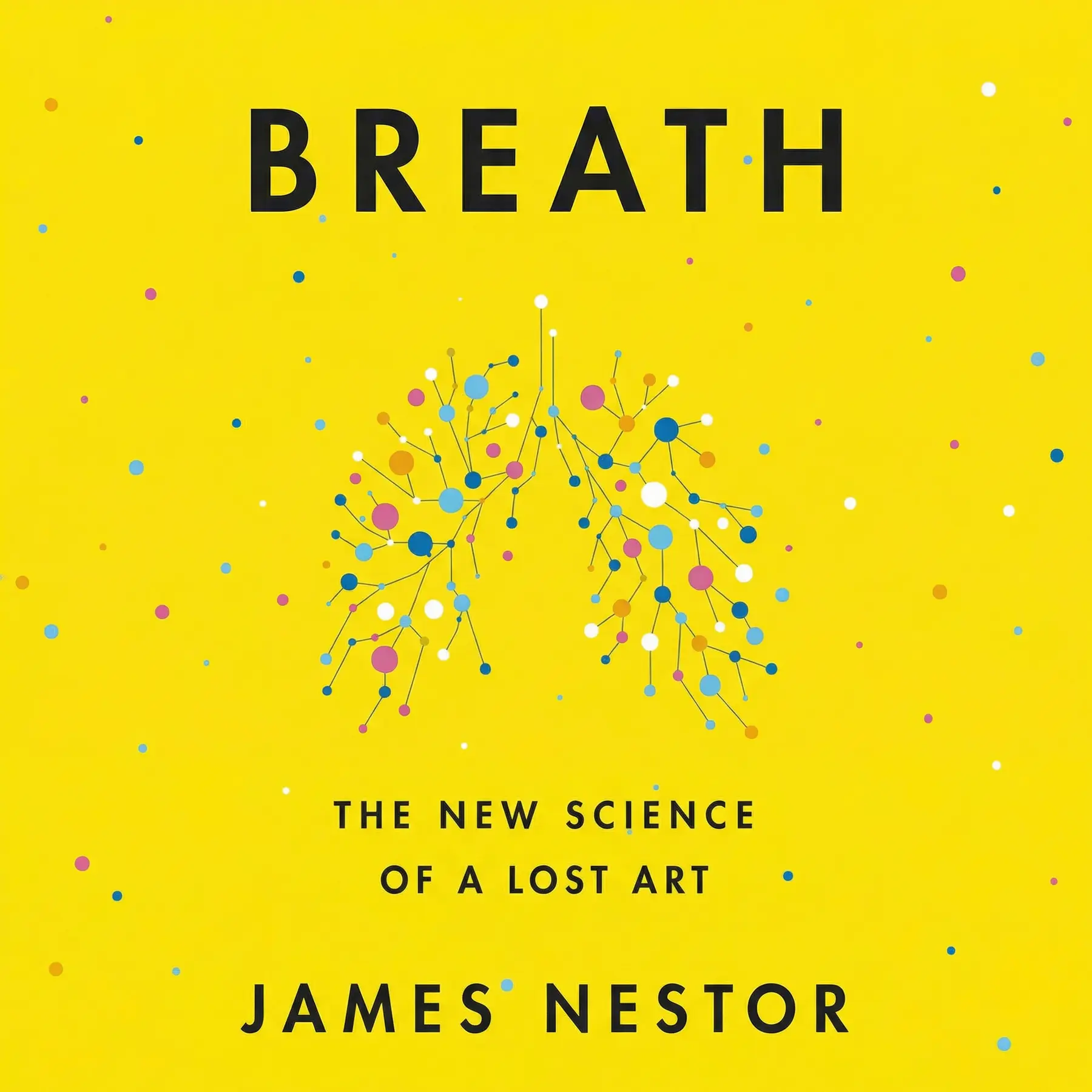
Breath: The New Science of a Lost Art
By James Nestor
Journalist James Nestor reveals how modern humans have lost the ability to breathe correctly and explains how reviving ancient techniques can dramatically improve physical health, mental clarity, and longevity.
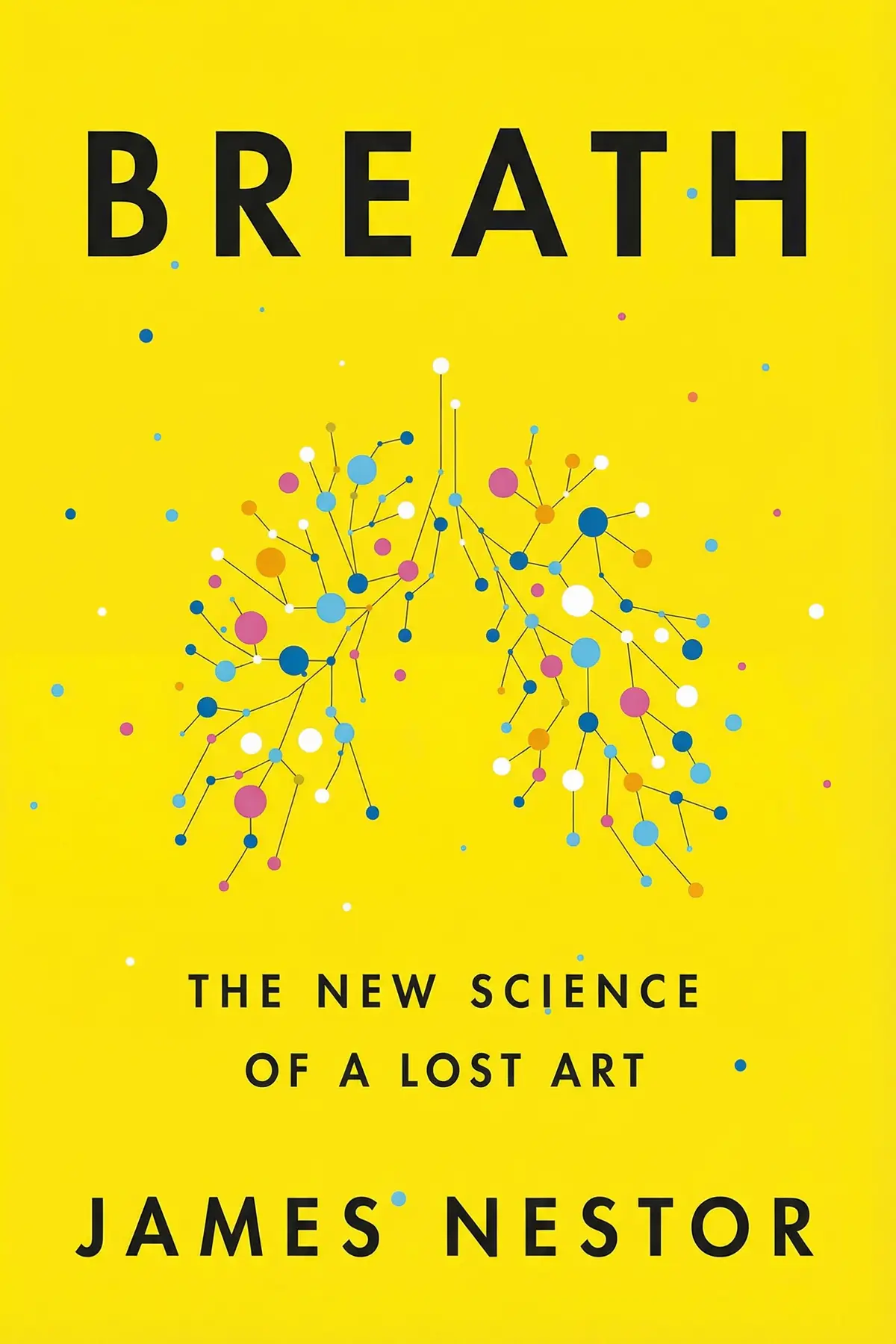
Table of Content
1. Introduction
1 min 28 sec
Think about the last time you truly focused on your breathing. For most of us, the act of respiration is so automatic that it fades into the background of our lives. We assume that as long as we are alive, we must be breathing well enough. But what if that assumption is dangerously wrong? What if the way you are breathing right now is actually contributing to your fatigue, your stress, or even the shape of your face?
In this summary of James Nestor’s investigation into the world of air, we are going to dive into a field of study that has been largely overlooked by the modern medical establishment. Nestor takes us on a journey to meet the ‘pulmonauts’—the scientists, explorers, and practitioners who have spent years documenting the profound impact of breath on the human body. We will discover that breathing is not just a passive requirement for survival, but a powerful tool that can be used to restructure our bodies and minds.
Throughout this exploration, we will see how our evolutionary history has left us with a unique set of challenges. We’ll look at the physiological differences between breathing through the nose and the mouth, the surprising chemistry of carbon dioxide, and the ancient traditions that have known these secrets for millennia. By the end of this journey, you will understand that the simple act of shifting your respiratory habits can be the most effective health intervention you ever undertake. This isn’t just about oxygen; it’s about reclaiming a lost biological superpower. Let’s begin by looking at why we need to stop using our mouths as a primary entrance for air.
2. The Dangers of Mouth Breathing
1 min 45 sec
Discover why the simple act of breathing through your mouth can lead to a cascade of health problems and physiological decline.
3. The Multi-Functional Power of the Nose
1 min 34 sec
The human nose is much more than a sensory organ; it is an advanced climate-control system and a chemical laboratory for your body.
4. Evolutionary Shifts and the Shrinking Human Face
1 min 41 sec
Trace the history of human development to see how our move toward soft foods and bigger brains narrowed our airways.
5. The Impact of the Modern Industrial Diet
1 min 41 sec
Explore how the shift to processed, soft foods over the last few centuries has physically altered the shape of our mouths.
6. The Crucial Role of the Full Exhale
1 min 39 sec
Learn why the key to better breathing isn’t taking in more air, but effectively pushing the old air out.
7. The Diaphragm as a Vital Pump
1 min 34 sec
Discover the ‘second heart’ of the human body and how its movement influences your entire circulatory system.
8. The Perfect Breath: 5.5 Seconds
1 min 36 sec
There is a specific rhythm of breathing that synchronizes your body’s systems for optimal performance and health.
9. The Carbon Dioxide Paradox
1 min 41 sec
Uncover why carbon dioxide is not just a waste product, but a vital key to unlocking oxygen for your cells.
10. Reshaping the Face Through Oral Posture
1 min 37 sec
It is possible to change the physical structure of your face and airways, even as an adult, through specific habits.
11. Unlocking Human Superpowers
1 min 34 sec
See how extreme breathing techniques can allow people to consciously control their heart rate and body temperature.
12. The Inner Fire of Tummo
1 min 35 sec
Ancient Tibetan techniques use aggressive breathing to generate heat and survive in the most extreme environments on Earth.
13. Altering Consciousness Through Breath
1 min 41 sec
Discover how changing your respiratory patterns can lead to profound psychological shifts and visionary experiences.
14. Ancient Wisdom and the Concept of Prana
1 min 38 sec
Long before modern science, ancient cultures understood breath as the primary vehicle for a universal life force.
15. Conclusion
1 min 36 sec
We have traveled from the depths of evolutionary history to the cutting edge of modern laboratory research, and the message is consistent: your breath is your most powerful tool for transformation. We’ve seen how our modern world has physically altered our faces and narrowed our airways, but we’ve also learned that we are not victims of these changes. Through the simple practices of nasal breathing, full exhalations, and maintaining a slow, rhythmic pace, we can reverse many of the health problems that plague us today.
Whether it’s the 5.5-second ‘perfect breath’ that brings our systems into coherence, or the more extreme techniques that allow us to regulate our own body temperature and heart rate, the power lies within you. You don’t need expensive equipment or a complicated diet to start this journey. You only need to pay attention to the one thing you are doing right now, and the one thing you will do thousands of times today.
As an actionable first step, try to incorporate a few minutes of conscious breathing into your daily routine. Set a timer for five minutes, close your mouth, and focus on slow, gentle inhales and exhales of about five or six seconds each. Notice how your body feels as you switch from the shallow chest breathing of stress to the deep, diaphragmatic breathing of vitality. Keep your tongue on the roof of your mouth and your jaw relaxed. Over time, these small shifts will become your new baseline, and you will find yourself with more energy, less stress, and a body that is better equipped to handle the challenges of life. Remember, the secret to a better life isn’t just in the air around you; it’s in how you choose to take it in.
About this book
What is this book about?
Every day, we take roughly twenty-five thousand breaths, yet most of us are doing it wrong. In this exploration of respiratory science, James Nestor investigates why the modern human face is shrinking and our airways are narrowing. By looking at evolutionary history, medical anomalies, and ancient spiritual traditions, the book illustrates that how we breathe is just as important as what we eat or how much we exercise. Nestor takes readers on a journey from the dental offices of researchers to the freezing landscapes where practitioners of inner-fire meditation thrive. He provides a roadmap for reclaiming our health through the nose, the diaphragm, and the slow, deliberate rhythm of air. The promise of this work is a total transformation of wellbeing. By adjusting the way we inhale and exhale, we can potentially reverse chronic conditions, lower stress, and tap into hidden biological capabilities that have been ignored by Western medicine for centuries. It is a guide to the most fundamental—yet most forgotten—biological function we possess.
Book Information
About the Author
James Nestor
James Nestor is a journalist based in San Francisco. He has written for publications including Scientific American, Outside Magazine, and the New York Times, and wrote the book Deep: Freediving, Renegade Science, and What the Ocean Tells Us About Ourselves.
Ratings & Reviews
Ratings at a glance
What people think
Listeners find this work to be a superb listen that is extensively researched and packed with deep insights. They value how it highlights the necessity of correct breathing methods, with a specific emphasis on nasal breathing, and how these techniques enhance general wellness and help manage chronic ailments. Listeners admire the narrative style, with one observer noting it is written without ego, and they appreciate the actionable exercises and advice offered throughout the chapters.
Top reviews
Om
Ever wonder why humans are the only species with crooked teeth? Nestor takes us on a wild ride through history to explain how our transition to soft, processed foods essentially shrivelled our mouths and ruined our airways. This isn't just a book about breathing; it’s an investigation into human devolution. The writing is incredibly accessible, blending humor with some pretty shocking experiments, like the author literally plugging his nose for ten days to prove how damaging mouth-breathing is. I found myself consciously closing my mouth and adjusting my posture while reading. It’s rare to find a science book that is this gripping and immediately applicable to your daily life. The sections on how nasal breathing can regulate heart rate and blood pressure were particularly eye-opening for me. A total must-read for anyone interested in longevity and holistic health.
Show moreIce
As someone who has struggled with chronic sinus infections for years, this book felt like a manual for my own body that I never knew existed. James Nestor has a gift for making complex biological processes feel like a thrilling detective story. I was fascinated by the 'pulmanauts' he interviewed—those fringe scientists and explorers who have spent decades uncovering lost breathing techniques from ancient cultures. The practical advice on the 5.5-second inhale/exhale rhythm has already helped me manage my daily stress levels. Honestly, the realization that we can actually expand our lung capacity and reshape our jaws through proper technique is life-changing. I’ve started using a tiny piece of tape on my lips at night, and I wake up feeling more refreshed than I have in a decade. It’s brilliant, well-researched, and written with a genuine sense of curiosity.
Show moreFelix
Nestor writes with a refreshing lack of ego, which is rare in the biohacking space. Instead of acting like an all-knowing guru, he positions himself as a journalist on a quest for the truth, which makes the information much easier to digest. The book highlights how modern medicine often ignores the root causes of respiratory issues in favor of quick-fix medications. I was particularly moved by the stories of people who used simple breathing techniques to help manage autoimmune diseases and asthma. It’s a powerful reminder that the most basic biological function we perform—something we do 25,000 times a day—is often the one we understand the least. The bibliography is massive, which satisfied my need for academic proof. It is easily one of the most important health books published in the last decade. Everyone with a nose should read this.
Show moreArt
Look, I was skeptical about the idea of taping my mouth shut at night, but the results speak for themselves. Before this book, I just assumed my snoring and dry mouth were unavoidable parts of aging. Nestor’s deep dive into the 'lost art' of nasal breathing completely flipped my perspective on its head. The way he explains the chemistry of carbon dioxide—how it’s not just a waste product but a crucial component for oxygen delivery—was a lightbulb moment for me. The book moves quickly from 19th-century catacombs to high-tech sleep labs in San Francisco. It’s incredibly well-paced. My only tiny gripe is that I wanted even more on the specific exercises, but the narrative flow is so good that I can see why he kept it focused on the journey. I've already bought three copies for my family members who struggle with sleep apnea.
Show moreNatnicha
The truth is, we have become a species of 'mouth breathers,' and the health implications are far more terrifying than I realized. This book is a wake-up call. I was captivated by the history of how our skulls have changed since the industrial revolution. Nestor makes a compelling case that our narrow faces and crowded teeth are a direct result of our poor breathing habits and soft diets. I loved the blend of travelogue and science; one minute you’re in an ancient burial site, and the next you’re learning about the biochemistry of blood pH. It’s dense with information but never feels dry or academic. I’ve started practicing the 'Tummo' style breathing mentioned in the later chapters, and the boost in my energy levels is palpable. This is one of those rare books that changes how you move through the world.
Show moreTan
Picked this up on a whim, and it has completely changed how I approach my daily exercise routine. As a runner, I always thought huffing and puffing through my mouth was just how it worked when you pushed yourself. Nestor explains why that’s actually counterproductive and how nasal breathing can improve CO2 tolerance and endurance. The book is filled with these little counter-intuitive nuggets of wisdom. I especially appreciated the sections on how dentists are starting to recognize the link between jaw structure and respiratory health. It’s a very holistic look at the human body. James Nestor has a way of taking a subject that sounds incredibly boring—breathing—and turning it into a page-turner. I finished it in two sittings. If you care about your physical performance or just want to stop feeling tired all the time, buy this book.
Show moreWyatt
What if the secret to health isn't a new pill or a complicated diet, but something we’re already doing every second? This book is a masterclass in science journalism. Nestor takes a deep dive into the 'Great De-evolution' of the human face and how our modern environment has made us the worst breathers in the animal kingdom. The stories of people reversing chronic conditions simply by changing their breath are nothing short of miraculous, yet they are backed by significant research. I loved the 'Breathwork' appendix at the back which summarizes the different techniques. It makes the book feel like a permanent reference guide rather than a one-time read. It's humorous, slightly gross at times (the nose-plugging experiment!), and ultimately very hopeful. It’s the kind of book you want to talk about with everyone you meet. Essential reading for the modern age.
Show moreDarawan
The chapter on the Stanford experiment was genuinely hard to get through because it made me feel so claustrophobic just imagining it. Nestor really went the extra mile by becoming a human guinea pig for his research, which adds a layer of authenticity you don't usually see in health books. I did find some of the claims regarding the 'superpowers' of ancient breathers to be a little bit on the fringe side, but the core science regarding CO2 levels and oxygenation is solid. It’s a fast-paced read that manages to be both informative and entertaining. I would have liked a few more diagrams of the exercises, but the resources on his website make up for it. If you’re a mouth-breather or a snorer, you really can’t afford to skip this. It’s a solid four stars for the sheer amount of 'aha!' moments I had.
Show moreRatchada
After hearing about this book on several podcasts, I finally dove in, and I’m glad I did. The historical perspective on George Catlin and his observations of Native American breathing habits was fascinating. Nestor does a great job of showing how we’ve ignored ancient wisdom in favor of modern convenience. My only critique is that the book can feel a bit repetitive in the middle sections as he reinforces the 'nose good, mouth bad' mantra. However, the science is so vital that I didn't mind the reinforcement too much. The writing style is punchy and smart. I’ve already noticed a difference in my running performance just by switching to nasal breathing during my morning jogs. It was uncomfortable at first, but now I feel like I have a second wind that I never had before. Definitely worth your time.
Show moreIvan
While the research into the 'pulmanauts' is undeniably deep, I found some of the evolutionary claims regarding our ancestors' faces a bit too speculative for my liking. The author spends a lot of time on anecdotal success stories which, while inspiring, occasionally felt like they were drifting into the realm of pseudoscience. For instance, some of the theories about 'chewing ourselves' into better health felt a bit oversimplified. That said, the actual breathing techniques described—like the Box Breathing used by Navy SEALs—are very practical and have helped me stay calm during stressful work meetings. It’s an interesting read for sure, and Nestor is a talented storyteller, but I’d recommend keeping a healthy sense of skepticism while moving through the more 'miraculous' chapters. It’s a decent book, just take some of the broader claims with a grain of salt.
Show moreReaders also enjoyed

AUDIO SUMMARY AVAILABLE
Listen to Breath in 15 minutes
Get the key ideas from Breath by James Nestor, plus 5,000+ more titles in English and Thai.
- 5,000+ titles
- Listen as much as you want
- 7-day free trial
- Cancel anytime







