
13 min 03 sec
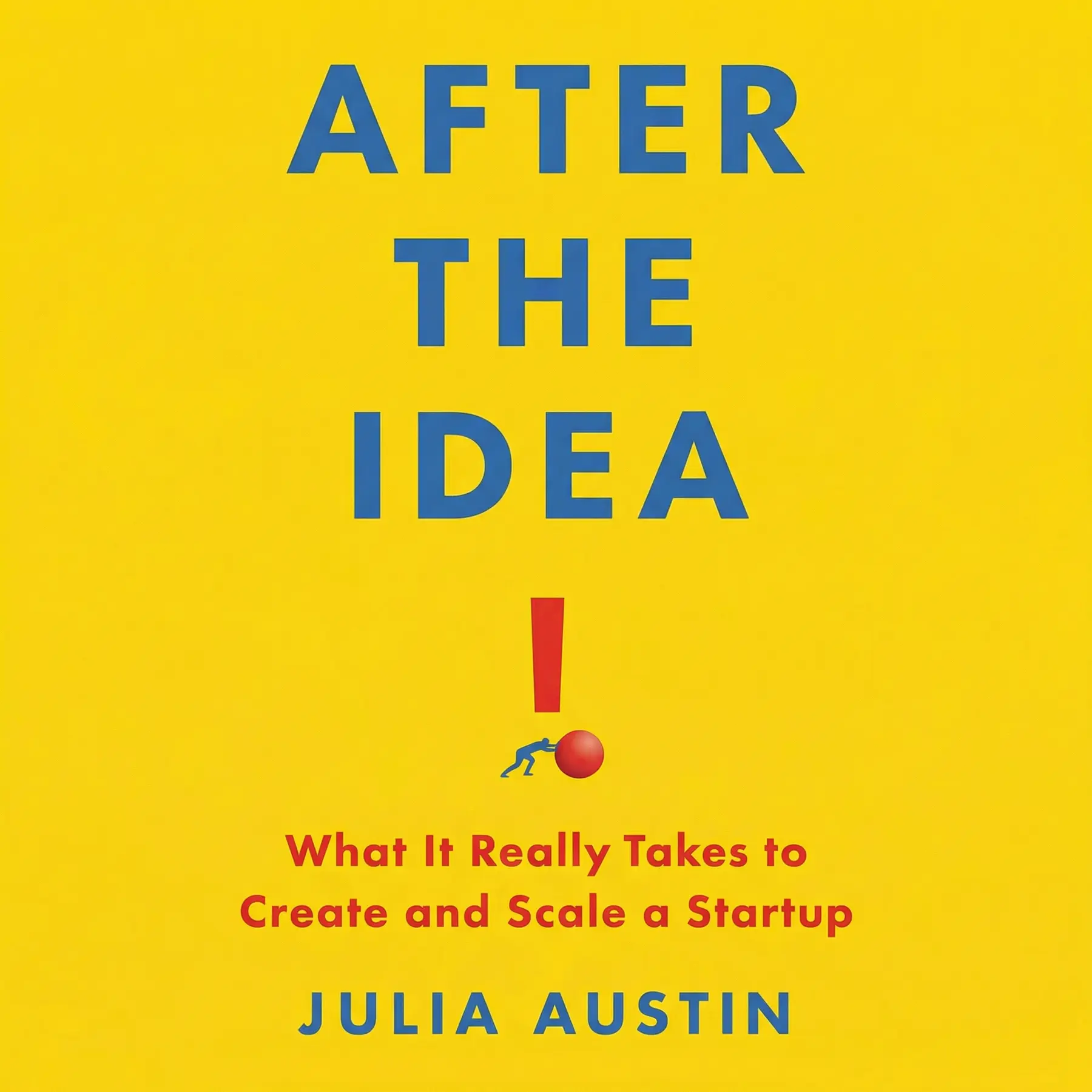
After the Idea: What It Really Takes to Create and Scale a Startup
By Julia Austin
After the Idea provides a roadmap for early-stage entrepreneurs, focusing on the human and strategic elements of starting a business. Julia Austin explains how to define success, validate products, and select the right partners.
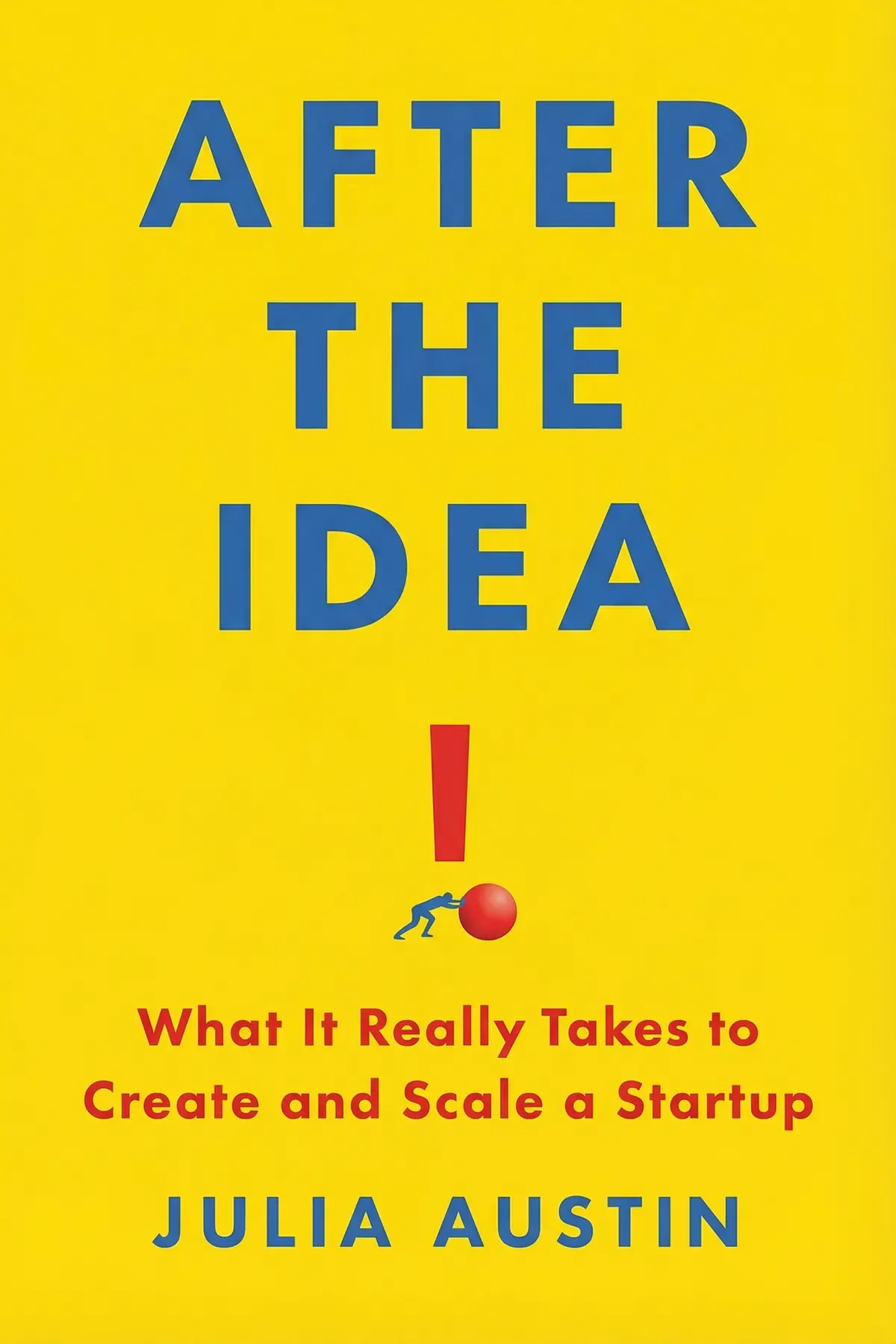
Table of Content
1. Introduction
1 min 35 sec
To the outside world, the life of a startup founder often looks like a series of high-stakes victories and sleek office spaces. We see the finished product, the massive valuations, and the confident public personas. But behind the scenes, the reality is often much messier. Many founders are navigating a sea of internal conflict, dealing with persistent fear, nagging doubt, and the crushing weight of imposter syndrome. They find themselves asking: Is my idea actually any good? Do I have what it takes to manage a real company? And perhaps most dauntingly, where exactly do I start?
Julia Austin understands this pressure. Having held leadership positions in several tech startups and now serving as a coach for founders and a faculty member at Harvard Business School, she has seen the overwhelming nature of the early stages firsthand. In After the Idea, she offers a guiding hand through the fog of starting up. This isn’t just about the mechanics of filing paperwork; it’s about the deeper, nonlinear journey of turning a spark of inspiration into a sustainable venture.
In this summary, we are going to explore the critical steps that happen before the product is even built. We will look at how to define success on your own terms and why that definition is the foundation of everything else. We’ll dive into the world of product discovery—a phase of learning and listening that can make or break a company. Finally, we’ll discuss the delicate art of choosing a cofounder, treating it with the same care as a lifelong partnership. Whether you’re working from your garage or an incubator, these insights are designed to help you navigate the complexity of the startup world with more clarity and less stress.
2. Defining Success Beyond the Unicorn
2 min 07 sec
What does a win look like for you? Before rushing into development, it is vital to move beyond vague financial goals and determine your deeper motivations.
3. The Necessity of Product Discovery
1 min 59 sec
Building a solution before fully understanding the problem is a recipe for failure. Discover why a slow, research-heavy approach is actually your fastest route to success.
4. Validating Your Worldview with Hypotheses
1 min 54 sec
Transform your assumptions into testable statements to ensure your business is built on facts rather than just hope.
5. Observing Behavior Through Research and Simulation
1 min 59 sec
What people say they do is often different from what they actually do. Learn how to use ethnographic and concierge research to uncover the truth.
6. The Strategic Courtship of a Cofounder
2 min 05 sec
A cofounder can be your greatest asset or your biggest liability. Discover why this relationship requires a slow, deliberate ‘courtship’ process.
7. Conclusion
1 min 24 sec
As we have seen, the path that follows the initial spark of an idea is rarely a straight line. It is a demanding, often exhausting process of self-reflection, rigorous testing, and relationship building. Julia Austin’s approach in After the Idea reminds us that the most successful founders are not necessarily the ones with the ‘best’ ideas, but those who are the most willing to learn, adapt, and move with intentionality.
To apply these lessons today, start by looking inward. Write down your personal definition of success and ensure it goes beyond simple financial milestones. Then, commit to the discovery process. Before you write a single line of code or sign a lease, go out and observe your potential customers. Turn your assumptions into hypotheses and be brave enough to prove yourself wrong. Finally, if you are looking for a partner, do not rush the process. Treat it with the gravity it deserves, and build a relationship based on radical honesty and shared vision.
Launching a startup is a marathon, not a sprint. By slowing down in these early stages, you aren’t falling behind; you are building the sturdy foundation that will allow you to eventually run faster and further than you ever thought possible. The ‘after’ in After the Idea is where the real work begins—and where the most rewarding part of the journey lies.
About this book
What is this book about?
Starting a business often feels like jumping out of a plane while trying to assemble the parachute. While the initial spark of an idea is exciting, the transition from concept to execution is where most founders struggle. After the Idea is designed to bridge this gap, offering a structured approach to the chaotic early days of entrepreneurship. The book promises to move beyond the technical "how-to" and into the strategic "why" and "with whom." It covers the foundational pillars of startup success: defining a personal vision of victory, engaging in rigorous product discovery, and navigating the complexities of cofounder relationships. By focusing on these often-overlooked areas, Julia Austin helps founders avoid the common pitfalls that lead to early failure. Instead of rushing to build a product that no one wants, readers learn how to listen to the market and build a sustainable venture that aligns with their personal values and long-term goals. It is a guide for anyone who has an idea but isn't quite sure how to make the leap into a functional, thriving business.
Book Information
About the Author
Julia Austin
Julia Austin is a seasoned executive coach who specializes in supporting startup founders through the hurdles of business growth. Her insights are grounded in her extensive background in leadership roles at various technology startups. Additionally, Austin shares her expertise with the next generation of entrepreneurs as a faculty member at Harvard Business School, where she teaches the practicalities of launching and scaling new ventures.
Ratings & Reviews
Ratings at a glance
What people think
Listeners find this book full of actionable wisdom and consider it essential reading for founders. They value its thoroughness, with one listener pointing out that it is grounded in real experience. The text receives high marks for its tactical focus, and one review emphasizes its direct applicability to day-to-day decision making.
Top reviews
Bee
Finally got around to reading Julia Austin's latest, and it’s a masterclass in tactical execution. This book is essentially a manual for anyone tired of high-level theory and looking for day-to-day decision-making support. Truth is, most business books are fluffy, but Austin’s background at Akamai and VMware shines through in her grounded, practical approach. She doesn't just tell you to 'innovate'—she explains how to use concierge testing to validate your assumptions before you waste a dime. I particularly appreciated the sections on navigating the messy overlap between technology and people management during those fragile early months. Whether you are currently in the trenches or just sketching out a plan, these insights are gold. It’s the kind of resource you keep on your desk, not your shelf.
Show moreBird
This book is exactly what the startup community needs right now—a dose of reality grounded in actual experience. Austin’s work with hundreds of entrepreneurs clearly informs her perspective, making the advice feel tailored and incredibly relevant. I loved the fun fact about YouTube’s origins as a dating site; it’s a perfect reminder that the journey is rarely a straight line. Personally, I found the tactical breakdown of how to identify unmet needs before building a product to be the most useful part. Many founders rush to market, but this book teaches you the discipline of experimentation. It is a comprehensive guide that tackles the technical and human challenges of entrepreneurship with equal weight. Every aspiring founder should grab a copy immediately.
Show moreKaen
As someone who has struggled with the 'what now?' phase of a startup, this was a breath of fresh air. The advice on treating a co-founder search like a courtship really hit home for me. I’ve seen so many partnerships crumble because they rushed the process, and Austin provides a much-needed reality check on that front. My only minor gripe is that the book leans very heavily into the pre-launch phase. I would have loved more depth on how these principles shift once you start scaling rapidly. Still, the emphasis on ethnographic research and discovering true user pain points is invaluable for early-stage founders. It’s clear, actionable, and clearly comes from someone who has seen the good, the bad, and the ugly of the tech world.
Show moreJoshua
Ever wonder why some founders seem to have it all figured out while you’re spinning your wheels? After reading this, I realize it’s usually because they have a framework for their madness. Austin provides that framework here. In my experience, the biggest hurdle isn't the idea itself, but the 'after'—the people, the management, and the fundraising hurdles that pop up like landmines. This book walks you through those mines with a calm, expert voice. While I thought the section on concierge testing could have been even longer, the overall advice is incredibly actionable. It’s a quick read but one that requires you to stop and take notes. If you're currently navigating the early stage, this is a tremendous advantage for your strategy.
Show moreAudrey
Picked this up on a recommendation from a colleague, and I’m glad I did. Having worked at a startup myself, some of the topics Austin discusses—especially the friction between tech teams and management—resonate deeply. She manages to capture the chaotic energy of the early stages while providing a calming structure to follow. I found the advice on not rushing the product to market to be particularly poignant in today’s 'move fast and break things' culture. Sometimes, moving slower to gather insights actually saves you time and money in the long run. It’s a very tactical book that doesn’t shy away from the hard parts of being a founder. A few chapters felt a bit redundant, but the core message is vital.
Show moreSophia
Wow, I wish I had read this before my first attempt at a SaaS product. Austin’s emphasis on finding target users’ pain points before writing a single line of code is a lesson I learned the hard way. Gotta say, her approach to experimentation is refreshing; it’s not just about 'failing fast,' but about learning systematically. The book is packed with real-world examples that make the concepts feel less like a lecture and more like a conversation with a mentor. My only complaint is that the formatting of some of the lists and takeaways felt a bit cluttered. However, the actual content is top-tier. It covers the crucial aspects of fundraising and team building with a level of honesty you don't often find in the startup genre.
Show moreChamlong
The chapter on ethnographic research was definitely the highlight for me, but the rest of the book felt a bit elementary. To be fair, if you are a first-time entrepreneur, this is a fantastic roadmap for product development. However, for those of us who have been through the ringer a few times, a lot of these concepts feel like common sense. Austin’s writing style is very clear and her anecdotes from DigitalOcean are engaging, but I found myself skimming the sections on fundraising and basic management. It’s a solid 3-star read that serves as a great primer, though it might lack the complexity needed for seasoned founders looking to scale beyond the initial 'idea' stage. It’s practical, just not groundbreaking.
Show moreKasemsan
Not what I expected, but still worth a look if you're in the very early days of your journey. The book focuses heavily on the transition from an idea to a functioning product, which is great, but it ignores a lot of the later-stage scaling issues I was hoping to learn about. Frankly, the tone is a bit dry at times, and some of the 'real-world advice' feels like things you could learn in an intro to business course. On the plus side, the research on why billion-dollar startups often have two co-founders was quite eye-opening. It’s a decent guide for the pre-launch phase, but don't expect a deep dive into the complexities of long-term growth. It’s good, just not essential for everyone.
Show moreMatteo
While the advice on co-founder selection is solid, I found the technical sections a bit light for my taste. I appreciate that Austin is trying to make this accessible to a broad audience, but sometimes the depth suffers because of it. Look, if you want a quick overview of how to validate a product and set up a basic team, this is perfect. If you’re looking for a deep dive into the architecture of a tech stack or complex fundraising maneuvers, you might find it a bit basic. The writing is clear and the insights from her time at Akamai add credibility, but it stays very much at the '101' level. It’s a helpful starting point, though not a definitive manual.
Show moreDuangjai
Honestly, I felt most of this information could be found in a series of medium-length blog posts rather than a full book. While Julia Austin clearly knows her stuff, I didn't find many of the insights to be particularly new or revolutionary. Much of it felt like a rehashing of 'Lean Startup' principles but with a few more personal anecdotes from VMware and DigitalOcean thrown in. The advice to 'get a co-founder' and 'experiment' is pretty standard fare for anyone who has been in the ecosystem for more than a month. It might be helpful for someone completely new to the world of entrepreneurship, but for me, it was a bit of a letdown. I was hoping for more specialized, high-level strategy.
Show moreReaders also enjoyed
7 Powers: The Foundations of Business Strategy
Hamilton Helmer
Alibaba: The House That Jack Ma Built
Duncan Clark
Being Boss: Take Control of Your Work and Live Life on Your
Kathleen Shannon
Better and Faster: The Proven Path to Unstoppable Ideas
Jeremy Gutsche
AUDIO SUMMARY AVAILABLE
Listen to After the Idea in 15 minutes
Get the key ideas from After the Idea by Julia Austin, plus 5,000+ more titles in English and Thai.
- 5,000+ titles
- Listen as much as you want
- 7-day free trial
- Cancel anytime







