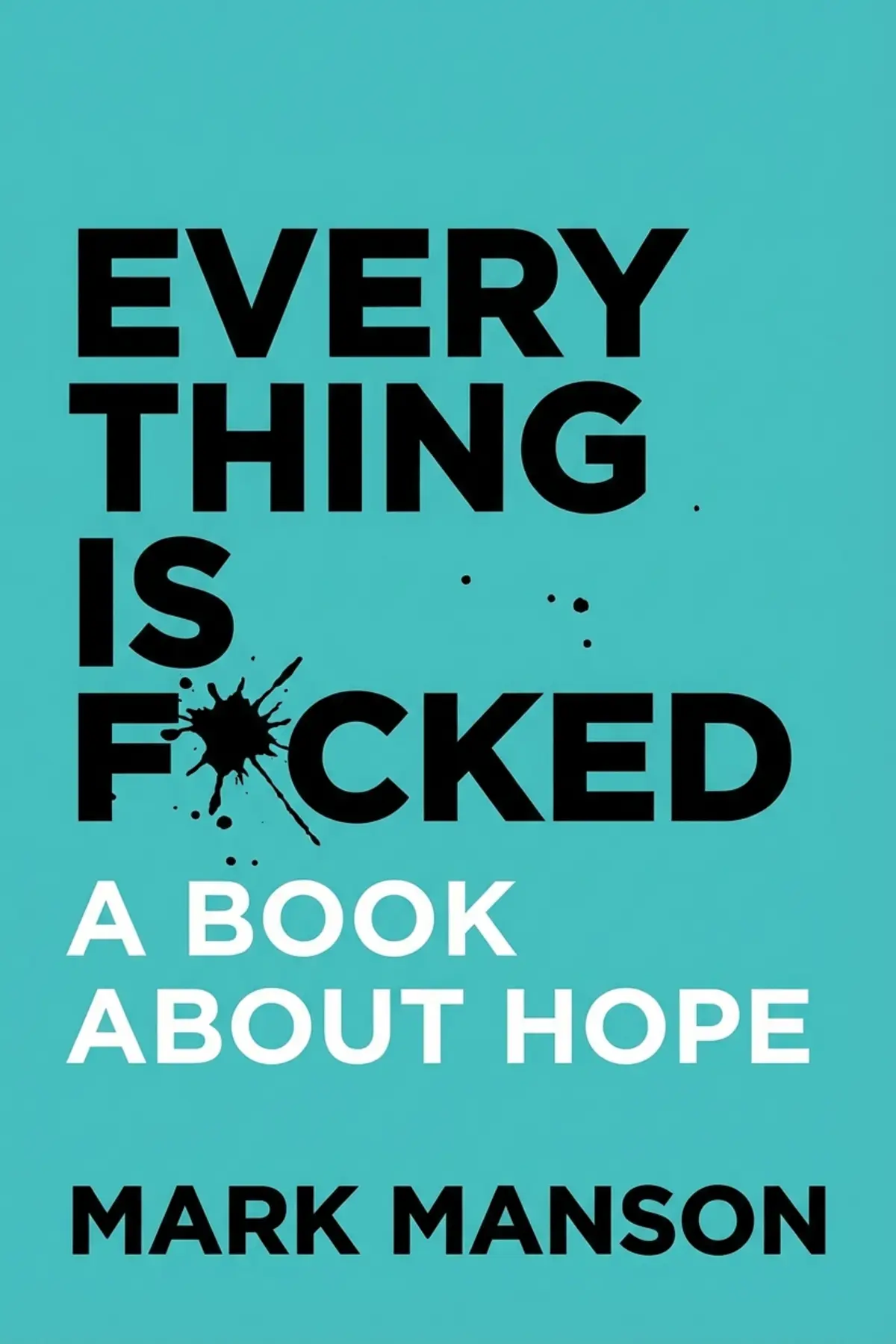
Everything is F*cked: A Book About Hope
Mark Manson
A refreshing guide to prioritizing what truly matters by embracing life's inevitable challenges. Learn why chasing constant happiness is a trap and how choosing the right struggles leads to genuine fulfillment.
1 min 42 sec
We are living in an era of unprecedented choice. At any given moment, we can scroll through thousands of career paths, dating profiles, or news streams. On the surface, this looks like the ultimate win for humanity—the more options we have, the happier we should be, right? But if you look around, or perhaps look in the mirror, you might notice the opposite is happening. We are more stressed, more anxious, and more unfulfilled than ever before. This paradox exists because we are trying to give our attention and our ‘f*cks’ to everything all at once. We feel like we need to have the perfect body, the highest-paying job, the most adventurous hobbies, and a social life that looks like a highlight reel.
By trying to do it all, we end up spreading ourselves so thin that we eventually burn out. The ‘throughline’ of this exploration is a radical shift in perspective: life is not about avoiding problems or finding a way to never suffer. Instead, it is about being very picky about which problems you choose to have. It’s about understanding that our time and energy are limited resources. If we don’t decide what is important to us, the world—with all its advertisements and social pressures—will decide for us.
In the following segments, we are going to break down how to stop being a victim of your circumstances and start being the architect of your own struggles. We’ll look at why comparing your life to others is a recipe for misery, why your values might be the very thing holding you back, and how even the thought of your own mortality can be the ultimate tool for living better. The goal isn’t to become indifferent to everything; it’s to become comfortable with being different and focusing on the few things that truly matter while letting the rest fall by the wayside. Let’s dive into how we can stop being overwhelmed by opportunity and start living with intention.
2 min 00 sec
Success isn’t found by avoiding pain, but by deciding which challenges you are willing to endure. Learn why vague goals fail and how the right struggle leads to growth.
2 min 09 sec
Even great success can feel like failure if your metrics are wrong. Discover why measuring your worth against others is a trap that leads to persistent unhappiness.
1 min 58 sec
Not all goals are created equal. Learn to distinguish between ‘shitty’ values that leave you empty and ‘good’ values that provide a solid foundation for your life.
1 min 48 sec
Taking responsibility for your life is not about taking the blame. It’s about realizing that you have the power to choose how you respond to any situation.
1 min 48 sec
Our identities can become prisons that prevent us from growing. Learn why we flee from opportunities that threaten our self-image and how to break free.
1 min 46 sec
Clinging to being right is a major source of conflict and stagnation. Explore how questioning your own assumptions can lead to a more honest and happy life.
1 min 51 sec
Romantic love can be as addictive and destructive as a drug. Learn the difference between toxic dependency and a relationship built on mutual support.
1 min 42 sec
Fearing death is natural, but accepting it is the key to living a meaningful life. Discover how your legacy is shaped by the present moment.
1 min 46 sec
In the end, the ‘subtle art’ isn’t about becoming a person who doesn’t care about anything. A person who doesn’t care about anything is just a person with a different kind of problem. Rather, the art is in being comfortable with being different, being comfortable with failure, and being comfortable with the fact that you can’t be everything to everyone. We have explored how to choose the right struggles, how to set better values, and how to take radical responsibility for our lives. These aren’t just intellectual exercises; they are tools for building a more resilient and meaningful existence.
The most actionable advice you can take away from this is to embrace the power of ‘no.’ In a world that is constantly screaming at you to do more, buy more, and be more, saying ‘no’ is an act of rebellion. It is the only way to protect your time and your energy so that you can give your full attention to the things you have decided are truly important. Remember that you are always choosing what to care about, whether you realize it or not. If you don’t choose consciously, you will end up caring about the trivial and the superficial.
As you move forward, try to look at your life through the lens of your values rather than your feelings. Feelings are temporary and often misleading, but values are a steady compass. When you face a problem, don’t ask how to make it go away; ask if this is a problem worth having. If it aligns with who you want to be, then embrace the struggle. If it doesn’t, let it go. By being ruthless with your priorities and honest about your limitations, you don’t just survive life—you actually begin to live it. You find that by giving fewer f*cks about the things that don’t matter, you have so much more to give to the things that do.
This summary explores a counterintuitive approach to modern living, suggesting that the secret to a good life isn't about having more, but about caring less—or rather, caring specifically about the things that align with your deepest values. We often find ourselves overwhelmed by endless choices and the pressure to be constantly positive, which only leads to burnout and a sense of inadequacy. By learning to accept our limitations and the reality of suffering, we can stop spreading ourselves too thin. The promise of this approach is a life defined by clarity and purpose. It moves away from the toxic positivity of the self-help world and instead offers a gritty, realistic look at how we can find meaning through responsibility and the acceptance of our own mortality. You will learn how to identify which struggles are worth your time and which distractions you should ruthlessly ignore to achieve a sense of peace.
Mark Manson is a celebrated author and a prominent blogger whose work has reached a massive global audience. His digital platform, markmanson.net, serves as a hub for his unconventional perspectives on life and psychology, attracting millions of readers every month. Manson continues to write and work, challenging traditional self-help narratives with his direct and often provocative style.
Mark Manson
Will Smith
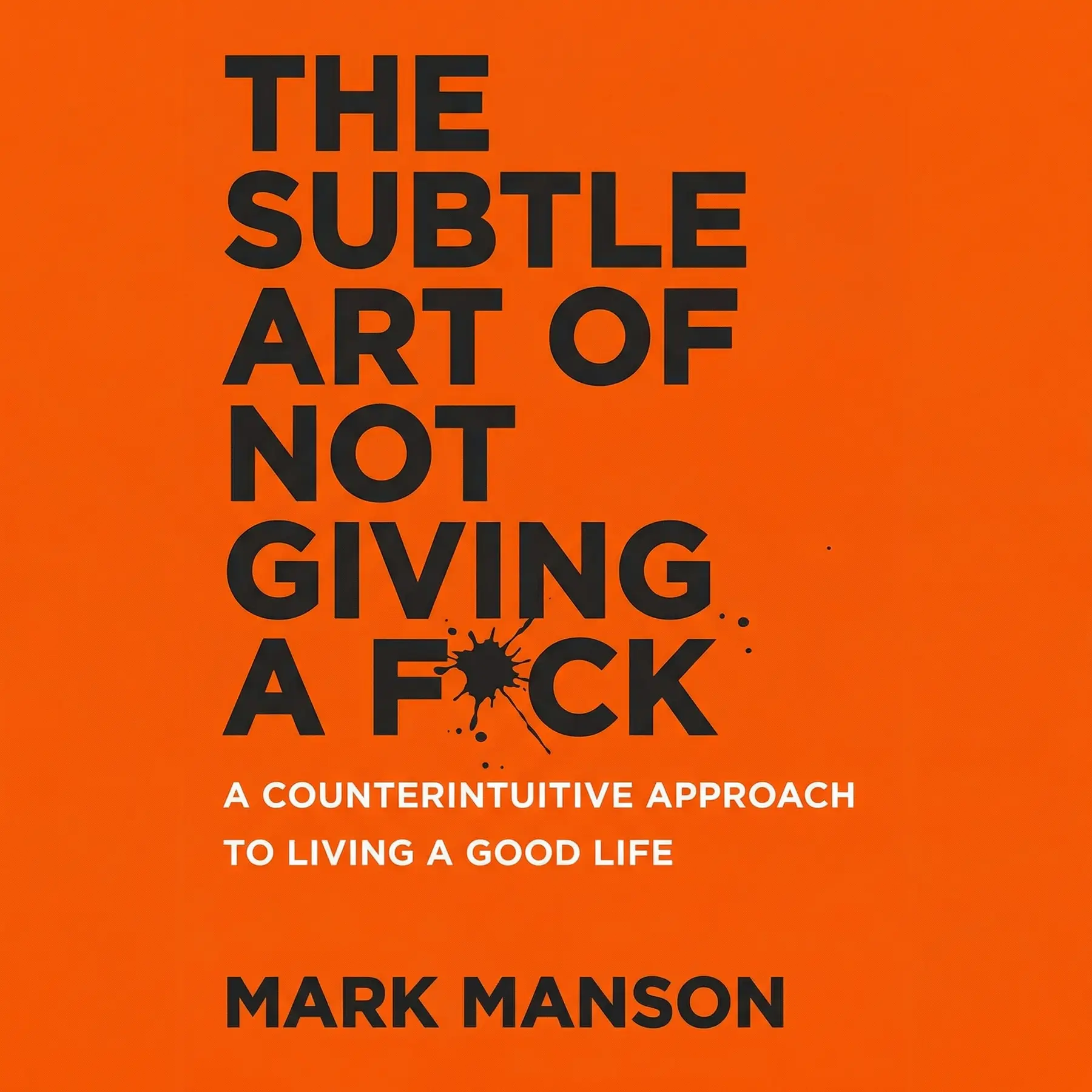
Listeners consider this work a required listen that provides great refreshers on vital lessons and candid guidance. They also value the comedic tone, as one listener observed that there isn't a boring moment from start to finish. Additionally, the content delivers meaningful perspective, prompting listeners to reflect deeply on their own lives.
Picked this up because I was tired of the usual 'manifest your dreams' fluff that populates the self-help section. What I found was a blunt, hilariously honest guide to prioritizing what actually matters. Manson’s concept of 'Disappointment Panda' is a stroke of genius—a superhero who tells people the harsh truths they don’t want to hear. The truth is, we only have a limited amount of energy to give, so why waste it on things that don't serve our values? This book is a must-read for anyone stuck in a cycle of trying to please everyone. It’s not just about being indifferent; it’s about being comfortable with being different. Not a single dull moment in the entire read. It really forced me to think deeply about my own metrics for success. Highly recommended for those who need a reality check.
Show moreWow. This isn't your typical 'think positive' self-help garbage that ignores the reality of human suffering. Manson argues that the desire for a more positive experience is itself a negative experience, which is a total mind-flip but so true. The chapter on taking responsibility for everything in your life—even if it isn't your fault—was a massive perspective shift for me. Not gonna lie, I laughed out loud at several points because his humor is just so dry and relatable. It’s a straightforward, no-nonsense guide to living a more authentic life. If you're tired of being told to 'just be happy,' give this a shot. It teaches you how to suffer better, which sounds grim, but it’s actually incredibly liberating. This book is a masterpiece of modern common sense.
Show moreAs someone who has spent years being paralyzed by what other people think, this book was exactly the slap in the face I needed. The truth is, we are always giving a fuck about something, so the key is just choosing to give a fuck about the right things. I loved the section on how our struggles determine our successes—it's such a simple concept but so easy to forget when you're in the middle of a hard time. Manson’s writing style is punchy and fast-paced; I finished it in two sittings. It provides a valuable perspective on why we feel so miserable despite having so much. It's funny, raw, and doesn't sugarcoat anything. For me, the advice about choosing your own metrics for failure was worth the read alone. Definitely a must-read for the modern era.
Show moreLook, I don't usually go for self-help because it's usually all 'smile and it'll be fine,' but this was the exception. The humor is top-tier and it kept me engaged from start to finish. I loved the idea that we shouldn't try to 'find ourselves' because that just keeps us stuck in a rigid role. Instead, we should remain humble and admit we don't know much of anything. It’s a refreshing take that takes the pressure off of being perfect. The book is short, punchy, and doesn't waste time with flowery language. It’s a straightforward guide to figuring out what’s worth your time and what isn't. Not gonna lie, I've already recommended this to three friends. It's a genuine must-read if you feel overwhelmed by life.
Show moreThe chapter on the 'do or do not' mentality really changed the way I look at my daily habits. Manson points out that we are already choosing what to care about in every moment, so 'changing' is just a matter of making a different choice. It’s simple, but definitely not easy. I found the whole book to be a great perspective shift on why we are so addicted to outrage and victimhood. The humor keeps it from feeling too preachy, even when he's calling the reader out for being entitled. Got to say, it’s one of the few books that actually made me stop and re-evaluate my values. It’s straightforward, honest, and incredibly relevant to anyone living in the age of social media. A very valuable read.
Show moreAfter hearing everyone rave about this for years, I finally dove in and I’m glad I did. It’s a straightforward reminder that life is essentially just a series of problems that never truly end. The goal isn't to be happy all the time, but to find better problems to solve. I particularly appreciated the section on the 'Feedback Loop from Hell'—that cycle of being anxious about being anxious. It’s a very relatable perspective for the social media age. While the tone is a bit abrasive at times, the underlying advice is solid common sense that we often forget. It’s not a masterpiece of literature, but it’s an effective kick in the pants. Some parts in the second half felt a bit like filler, but the core message about values is definitely worth the price of admission.
Show moreFinally got around to reading the 'orange book' and it's better than I thought it would be. Look, the author is definitely a bit of a know-it-all, and the way he brings up Romeo and Juliet only to dismiss them is a bit much. But if you can look past the edgy persona, the core lessons are excellent reminders of how to live well. He does a great job of distilling complex ideas from Eastern philosophy into something that is actually digestible for a casual reader. I liked the focus on the 'climb' rather than the 'destination.' My only real complaint is that it feels a bit repetitive towards the end, and the swearing feels forced at times. Still, it’s a solid 4-star read for the perspective it provides on modern anxiety.
Show moreTo be fair, I actually agree with several of the points Manson makes regarding the entitlement of victimhood and the importance of choosing your struggles. However, the 'edgy dudebro' persona he adopts throughout the book gets old very fast. It feels like he is trying to sell basic Stoicism and Buddhist philosophy to people who wouldn't normally read those texts by wrapping it in a layer of aggressive vulgarity. The first half is quite strong, but the second half starts to dwindle into trite advice about relationships that didn't really resonate with me. It’s a bit rich hearing blanket statements about how easy it is to change your life from someone who admits to coming from a wealthy background. It's an okay read if you want a lighter version of existentialism, but it's definitely not the life-changing experience the hype suggests.
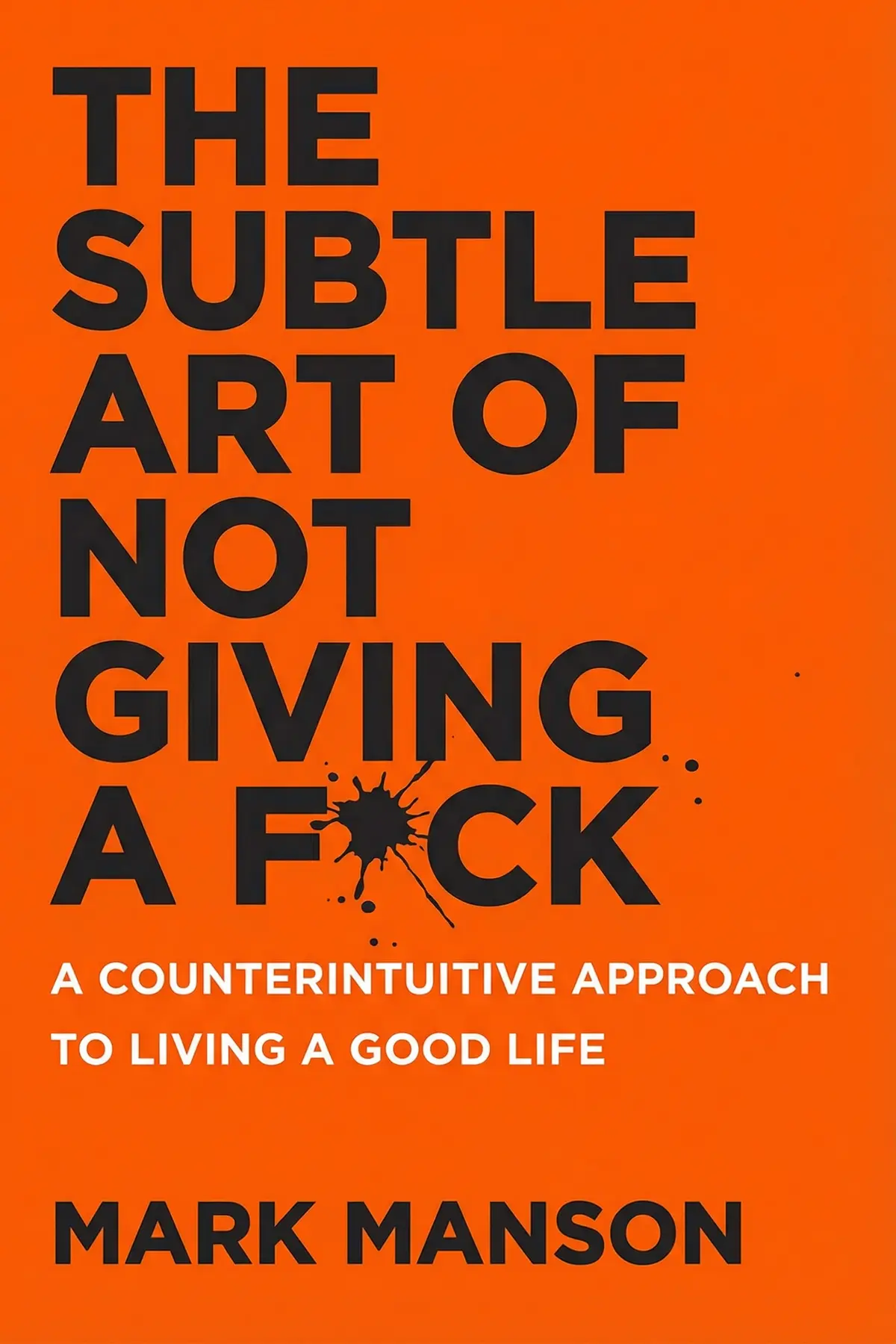
Show moreEver wonder if you could pay money to be lectured by a drunk guy at a pub? That is exactly what reading this felt like to me. The bright orange cover promised something revolutionary, but the content felt like a young person who just discovered how to use the F-word and decided to make it their entire personality. Frankly, the constant profanity becomes incredibly tiring after the first ten pages. It felt like he was trying way too hard to be 'edgy' and 'real' without having much evidence to back up his claims. I found some of the transitions jarring, jumping from Romeo and Juliet to Buddhism to his own personal anecdotes about his wife looking 'shitty.' It felt more like a collection of blog posts than a cohesive book. There are some okay points buried in there, but you have to dig through a lot of garbage to find them.
Show moreNot what I expected, and frankly, I found some of the author's examples to be supremely irresponsible. On page 128, he uses a story about a woman 'falsely' accusing her father of abuse to illustrate false memories, then claims hundreds of innocent people went to prison under similar circumstances. In a world where sexual violence is already so under-reported, this felt like a dangerous narrative to push without proper nuance or context. Beyond that, the book is just a loud, profanity-laced retelling of things we already know. He acts like he's the first person to realize that chasing fame is empty. It’s a very smug, patronizing tone that makes it hard to take any of the actual advice seriously. I regret spending money on this. If you want actual philosophy, go read Camus or Sartre instead of this watered-down version.
Show more
Richard Wiseman
William B. Irvine
Andrew D. Thompson
Deepak Chopra
AUDIO SUMMARY AVAILABLE
Get the key ideas from The Subtle Art of Not Giving a F*ck by Mark Manson, plus 5,000+ more titles in English and Thai.