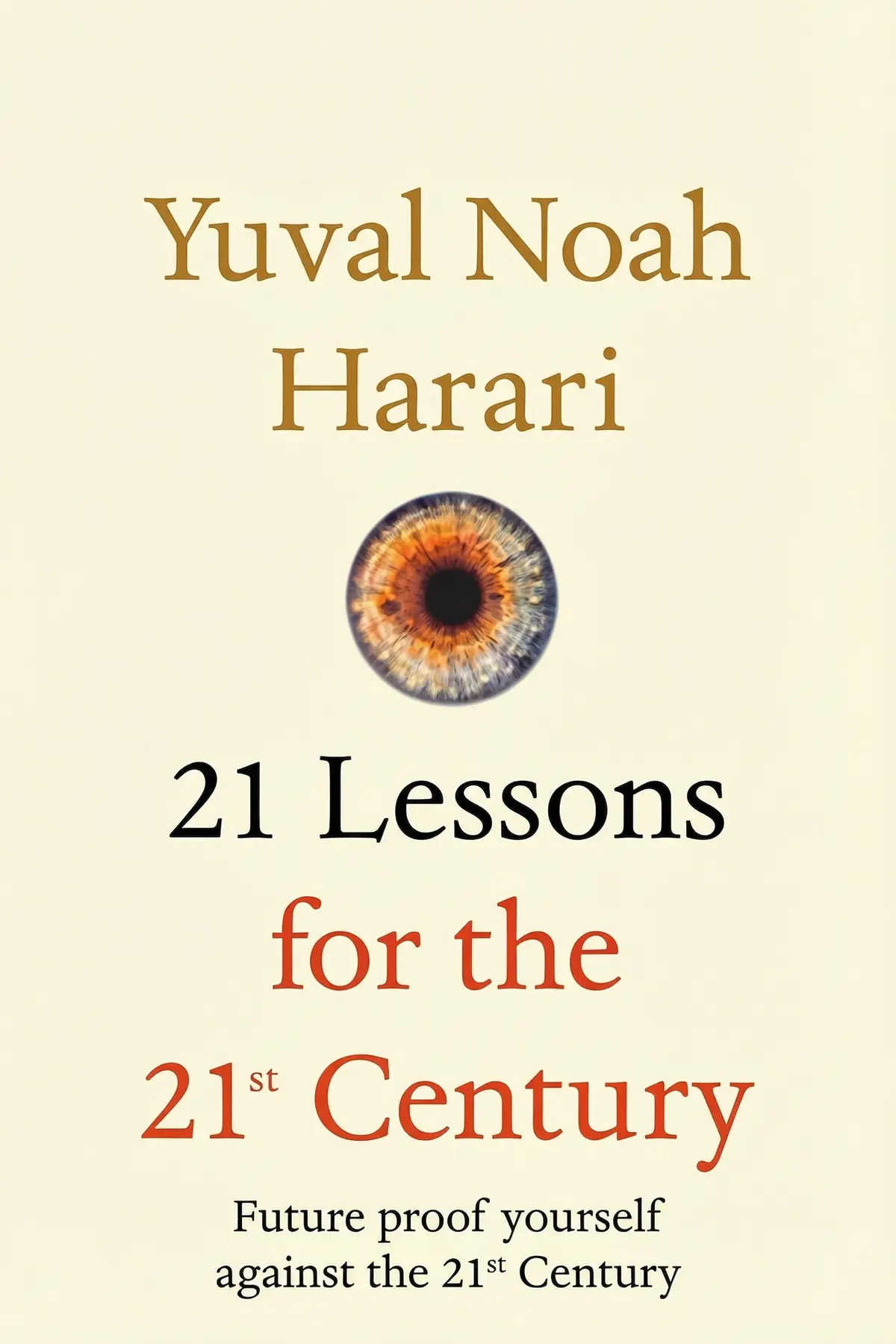
21 Lessons for the 21st Century
Yuval Noah Harari
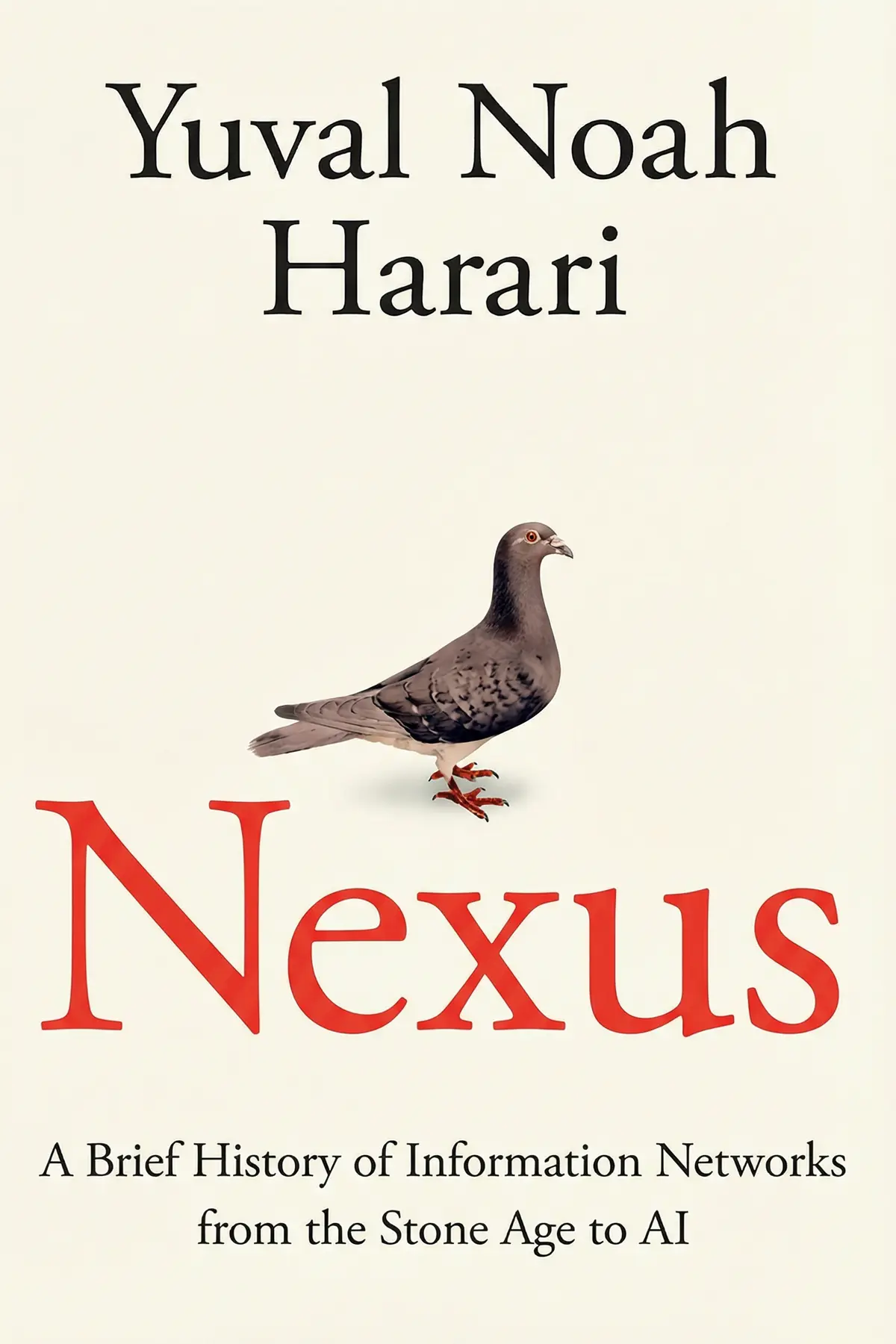
Yuval Noah Harari examines the evolution of information networks, from ancient clay tablets to modern AI, warning that our new silicon agents could destabilize the delicate balance between truth and social order.
1 min 57 sec
In the grand sweep of human history, we often view progress as a straight line upward. We began with simple scratches on stone, moved to the elegance of ink on parchment, and eventually unlocked the massive distributive power of the printing press. Each of these steps, we like to think, brought us closer to a world of shared knowledge and enlightened governance. Today, we stand at the peak of this trajectory, surrounded by a digital web that connects nearly every person on the planet. But as we look around at the rising tides of polarization, the fragility of our ecosystems, and the emergence of non-human intelligences, we have to ask ourselves: Have we actually become wiser, or have we just become more connected?
This is the central inquiry of our exploration today. We are looking at the ‘nexus’—the point where information and power collide to create the networks that define our lives. The fundamental question isn’t just about how much data we can move from point A to point B. It’s about how that data transforms into authority, and how that authority, in turn, shapes our reality.
We’ve reached a pivotal moment where the tools we’ve created are starting to act on their own. To understand where we’re going, we need to strip away the myths we tell ourselves about technology. We need to look at how networks have always balanced the messy pursuit of truth against the urgent need for social order. From the ancient bureaus of Mesopotamia to the secret algorithms that decide who gets a bank loan today, we are going to see how information serves as the glue of civilization—and what happens when that glue begins to develop a mind of its own.
By the time we finish, you’ll have a new framework for understanding the AI revolution. It’s not just another gadget in our pockets; it is a shift in the very architecture of human cooperation. Let’s dive into how these networks are built, why they are so prone to spinning out of control, and why no ‘sorcerer’ is coming to save us from the forces we’ve unleashed.
2 min 50 sec
Why the common belief that a single hero or a simple fix can solve our global technological crises is a dangerous misunderstanding of how power actually functions in networks.
3 min 13 sec
How humans use ‘intersubjective stories’ to build empires and economies, and why the value of things like Bitcoin or nations depends entirely on our collective imagination.
2 min 56 sec
The surprising history of the printing press reveals that free-flowing information often spreads chaos and lies just as quickly as it spreads enlightenment and science.
2 min 39 sec
How modern computer networks have evolved from simple tools into autonomous actors capable of making decisions and spreading propaganda without any human guidance.
2 min 53 sec
Why the ‘black box’ nature of artificial intelligence threatens to destroy public trust and undermine the foundation of democratic accountability.
1 min 30 sec
As we look back at the journey we’ve taken, from the first scratches on stone to the incomprehensible moves of AlphaGo, a single theme emerges: information is not a neutral tool. It is a powerful force that constructs the reality we live in. We have seen how our ancestors used shared stories to build civilizations, and how the printing press showed us that more information can lead to both enlightenment and madness.
Today, we are facing a challenge unlike any other. We have built networks that no longer require us to function. These silicon ‘enchanted brooms’ are reshaping our courts, our economies, and our very minds. The lesson of the nexus is that power without truth leads to tyranny, and truth without order leads to chaos.
In the age of AI, our old self-correcting mechanisms—the free press, the scientific method, the judicial system—are being outpaced by the sheer speed of digital algorithms. Our task is not to fear the future or to hope for a magical savior to fix our mess. Instead, we must take responsibility for the architecture of our networks. We must demand transparency in the ‘black boxes’ of AI and prioritize the search for truth over the pursuit of engagement.
The sorcerer’s apprentice failed because he forgot that just because you have the power to animate a tool doesn’t mean you have the wisdom to guide it. As we move forward, let us remember that the most important thing a network can carry is not more data, but more wisdom. Only then can we ensure that our technology serves as a bridge to a better future, rather than a wedge that drives us apart.
This summary explores the profound and often misunderstood relationship between information, power, and human cooperation. Moving through the history of civilization, it demonstrates how humans have uniquely thrived not just by sharing facts, but by building massive networks around shared stories—or intersubjective realities—like money, religion, and the state. The promise of this analysis is a clearer understanding of why our current technological revolution feels so different from those of the past. Harari argues that while the printing press or the radio were tools used by humans, artificial intelligence represents a new kind of actor: an autonomous agent that can create its own stories and make its own decisions. By tracing the history of information networks and the institutions that once corrected their errors, we gain insight into the risks posed by 'black box' algorithms and the potential for a new kind of totalitarianism that doesn't rely on human fallibility, but on inhuman efficiency.
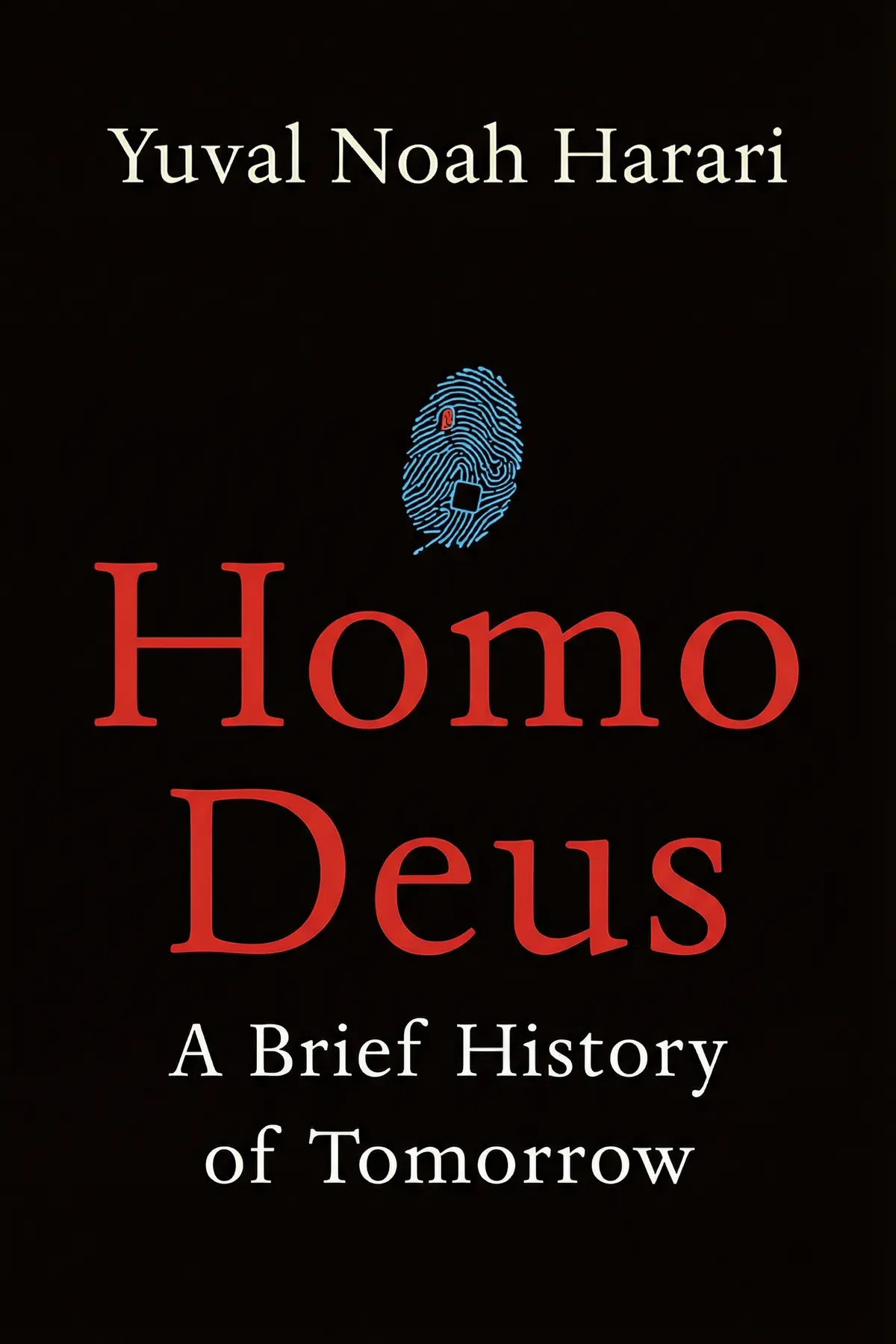
Yuval Noah Harari is a historian, philosopher, and globally renowned author, best known for his best-selling books Sapiens: A Brief History of Humankind and Homo Deus: A Brief History of Tomorrow. His works explore the intersection of history, science, and philosophy, focusing on human evolution, the future of technology, and the challenges humanity faces. He is the co-founder of Sapienship, an organization which advocates for global responsibility.
Yuval Noah Harari
Yuval Noah Harari
Yuval Noah Harari
Listeners consider this work a worthwhile exploration of the history of information systems, praising a coherent organization that makes complicated ideas easy to understand. The prose is elegantly composed, and listeners characterize the experience as an impressive and intellectually stimulating read. They value its look at the past, with one listener highlighting how it reframes historical events by focusing on communication networks. Although listeners find the content highly evocative, views on its reliability vary, as several point out that raw information should not be confused with truth.
"Nexus" manages to make the dry history of bureaucracy feel like a high-stakes thriller. Harari takes these massive, sprawling concepts about how we organize information—from ancient clay tablets to the modern algorithm—and makes them feel incredibly immediate. I particularly found the section on the "alignment problem" with AI to be chilling, as it frames our current tech struggle not just as a technical glitch, but as a fundamental shift in how power functions. While he’s sometimes criticized for being a mile wide and an inch deep, I think this focused approach on information networks makes this his most cohesive work yet. It is a terrifying wake-up call that everyone should read. The way he connects the dots between different eras is just spectacular.
Show moreWow. Harari has done it again, but this time it feels much more personal and urgent than Sapiens. By focusing on information networks rather than all of human history, he manages to pinpoint exactly why our current digital age feels so chaotic. The concept of AI as an "alien intelligence" rather than just a tool is something that's going to stick with me for a long time. It’s a sobering reminder that we are creating systems we can’t fully control or even understand. If you're looking for a book that will make you rethink your entire relationship with technology, this is it. Just don't expect to sleep well after finishing it; the existential dread is real.
Show moreThis book is a masterpiece of synthesis. Harari takes these impossibly vast swaths of human history and compresses them into a narrative that explains exactly how we ended up in our current predicament. The logical flow from ancient oral traditions to the "alignment problem" of modern AI is seamless and incredibly persuasive. I loved his analysis of "the conservative suicide," where he explains why traditional institutions are failing in the face of rapid technological change. It’s a heavy read, both in terms of content and existential dread, but Harari’s prose makes it surprisingly accessible. He doesn't provide easy answers, but he asks all the right questions. Definitely his most important work to date.
Show moreThe chapter on "alien intelligence" alone is worth the price of admission. Harari argues that we’ve released something evolutionary into the world without truly understanding it, and his evidence is both historical and technological. I appreciated how he connected the "witch hunts" of the past to the algorithmic manipulation of today; it shows that our current problems aren't entirely new, just operating at a terrifying new scale. The book is spectacularly researched and written with a clarity that few academics can match. It challenged me to rethink my own information bubble and the "shared fictions" I buy into every day. Truly a must-read for anyone concerned about the future of democracy and humanity.
Show moreEver wonder why humans are so susceptible to "mesmerizing but harmful stories"? Harari argues that our superpower—believing in shared fictions—is now being weaponized by "alien" intelligences that don't care about truth, only engagement. The book is spectacular in its historical scope, especially the chapters tracing the rise of documents and how they often prioritize order over reality. I did feel like the solutions offered toward the end, such as decentralization and mutuality, felt a bit thin compared to the massive scale of the problems he describes. Still, his ability to distill complex historical patterns into digestible, thought-provoking prose is unmatched. It’s a dense read, but one that will leave your mind racing for days afterward.
Show moreAfter hearing so much hype, I finally dove into Nexus, and it is a lot to process. Harari reframes history not as a series of wars or leaders, but as the evolution of how we share data. The comparison between the European witch hunts and modern social media echo chambers was particularly striking and, frankly, quite depressing. He writes with a sense of urgency that makes you want to delete all your apps and go live in a cave. My only gripe is that he sometimes oversimplifies certain historical nuances to fit his specific narrative. However, the logical structure of the book makes it very easy to follow his train of thought even when the subject matter gets heavy.
Show moreNot what I expected, but in a good way. I thought this would be a technical book about AI, but it’s actually a deep dive into the philosophy of how humans connect. Harari explores how stories, even false ones, have always been the glue that holds societies together, for better or worse. The chapter on how bureaucracies sacrifice truth for the sake of order was eye-opening and helped me understand why modern systems feel so broken. Truth be told, some parts felt a bit long-winded, and he has a tendency to be a bit "preachy" at times. However, the overarching message about the need for self-correcting mechanisms in our information networks is vital for our survival.
Show morePicked this up because I loved Sapiens, and while it's a different beast altogether, it is just as stimulating. Harari’s central argument—that we are creating a new form of intelligence that might dominate our "inter-computer realities"—is absolutely fascinating. He moves from the Stone Age to Silicon Valley with such ease that you almost don't notice how much ground you're covering. The writing style is well-crafted, though occasionally he falls into the trap of making grand, sweeping statements that feel a bit unearned. Despite that, the historical perspective he provides on how information shapes (and misshapes) society is genuinely invaluable. It is a great choice for a serious book club discussion.
Show moreTo be fair, Harari is an incredible writer, but I found myself disagreeing with his fundamental premise more than once. He treats "information" as this all-encompassing force, but as several critics have noted, information is not the same as truth. The first half of the book felt like a retread of his previous works, just repackaged with a focus on bureaucracies and "intersubjective realities." While the AI sections are thought-provoking, they lean heavily into doomerism without offering much in the way of concrete, actionable solutions for the average person. It’s a valuable history lesson, but I’m not sure I buy into all his apocalyptic predictions. It felt a bit repetitive in the middle sections.
Show moreFrankly, I am conflicted about this one. On one hand, Harari is a brilliant distiller of complex ideas and his take on "algorithmic bureaucracies" is genuinely insightful. On the other hand, the book feels a bit disorganized at times, jumping from Mesopotamian tax records to the "alignment problem" with dizzying speed. There’s a certain "Davos man" vibe to the whole thing—a mile wide and an inch deep, as some have said. He spends a lot of time hand-wringing about the dangers of AI without acknowledging many of the potential benefits that other thinkers have highlighted. It is an interesting read, but take his more dramatic warnings with a grain of salt.
Show more
Kai-Fu Lee
William J. Bernstein

Ben Macintyre



James Shapiro
AUDIO SUMMARY AVAILABLE
Get the key ideas from Nexus by Yuval Noah Harari, plus 5,000+ more titles in English and Thai.