

12 min 20 sec
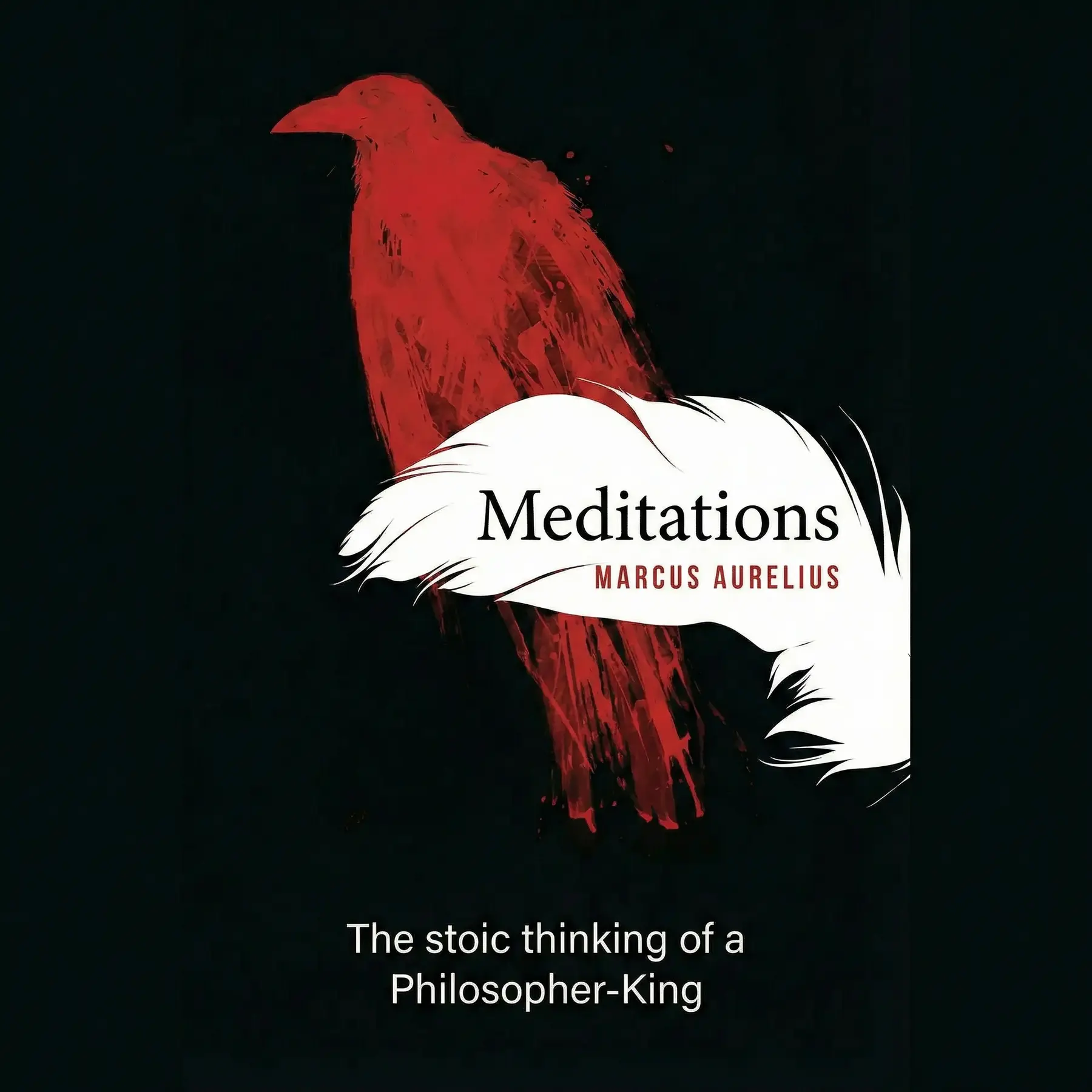
Meditations
Discover the personal reflections of a Roman Emperor who practiced Stoicism to navigate the burdens of power, loss, and mortality, seeking a life of reason, duty, and internal tranquility.
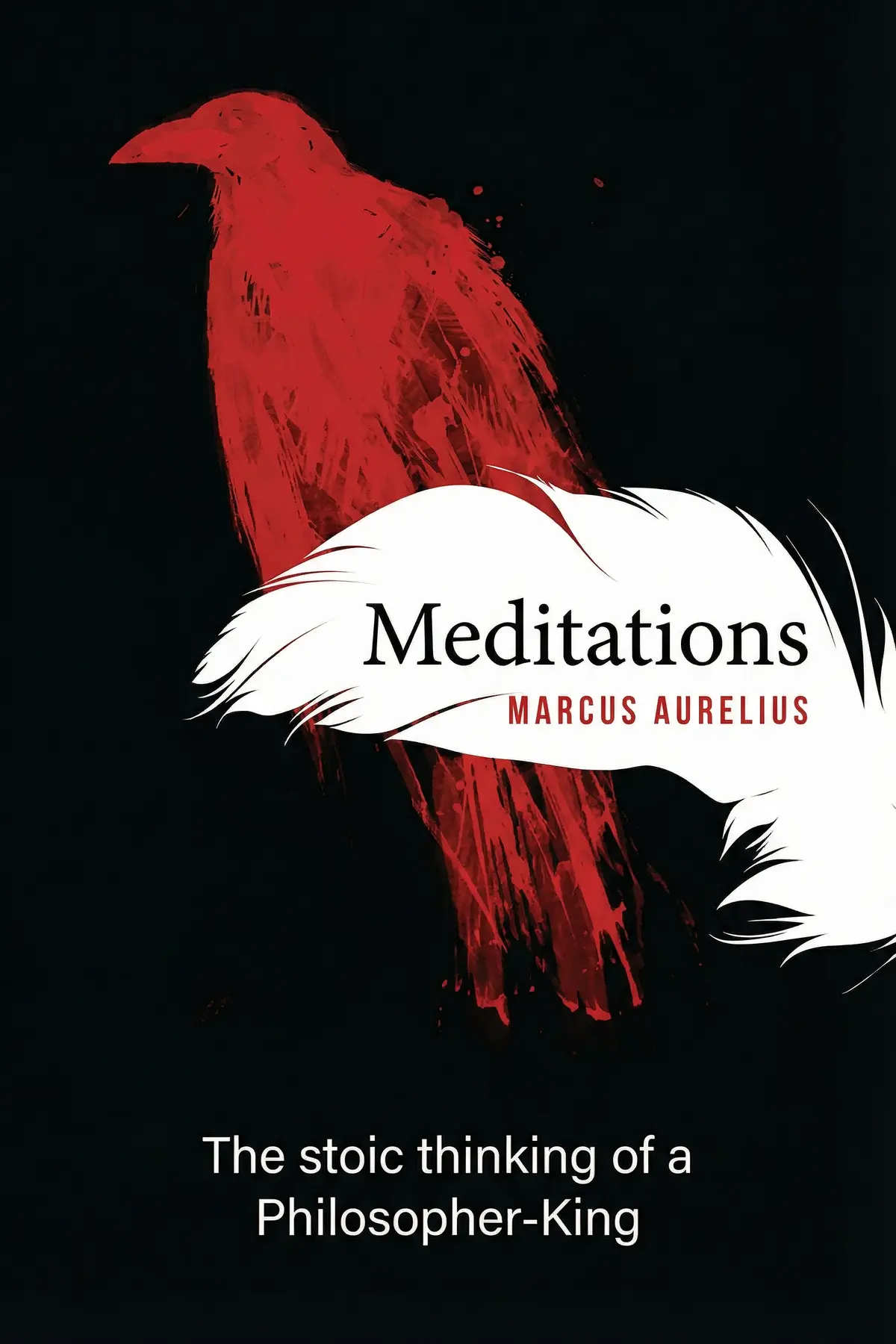
Table of Content
1. Introduction
1 min 33 sec
Imagine standing at the absolute peak of the known world, holding the power of life and death over millions, and possessing wealth beyond measure. For most, this would be a recipe for vanity or corruption. But for Marcus Aurelius, the man who ruled the Roman Empire in the second century AD, this position of ultimate authority was a heavy responsibility that required constant self-examination. He lived during a golden age of Rome, following a period of chaos, and became the final figure in a line of leaders known as the Five Good Emperors. Yet, he didn’t see himself as a god or a celebrity; he saw himself as a student of life, specifically the school of Greek Stoicism.
His writings, which we now know as his personal meditations, were never meant for our eyes. They were a private dialogue with himself, a way to stay grounded while leading an empire through wars, plagues, and internal strife. In this exploration, we are going to look at the ‘throughline’ of his thought: the idea that the universe is governed by a rational order and that our only job is to align ourselves with that order through reason and character. We will see how a philosopher-king deals with the most difficult human experiences—betrayal, the loss of children, and the approach of death. By the end, you’ll understand why this ancient text continues to influence world leaders and thinkers today, offering a timeless perspective on what it means to live a virtuous and meaningful life.
2. The Governing Power of Logos
2 min 07 sec
Discover the invisible architecture of the universe and how the Stoic concept of universal reason provides a sense of purpose and order to every event in life.
3. Embracing the Inevitability of Death
1 min 56 sec
Learn why the end of life is not something to be feared, but a natural transition that reconnects us with the source of all existence.
4. The Duty to Act Without Complaint
1 min 49 sec
Explore why wasting time on grievances is a betrayal of our nature and how to approach daily tasks with a sense of mission.
5. Mastery Over Perception and Emotion
1 min 56 sec
Discover how your interpretation of events dictates your happiness and why reason must always stand guard over the heart.
6. The Source of True Suffering
1 min 48 sec
Understand why external circumstances cannot truly harm you and how personal resilience is the ultimate defense against pain.
7. Conclusion
1 min 11 sec
In the end, the reflections of Marcus Aurelius serve as a powerful reminder that the struggles we face today are not so different from those faced by a man who ruled the world two thousand years ago. The throughline of his philosophy is simple yet profound: align your mind with the reason of the universe, fulfill your duties with excellence, and recognize that your power lies not in controlling the world, but in controlling yourself. He showed us that greatness is not found in fame or conquest, but in the quiet, steady discipline of a virtuous character.
The actionable takeaway from his life is to treat every person you encounter with fairness and kindness, even if they don’t return the favor. Remember that you are the sole architect of your reactions. When faced with adversity, ask yourself if the situation is truly harming your character, or if it is merely an external event that you have the power to endure. By choosing to let go of complaints and embracing the present moment as a necessary part of a larger plan, you can find the same tranquility that sustained a philosopher-king. Carry this perspective with you: life is short, and the best way to honor it is to remain steady, rational, and just in all that you do.
About this book
What is this book about?
This summary explores the private journals of Marcus Aurelius, the last of Rome's Five Good Emperors. It offers a window into the mind of a leader who prioritized self-discipline and logic over the chaotic whims of emotion and fame. By examining the Stoic principles that guided his reign, the text provides a roadmap for finding inner peace in a world defined by change and uncertainty. Readers will learn about the concept of a universal order known as Logos, the necessity of embracing one's mortality, and the importance of fulfilling one's duty without complaint. The promise of this work is not just a historical perspective, but a practical philosophy for maintaining character and perspective regardless of external circumstances, emphasizing that while we cannot control what happens to us, we have total authority over how we interpret those events.
Book Information
About the Author
Marcus Aurelius
Marcus Aurelius Antoninus lived from 121 to 180 AD and ascended to the position of Roman Emperor in 161 AD. History remembers him as the final member of the Five Good Emperors, a group of rulers who oversaw a rare era of stability for the empire. Beyond his political achievements, he was a dedicated man of thought, deeply committed to philosophy and justice, earning him a reputation as a wise and virtuous leader.
Ratings & Reviews
Ratings at a glance
What people think
Listeners find this specific translation of Meditations to be an extraordinary resource that rewards multiple listenings, delivering profound pieces of wisdom on enduring principles for a meaningful life. The delivery is succinct, and listeners admire the translation's lean language, with one listener commenting that it is more poetic than other interpretations. Additionally, the work is commended for its self-reflective depth and its power to transform one's outlook on the world, with one listener emphasizing its useful advice for daily conduct. Finally, listeners appreciate its pertinence to the present day, with one listener noting its surprisingly strong link to contemporary society.
Top reviews
Valentina
Finally got around to reading the Hays translation and it truly lives up to the hype. While some translations feel like a slog through dusty archives, this version captures a sparse, almost rhythmic quality that makes the Stoic principles hit much harder. It’s wild to think that these were private journals never meant for our eyes, which explains the raw, repetitive nature of the text. Marcus is essentially yelling at himself to stop complaining about "busybodies" and "liars" every single morning. He’s an emperor, yet his struggles with ego and social anxiety feel incredibly modern, almost like he’s bracing for a bad day at the office. The recurring theme of life being a mere "cranny of the earth" is both humbling and strangely comforting in a world obsessed with legacy. This isn't just a history lesson; it's a manual for sanity that I'll be dipping back into whenever I feel overwhelmed. It really changes your perception of what actually matters.
Show moreRung
The beauty of this book lies in its profound vulnerability. It’s rare to find such an honest account of a leader’s internal battle with his own nature and the weight of his responsibilities. Every time I open a random page, I find a sentence that shifts my perception of whatever minor tragedy I’m dealing with. "The best revenge is not to do as they do," is a line I’ve had to repeat to myself more times than I care to admit lately. Marcus reminds us that we are just "little souls dragging around a corpse," a grim but necessary reminder that our time here is vanishingly small. This translation is remarkably clear and avoids the flowery, archaic language that often plagues older versions of Greek philosophy. It feels like a conversation with a wise, if somewhat grumpy, grandfather who has seen it all and wants you to just be a decent human being. A phenomenal read for a satisfying life.
Show moreBee
This book is a phenomenal testament to the strength of the human spirit under pressure. Writing while on military campaigns, Aurelius managed to distill the entire Greco-Roman philosophical tradition into a series of actionable, poetic observations. I found his reflections on the "universal soul" and our connection to nature to be surprisingly spiritual for a work of logic. The translation I read was crisp and didn't waste a single word, mirroring the emperor’s own disdain for luxury and excess. It’s a book that demands to be reread, as you’ll catch different nuances depending on where you are in your own life journey. Not gonna lie, some of it is a bit repetitive, but that repetition serves to drill the habits of mind into the reader. It has changed the way I view obstacles—now I see them as fuel for the fire of my own character. Truly a timeless masterpiece.
Show moreNutnicha
After hearing so much about Stoicism, I finally dived into the source material and was blown away by its uncanny connection to modern life. We live in an era of constant distraction, yet here is an ancient text telling us to look within and find our own "inner citadel." The poetic nature of the writing makes even the most difficult concepts easy to digest and remember. It's essentially a guide on how to be a person of high character in a world that often rewards the opposite. This isn't a book you read once; it’s a lifelong companion that offers new insights every time you’re feeling lost or overwhelmed by the chaos of society. Personally, I think it's the most introspective thing I've ever read. It strips away the ego and leaves you with a very clear, very logical path toward inner peace.
Show moreRuangrat
"Look within: do not allow the special quality or worth of anything to pass you by." This single quote summarizes the entire experience of reading Meditations for me. It’s a hauntingly beautiful look at a man trying to align his soul with the universe while managing the weight of an empire. The honesty with which he discusses his own mortality is moving, especially considering he was writing this as his health was likely failing him on the frontier. It encourages a life of intentionality and virtue that is sorely lacking in our current culture of instant gratification. I loved how he thanked his teachers in the first book; it sets a tone of gratitude that carries through even the darker passages. This is a must-read for anyone seeking a more satisfying and grounded life. I've already bought three extra copies to give as gifts to friends.
Show morePia
As someone who spends way too much time scrolling through endless social feeds, the concept of the "inner citadel" was a total wake-up call. Marcus Aurelius writes with a level of intentionality that we’ve almost entirely lost in the digital age. Most of the book is him repeating the same three or four core ideas—the brevity of life, the power of opinion, and the duty to the common good—like a mantra. To be fair, it can get a bit repetitive if you try to read it cover-to-cover in one sitting, as it’s basically a Roman LiveJournal. However, the brevity of his prose makes it perfect for a morning "wisdom nugget" to set your head straight before facing the world. It’s fascinating to see a man with absolute power struggle so deeply with the same insecurities we all face. I did find some of his detachment a bit cold, especially regarding loss, but the logic is sound and helpful for daily living.
Show moreSamroeng
Ever wonder what goes through the mind of a person who has everything? Meditations reveals that even an emperor deals with annoying neighbors, betrayal, and the crushing fear of death. The structure is fragmented and nonlinear, reflecting its origin as a personal diary rather than a polished philosophical treatise. I love the "morning routine" aspect where he prepares himself to meet liars and boors; it’s such a practical way to manage expectations for the day. My only gripe is that some sections feel a bit like he’s trying too hard to convince himself that pain doesn't matter, which feels a bit like toxic positivity in a Roman toga. Still, the core message of focusing only on what you can control is a timeless principle that everyone should internalize. It’s a slim volume that packs more punch than most 500-page modern leadership books.
Show morePrayoon
Picked this up for a philosophy class but ended up keeping it on my nightstand for daily inspiration. It’s basically Marcus Aurelius telling himself to "get it together" for twelve chapters straight, which is honestly very relatable. The advice on avoiding "circus contests" and not meddling in other people's affairs is just as relevant now as it was in the second century. While some parts are a bit "old man yells at cloud," the overall wisdom is undeniable. It’s a short, punchy read that challenges you to be better without being preachy. The sparse language used in this translation makes the heavier concepts of mortality and insignificance much easier to swallow. I especially appreciated the first book where he lists everything he learned from his family; it reminds you to be grateful for your own influences. Definitely worth the time for anyone looking for helpful hints on living with integrity.
Show moreChloe
Look, I get why this is considered a classic, but let’s be real for a second. If these exact same thoughts were posted on a modern blog today, we’d probably dismiss them as generic self-help or "grindset" philosophy. It’s essentially a 2,000-year-old version of "don't sweat the small stuff," and the only reason it carries so much weight is that the author happened to be the most powerful man in the world. He talks a lot about not desiring luxury or opulence while literally living in a palace, which feels a little tone-deaf at times. The writing is incredibly dry, and without the historical context of his military campaigns, it’s just a list of repetitive commands to himself. It’s worth a look for the historical significance, but don’t expect a life-changing epiphany on every page. It’s okay, but maybe a bit over-hyped by the modern stoic community.
Show moreNarongrit
Frankly, I found this incredibly boring and repetitive. I understand that he was an emperor, but reading a man tell himself "don't be afraid to die" and "people are annoying" for the hundredth time gets old very quickly. There is no narrative, no development, and very little that feels like actual philosophy rather than just a collection of disjointed aphorisms. It lacks the depth of Plato or the systematic approach of Aristotle, feeling more like a notebook of someone who was clearly struggling with their mental health. To be fair, the translation is clear enough, but the content itself just didn't live up to the massive reputation it has. I felt like I was reading a Roman version of a mediocre self-help blog from the early 2000s. The emperor might have been wise, but he definitely needed an editor to cut out about 60% of the repetition.
Show moreFeatured in
Readers also enjoyed
A Guide to the Good Life: The Ancient Art of Stoic Joy
William B. Irvine
A Little History of Philosophy
Nigel Warburton
A Theory of Justice
John Rawls
Anarchism: A Very Short Introduction
Colin Ward
AUDIO SUMMARY AVAILABLE
Listen to Meditations in 15 minutes
Get the key ideas from Meditations by Marcus Aurelius, plus 5,000+ more titles in English and Thai.
- 5,000+ titles
- Listen as much as you want
- 7-day free trial
- Cancel anytime







