
16 min 14 sec
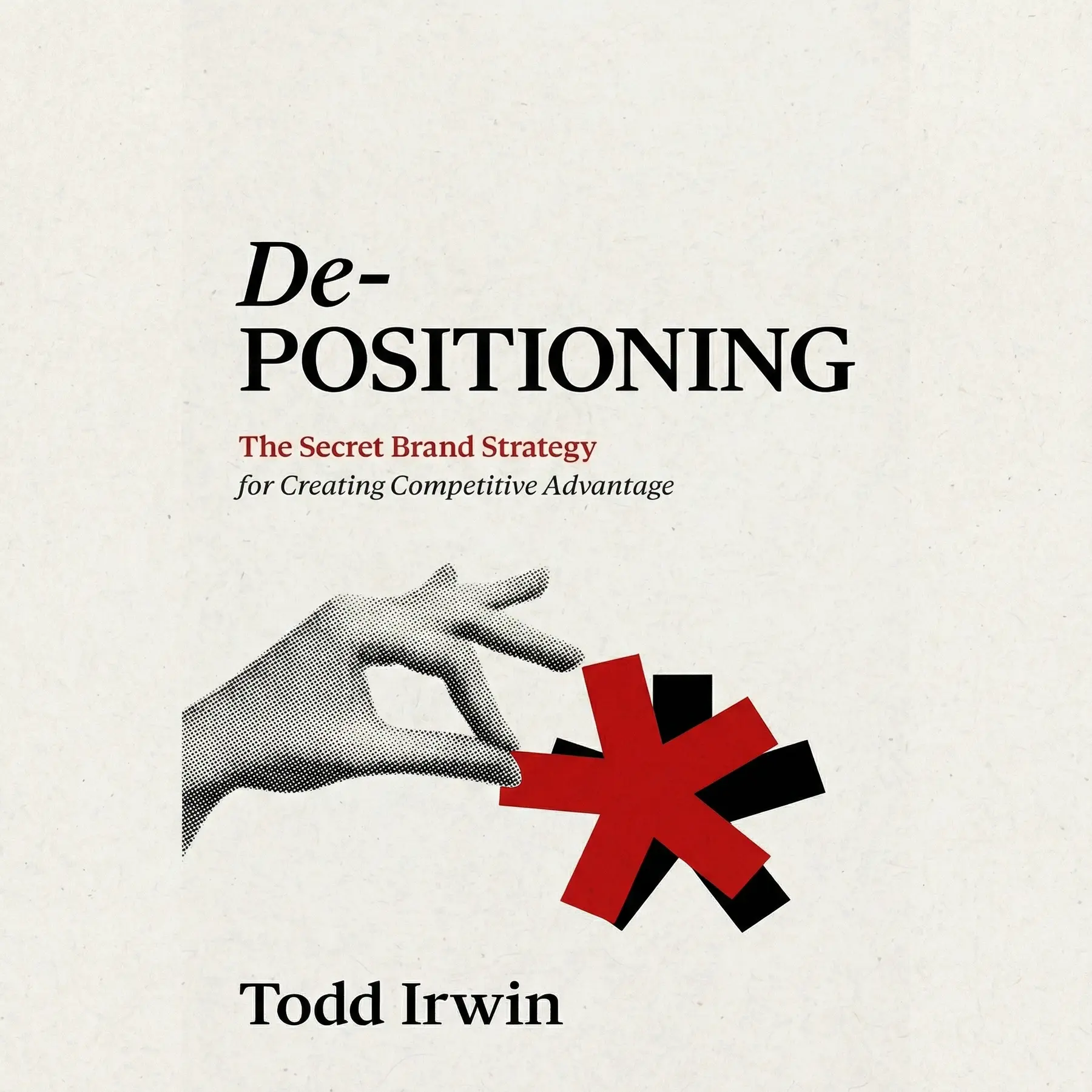
De-Positioning: The Secret Brand Strategy for Creating Competitive Advantage
By Todd Irwin
De-Positioning explains how to gain a competitive edge by moving beyond simple differentiation. Learn to identify rival weaknesses and align your brand with the most critical needs of your customers.
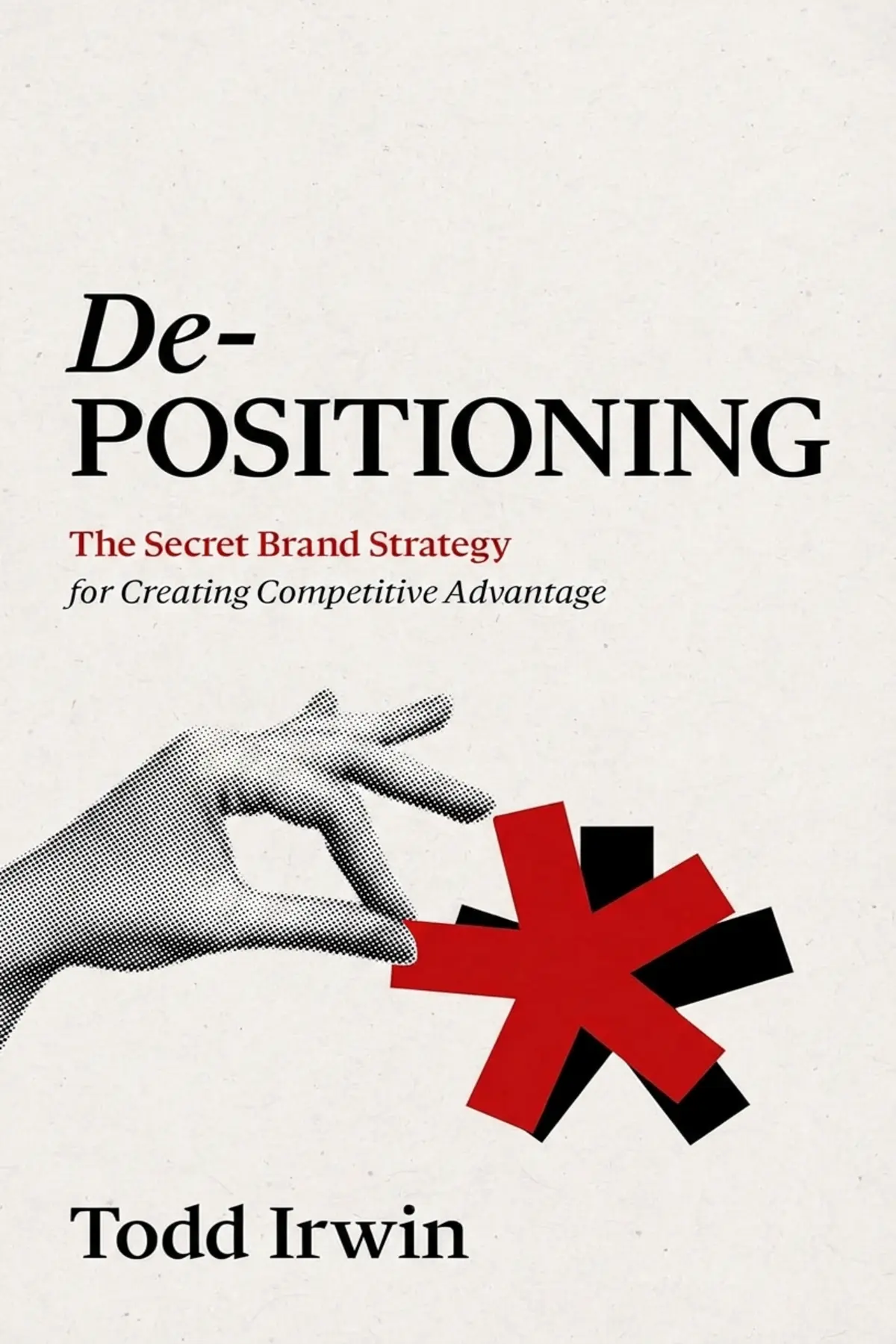
Table of Content
1. Introduction
1 min 36 sec
We live in an era of unprecedented noise. Every single day, consumers are buried under an avalanche of advertisements, social media posts, and brand promises, each claiming to be faster, better, or cheaper than the next. In this environment, the traditional playbook for business success is rapidly losing its effectiveness. Most companies spend their time trying to be ‘different’ or searching for a tiny piece of unoccupied market territory, but these tactics often lead to a sea of sameness where no one truly stands out.
The real secret to winning today isn’t just about shouting your message louder than the person next to you. It’s about a fundamental shift in how you view the competitive landscape. This is the core of de-positioning. Instead of fighting for a tiny sliver of ‘white space,’ de-positioning focuses on taking a hard look at where the big players are failing. It’s about finding the gaps in their service, the complexity in their products, and the frustrations they’ve left in their wake.
In this summary, we are going to explore a disciplined strategy that moves beyond flashy marketing and gets to the heart of what makes a brand essential. You’ll see how to identify the deep-seated needs of your customers and how to align your entire organization to meet those needs with surgical precision. We’ll look at why being the first to market is often a disadvantage and why being the second mover allows you to learn from everyone else’s mistakes. The goal here is simple: to stop competing for attention and start making your rivals irrelevant by owning the solution to the one thing that matters most to your audience.
2. The Strategic Shift Toward De-Positioning
2 min 34 sec
Discover why the search for unoccupied market space is a myth and how attacking the established status quo is the true path to dominance.
3. Making the Customer the Center of the Story
2 min 51 sec
Learn why your brand’s personality matters far less than your ability to solve a specific, crushing problem for your audience.
4. Leveraging Competitor Weaknesses for Market Judo
2 min 39 sec
Discover the art of using a rival’s own momentum and legacy structures against them to clear a path for your brand.
5. The Power of One Big Idea
2 min 36 sec
Understand why the most successful brands own a single concept in the mind of the consumer and how to avoid the trap of ‘featuritis.’
6. Total Integration from Strategy to Operation
2 min 30 sec
See why a brand is more than just marketing and why your entire organization must live the promise you make to the world.
7. Conclusion
1 min 28 sec
In the end, the philosophy of de-positioning is about a return to clarity and purpose. It challenges the notion that business success is about constant expansion and complex feature sets. Instead, it suggests that the real winners are those who have the courage to focus on what truly matters. By identifying the ‘hero pain point’ that causes the most friction for your customers, you find your reason for existing. By exposing the weaknesses and ‘dead weight’ of your competitors, you find your path to growth. And by owning ‘One Big Idea’ and integrating it into every fiber of your organization, you build a brand that is built to last.
The most important takeaway is that you should strive to be essential, not just different. Being different is easy—anyone can wear a funny hat to get attention. But being essential means that you have become the bridge between your customer’s frustration and their success. When you reach that level, you are no longer just a vendor or a service provider; you are a partner. Your competitors will continue to shout and chase ‘white space,’ but you will be the one holding the ground that matters. Take these principles of de-positioning and apply them with discipline. Stop trying to win the old game and start defining a new one where you are the only logical choice.
About this book
What is this book about?
In an oversaturated market, traditional branding often fails to break through the noise. This book introduces the methodology of de-positioning, a strategic approach designed to make competitors irrelevant. Instead of chasing unoccupied 'white space,' it teaches you how to target the space your rivals already occupy by highlighting their inherent flaws and positioning your brand as the essential antidote to those frustrations. You will learn the importance of identifying a 'hero pain point'—the single most significant friction your customers face—and building your entire business around solving it. The promise is a shift from being just another option to becoming an indispensable solution. By integrating this strategy across every department, from the C-suite to the customer service desk, you can create a cohesive brand that commands loyalty and dominates its category through authenticity and emotional connection.
Book Information
About the Author
Todd Irwin
Todd Irwin is the founder and Chief Strategy Officer of Fazer, an international agency specializing in brand strategy. He has extensive experience working with a diverse range of clients, from high-growth startups to members of the Fortune 500. As the pioneer of the de-positioning methodology, Irwin's insights on market dynamics have been highlighted in prominent publications such as Forbes and The New York Times.
Ratings & Reviews
Ratings at a glance
What people think
Listeners appreciate the straightforward, pragmatic take on current branding, characterizing the guide as an actionable "playbook for competitive dominance" that bypasses usual industry clichés. They specifically value the central theme of de-positioning, which involves tackling consumer problems by capitalizing on a rival's shortcomings. While some listeners suggest the approach leans too much on well-known Apple case studies, they still observe that the takeaways are incisive, short, and manageable. Additionally, the methodology is praised as truly impactful for founders, with one listener noting that it successfully bridges the gap between high-level theory and actionable brand-building steps.
Top reviews
Chee
This book cuts straight through the fluff of modern branding and delivers something actually useful for a change. Todd Irwin challenges the obsession with 'differentiation' and instead focuses on how to systematically dismantle your competition by solving what they won't. I found the 'Hero Pain Point' concept particularly transformative for our internal strategy sessions. It’s a sharp, no-nonsense guide that feels more like a tactical playbook than a theoretical lecture. While the heavy reliance on Apple examples is definitely noticeable, the logic behind the six principles is undeniable. If you’re tired of soft marketing strategies that don't move the needle, this is a breath of fresh air. It’s practical, slightly aggressive in its tone, and exactly what I needed to rethink our market position. Highly recommended for any leader looking to gain a real edge.
Show moreWatcharin
Finally, a strategy book that doesn't just feel like a long-winded LinkedIn post expanded into 200 pages. Todd Irwin provides a masterclass in how to identify where your competitors are failing and how to plant your flag right in that gap. I love the aggressive stance on moving past 'purpose-driven' fluff to focus on actual customer utility. The six principles are laid out clearly, and the book's structure makes it very easy to go back and reference specific tactics when you're planning a campaign. Personally, the Apple case study served as a perfect illustration of his points, even if it's a common example in these types of books. This is an essential toolkit for anyone serious about building a brand that doesn't just exist, but actually leads the market.
Show moreFort
Picked this up during a total rebrand of my startup, and the timing could not have been better. Irwin's 'De-Positioning' framework helped us stop trying to match our competitors feature-for-feature and instead focus on where they were leaving our customers frustrated. It’s an unflinchingly practical guide that cuts through the noise of modern marketing trends. The book is short, sharp, and punchy, which I appreciate as a busy entrepreneur. I found myself scribbling notes in the margins and questioning every campaign we’ve run in the last year. It’s not just about being better; it’s about being the only solution that matters for a specific, painful problem. This is easily one of the most actionable business books I've read in years.
Show moreRoo
De-Positioning is the first marketing read in years that actually made me change my campaign strategy mid-stream. Irwin’s take on the 'Hero Pain Point' is a game changer for how we talk to our customers. He reminds us that branding isn't about being pretty or having a cool origin story—it’s about solving problems better than anyone else. The book is concise, powerful, and remarkably easy to digest. I loved the way he evaluated Sinek’s 'Start with Why' in the context of today’s cutthroat business climate. It’s a refreshing, honest look at what it actually takes to build a brand that lasts. If you are in leadership or marketing, stop reading the trend reports and just read this instead.
Show moreSomsri
Ever wonder why some brands just seem to dominate the conversation without shouting the loudest? Irwin argues that it's because they've mastered the art of de-positioning, turning a rival's supposed strength into a glaring liability. I appreciated the nod to Trout and Reis; it gives the book a sense of professional lineage while updating the concepts for a digital-first world. The breakdown of Volvo’s safety focus and Starbucks’ dominance was enlightening, though I did find myself wishing for a few more niche or B2B case studies. The writing style is very punchy, making it a quick read for a flight or a Sunday afternoon. Truth is, some of the points feel repetitive by the halfway mark, but the core message is too valuable to ignore. It’s a solid addition to any marketer's library.
Show moreBo
Todd Irwin’s background with Trout and Reis really shows in how he structures his arguments, and that’s a good thing for those of us who value logic over buzzwords. He successfully bridges the gap between high-level theory and the kind of actionable steps that a small business owner can actually implement tomorrow. I particularly enjoyed the sections on brand behavior and culture, which emphasize that strategy isn't just what you say, but how the whole company acts. Not gonna lie, the text can feel a bit repetitive at times, as if he’s trying to hammer the same three points home in every chapter. However, those points are vital. Moving the focus from 'us' to 'the customer's problem' is a shift many brands still haven't made. It’s grounded, honest, and very useful.
Show moreVilaiporn
After hearing Irwin talk on a podcast, I wanted to see if the book lived up to the 'de-positioning' hook, and it mostly does. The idea of turning a competitor’s strength into a weakness is a fascinating strategic move that most companies are too afraid to try. Irwin makes it feel attainable by breaking it down into a clear process. The writing is accessible and avoids the usual industry jargon, which is a massive relief. I did feel that the book leaned a little too heavily on the same few examples, but the underlying logic is incredibly strong. It’s a playbook for dominance, not just survival. For any founder tired of 'soft' strategies, this book will feel like a wake-up call to start playing to win.
Show moreTar
As someone who has worked in brand strategy for over a decade, I found the core premise of 'De-Positioning' to be a bit of a rebrand of existing competitor analysis techniques. Irwin is a fantastic writer, and his tone is engagingly direct, but the 'secret strategy' felt a lot like standard market research dressed up in new terminology. To be fair, the focus on solving customer pain points over just being 'different' is a necessary reminder for the industry. I just didn't feel like I was learning a revolutionary new system. The book is probably best suited for business students or founders who are new to the marketing world and need a clear, structured framework to follow. It’s a decent read, just don't expect it to completely reinvent the wheel if you’re already a pro.
Show moreSai
The core framework of the six principles is solid, but the execution feels a bit thin in the middle chapters. I appreciated Irwin's no-nonsense tone and his critique of 'purpose' marketing, which often feels disconnected from reality. However, I struggled with the lack of diverse case studies outside of the usual global giants like Volvo and Starbucks. For a book about competitive advantage, it would have been great to see how this works in more crowded, less 'sexy' industries. It’s a good primer for someone just starting their journey in brand strategy, but seasoned veterans might find themselves nodding along without actually discovering anything new. Worth a read if you need a refresher on the basics of positioning, but maybe skip if you're looking for deep, technical insights.
Show moreRotjanee
Not what I expected based on the glowing reviews I'd seen on social media. While the concept of de-positioning is sound, the book spends way too much time on Apple. I get it—Apple is the gold standard—but I wanted more variety in the examples, especially for those of us not working with billion-dollar budgets. Most of this felt like common sense marketing that’s been polished up with a fancy new title. Frankly, I could have gotten the same value from a long-form article or a 20-minute podcast. It isn't a bad book per se, but it didn't offer the 'revelation' I was promised. It’s a very fast read, which is a plus, but I found myself skimming through large sections that felt like filler.
Show moreFeatured in
Readers also enjoyed




AUDIO SUMMARY AVAILABLE
Listen to De-Positioning in 15 minutes
Get the key ideas from De-Positioning by Todd Irwin, plus 5,000+ more titles in English and Thai.
- 5,000+ titles
- Listen as much as you want
- 7-day free trial
- Cancel anytime







