
17 min 33 sec
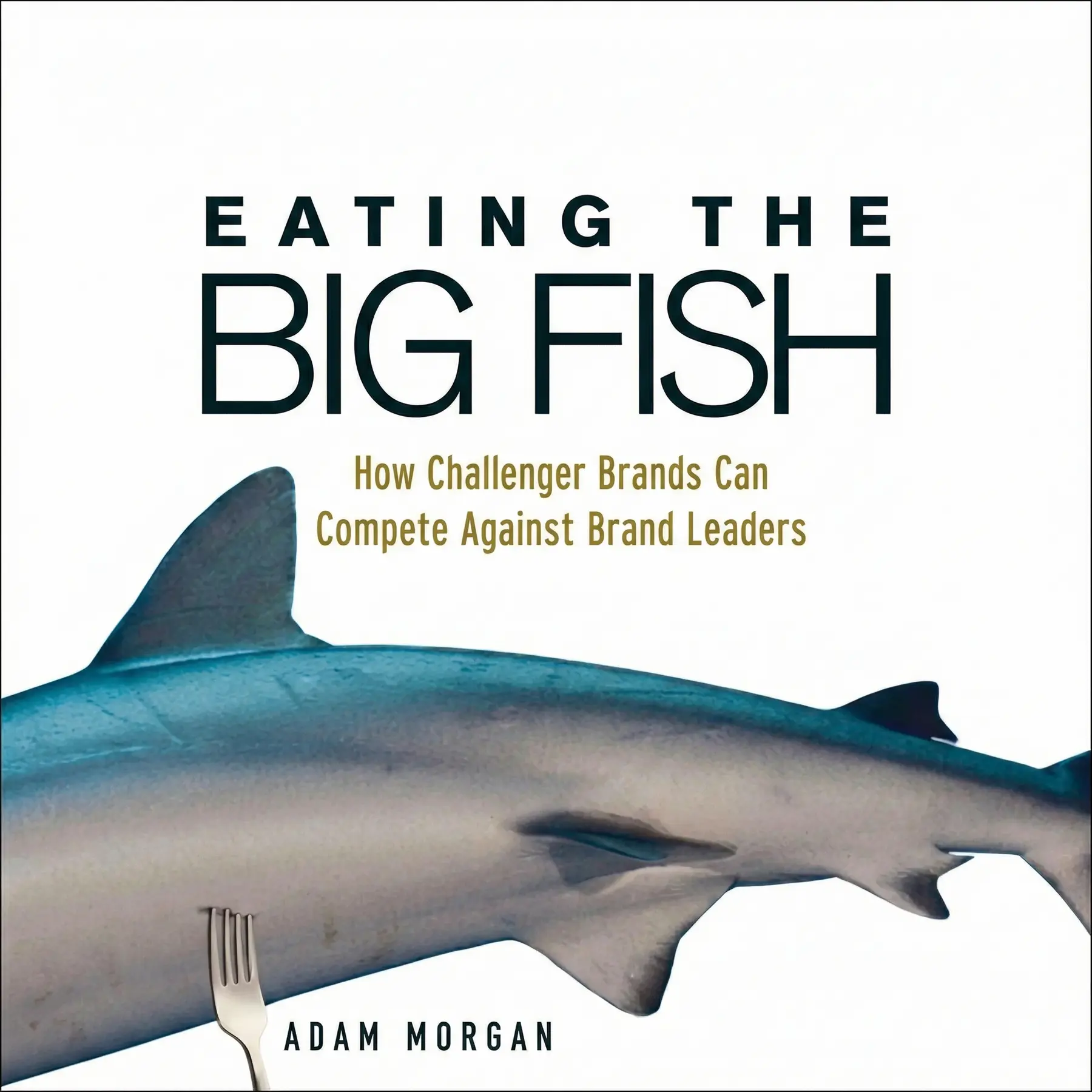
Eating The Big Fish: How Challenger Brands Can Compete Against Brand Leaders
By Adam Morgan
Discover how smaller brands can outmaneuver industry giants. This guide explores the mindset and strategic shifts necessary for challenger brands to disrupt established markets through creativity, clear values, and bold identity.
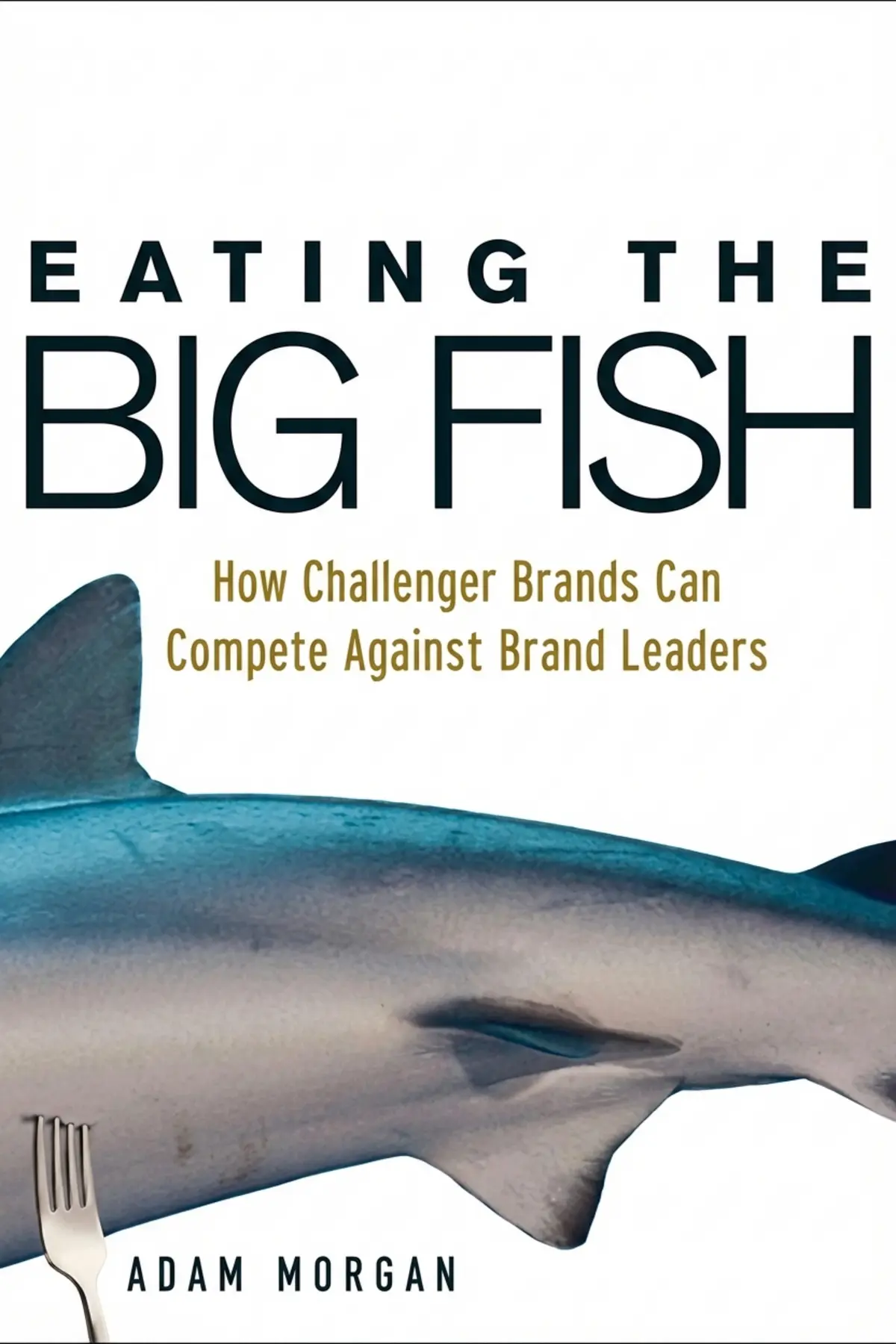
Table of Content
1. Introduction
1 min 55 sec
Imagine yourself walking through the center of any major global city. Whether you are strolling through the streets of San Francisco, London, or Barcelona, a certain sense of sameness likely begins to set in. You see the same glowing green sirens of Starbucks, the golden arches of McDonald’s, and the minimalist storefronts of H&M. This visual monopoly represents more than just a lack of variety; it represents the massive wall of dominance that every new company faces when trying to bring a product to market. These are the brand leaders—the massive fish that own the pond. For any smaller firm trying to swim in these waters, the environment can feel hostile, if not impossible to navigate.
However, there is a distinct and powerful role for what we call the challenger brand. These are the companies that refuse to accept the status quo. They are the essential engines of creativity and choice in a healthy market. But to survive and actually thrive next to a giant, a challenger cannot simply copy what the leader is doing. If you try to play the leader’s game with a fraction of their resources, you will lose every time. Instead, you have to change the rules. You have to think differently about your identity, your audience, and your very purpose.
This summary explores the strategic framework needed to navigate this uphill battle. We will look at why leaders have such a natural advantage and how challengers can find the cracks in those foundations. We will delve into the changing psychology of the modern consumer—who is more distracted and skeptical than ever before—and see how those hurdles can actually become opportunities for the bold. This is a journey through the principles of disruption, where being the underdog isn’t a weakness, but a catalyst for a more vibrant and successful brand identity.
2. The Inherent Advantage of Market Dominance
2 min 28 sec
Large brands enjoy a natural financial momentum that makes them difficult to unseat. Learn why being a leader provides a higher return on every dollar spent.
3. Navigating the Stressed and Skeptical Consumer
2 min 26 sec
Modern audiences are tired, distracted, and wary of traditional marketing. Discover why a new approach is necessary to capture their fading attention.
4. The Dissolving Boundaries of Product Categories
2 min 19 sec
Traditional industry silos are falling apart. Learn why your brand is now competing with products you never previously considered rivals.
5. The Power of Intelligent Naivety
2 min 23 sec
Lack of experience can be a superpower. See how questioning the status quo can lead to revolutionary design and market success.
6. Establishing a Lighthouse Identity
2 min 12 sec
To attract loyal followers, a brand must stand for something more than a product. Learn how to project a clear and unshakeable point of view.
7. Interrupting Consumption Habits with Bold Symbols
2 min 09 sec
People often shop on autopilot. Discover how to use symbolic actions to force consumers to stop, think, and reevaluate their choices.
8. Conclusion
1 min 41 sec
As we have seen, the path of the challenger brand is not about having the most resources, but about having the most resourceful mindset. We live in an era where the giants seem untouchable, but their very size often makes them slow, predictable, and disconnected from the deeper emotional needs of the consumer. By embracing the principles of the challenger—using intelligent naivety to ask the right questions, building a lighthouse identity that projects clear values, and using bold symbols to wake up ‘sleep shoppers’—you can carve out a space that the brand leaders simply cannot fill.
The most important takeaway for anyone building a brand today is the need for focus. You cannot fight on every front. A highly effective actionable step is to strictly limit your marketing focus. Instead of trying to do a dozen different things poorly, identify the two most critical marketing actions that will drive eighty percent of your success. Be ruthless in cutting away the minor goals until only the two most vital ones remain. By concentrating your limited resources on these high-impact areas, you ensure that every move you make has the maximum possible effect.
Ultimately, eating the big fish isn’t about becoming a giant yourself; it’s about being the shark that is too fast, too smart, and too distinctive to be ignored. The market is always ready for a new perspective, and for those willing to challenge the conventions of their industry, the opportunities for disruption are limitless. Now is the time to take that first bold step, find your lighthouse, and start changing the rules of the game.
About this book
What is this book about?
In an era dominated by multinational corporations, small and emerging brands often feel like they are fighting a losing battle. This summary breaks down the strategic blueprint for the underdog, known as the challenger brand. It moves beyond traditional marketing tactics to reveal how a company can use its size and relative obscurity to its advantage. You will explore the internal shifts required to compete with brand leaders who possess deeper pockets and more market share. By understanding the evolving habits of stressed and skeptical consumers, you will learn why traditional advertising is failing and how 'intelligent naivety' can lead to industry-changing innovations. The book promises to provide a set of principles—ranging from lighthouse identities to symbols of reevaluation—that allow any brand to stand out, even in a crowded and distracted marketplace.
Book Information
About the Author
Adam Morgan
Adam Morgan is a highly regarded expert in the field of marketing and branding. He is the best-selling author of several industry-standard texts and the founder of the specialized marketing consultancy known as eatbigfish. His firm is dedicated to helping clients develop powerful, disruptive marketing strategies that allow them to compete effectively against much larger rivals.
Ratings & Reviews
Ratings at a glance
What people think
Listeners rank this marketing guide among the top five business marketing books, and one listener identifies it as the best resource on challenger brands. The work offers useful insights, with one listener noting it contains numerous examples from various industries. Listeners appreciate the marketing content provided, with one listener describing the book as a seminal text.
Top reviews
Pang
This belongs in the top five marketing books of all time, no question. Morgan’s exploration of how second-rank brands can use 'Mechanical Advantage' to outmaneuver the establishment is brilliant. It pairs perfectly with 'Blue Ocean Strategy' but offers much more tactical advice on the mindset required to stay hungry. I especially appreciated the section on 'Symbols of Reevaluation' and how brands like Target used design to completely shift consumer perception from cheap to fashionable. Not gonna lie, the book requires some effort to get through because it’s packed with information, but the payoff is worth it. It’s not just about being smaller; it’s about thinking differently and having the courage to sacrifice secondary messages for a single, powerful identity. If you are serious about branding, this is mandatory reading. It transformed how I view our competition and our own internal 'Lighthouse' values. Truly the best resource on challenger brands.
Show moreTaw
What struck me most was the framework of 'Mechanical Advantage'—getting a greater output from a smaller input. In an era where we are all drowning in consumer skepticism and distractions, this approach is more relevant than ever. Morgan breaks down how to stop being consumer-centered and start being ideas-centered, which is a provocative but necessary shift. The writing can be a bit 'textbook-ish' at intervals, but the eight credos provide a roadmap that is hard to find elsewhere. I’ve recommended this to several colleagues already. It’s not a quick read, but the case studies from various industries still offer lessons that apply to the digital age. Success isn't about having the biggest budget; it's about the quality of the ideas and the willingness to overcommit to a distinct identity. Truly a top-tier resource for anyone in brand planning who wants to avoid being an invisible part of the landscape.
Show morePla
Look, most business books are fluff, but this is a deep dive into the psychology of competition. Morgan understands that in a world of information overload, a brand must be 'highly intrusive' just to be noticed. The section on 'Thought Leadership' alone changed my perspective on what it means to lead a category. You don't have to be the biggest to be the one everyone is talking about. I loved the study insight about how people multitask while watching TV; it really hammers home why traditional marketing is failing. This is a seminal text for a reason. It’s dense, yes, and some parts feel a bit like a lecture, but the strategies for building a 'Lighthouse Identity' are irreplaceable. If you're a challenger brand, this is basically your bible. Just don't expect a fast, easy read—it’s a commitment that pays off in strategic clarity and bold thinking.
Show moreManika
How does a small brand actually stand a chance against a global titan? That is the core question Adam Morgan tackles here, and he does it with a lot of grit. I was particularly fascinated by the concept of 'Lighthouse Identity'—the idea that you need to stand for something so clearly that consumers can find you amidst the fog of information overload. The book is filled with great industry examples, like Avis or the shoe brand Camper, which help ground the theoretical credos in reality. While some of the references feel a bit dated now, the universal principles regarding 'Sacrifice' and 'Overcommitment' still ring true today. You can't be everything to everyone, and this book gives you the permission to narrow your focus. It’s a bit of a dense read, but if you’re a 'challenger' in your market, the strategic roadmap provided is genuinely valuable for your business.
Show moreRodrigo
Finally got around to reading this seminal text on challenger brands after hearing about it for years. It’s easy to see why it’s considered one of the top business marketing books out there; the depth of the research into brand planning is impressive. I loved the idea of 'Intelligent Naivety'—how not knowing the 'rules' of an industry can actually be a massive advantage for a newcomer like Eric Ryan at Method. The chapter on building emotional connections through strong values was a highlight for me. However, I will say the book is quite long. It feels like a 'fat tome' at times, and some of the case studies could have been trimmed down without losing the impact of the point. Still, for any entrepreneur trying to disrupt a category, the '8 Credos' offer a solid foundation. It’s definitely more of an advanced brand planning guide than a light business read, so bring a highlighter and a coffee.
Show moreYindee
As an entrepreneur struggling to find a niche, I found Morgan's insights quite refreshing. The book describes perfectly how to find your share in a market that's already dominated by a big fish. I was pleasantly surprised by the universal principles discussed, especially the idea that our own success can be the thing that eventually eats us if we stop being hungry. The Avis example really resonated with me—positioning yourself as second-best is such a bold, creative move. My only gripe is that the book is quite long and sometimes feels like it’s stating the obvious in very complex ways. But, once you get past the academic tone, the actionable insights on prioritization and efficiency are gold. It’s helped me list my marketing goals and aggressively eliminate the ones that don't align with my core brand. Great for those in an uphill battle against major franchises.
Show moreEnd
The chapter on 'Symbols of Reevaluation' was worth the price of admission alone. I’ve always wondered how brands like Target successfully shed their 'cheap' image, and Morgan’s analysis of their Michael Graves partnership was spot on. This book provides a fantastic framework for anyone trying to navigate a market where they aren't the leader. It’s full of diverse examples from various industries, which I loved, although some of the data feels a bit ancient in the age of social media. Still, the core advice about building emotional connections rather than just pushing product features is timeless. Personally, I think every brand manager should have a copy of this on their shelf, even if they only dip into it for specific strategies. It’s a strong, analytical look at what it takes to actually win when you're the underdog. Definitely worth the read for the strategic depth, even if it is a bit of a slow burn.
Show moreNathan
If you're looking for a crash course in branding, this works as a standard textbook, but don’t expect a thrilling ride. I went in expecting something on the level of 'The Origin of Brands,' but the writing style is quite dry and academic. It covers the basics of how a niche company can grow in a space dominated by a big fish, providing a decent framework for those new to the field. However, if you have a marketing degree or a few years of experience, you’ll likely find yourself nodding along to things you already know. The examples are varied, which is nice, but the overall tone is a bit heavy-handed. It’s useful as a reference, I suppose. Just be prepared for a lot of long-winded explanations for concepts like 'differentiation' and 'sacrifice' that could have been summarized in half the page count. It’s an okay read for a flight, but not the life-changing experience some claim.
Show moreNatnicha
To be fair, the concepts are solid, but for a seasoned marketer, it feels like a long-winded review of stuff we already do. I’ve been in the field for over a decade, and while I appreciate the '8 Credos,' I didn't find much that was revolutionary. It’s a well-organized textbook, no more, no less. The idea of 'sacrifice' in marketing is a cornerstone of the industry, yet it’s treated here like a brand-new discovery. I think this book is better suited for entrepreneurs or non-marketers who need a structured way to think about brand identity. The writing is okay, but it lacks the punch and engagement of more modern business books. It’s a 'fat tome' that could have been a very impactful 50-page essay. If you have the time to kill, go for it, but don't expect to be blown away if you already know your way around a brand deck and understand differentiation.
Show moreSoontorn
Stop right there. Unless you enjoy wading through hundreds of pages of common sense masquerading as 'breakthrough strategy,' skip this one. It’s a fat tome that takes forever to tell you that you need to be different. Really? No kidding. Mr. Morgan presents himself as this radical challenger, but he’s essentially just repackaging basic marketing principles in longer, more pretentious words. I felt like I was being lectured on the alphabet by someone who thinks they invented the letter 'B.' For a book about being a challenger, it feels remarkably safe and bloated. Frankly, you’re better off spending your weekend with your family or doing something you actually enjoy. It’s not that the advice is wrong, per se—it’s just painfully obvious to anyone who has spent more than five minutes thinking about business. Don't believe the hype; it’s just another oversized marketing textbook that states the bleeding obvious.
Show moreFeatured in
Readers also enjoyed
AUDIO SUMMARY AVAILABLE
Listen to Eating The Big Fish in 15 minutes
Get the key ideas from Eating The Big Fish by Adam Morgan, plus 5,000+ more titles in English and Thai.
- 5,000+ titles
- Listen as much as you want
- 7-day free trial
- Cancel anytime







