
16 min 39 sec
A First-Rate Madness: Uncovering the Links Between Leadership and Mental Illness
A First-Rate Madness explores the surprising connection between mental health struggles and exceptional leadership, arguing that conditions like depression and bipolar disorder can be distinct advantages for leaders navigating major world crises.
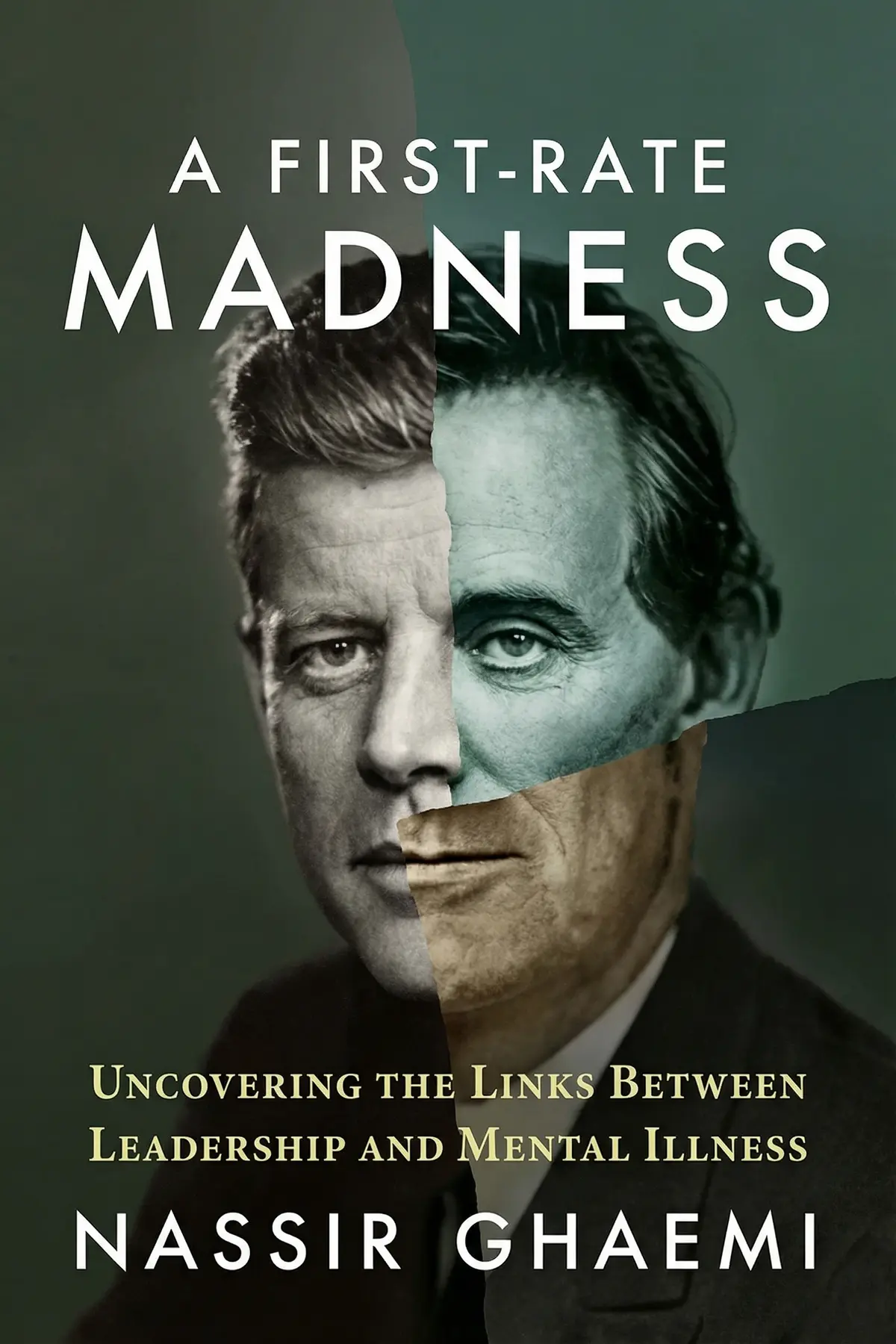
Table of Content
1. Introduction
1 min 46 sec
We often think of leadership and mental health as being on opposite ends of a spectrum. In our collective imagination, the perfect leader is a beacon of stability—someone calm, collected, and ‘normal’ who can guide the ship through any storm. When we talk about mental health struggles in the public sphere, we usually do so with a sense of shame or a belief that such struggles are a liability. We want our presidents and prime ministers to be the picture of psychological health because we assume that a healthy mind is a prerequisite for a healthy society.
But what if that assumption is fundamentally flawed? What if, in certain situations, the qualities we associate with mental illness are actually the very traits required to save a nation or change the world? This is the provocative throughline of our exploration today. Nassir Ghaemi argues that during times of peace and prosperity, ‘normal’ leaders—those without psychological disorders—do just fine. They keep the status quo and manage things efficiently. However, when the world descends into crisis, when the stakes are existential and the path forward is obscured, these ‘healthy’ leaders often fail. In those moments, it is the leaders with histories of depression or bipolar disorder who often rise to the occasion.
By looking at the lives of some of history’s most influential figures, we will see how conditions like depression can cultivate a profound sense of realism and empathy, and how hyperthymic personalities can fuel extraordinary creativity and resilience. We are going to challenge the stigma of the ‘abnormal’ mind and see how, in the right hands and at the right time, what we call madness can actually be a first-rate asset for leadership. Let’s dive into how these psychiatric conditions shaped the course of human history.
2. The Hidden Gifts of Depression and Hyperthymia
2 min 02 sec
While mental health struggles cause immense personal suffering, they can also unlock unique capabilities like deep empathy and heightened realism that are often unavailable to the general population.
3. How Suffering Cultivates Radical Empathy
1 min 44 sec
Great humanitarian leaders like Martin Luther King Jr. and Mahatma Gandhi used their personal battles with depression to forge a revolutionary path of non-violent resistance.
4. Depressive Realism and the Recognition of Evil
1 min 42 sec
Winston Churchill’s history with bipolar disorder gave him the ‘depressive realism’ necessary to see the Nazi threat when his more optimistic colleagues were blinded by hope.
5. Hyperthymic Creativity in the Nuclear Age
1 min 47 sec
During the Cuban Missile Crisis, John F. Kennedy’s hyperthymic personality allowed him to resist military pressure and find a creative solution to avoid global catastrophe.
6. The Dangers of the Mentally Healthy Mind
1 min 40 sec
Contrary to popular belief, ‘normal’ psychological health can be a liability in leadership, leading to rigidity and an inability to admit mistakes during a crisis.
7. When Mania Meets Ideology
1 min 35 sec
The case of Adolf Hitler shows that while mental illness can be a leadership asset, it becomes catastrophic when combined with toxic ideology and substance abuse.
8. The High Cost of Stigma
1 min 27 sec
Society’s fear of mental illness, even within the medical profession, prevents us from acknowledging and utilizing the unique strengths of ‘abnormal’ minds.
9. Crisis Leadership vs. Peaceful Management
1 min 28 sec
The ‘balanced’ leaders we prefer in peaceful times are often the least equipped for moments of upheaval, where ‘first-rate madness’ becomes a necessity.
10. Conclusion
1 min 28 sec
In the end, we are left with a powerful and counterintuitive truth: what we often perceive as a weakness can, in the right context, be a supreme strength. Mental illness is undeniably a source of great personal pain, but as we’ve seen through the lives of figures like Churchill, Lincoln, and King, it can also be a source of profound leadership qualities. These leaders didn’t succeed in spite of their mental health struggles; they succeeded because of them.
By fostering empathy, enhancing realism, and sparking creativity, conditions like depression and hyperthymia provide a unique psychological toolkit. These tools are especially vital when the world is in crisis and ‘normal’ solutions are no longer enough. The challenge for us today is to move past the stigma and the fear. We need to stop demanding that our leaders be ‘normal’ and instead start looking for leaders who have the depth, the resilience, and the creative spark that often come from navigating the darker corners of the human mind.
The next time you hear about a leader’s struggle with mental health, don’t immediately assume they are unfit for office. Instead, ask yourself: is this the kind of mind we need for the times we are living in? In a world that is often unpredictable and fraught with crisis, a little bit of ‘first-rate madness’ might be exactly what we need to find our way forward. Let this be a call to look deeper into the complexities of the human spirit and to appreciate the diverse ways that great leadership can manifest.
About this book
What is this book about?
When we think of the ideal leader, we usually picture someone who is stable, rational, and mentally resilient. We tend to view mental illness as a disqualifying weakness for those in power. However, Nassir Ghaemi challenges this deeply ingrained assumption by looking at history through a psychiatric lens. He suggests that in times of extreme turmoil and crisis, the very qualities that define mental illness—such as heightened empathy, creative risk-taking, and a brutal sense of realism—actually make for superior leadership. By examining the lives of iconic figures like Winston Churchill, Abraham Lincoln, Martin Luther King Jr., and John F. Kennedy, the book reveals how their personal struggles with depression or hyperthymia allowed them to see the world more clearly and act more decisively than their 'mentally healthy' peers. This exploration provides a provocative new perspective on human psychology and leadership, suggesting that our societal stigma against mental health issues might be preventing us from recognizing the best leaders for our most challenging times.
Book Information
About the Author
Nassir Ghaemi
Nassir Ghaemi is a psychiatrist and professor of psychiatry at Tufts Medical Center. He also lectures on psychiatry at Harvard Medical School. His research specialisms include depression and bipolar disorder. He has published over 200 scientific articles and is a Distinguished Fellow of the American Psychiatry Association.
Ratings & Reviews
Ratings at a glance
What people think
Listeners consider this book a fascinating work that offers superb mental health analysis and top-notch perspectives on leadership. The prose is expertly constructed and backed by thorough research, with one listener describing it as an ideal marriage of psychology and history. They value the high standard of information, with one review specifically praising the frequent use of original source documents, and find the historical narrative absorbing. However, perspectives remain divided when it comes to the author’s portrayal of mental illness.
Top reviews
Tanyaporn
The chapter on Abraham Lincoln and Winston Churchill really anchored the whole experience for me. Ghaemi weaves together a compelling narrative that challenges how we view mental health in the halls of power. Instead of seeing depression as a pure deficit, he argues that it fosters the very realism and empathy required to navigate a world on fire. I was particularly impressed by the extensive use of primary source documents which gave the analysis a weight that many pop-psychology books lack. While the prose is well-crafted, the core message remains radical: that the 'sane' leaders are often too rigid for the chaos of a true crisis. It’s a refreshing take that flips the script on stigma, even if some of the clinical diagnoses feel a bit speculative. If you enjoy history through a psychological lens, this is essential.
Show moreEye
Wow, what a ride. I’ve never read a book that treats depression and bipolar disorder with such a sense of purpose and dignity. Ghaemi’s argument that these conditions can provide a 'first-rate madness' capable of saving civilizations is both radical and deeply moving. He breaks down the four key elements—realism, resilience, empathy, and creativity—with such clarity that you start seeing them everywhere in history. The book is dense with information but remains a quick read because the stories are so compelling. I loved the deep dives into how Lincoln’s melancholy allowed him to see the tragedy of the Civil War more clearly than his contemporaries. This is a must-read for anyone who has ever felt that their mental health struggles were only a burden. It proves that sometimes, the outliers are the ones we need most.
Show moreAmy
To be fair, Ghaemi is taking a massive risk by challenging the entire foundation of how we select our leaders. He argues that we are subconsciously biased toward 'sane' candidates who are actually ill-equipped for real trouble. The analysis of Richard Nixon was particularly enlightening, showing how his mental state fluctuated during his time in office. I found the prose to be sharp and the research to be incredibly thorough, especially the way he links physical illness to psychological outcomes. It’s not just a book about 'crazy' people; it’s a book about the complexity of the human mind and how it interacts with power. Even if you don't agree with every diagnosis, the core argument about empathy and realism is hard to ignore. This is top-tier historical psychology.
Show moreCarter
Finally got around to reading this, and the combination of history and psychology is handled with surprising grace. Ghaemi doesn't just throw around labels; he attempts to show how specific traits like resilience and creativity manifest in leaders like Churchill during their darkest hours. I appreciated how he utilized original source documents to build his case, making the narrative feel grounded in reality rather than just theory. There is a certain beauty in the idea that our flaws can become our greatest strengths under pressure. My only real gripe is that the book leans heavily on anecdotal evidence which can be interpreted in a dozen different ways. Still, the prose is engaging and the insights into the 20th century’s biggest turning points are first-rate. It definitely makes you rethink what you want in a president.
Show morePenelope
As someone who follows both modern politics and history, I found this analysis of leadership to be incredibly timely. Ghaemi looks at figures like JFK and FDR through a lens that explains their resilience as a product of their internal struggles. The idea that a 'normal' person might be too well-adjusted to handle the insanity of war is a fascinating perspective. The writing style is professional yet accessible, avoiding the dry tone usually associated with academic dissertations. I liked the focus on how physical maladies can influence mood and, by extension, policy decisions. It’s a bit of a 'soft science' approach, which might annoy those looking for hard data, but the narrative flow is excellent. It’s the kind of book that stays with you and changes how you watch the news.
Show moreMaya
Picked this up after hearing a lot of buzz about the 'homoclite' theory. I have to say, the historical content is absolutely engaging and kept me turning pages late into the night. Ghaemi does a great job of showing how leaders like Gandhi and Martin Luther King Jr. used their internal battles to fuel their external movements. The research into original sources really shines here, giving us a peek into the private lives of public figures that feels authentic rather than gossipy. My only hesitation is that the author’s definition of 'sanity' feels a bit like a straw man at times. Is anyone truly that 'normal'? Regardless, the book is well-crafted and offers a unique perspective on the 20th century’s most defining moments. It’s a solid addition to any history buff’s shelf.
Show moreDarawan
Ever wonder why we seem to prefer middle-of-the-road leaders during peaceful times but turn to 'eccentric' figures when things fall apart? Ghaemi’s exploration of the 'homoclite' personality—the well-adjusted, mentally stable individual—is probably the most provocative part of the book. He suggests these people are actually the worst choice for a crisis because they are too tied to the status quo. While I found the historical anecdotes about General Sherman and Martin Luther King Jr. fascinating, I’m not entirely sold on the medicalized conclusions. Is it really a bipolar spectrum that makes a leader creative, or is it just their life experience? The book is a bit repetitive in its structure, and the logic feels circular at points. It’s a decent read for history buffs, but take the clinical diagnoses with a massive grain of salt.
Show moreChatchai
Not what I expected, but certainly a conversation starter. The author argues that mental illness grants a certain realism that 'normal' people lack, which is a bold claim to make in a society that stigmatizes mood disorders. I found the sections on Nixon and Hitler particularly challenging, as they force the reader to confront the darker side of this 'madness' theory. To be fair, the research is solid and the historical context provided for each leader is enlightening. However, I struggled with how easily Ghaemi dismisses 'sane' leaders as being essentially mediocre. It feels like a reach to say that you need a mental health struggle to be empathetic. It’s a well-written book, but the hypothesis feels like it needs a lot more rigorous testing before it can be taken as gospel.
Show moreAroha
Honestly, I felt like the author let his personal political leanings get in the way of objective psychiatric analysis. The thesis that 'madness' is a prerequisite for greatness feels forced and dangerous when you consider the historical monsters he conveniently ignores. Why focus on JFK and FDR while skipping over figures like Idi Amin or Caligula? It feels like cherry-picking at its most blatant. The writing is smooth, but the lack of actual statistical data to back up these sweeping generalizations makes it feel more like a long-form opinion piece than a scholarly work. He labels stable leaders as 'homoclites' with a sneer that suggests being healthy is somehow a failure of character. It’s an interesting thought experiment, but as a serious study of leadership, it falls short of being convincing.
Show moreTantipat
This book makes a bold claim that is ultimately undermined by its own methodology. Ghaemi attempts to convince the reader that mental instability is a net positive for crisis management, but he does so by only looking at the 'winners' of history. Where is the analysis of the mentally ill leaders who led their nations into total ruin without any redeeming qualities? The truth is, you can't just diagnose dead people based on letters and second-hand accounts and call it science. Look, the writing is okay, but the logic is flimsy. He treats the DSM like a menu to pick and choose traits that fit his narrative. It’s a classic case of starting with a conclusion and working backward to find the evidence. It was a frustrating experience that left me more skeptical than when I started.
Show moreReaders also enjoyed
A Liberated Mind: How to Pivot Toward What Matters
Steven C. Hayes

7 Powers: The Foundations of Business Strategy
Hamilton Helmer
Age of Propaganda: The Everyday Use and Abuse of Persuasion
Anthony Pratkanis

A Bigger Prize: How We Can Do Better Than the Competition
Margaret Heffernan

AUDIO SUMMARY AVAILABLE
Listen to A First-Rate Madness in 15 minutes
Get the key ideas from A First-Rate Madness by Nassir Ghaemi, plus 5,000+ more titles in English and Thai.
- 5,000+ titles
- Listen as much as you want
- 7-day free trial
- Cancel anytime







