
18 min 53 sec
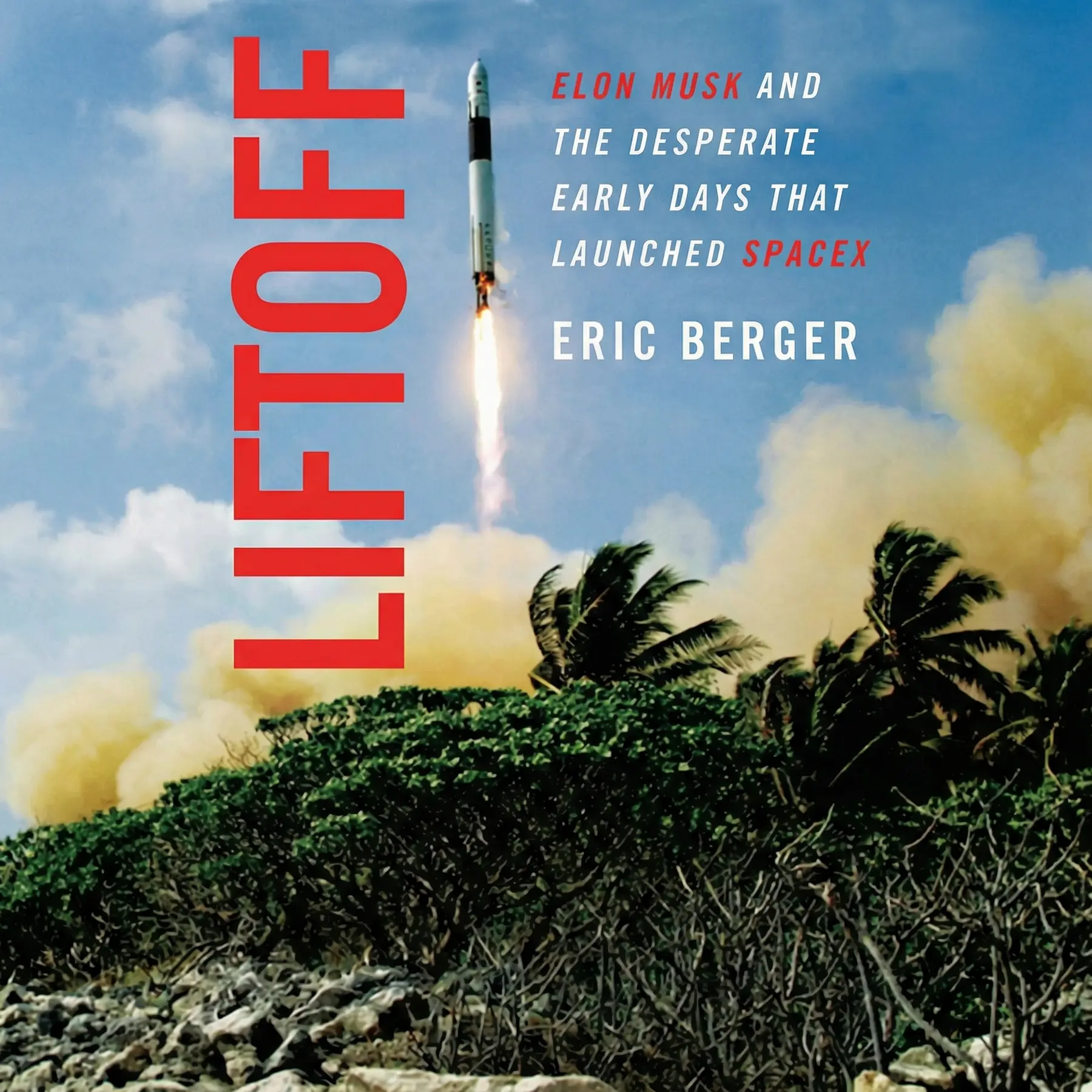
Liftoff: Elon Musk and the Desperate Early Days That Launched SpaceX
By Eric Berger
Liftoff examines the high-stakes, chaotic early years of SpaceX. It follows Elon Musk’s relentless drive to reach Mars, detailing the near-failures and technical breakthroughs that transformed a skeptical industry and redefined space exploration.
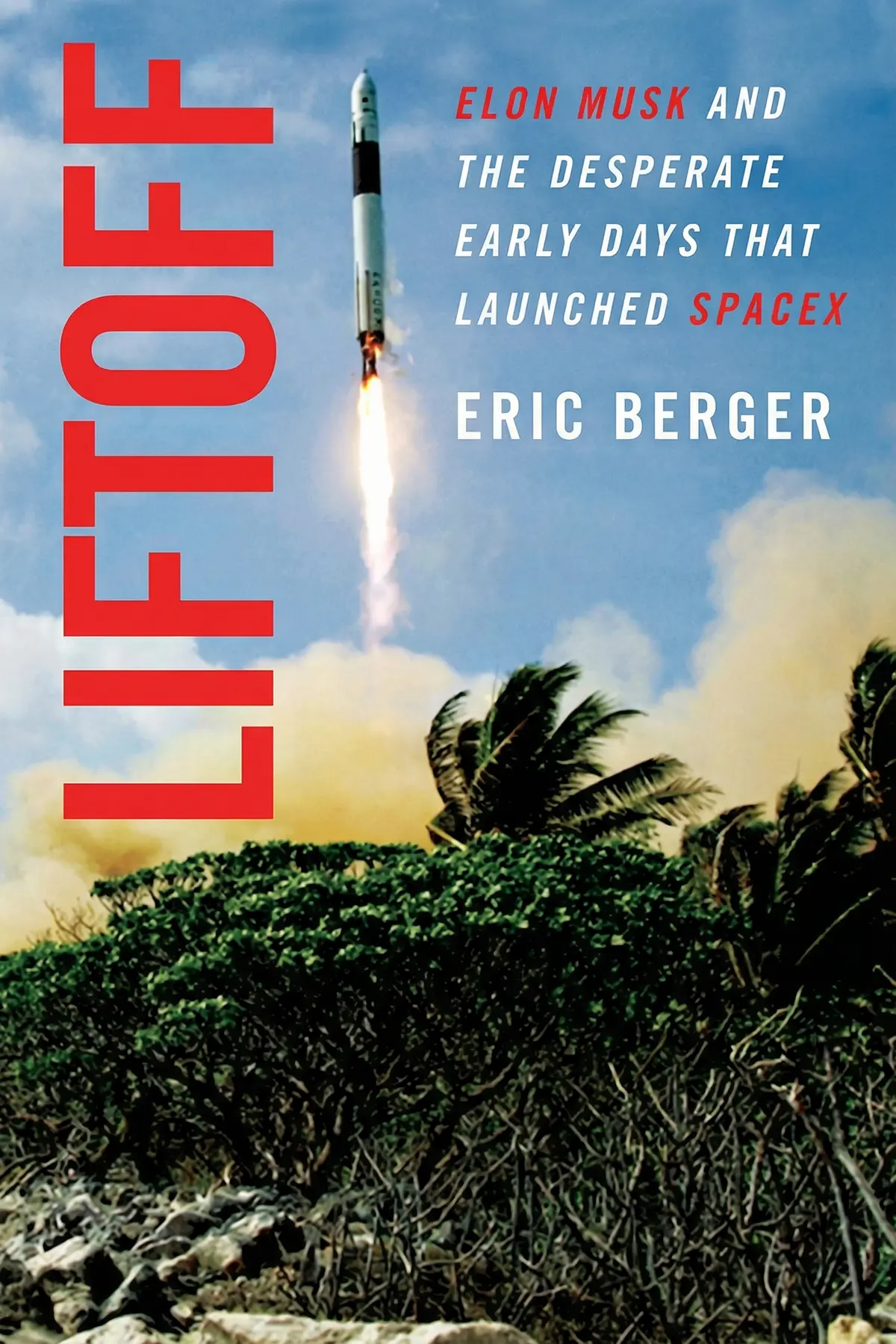
Table of Content
1. Introduction
1 min 42 sec
Imagine standing on the edge of a dream that everyone else insists is a delusion. In the early 2000s, that was precisely the position of Elon Musk. Having already disrupted the financial world with the creation of PayPal, Musk wasn’t looking for a quiet retirement or a safe investment. Instead, he was looking at the night sky and wondering why humanity seemed to have lost its nerve. To him, the path to the stars wasn’t just a fantasy; it was a necessity for the survival of the species. He looked at the existing space programs and saw stagnation, a lack of ambition that he felt compelled to fix.
This led to the birth of SpaceX, a company that began as little more than a collection of bold ideas and a few determined engineers. The journey we are about to explore isn’t a story of easy success or inevitable triumph. It is a gritty, often desperate account of a startup that came inches away from total collapse multiple times. We will travel from the boardrooms of Los Angeles to a tiny, remote island in the Pacific Ocean, witnessing the technical hurdles and the intense pressure that defined the company’s formative years.
In the pages that follow, we’ll see how Musk’s unique approach to hiring and problem-solving set SpaceX apart from its predecessors. We’ll learn about the ghost of companies past that haunted the industry’s perception of Musk, and the physical and political obstacles the team had to overcome. Ultimately, this is the story of how a small group of people, working under the most extreme conditions, managed to do what no private entity had ever done before. Through this exploration, we find the throughline of the SpaceX narrative: that with enough obsession and a willingness to learn from failure, the impossible becomes merely difficult.
2. A Vision Born from Stagnation
2 min 05 sec
Elon Musk’s journey into rocketry began with a startling discovery about the state of NASA’s ambitions. He realized that if he didn’t step in, the dream of Mars might never happen.
3. Cultivating a Culture of Speed and Iteration
2 min 18 sec
SpaceX succeeded where others failed by rethinking how a rocket company should function. From unconventional hiring to a ‘build and break’ philosophy, they threw out the old rulebook.
4. The Ghost of Failed Ambitions
2 min 14 sec
The skepticism Musk faced wasn’t just pessimism; it was rooted in the history of those who had tried and failed before him. One man’s story served as a particularly dark warning.
5. The Search for a Launch Site
2 min 23 sec
Faced with bureaucratic roadblocks in the United States, SpaceX had to look to a tiny, remote atoll in the Pacific to find a place to test its wings.
6. The Agony of the First Flight
2 min 05 sec
Years of preparation led to a single moment of truth on Omelek. But as the countdown hit zero, the team learned just how cruel the rocket business can be.
7. Challenging the Status Quo
2 min 10 sec
SpaceX didn’t just build rockets; they built a brand by being bold and confrontational. From a PR stunt in DC to a legal battle with NASA, they refused to be ignored.
8. The Fourth Launch: A Final Stand
2 min 20 sec
With the company on the brink of bankruptcy, SpaceX faced its most harrowing challenge yet. A near-disaster in the air led to a miracle on the ground.
9. Conclusion
1 min 36 sec
The journey of SpaceX, as captured in the early days of the Falcon 1, is more than just a series of technical achievements. It is a testament to the power of a clear vision and the refusal to accept the status quo. Elon Musk saw a future where humanity was no longer tethered to a single planet, and he was willing to risk his entire fortune and reputation to make that future a reality.
What we can take away from this story is the importance of perseverance in the face of overwhelming skepticism. SpaceX didn’t succeed because they had more money or better technology than their competitors at the start. They succeeded because they were willing to fail, learn, and try again faster than anyone else. They built a culture that prized raw talent and problem-solving over seniority and tradition. They took the lessons of the past, like the failure of AMROC, not as a reason to quit, but as a roadmap of what to avoid.
Today, SpaceX is a dominant force in the space industry, but it’s vital to remember that it all started with a handful of people on a tiny island, fixing a crushed rocket with their bare hands. Their success serves as a reminder that the most significant breakthroughs often come from the most desperate circumstances. As you look toward your own goals, remember the throughline of this story: that audacity, when paired with relentless execution, can truly launch a dream into the stars. The next time you face a hurdle that seems insurmountable, think of the Falcon 1 finally reaching orbit on its fourth and final attempt, and know that the edge of a dream is exactly where the real work begins.
About this book
What is this book about?
Liftoff tells the story of how a small, determined team of engineers took on the giants of the aerospace industry and won. In the early 2000s, space travel was seen as the exclusive domain of governments and massive corporations. Elon Musk, fueled by a vision of making humanity multi-planetary, challenged this status quo by founding SpaceX. The book chronicles the company’s desperate struggle to survive, from its first three failed launches to the final, high-pressure attempt that changed everything. This summary explores the unconventional culture Musk fostered, the grueling conditions the team endured on a remote Pacific island, and the innovative engineering philosophy that allowed them to move faster than their competitors. You will see how the company navigated political minefields, financial ruin, and technical disasters to eventually achieve what many thought was impossible. It is a story of grit, risk-taking, and the unwavering belief that the future of humanity lies among the stars.
Book Information
About the Author
Eric Berger
Eric Berger is a prominent figure in space journalism, serving as the senior space editor for the technology website Ars Technica. His deep expertise in the field is complemented by his background at the Houston Chronicle, where his reporting on Hurricane Ike contributed to the paper becoming a Pulitzer Prize finalist in 2009. In addition to his work as a journalist, Berger is a certified meteorologist and the founder of Space City Weather, a forecasting site based in Houston, where he currently resides.
Ratings & Reviews
Ratings at a glance
What people think
Listeners find this book captivating and skillfully crafted, describing it as a compelling account that unfolds like an action-packed adventure. It offers an in-depth history of SpaceX’s initial years, and listeners appreciate the brisk pacing and the poignant depiction of the crew's struggles. They prize the quality of the prose; one listener notes how it clarifies technical advancements for the audience, while another describes it as a masterpiece of reporting.
Top reviews
Valentina
This book reads like a high-stakes thriller rather than a dry technical manual, which is a testament to Berger's reporting. The narrative captures the absolute chaos of the early Falcon 1 days on Omelek Island, where the team was basically fighting nature as much as physics. Frankly, I was gripped by the descriptions of the 'misfit' engineers who left stable careers to build something in the middle of nowhere. From the giant crabs to the heartbreak of three failed launches, the emotional weight of their struggle is palpable. It is a masterpiece of reporting that makes complex aerospace concepts accessible to anyone. Even if you aren't a space nerd, the sheer human drama of the Texas and Kwajalein sites is worth the read.
Show moreJai
As someone who follows space news closely, I thought I knew the SpaceX origin story, but Berger digs up details that even hardcore fans will find new. The specific account of the rocket nearly imploding inside a C-17 transport plane at 30,000 feet was absolutely nail-biting. It’s rare to find a non-fiction book that balances technical precision with such a driving, adventurous tone. The author avoids the trap of dry prose by centering the story on the eccentric personalities who actually turned the wrenches. You really get a sense of the 'do or die' atmosphere that defined the company before it became a global powerhouse. This is essential reading for anyone interested in the grit required to innovate.
Show moreWararat
Wow, what a ride! Eric Berger has managed to turn a series of engineering hurdles into a page-turning adventure that highlights the genius behind the Falcon 1. I loved the focus on the people like Hans Koenigsmann and Tom Mueller rather than just the guy at the top. The book perfectly captures the 'ball of twine and thumbtacks' energy of the early days. It’s a story about a bunch of mavericks who were constantly on the edge of bankruptcy and total failure. The writing is punchy, clear, and makes you feel the heat of the South Texas sun. If you want to understand why SpaceX is currently dominating the industry, you have to start here.
Show moreRafael
The chapter on the Kwajalein launch site alone is worth the price of admission, featuring everything from tropical storms to the literal collapse of a fuel tank. Berger’s writing style is excellent; he knows exactly when to lean into the technicalities and when to focus on the human drama. Personally, I found the stories about the logistics of living on a remote island while trying to launch a revolution into orbit to be the most compelling part. It’s an underdog story at its finest. The book doesn’t just tell you that space is hard; it shows you through the sweat and ruined vacations of the original team. A truly gripping account of modern exploration.
Show moreFord
Ever wonder how a tiny group of engineers actually manages to disrupt a billion-dollar industry dominated by giants? Liftoff provides the answer through a series of wild, almost unbelievable anecdotes that feel like they belong in a movie. The writing is sharp and the pacing is perfect for a weekend read. I especially liked how the author gave credit to the early employees who are often overshadowed by the CEO's public persona. It’s a gritty, realistic look at what it takes to build a rocket from scratch in a tent. Not gonna lie, the ending made me want to go out and build something myself. This is a definitive account of the new space race.
Show moreSai
Not what I expected from a non-fiction book about aerospace, but in the best way possible. Instead of a dry timeline, Berger gives us a collection of vivid profiles and nail-biting cliffhangers. The story of the team trying to save the rocket as it imploded on a plane is the stuff of legends. It’s an outstanding book that manages to be both informative and genuinely exciting. The level of detail regarding the Falcon 1's development is impressive, yet it never feels like a textbook. Truly, it’s a remarkable achievement in tech journalism that highlights the sheer willpower required to reach the stars. Highly recommended for anyone who loves a good underdog story.
Show moreAnucha
Finally got around to reading this and I’m struck by the intensity of those early years. Berger focuses heavily on the boots-on-the-ground perspective, which provides a refreshing break from the usual Musk-centric media coverage. The first-hand accounts of the technical hurdles are fascinating, though I occasionally felt the book leaned a bit too much into the 'heroic' framing of 90-hour work weeks. To be fair, achieving orbit on a shoestring budget is incredible, but the human cost mentioned here is staggering. It’s a fast-paced, engaging journey that explains the 'how' behind the hardware quite effectively. I just wish there was a bit more analysis of the broader commercial industry at the time.
Show moreManee
After hearing so much buzz, I jumped in and found a narrative that is both incredibly detailed and surprisingly emotional. The technical explanations are handled with a light touch, ensuring the reader never feels bogged down by 'rocket science.' Look, it’s a gripping story, but it does feel slightly narrow in its scope by ignoring the larger competitive landscape of the early 2000s. I appreciated the first-hand accounts from the engineers who were actually there in the trenches. The descriptions of the failed launches were particularly moving, capturing the collective heartbreak of a team that had given up everything for a vision. It’s a solid, fast-read that mostly lives up to the hype.
Show moreAmara
Pick this up if you want to understand the 'how' behind the hardware, though I'll admit the relentless focus on the 'work-until-you-collapse' culture left me uneasy. The engineering challenges are presented as thrilling puzzles, which kept me turning the pages late into the night. It is a very well-constructed narrative that manages to make the success of the fourth launch feel like a personal victory for the reader. My only real gripe is that it feels a bit rushed toward the end. I would have loved more elaboration on how the team learned to iterate so much faster than their traditional competitors. Still, it’s a fascinating, first-hand look at a pivotal moment in history.
Show moreChon
While the pacing is undeniable, the truth is that the book often feels like a polished piece of SpaceX public relations rather than a critical history. It moves fast. However, it frequently glosses over the systemic issues of burnout and mismanagement that the sample reviews hinted at. I wanted more context on the global launch market and how these decisions were contextualized financially. Instead, we got a hero’s journey that feels a bit too curated for comfort at times. It’s an interesting look at the engineering feats, certainly, but I left wanting a more objective analysis of the company's culture. Great for fans, perhaps less so for those seeking a balanced corporate biography.
Show moreReaders also enjoyed

7 Powers: The Foundations of Business Strategy
Hamilton Helmer


Alibaba: The House That Jack Ma Built
Duncan Clark


Bad Blood: Secrets and Lies in a Silicon Valley Startup
John Carreyrou
AUDIO SUMMARY AVAILABLE
Listen to Liftoff in 15 minutes
Get the key ideas from Liftoff by Eric Berger, plus 5,000+ more titles in English and Thai.
- 5,000+ titles
- Listen as much as you want
- 7-day free trial
- Cancel anytime







