
17 min 08 sec
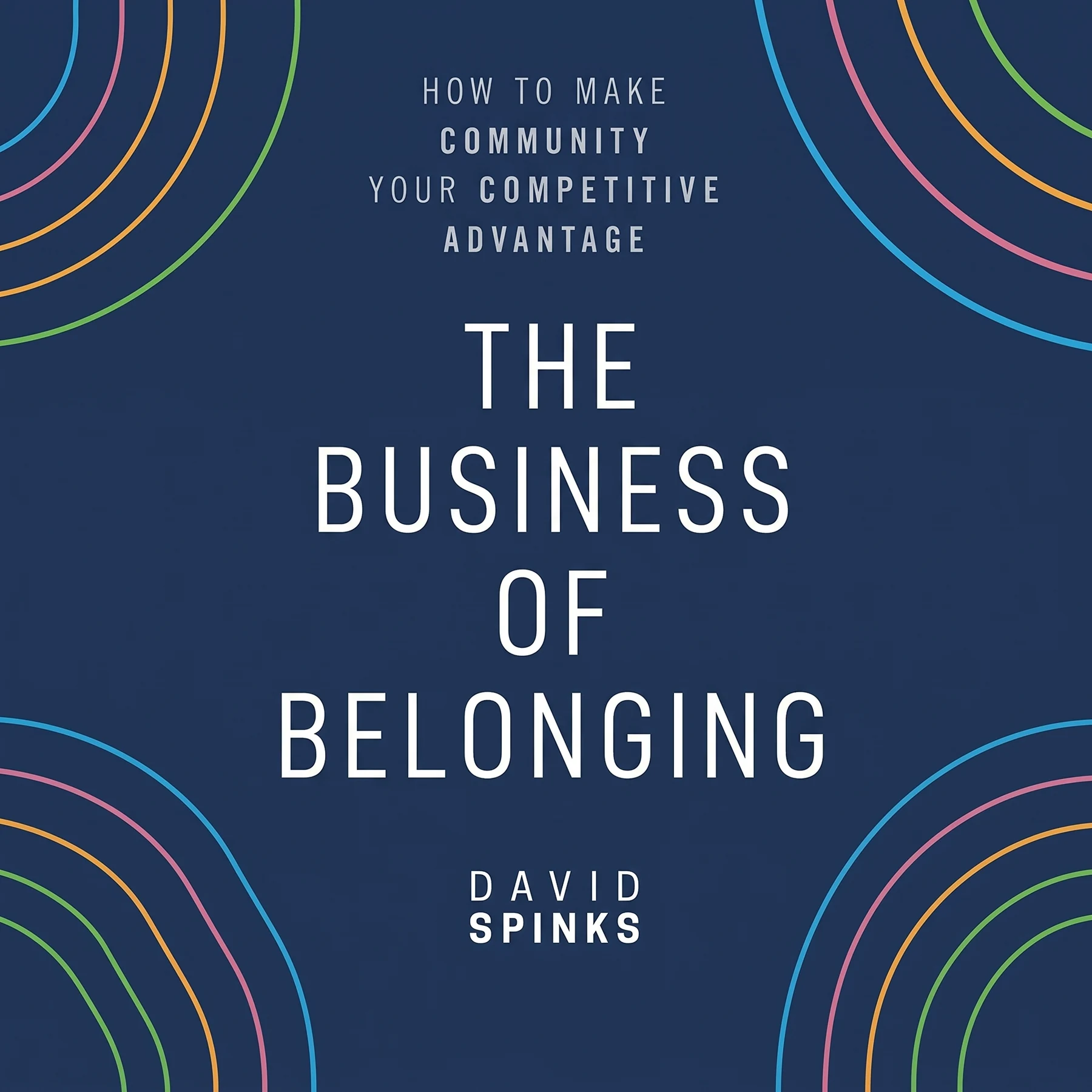
The Business of Belonging: How to Make Community your Competitive Advantage
By David Spinks
David Spinks explores the strategic power of community. Learn how to foster genuine belonging and leverage collective engagement to drive long-term business growth and organizational resilience.
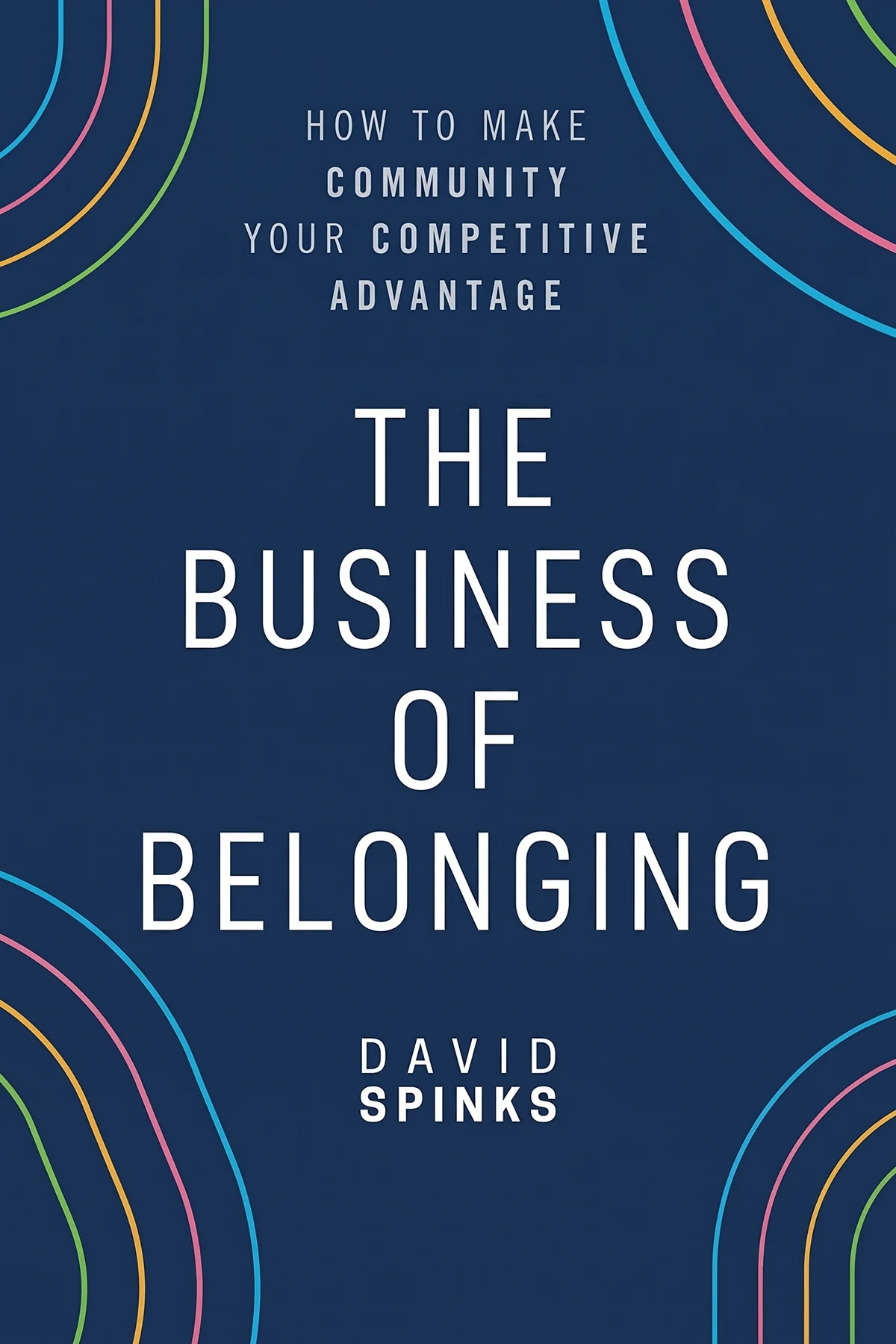
Table of Content
1. Introduction
1 min 51 sec
In the modern corporate landscape, we often hear about engagement, reach, and conversion. We treat our customers as data points and our teams as resources to be optimized. But there is a missing element in this purely transactional approach: the fundamental human need for connection. We are social creatures, and yet, the way we conduct business often leaves us feeling isolated and disconnected. This is where the concept of community comes into play, not just as a marketing buzzword, but as a core business strategy.
When we talk about the power of belonging, we are talking about something much deeper than a loyalty program or a social media following. We are talking about the creation of inclusive spaces where individuals feel seen, heard, and valued. The shift toward a community-driven model is perhaps the most significant evolution in business today. It moves the needle from asking ‘How can we sell to these people?’ to ‘How can we build something with these people?’
In this exploration of David Spinks’ insights, we will look at how the business of belonging is actually the business of the future. We will see how diversity and inclusion are not just moral imperatives but are the functional engines that drive high-performance teams and long-term success. By the end of this journey, the goal is to understand that a sense of belonging isn’t just a ‘nice-to-have’—it is a competitive advantage that can transform an organization from the inside out. We’ll examine the mechanics of building these communities, the psychological impact of belonging on team performance, and how a commitment to inclusive spaces leads to measurable business outcomes. It’s time to rethink what it means to belong in a professional context.
2. Transitioning from Audience to Community
2 min 42 sec
Moving beyond one-way communication is the first step toward building a resilient organization. Discover why the shift from transactions to relationships creates a more sustainable business model.
3. The Strategic Value of Inclusion and Diversity
2 min 43 sec
Diversity is often treated as a checkbox, but it is actually the secret to innovation. Learn how inclusive communities unlock the full potential of your teams.
4. Cultivating the Psychology of Belonging
2 min 43 sec
What does it actually feel like to belong? Explore the psychological foundations that turn a group of strangers into a cohesive, high-performing community.
5. Linking Community Health to Business Outcomes
2 min 38 sec
How do you measure the ROI of a feeling? Discover the tangible ways that community-driven initiatives impact the bottom line and overall business success.
6. Sustaining an Inclusive Environment for the Long Term
2 min 39 sec
Community is not a one-time project; it is an ongoing commitment. Learn the principles of maintaining a healthy, vibrant, and inclusive space over time.
7. Conclusion
1 min 52 sec
The journey toward building a truly community-driven organization is one that requires a shift in both strategy and heart. As we have explored, the business of belonging is built on the pillars of inclusion, diversity, and genuine human connection. It’s about moving past the superficiality of audience management and embracing the complexity and richness of human relationships. When we prioritize belonging, we don’t just create a better environment for our teams and customers; we create a more resilient and successful business.
The throughline of this exploration is clear: diversity and a sense of belonging are the engines of performance. When people feel seen and valued for their unique contributions, they are capable of extraordinary things. They innovate more effectively, they support one another more deeply, and they remain loyal to the mission. This is the ultimate promise of community. It’s not just about the numbers on a spreadsheet; it’s about the impact we have on the lives of the people who interact with our organizations.
As you look forward, consider how you can start to integrate these principles into your own work. It doesn’t happen overnight. It starts with a commitment to listen, a willingness to be transparent, and an intentional effort to make space for voices that are different from your own. Whether you are leading a small team or a global corporation, the path to success is the same: build a place where people truly belong. When you do that, the business outcomes will follow. The future of business is not just about what we build, but who we build it with. By focusing on the business of belonging, you are not just building a company; you are building a community that can change the world.
About this book
What is this book about?
The Business of Belonging examines the critical shift from transactional business models to those rooted in deep, human-centric community. It provides a roadmap for organizations looking to build inclusive spaces where members and employees feel a genuine sense of connection and value. The core premise is that in a hyper-digital world, the companies that succeed are those that facilitate meaningful human interaction rather than just selling products. By focusing on the twin pillars of diversity and inclusion, the book promises to show leaders how to unlock higher team performance and sustainable success. It moves beyond superficial metrics to explore the psychological and operational foundations of belonging. Readers will understand how to transform a passive audience into an active community that contributes to the organization’s health, innovation, and long-term viability. Ultimately, it is a guide for any professional looking to integrate human connection into the heart of their business strategy.
Book Information
About the Author
David Spinks
David Spinks is a leading authority in the field of community building. He cofounded CMX, which has grown into a massive network for community professionals with a membership exceeding 20,000 individuals globally. In addition to his work with CMX, Spinks serves as the Vice President of Community at Bevy, an enterprise software platform designed to help companies build and scale their communities. Bevy officially acquired CMX in 2019, further cementing Spinks’ role as a pivotal figure in the intersection of community and business technology.
Ratings & Reviews
Ratings at a glance
What people think
Listeners find the book offers an ideal mix of useful frameworks and actionable tips, rendering it essential reading for anyone building communities. Furthermore, they value the clear-cut method for designing and growing communities, with one listener characterizing it as an accessible introduction to contemporary community design. The book also earns praise for being highly relevant; one listener remarks on how it masterfully synthesizes historical context, while another points out its emphasis on scaling 21st-century businesses. However, the grammar receives varied reviews, with one listener citing painful grammatical errors.
Top reviews
Rotjanee
Finally got around to reading David Spinks' work, and it's a game-changer for anyone managing a brand community. The SPACES framework alone is worth the price of admission because it provides a clear language for explaining the value of community to executives who only care about the bottom line. I loved how the book moves from high-level strategy to the 'Social Identity Cycle,' showing exactly how a member moves from their first interaction to becoming a true advocate. While some might find the business focus a bit cold, I found it incredibly refreshing to see community treated as a serious discipline rather than just a 'nice-to-have' marketing fluff piece. This is the manual we've been waiting for in the industry.
Show moreSirirat
What a breath of fresh air for the 21st-century marketer. Spinks expertly pulls together the history of community building and applies it to the modern digital landscape with surgical precision. I particularly connected with the section on 'bringing on the crickets'—the idea that you have to stare down the fear of an empty forum and just keep showing up. It’s a scary reality for any community manager, but the way he explains the algorithm's role in hiding those 'failures' was a huge relief. This book is a straightforward primer that manages to be both approachable and deeply intellectual. If you’re trying to grow a business today, you simply cannot ignore these principles.
Show moreGun
This book is basically a decade of community management wisdom distilled into a concise, actionable manual. Spinks doesn't just tell you that community is important; he shows you exactly how to design the spaces where it happens. I’ve been facilitating groups since the early 2000s, and I still found myself highlighting something on almost every page. The way he dissects the 'Social Identity Cycle' through the character of 'Cam' made the theory feel very real. It’s a perfect blend of practical advice and helpful frameworks. Whether you are building an offline ambassador program or a massive support forum, you need this on your shelf.
Show moreKavya
David Spinks has managed to bridge the gap between historical community principles and the digital future of brand engagement. The book is an approachable primer to modern community design that doesn't waste the reader's time with fluff. I loved the distinction between 'Support' and 'Success' communities—it’s a nuance that most people miss but makes a huge difference in how you staff your team. The writing is direct and the layout makes it easy to jump back in for reference later. Truly, this is the first book I’ve read that puts community on a whole new level of professional rigor.
Show moreTar
As someone who has been building online groups for a decade, I found the SPACES model to be incredibly clarifying for explaining ROI to stakeholders. It breaks down community outcomes into Support, Product, Acquisition, Contribution, Engagement, and Success. This framework helps you decide which lever you're actually trying to pull instead of just 'doing community' for the sake of it. The stories are short and specific, which makes the concepts easy to digest during a busy work week. My only gripe is that it feels like a very standard 'business-y' book with the typical framework-heavy structure, but the wisdom packed into these 250 pages is undeniable. It’s a solid B+ for any professional.
Show moreSawit
Ever wonder why some online forums thrive while others just wither away? This book answers that by breaking down the Social Identity Cycle: identification, participation, and validation. It’s a loop that makes so much sense once you see it on paper. I’ve started applying the 'identification' phase by getting more specific about who our community is for, rather than trying to appeal to everyone. The book is very practical, though I will say some of the case studies felt a little dated. Still, for anyone starting a YouTube channel or a brand forum, the frameworks provided here are essential for long-term success.
Show moreRohan
Look, if you're looking for a warm and fuzzy book about friendship, this isn't it; it’s a tactical blueprint for business growth. Frankly, it’s about time someone treated community as a core business function like sales or engineering. The SPACES acronym is going to be a staple in my future presentations to the board. I appreciated the specific focus on how users help each other in support forums to save the company money. While I did notice the mixed quality of the grammar that others have mentioned, the actual strategies are too good to ignore. It’s a must-read for the 21st-century business leader.
Show moreOm
Picked this up after hearing a recommendation on a podcast, and the second half of the book is where the real gold is hidden. The first half is a bit heavy on the 'why,' which most people buying this book probably already understand. But once you get into the concrete tips on participation and validation, it becomes an invaluable resource. I specifically liked the advice on how to handle the 'crickets' when starting out. It’s a common fear that keeps people from launching. This book gives you the confidence to start small and the frameworks to scale big. It’s an essential read for anyone in the community space.
Show moreTim
To be fair, I went into this expecting more on the psychology of human connection rather than a corporate strategy guide. I was hoping to hear more about building communities outside of having the end goal of selling products to them, but the focus is heavily on ROI. The first few chapters felt a bit repetitive, and I honestly struggled with some of the writing style, as there are a few distracting grammatical errors that should have been caught in editing. However, the second half contains concrete tips on how to think about communities that saved the experience for me. If you want a blueprint for a business forum, this is perfect, but don't expect a deep philosophical dive into belonging.
Show moreChee
The grammar errors in this book were so distracting that it was difficult to take the professional advice seriously at times. Beyond the technical issues with the prose, the content itself felt like a collection of blog posts expanded into a book format. I gave up after getting through about 20% because it was so focused on the 'business' side that the 'belonging' side felt secondary. It treats community members like cogs in a machine designed to drive customer satisfaction and product development. If you’re looking for something that treats community as a human endeavor rather than a sales funnel, you might want to look elsewhere.
Show moreFeatured in
Readers also enjoyed

AUDIO SUMMARY AVAILABLE
Listen to The Business of Belonging in 15 minutes
Get the key ideas from The Business of Belonging by David Spinks, plus 5,000+ more titles in English and Thai.
- 5,000+ titles
- Listen as much as you want
- 7-day free trial
- Cancel anytime







