
27 min 18 sec
The Everything Store: Jeff Bezos and the Age of Amazon
By Brad Stone
Explore the relentless rise of Amazon and the singular vision of Jeff Bezos. This summary reveals the internal culture, long-term strategies, and customer obsession that transformed a garage startup into a global titan.
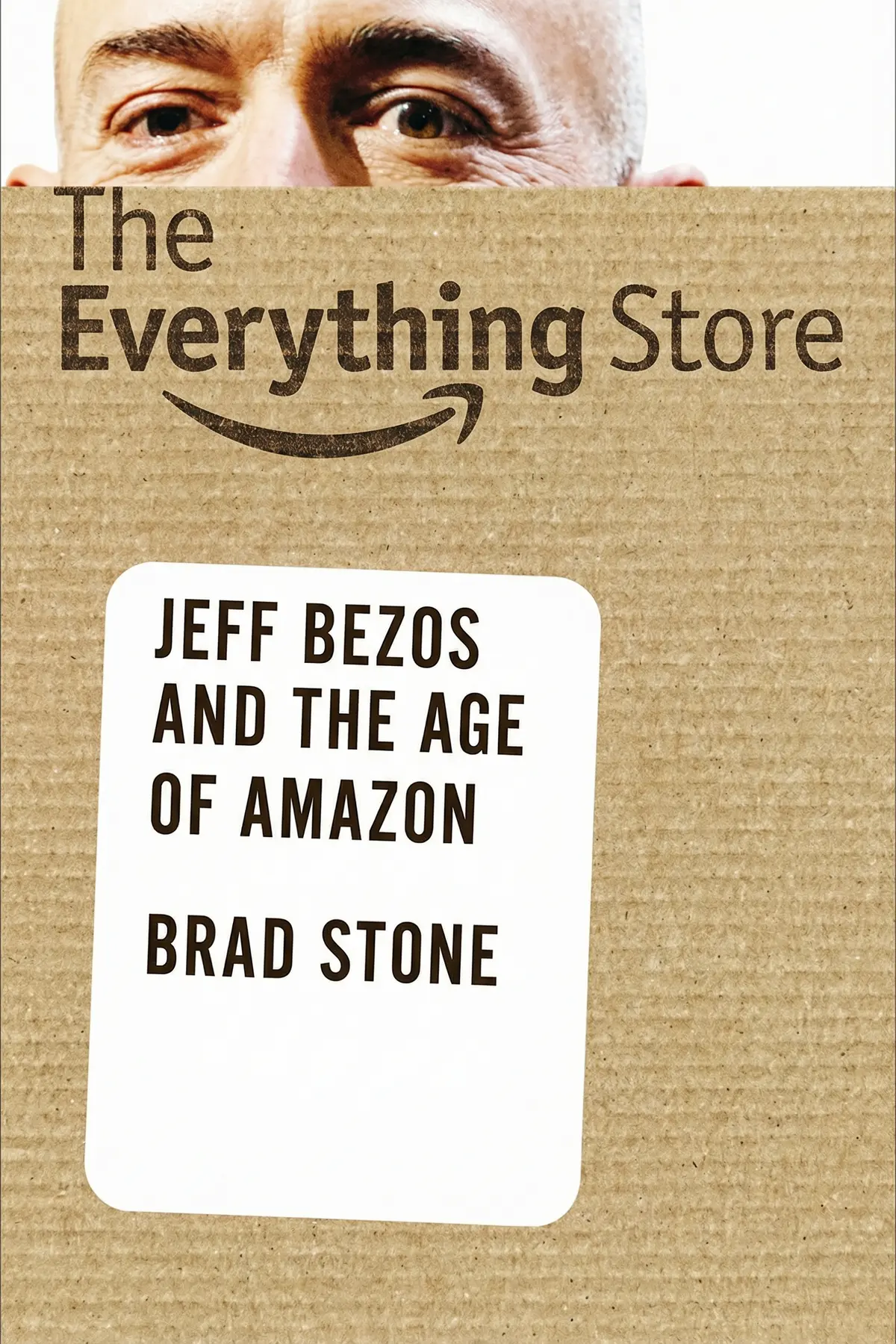
Table of Content
1. Introduction
2 min 09 sec
In the mid-1990s, the digital world was a frontier that few people truly understood. While most saw the internet as a novelty or a niche tool for researchers, a young executive named Jeff Bezos was working at a high-end hedge fund called D.E. Shaw & Co., looking at the data. He saw something others missed: the staggering growth rate of the web. Alongside his colleagues, Bezos began to imagine a future where the internet acted as the ultimate intermediary between those who made products and those who consumed them. This wasn’t just about selling one or two things; it was about the creation of a universal marketplace, a place where a person could find literally anything they needed with a few clicks. This vision would eventually be known as the Everything Store.
Driven by the potential of this digital revolution, Bezos made a choice that would change the history of commerce. He walked away from a lucrative career in finance, packed his belongings, and headed to Seattle. He didn’t start with a massive headquarters or a fleet of trucks; he started in a garage, fueled by a clear, focused vision. However, he was also a pragmatist. He knew that trying to sell everything at once would lead to logistical chaos. He needed a starting point, a category of goods that was easy to ship and had a vast selection available. After a careful analysis of various industries, he landed on books.
What followed was an unprecedented journey of growth, controversy, and innovation. The story of Amazon is inextricably linked to the personality and intellectual quirks of its founder. It is a tale of a company that prioritizes the distant future over the immediate present, often at the expense of its own profit margins and the comfort of its workforce. As we explore the narrative of Amazon’s rise, we will see how a relentless focus on the customer, a culture of extreme frugality, and a fearless approach to failure built an empire that has fundamentally rewritten the rules of the modern economy. This isn’t just a corporate history; it’s a study in how a singular, uncompromising vision can reshape the world.
2. A Radical Commitment to Customer Satisfaction
3 min 04 sec
Amazon’s dominance isn’t just about low prices; it’s built on a near-obsessive focus on making life easier for the buyer, even when it means upsetting the status quo.
3. The Strategic Power of Frugality
2 min 54 sec
While Amazon is worth billions, its internal culture is defined by a strict avoidance of waste, a trait Bezos believes is essential for fostering true innovation.
4. Unconventional Communication and Team Dynamics
3 min 07 sec
Amazon has replaced traditional presentations and large meetings with a unique system of silent reading and small, autonomous units designed for speed.
5. The Long-Term Horizon and the Art of the Loss Leader
2 min 54 sec
Amazon is famous for its willingness to lose money today in order to own the market tomorrow, a strategy that requires immense patience and foresight.
6. Vision Beyond the Marketplace: Bezos’s Grand Projects
2 min 43 sec
The same long-term mindset that built Amazon drives Jeff Bezos to invest in projects meant to last for millennia or take humanity into the stars.
7. A Culture that Embraces and Rewards Failure
2 min 48 sec
Innovation requires risk, and at Amazon, failure isn’t just tolerated—it’s often celebrated as a necessary step toward the next great breakthrough.
8. Expanding the Ecosystem: From Retailer to Tech Giant
2 min 59 sec
Amazon’s greatest pivots, like the Kindle and AWS, show how the company leverages its own internal needs to create entirely new global industries.
9. The Infinite Horizon of the Everything Store
2 min 31 sec
Even with multi-billion dollar revenues, Jeff Bezos believes Amazon is still at the beginning of its journey, with endless industries yet to be disrupted.
10. Conclusion
2 min 09 sec
The story of Amazon is a testament to the power of a singular, uncompromising vision. Through the lens of Jeff Bezos’s leadership, we see a company that has succeeded not by following traditional business wisdom, but by actively challenging it. The core pillars of Amazon—radical customer obsession, extreme frugality, and a deep-seated commitment to long-term thinking—have created a unique corporate engine that seems capable of disrupting almost any industry it enters. From the way it conducts meetings with silent narrative reading to its willingness to lose millions of dollars to secure a future market, Amazon operates on a logic all its own.
What we can take away from the rise of the Everything Store is the importance of having a clear throughline. For Bezos, that throughline has always been the customer’s experience and the belief that the future is worth investing in, even at the expense of the present. This has not come without a cost; the company’s harsh internal culture and its impact on the labor market remain points of significant debate. Yet, its success is undeniable. Amazon has moved from being a simple bookstore to becoming the very infrastructure of modern life, from the servers that power our favorite apps to the logistical network that delivers our daily essentials.
As we look forward, the lesson is clear: agility and a willingness to fail are essential in a rapidly changing world. Bezos’s ‘Day 1’ philosophy serves as a powerful reminder that no matter how much you have achieved, you must remain curious and ready to invent. Whether you are building a global empire or a small personal project, the principles of thinking in decades rather than years and prioritizing the needs of those you serve can provide a blueprint for lasting impact. The Everything Store is more than just a place to shop; it is a monument to the idea that with enough persistence and a long enough horizon, even the most audacious dreams can become a reality.
About this book
What is this book about?
The Everything Store provides a deep dive into the evolution of Amazon, from its humble beginnings as an online bookseller to its current status as a dominant force in global commerce and technology. It explores the high-stakes world of e-commerce through the lens of its founder, Jeff Bezos, whose unconventional leadership and refusal to settle for short-term gains shaped the company's trajectory. Listeners will discover the specific philosophies that drive Amazon's success, including its extreme focus on customer satisfaction, its rigorous internal standards for communication and efficiency, and its willingness to disrupt its own business models. The narrative promises to explain not just how Amazon grew, but why it operates with a culture of frugality and innovation that often baffles outsiders. From the development of the Kindle and Amazon Web Services to Bezos’s personal ventures in space and time, this summary offers a comprehensive look at the mechanisms behind the modern digital economy.
Book Information
About the Author
Brad Stone
Brad Stone is a prominent American journalist and author who has spent years covering the pulse of the technology industry. He contributes to major publications such as Bloomberg Businessweek and The New York Times, focusing on the intersection of innovation, business, and culture.
Ratings & Reviews
Ratings at a glance
What people think
Listeners find the book absorbing and skillfully composed, offering thorough and scholarly details that give excellent perspective on Jeff Bezos' mentality. Moreover, the narrative is compelling, with one listener observing how it integrates different aspects of the story quite well. Additionally, the text provides useful strategic advice and is notably helpful for founders, while ensuring the writing remains briskly paced.
Top reviews
Bee
This book provides a deeply immersive deep-dive into the relentless engine that powers the world's most aggressive retailer. Brad Stone successfully avoids the trap of founder-worship, instead presenting a balanced view of Jeff Bezos as a man who is both a brilliant strategist and a terrifyingly demanding boss. To be fair, the descriptions of the 'mercenary' culture inside the Seattle offices are enough to make any sane job-seeker run for the hills. However, the way Stone weaves the 'flywheel' philosophy into the narrative makes it almost impossible to stop reading once you start. It feels like a high-stakes thriller rather than a dry business biography. You get to see the exact moment the vision for an 'Everything Store' turned from a crazy dream into a global reality. If you want to understand why the retail landscape looks the way it does today, this is essential reading.
Show moreNarongrit
As an aspiring entrepreneur, I found this to be the ultimate manual on what it takes to actually scale a global empire from scratch. The book perfectly captures the 'start-something' goal that defines our current era, showing both the glory and the extreme personal cost of that ambition. Stone’s narrative is well-paced and filled with 'mantras of success' that you won't find in a standard textbook. Bezos is presented as a visionary genius, but one who is also remarkably impetuous and controlling. The way the book explores his 'Amazon.love' memo was particularly insightful for me. It shows that even at the top, there is a constant fear of becoming a hated, stagnant incumbent. This is more than just a biography; it's a deep dive into the psychology of extreme success and the relentless pursuit of perfection.
Show moreMadison
Picked this up on a whim and was immediately sucked into the high-stakes world of the 90s tech boom and the eventual dominance of the platform. The way Brad Stone structures the narrative makes the rise of Amazon feel almost inevitable, even though the book makes it clear how close they came to failure multiple times. I appreciated the focus on the 'best truth at the time' philosophy, which seems to guide every decision Bezos makes. It’s a fascinating study of a man who is obsessed with the long game rather than quarterly earnings. Even the parts about the brutal internal competition were strangely compelling. This book doesn't just tell you what happened; it explains the specific mindset that made it happen. It’s easily one of the best and most thoroughly researched business biographies I’ve read in years.
Show moreOmar
After hearing so many horror stories about Amazon’s 'churn and burn' employee turnover, I finally decided to see what the hype was about. Frankly, the picture Stone paints isn't exactly flattering for those hoping for a work-life balance. Bezos comes across as an intense figure who values customer obsession over almost everything else, including his own executives' sanity. The detail regarding the early days of the dot-com bubble is fascinating, specifically how they survived when everyone else was crashing. My only real gripe is that the narrative occasionally gets bogged down in the minutiae of quarterly reports and supply chain logistics. That said, the insight into Jeff’s 'ice water' veins and his 'improbable standards' provides a masterclass in modern corporate dominance. It’s a compelling, well-paced look at a man who essentially reinvented how we consume everything in the 21st century.
Show moreAna
Brad Stone managed to turn what could have been a boring corporate history into something that feels remarkably visceral and immediate. The writing style is sharp and the research is clearly extensive, drawing from sources that actually saw the 'Jungle' conditions firsthand. I was particularly struck by the description of Bezos as a 'missionary and mercenary' leader. This duality explains so much about why the company is both beloved by customers and feared by competitors. While the book captures the excitement of innovation, it doesn't shy away from the brutal tactics used to crush rivals like Diapers.com. Truth is, it’s a bit of a wake-up call for anyone who thinks successful startups are built on kindness and collaboration alone. It is a dense read, but the lessons on business strategy are worth the effort for any entrepreneur looking for an edge.
Show moreOm
Ever wonder how a tiny online bookstore managed to swallow the entire retail world in just two decades? This book answers that question by focusing on the 'flywheel' effect and the absolute obsession with the end-user experience. Brad Stone does an excellent job of illustrating how Jeff Bezos used his background in finance to create a platform that prioritizes long-term growth over short-term profits. The anecdotes about Bezos lashing out at subordinates were eye-opening, to say the least. It paints a picture of a leader who is more interested in winning than in being liked by his peers. My favorite parts were the behind-the-scenes looks at how they negotiated with publishers during the Hachette conflict. It’s a bit scary to see how much power one company can wield, but the strategic insights provided here are undeniably brilliant and worth studying.
Show moreKrisada
Look, Jeff Bezos might come across like a tech-savvy version of Dr. Evil in some of these chapters, but his business acumen is simply unmatched. The book does a stellar job of explaining the 'Why' behind Amazon's move from books to electronics and eventually to the cloud. I loved the specific details about the early days in the garage and the transition to the sleek, high-pressure environment of the modern offices. Some of the stories about the distribution centers were genuinely unsettling, which keeps the book from feeling like a PR puff piece. It’s a balanced account that respects the achievement while questioning the human cost. I deducted one star only because the pacing felt a bit uneven during the chapters on international expansion. Otherwise, it's a gripping account of a world-changing company that everyone should read.
Show moreLeah
The chapter on the development of the Kindle was the highlight of the book for me, showcasing the sheer force of will required to disrupt an entire industry. Stone provides a clear-headed analysis of how Bezos identifies 'customers who aren't getting what they deserve' and then builds a solution from the ground up. In my experience, most business books are full of fluff, but this one is packed with actual examples of high-level strategy grounded in history. I did find the sections on the dot-com bubble a bit long-winded, though they do provide necessary context for Amazon's survival. The book successfully captures the 'mercenary' spirit of the company without losing the 'missionary' vision that keeps customers coming back. It’s a must-read for anyone who uses Amazon daily and wants to know the true cost of that two-day shipping.
Show moreRyan
While it’s undeniably well-researched, the sheer amount of detail regarding corporate meetings and technical infrastructure started to drag for me toward the middle. I picked this up because I wanted to understand the man behind the brand, but at times it feels more like a warning manual for prospective employees. If you aren't prepared to work 16-hour stints or answer emails on weekends, this book makes it clear that Amazon isn't for you. Personally, I found the chapters on the Kindle’s development much more engaging than the endless talk of Wall Street expectations. The tone is a bit cynical, though perhaps that’s just a reflection of the company’s own internal culture. It’s a decent enough read if you’re a business nerd, but casual readers might find it a bit too technical and dry for a weekend read.
Show morePhu
Not what I expected from a business biography, as it spends a surprising amount of time detailing the high turnover and intense pressure faced by the rank-and-file. It’s almost a cautionary tale for anyone looking to enter the tech industry without knowing what they're getting into. The book describes an environment where 'working smart' means giving up your personal life entirely to feed the machine. While the strategic breakdowns of the 'Everything Store' concept are interesting, I found the constant focus on Bezos’s abrasive personality to be a bit exhausting after a while. Got to say, I left this book feeling more concerned about the future of retail than I did before I started. It’s well-written and certainly informative, but it lacks the warmth or inspiration I usually look for in a biography. It's a cold look at a cold business.
Show moreReaders also enjoyed

7 Powers: The Foundations of Business Strategy
Hamilton Helmer
Alibaba: The House That Jack Ma Built
Duncan Clark
AUDIO SUMMARY AVAILABLE
Listen to The Everything Store in 15 minutes
Get the key ideas from The Everything Store by Brad Stone, plus 5,000+ more titles in English and Thai.
- 5,000+ titles
- Listen as much as you want
- 7-day free trial
- Cancel anytime







