
A Year with Peter Drucker: 52 Weeks of Coaching for Leadership Effectiveness
Joseph A. Maciariello
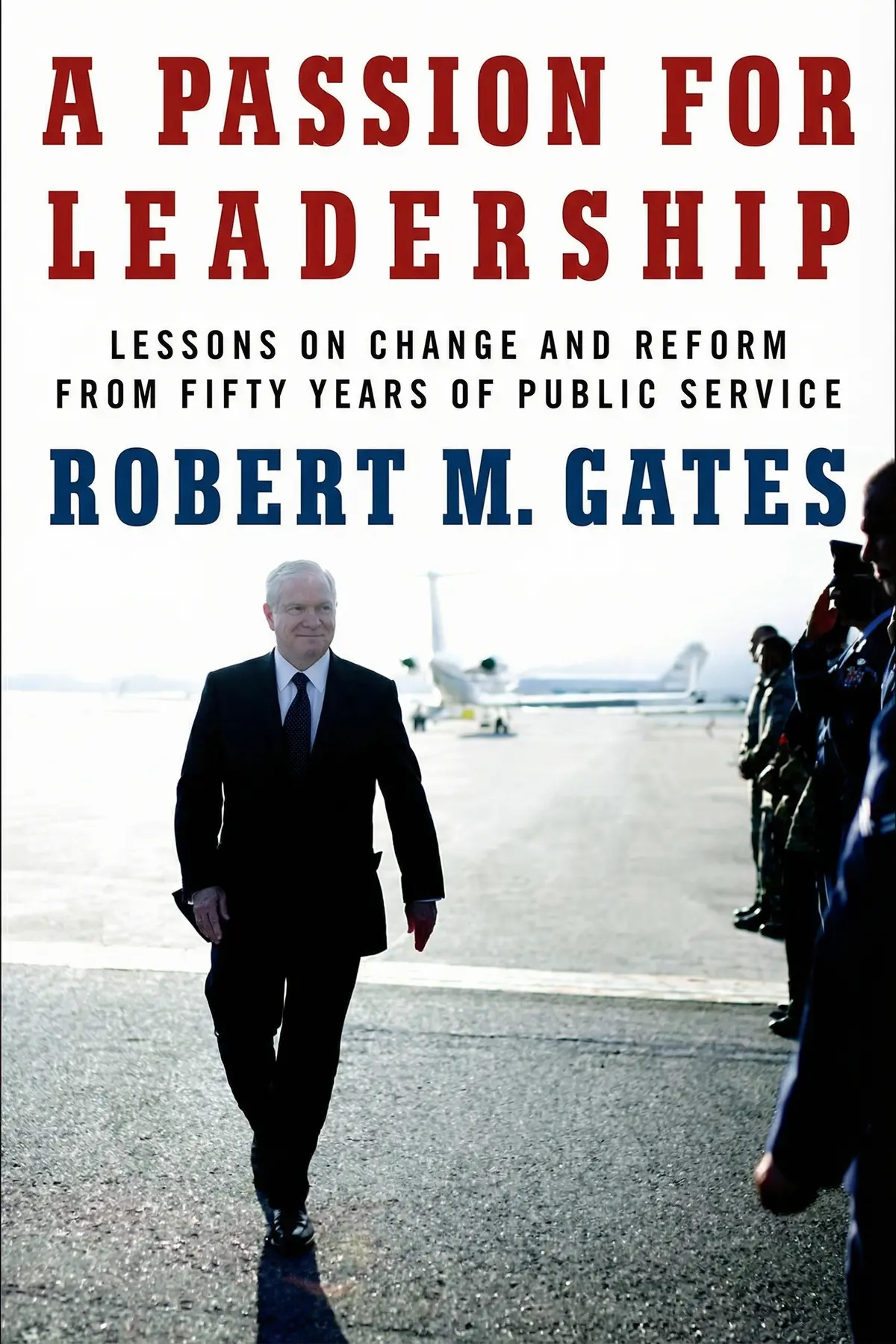
A Passion for Leadership provides a strategic roadmap for reforming large organizations. Drawing on decades of public service, it reveals how to overcome bureaucratic resistance through vision, accountability, and genuine human connection.
1 min 31 sec
We have all felt the frustration of a system that just doesn’t work. Think about the last time you had to deal with a confusing government form, a slow-moving corporate HR department, or a local utility that seemed indifferent to your needs. These are the hallmarks of bureaucracy—organizations that have become so focused on their own internal rules and survival that they have lost sight of their actual mission. For a leader tasked with fixing such an institution, the challenge can feel insurmountable. It is like trying to turn a massive ocean liner with a tiny rudder; you pull and pull, but the ship keeps moving in the same direction.
Yet, change is not just a luxury; it is a necessity for survival. In a world that is moving faster than ever, an organization that cannot adapt will eventually fail, often with significant consequences for the people it serves. The central question is: how do you break through that wall of inertia? How do you take an institution that is hard-wired to resist change and turn it into a dynamic, responsive force?
This summary explores the art and science of leadership in these difficult environments. We will look at why institutions get stuck in the first place and how a leader can craft a vision that actually moves people to action. We will also dive into the practical mechanics of reform—from restructuring teams to managing the politics of change. Through these insights, you will see that leadership isn’t just about having a title; it’s about having the passion and the persistence to make things better for the long haul.
2 min 03 sec
Discover why large institutions naturally resist change and how a culture of risk aversion can turn even well-intentioned organizations into inefficient fortresses of red tape.
1 min 57 sec
A great leader doesn’t just point to a destination; they provide a detailed map and invite the entire team to help navigate the journey toward transformation.
1 min 47 sec
Moving from ideas to reality requires more than just orders; it demands a carefully planned strategy that respects the people who must carry it out.
1 min 55 sec
Learn how to use specialized groups to bypass traditional hierarchies, foster collaboration, and create a sense of shared ownership over new initiatives.
2 min 06 sec
Real reform isn’t about moving boxes on an organizational chart; it’s about inspiring, empowering, and respecting the people who make the system run.
1 min 57 sec
Success in leadership requires more than internal management; it involves building bridges with external stakeholders, from politicians to the media.
1 min 16 sec
The journey of leadership and institutional reform is not for the faint of heart. It requires a rare combination of high-level vision and granular attention to detail. As we have seen, the path to a more efficient and responsive organization begins with a deep understanding of the human and cultural factors that lead to stagnation. By creating a clear, actionable vision and building a culture of trust and empowerment, a leader can begin to move the needle on even the most entrenched bureaucracies.
Remember that reform is not a one-time event, but a continuous process. There will always be new challenges, new political pressures, and new internal resistances to overcome. But the lessons of persistence, transparency, and strategic alliance-building remain constant. If you approach leadership with a genuine passion for service and a respect for the people you lead, you can transform your organization from a static fortress of red tape into a dynamic force for good. The work is difficult, but the reward—an institution that truly serves its purpose and its people—is well worth the effort. Now, take these insights and look at your own organization: what is the first small step you can take today to begin the process of meaningful change?
Many leaders find themselves trapped in organizations that seem immune to change. Whether it is a government agency, a university, or a massive corporation, the weight of tradition and the fear of risk often stall progress. A Passion for Leadership addresses this universal struggle by offering a pragmatic guide to institutional reform. It moves beyond theoretical management styles to provide actionable strategies rooted in real-world experience. The book promises to transform how you view the structures around you. It explores the inherent friction between stability and innovation, showing that the very systems designed to keep an organization safe can eventually lead to its stagnation. By following these lessons, leaders can learn to navigate political landscapes, build powerful internal alliances, and communicate a vision that resonates with everyone from the front lines to the boardroom. Ultimately, it is a testament to the fact that with the right approach, even the most entrenched bureaucracies can be revitalized to serve their true purpose with efficiency and integrity.
Robert M. Gates is a former US Secretary of Defense whose distinguished career in public service spans five decades. He has held high-level positions within the CIA and served as the president of Texas A&M University. Gates is recognized for his pragmatic leadership and his commitment to institutional reform. He is the author of several acclaimed books, including Duty and Exercise of Power.
Listeners find this title to be a highly useful resource that takes an admirable stance on leadership, delivering many takeaways via captivating stories. The quality of writing is superb, and listeners enjoy the hands-on illustrations, with one mentioning it offers great pointers for driving organizational shifts. The work gets high marks for its concentration on change management, including one review that spotlights groundbreaking change management ideas, and listeners value how the management expertise translates across different fields. While many describe the content as fascinating, some find it tedious and repetitive.
Robert Gates has provided a masterclass in institutional overhaul that feels grounded in reality rather than corporate theory. Having managed the CIA and the Pentagon, he understands that government agencies are "antibody" factories designed to reject new ideas. I particularly appreciated his take on "kaizen" applied to the public sector; it’s a refreshing perspective on continuous improvement. His stories about Texas A&M and the friction with state politics offer a rare glimpse into the gritty details of academic leadership. Frankly, the advice on building a "listening tour" is something every new manager should implement immediately to avoid early pitfalls. It’s an indispensable guide for anyone trying to steer a large ship through choppy waters without sinking the morale of the crew. This is a must-read for public servants.
Show moreFinally, a manual that treats public service with the dignity it deserves while acknowledging the soul-crushing nature of its inefficiencies. Gates captures the "kiss up, kick down" syndrome perfectly. His disdain for leaders who micromanage out of insecurity is palpable. I loved the anecdote about J. Edgar Hoover and the margins—it’s a hilarious yet sobering reminder of how easily a leader’s message can be distorted. In my experience, most leadership books ignore the political constraints of the public sector. Gates leans right into them. He reminds us that "wise men" must not decline the business of the public. This book isn't just about management; it's about the "flaming heart" required to sustain reform when you're standing absolutely alone. Truly inspirational stuff.
Show moreAs someone navigating the complexities of a large non-profit, I found Gates' insights on "antibody" reactions to be incredibly validating. He provides a roadmap for "listening tours" that actually build trust rather than just checking a box. The distinction he makes between a manager and a leader—the "flaming heart" vs. the PowerPoint—is a concept I'll be sharing with my entire board. I was surprised by his candor regarding his own failures, like his initial approach at the CIA which caused unnecessary hostility. It's rare for a figure of his stature to admit they hadn't "done enough right" even when they hadn't done anything "wrong." This book is an essential reference for anyone tasked with turning a stagnant institution into a high-performing team. Five stars all the way.
Show moreAfter hearing Gates speak at the Council on Foreign Relations, I knew I had to pick this up, and I wasn't disappointed by the practical focus. He tackles "little Stalins" with sharpness. Office culture is often ruined by them. The chapter on institutional tradition—and why you should respect it before trying to break it—is probably the best advice in the whole book. He emphasizes that you must be prepared to put your own job on the line for the sake of the mission. Personally, I think the 3-star reviewers are being too harsh. The repetition is likely intentional to drive home these core principles. It's a solid 5-star guide that bridges the gap between public service and private-sector efficiency with grace and authority.
Show moreThe core strength of this book lies in its blunt refusal to rely on the typical leadership platitudes found in airport bookstores. Gates draws on his massive resume to show how he dismantled "stovepipes" and addressed "little Stalins" who thrive on bureaucratic inertia. Truth is, his prose is straightforward and unpretentious, making complex organizational theory feel like a conversation over coffee. I found the section on media relations particularly enlightening. His "never miss a good chance to shut up" rule is absolute gold for anyone in a high-stakes position. While some chapters feel slightly more focused on his own legacy than general application, the specific examples of holding people accountable are incredibly bold. It's a rare look at how to actually get things done.
Show moreIf you’re stuck in a rigid organization where "don’t rock the boat" is the unofficial motto, you need this on your desk. Gates explains why it’s better to take 60% of a deal now than to wait for a 100% that never comes. I appreciated the specific mentions of his time at Texas A&M, especially how he handled the athletics boosters and diversity initiatives. He doesn't sugarcoat the difficulty of firing people in the merit system, which I found refreshingly honest compared to most CEO memoirs. Gotta say, the emphasis on "handwritten notes" as a leadership tool was a small but profound detail. It’s a fast read, though it does get a little repetitive when he pivots back to the Department of Defense. Still, the skills here are transferable.
Show moreWhat separates this work from the pack is the sheer weight of the author’s experience across wildly different organizational cultures. From the secretive halls of Langley to the tradition-heavy campus of Texas A&M, Gates proves that leadership principles are universal. He uses the John Adams quote about "wise men" to great effect, framing leadership as a moral obligation rather than just a career move. I found his focus on transparency and the media to be his most radical and useful contribution. He argues that the media isn't a hostile force but a tool for accountability, which is a brave stance to take. The book is short on fluff and long on accountability, though it can feel a bit repetitive in its praise of certain colleagues. It's a manual for change.
Show moreEver wonder how someone survives the transition from the Bush administration to the Obama administration while maintaining their sanity? Gates reveals that the secret is a mix of strategic compromise and a relentless focus on the "folks on the front lines." He mentions that he wouldn't have known about the VA conditions without the media, which shows a level of humility missing from most high-level leaders. However, I did find some of his advice on "firing incompetence" to be a bit contradictory given his own admission of how hard the merit system is to navigate. In my view, it's a good book with great anecdotes, but it’s definitely written from the "view from the top." I wanted more on how mid-level managers can implement these changes.
Show moreWhile I respect Secretary Gates' immense service to the country, this book occasionally struggles with its own pacing. It serves as an interesting companion to his memoir, Duty, but it often retreads the same ground without adding enough new tactical depth. My biggest gripe is that he misses the mark on how to make government work appealing to Millennials, which was a stated goal. He identifies the "barnacles" of bureaucracy perfectly—I've seen them myself in my state-level work—but his solutions can feel a bit too high-level for a junior manager. To be fair, the advice on "red teams" and setting hard deadlines is practical enough to keep the book relevant. It’s a decent read that would benefit from more specific "how-to" guides for those not running the Pentagon.
Show moreNot what I expected from a leader of this caliber, to be honest. The writing here is surprisingly dry and repetitive, often feeling like a collection of commencement speeches stitched together with leftover notes from his previous memoirs. He mentions common sense is rare in government, then proceeds to give common-sense advice for nearly 200 pages. I was hoping for more "under the hood" details about negotiating the Defense budget, but he stays frustratingly vague on the actual mechanics of power. If you’ve already read Duty, you might find yourself skipping entire sections because you’ve heard the stories before. It’s not a total waste of time, but it certainly doesn't live up to the hype or provide the specific "how-to" guide for modern bureaucracies that it promises.
Show moreJoseph A. Maciariello


Deborah Gruenfeld
Mike Michalowicz

Hamilton Helmer

Margaret Heffernan
AUDIO SUMMARY AVAILABLE
Get the key ideas from A Passion for Leadership by Robert M. Gates, plus 5,000+ more titles in English and Thai.







