

A Year with Peter Drucker: 52 Weeks of Coaching for Leadership Effectiveness
Joseph A. Maciariello
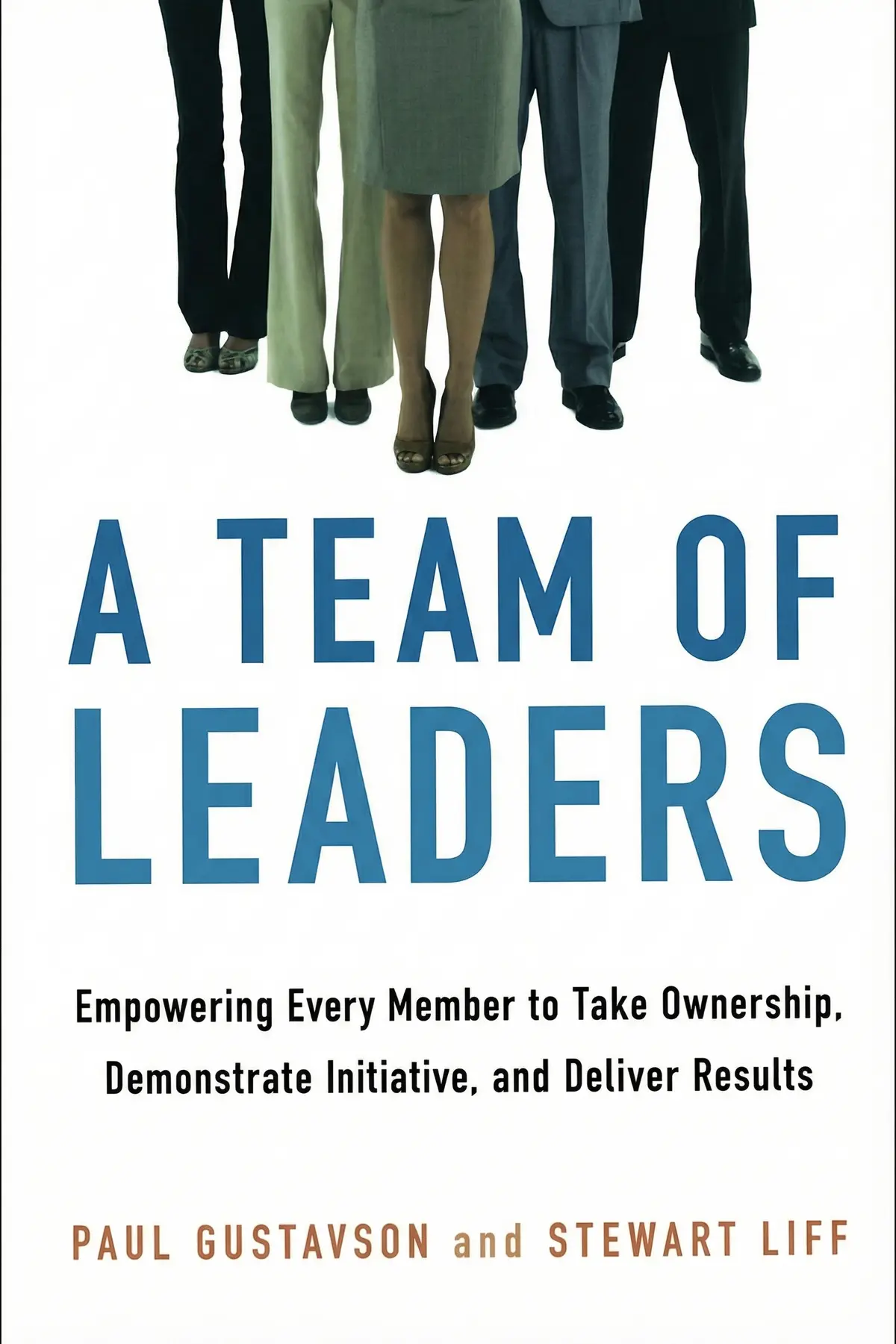
A Team of Leaders explores how to move away from traditional hierarchies and transform every employee into a self-sufficient leader through strategic design, alignment, and visual management.
1 min 21 sec
Picture the average Monday morning in many offices across the country. The air is often heavy with a sense of routine, and for many employees, the primary goal isn’t innovation or excellence—it’s simply making it to Friday. This lack of engagement isn’t just a morale issue; it’s a massive economic drain. In the United States alone, the low productivity resulting from disengaged staff costs an estimated $550 billion every single year. When people feel like they are just following orders, they stop bringing their best selves to the table. They do the bare minimum, wait to be told what to do, and check out mentally the moment the clock hits five.
But there is a different way to work. Imagine an organization where every person, from the front desk to the executive suite, acts like an owner. This is the core concept of building a team of leaders. Instead of a single person at the top making every decision, you have a group of self-sufficient individuals who are deeply committed to the company’s success. They don’t need bonuses or threats to work hard; they are driven by a shared purpose and the autonomy to make things happen. Over the next few sections, we’ll explore how to bridge the gap between a standard hierarchy and a high-performance team. We’ll look at the stages of development required to get there, the importance of organizational design, how to keep everyone’s goals aligned, and the surprising role that physical workspace plays in a team’s success.
2 min 16 sec
Moving from a strict hierarchy to a self-managed team doesn’t happen overnight; it requires a deliberate progression through five distinct developmental stages.
2 min 01 sec
Effective organization design isn’t about office furniture; it’s about structuring the team to ensure every member finds deep meaning in their contributions.
2 min 02 sec
Even the most talented team will fail if their individual incentives and the company’s stated goals are working at cross-purposes.
2 min 16 sec
True empowerment occurs only when information is treated as a shared resource rather than a guarded secret or a personal asset.
1 min 57 sec
Your physical environment is more than just a place to sit; it is a tool that can either stifle collaboration or visually reinforce your team’s mission.
1 min 11 sec
Building a team of leaders is not an easy task, but it is one of the most rewarding transformations an organization can undergo. It requires moving through the five stages of team development, starting with the intent to share power and ending with a self-managed, high-performing unit. By focusing on smart organizational design, you can ensure that every person understands their purpose and sees the value they create. When you align your rewards with your stated goals and make knowledge a shared resource, you remove the obstacles that usually prevent people from taking initiative. And finally, by using visual management to make your mission visible in the physical workspace, you create a constant reminder of what the team is striving for.
As you think about applying these ideas, start by looking at your own role. If you ever find yourself feeling demotivated, take a moment to reflect on the bigger picture. Ask yourself how your specific tasks contribute to the greater good your company serves. Whether you are fixing a bug, answering a call, or designing a product, your contribution matters to the people you serve. By shifting your own mindset and looking for ways to take ownership, you become the first spark in creating a team of leaders. When everyone takes responsibility for the whole, the possibilities for success are limitless.
Many organizations struggle with employee disengagement, where staff members feel like cogs in a machine rather than active contributors. This summary breaks down the transition from a top-down command structure to a culture of shared leadership. It provides a blueprint for how every team member can take ownership of their work, demonstrate initiative, and deliver high-level results without constant managerial oversight. The core promise of the book is that by redesigning the organization as a collection of mini-businesses, aligning incentives with stated values, and making knowledge accessible to everyone, you can create a high-performance environment. It emphasizes the importance of visual management and physical workspace design in reinforcing a company's mission and keeping everyone focused on collective success.
Paul Gustavson is an organization design consultant and the founder of Organization Planning & Design, a company that creates and sustains high-performance teams around the world. He also coauthored The Power of Living by Design and Running into the Wind. Stewart Liff is a human resources and visual management expert, as well as the president and CEO of his own consulting group. He is the author of several other successful books, including Managing Government Employees.
Listeners find that the book offers fresh perspectives on organizational success and serves as a practical resource for those in leadership. They appreciate its readability and how easy it is to understand, with one listener noting it provides detailed processes for team development. The content receives positive feedback for its motivational quality, with one review mentioning how it "ignites hearts and minds," and another highlighting its visual management techniques. Listeners value the approach to organizational design, with one review noting how it helps organizations become more agile and flexible.
Wow, the chapter on visual management alone makes this worth the cover price for any serious professional. It’s rare to find a management book that bridges the gap between high-level theory and actual, tactile implementation so effectively. Gustavson doesn’t just tell you to inspire people; he shows you how to ignite hearts and minds by making performance visible and shared. Personally, I found the Five-Stage Team Development Model to be an eye-opener for our current department struggles. We realized we were stuck at Stage 2 because we hadn't designed our processes to support leadership at the lower levels. Since implementing a few of these 'design secrets,' the shift in energy has been palpable. This isn't just a one-time read; it’s a reference guide that stays on my desk for daily troubleshooting. Highly recommended for those who want to build a truly resilient team culture.
Show moreFinally got around to reading this for our leadership book club, and it’s genuinely transformative for organizational agility. The authors demystify the process of building a self-managed workforce by focusing on 'state changes' and knowledge distribution. I love that Paul’s purpose came from watching his father’s struggles at work; that personal touch makes the motivational sections feel authentic rather than corporate. It’s a book that encourages you to trust that people can grow if given the right environment. We’ve already started using the Five-Stage Assessment, and the clarity it provided our supervisors was worth the price of the book alone. It helps you realize that leadership isn't a title, but a series of behaviors that anyone can learn. If you want to create a place where people actually enjoy coming to work, you need to read this.
Show moreThis book doesn't just sit on your shelf; it becomes a tool you pull down every time you hit a roadblock. I was especially struck by how these principles apply to life outside the office, including scouting units and even home life. The idea that we can design our environments to produce specific results is incredibly empowering. It shifts the focus from 'fixing people' to 'fixing the system,' which is a much more productive way to lead. The 5-stage model gives a clear language for growth that everyone on the team can understand and get behind. Not gonna lie, it’s a long journey to get to Stage 5, and the book is honest about the work required. But the reward—a team of confident, autonomous leaders—is worth every bit of the effort. It’s an essential guide for anyone who believes in the potential of their people to do great things.
Show moreAfter hearing so much about the five-stage development model, I finally decided to dive into this guide. Gustavson and Liff present a compelling case for why autonomy is the ultimate goal of any high-performing group. The framework helps leaders move from directive styles to a more advisory role, which is crucial for modern organizational agility. I especially liked the emphasis on trust and how it’s not just a feeling, but a design element you build into your systems. Truth is, many managers are afraid of making themselves redundant, but this book proves that doing so actually frees you up for higher-level strategic work. The transition from Stage 1 to Stage 5 is clearly mapped out, providing a practical roadmap for anyone feeling stuck in the micromanagement trap. It’s a solid resource for those looking to foster a more flexible and responsive workforce.
Show moreBuilding a culture where every single person feels like a stakeholder isn't just a soft skill—it’s a design choice. This book does a fantastic job of breaking down the technical side of team building, focusing heavily on how systems dictate behavior. I’ve always believed that organizations are perfectly designed for the results they achieve, and seeing that philosophy expanded here was very validating. The authors provide a clear path toward creating a motivating and psychologically safe environment where people can actually thrive. Frankly, the transition from being a 'boss' to a 'coach' is a difficult journey, and this book doesn't sugarcoat the challenges. You will face doubt from upper management and your own team as you shift responsibilities. Despite some of the denser sections on knowledge management, the overall message of fostering independence is loud, clear, and incredibly necessary for today’s fast-paced corporate world.
Show moreEver wonder why some teams naturally click while others seem stuck in a cycle of resentment? This book argues that it’s all down to how the team is designed from the ground up. I appreciated how the authors didn't limit their scope to just corporate offices; they mentioned applications in non-profits and even families. As someone working in a church leadership role, the focus on 'value creation' was particularly relevant to our volunteers. We often forget that people need to see the direct impact of their work to feel like leaders themselves. The writing is accessible and avoids most of the annoying jargon found in this genre. I do think some of the 'secrets' felt a bit intuitive, but having them organized into a structured roadmap makes a huge difference. It’s a great investment of time for anyone looking to increase their team's productivity without increasing their own stress levels.
Show moreAs someone who has struggled with delegation in the past, Gustavson’s focus on the 'why' of team design hit home. The truth is, if your team can't function without you, you haven't succeeded as a leader yet. This book provides the systematic tools needed to transition from being the center of all activity to being a strategic advisor. I found the visual management techniques to be a real highlight, as they offer a way to reinforce accountability without constant verbal reminders. The prose is straightforward and easy to digest, which is a relief compared to other management tomes. My only minor gripe is that the book can feel a bit repetitive in its praise for the 5-stage model. Still, the underlying message of building trust and capability is handled with a lot of nuance and practical wisdom. It’s a must-read for any new manager feeling overwhelmed by their responsibilities.
Show moreIs this a groundbreaking manual for veteran managers? Probably not, as the core concept of empowering employees has been around for quite some time. To be fair, the authors provide a very systematic way to think about team growth, which is helpful if you’re new to leadership. However, I found the examples to be incredibly repetitive and somewhat exhausting to slog through after the first few chapters. It felt like the same point was being hammered home using virtually identical scenarios. While the 'perfectly designed to get the results they get' mantra is a powerful takeaway, the book could have been about fifty pages shorter without losing much substance. It’s a decent introductory text, but seasoned pros might find themselves skimming through the latter half to find the actual tools among the fluff.
Show moreLook, I appreciated the structured roadmap, but the examples felt a bit recycled by the halfway point. The premise is simple: train your team to be autonomous so you can go do other things. It’s a great goal, but the journey Gustavson describes feels a bit idealistic at times. In my experience, not every employee wants to be a leader, and the book doesn't spend enough time on how to handle people who just want to do their job and go home. That said, the section on visual performance management was quite insightful and offered some fresh ideas on how to keep everyone on the same page. It’s a solid 3-star read—useful enough to keep, but it didn't exactly blow my mind. If you are struggling with a team that can’t make a single decision without you, this will definitely help you identify the cracks in your design.
Show moreTo be fair, the core philosophy here about autonomy is sound, but I struggled to stay engaged with the delivery. The authors provide a hundred different things to do in every chapter, and it quickly becomes overwhelming rather than helpful. I felt like I was reading a giant list of chores rather than a cohesive strategy for leadership. Not gonna lie, the Kindle version's index was also a mess, which made it even harder to navigate back to specific concepts I wanted to revisit. While the 5-stage model is a neat academic concept, trying to apply it in a fast-moving startup environment felt clunky and overly bureaucratic. If you have months to slowly transition a team in a stable corporate setting, this might work for you. For me, it was just too much dry theory and not enough punchy, actionable advice that didn't involve filling out dozens of assessments.
Show moreJoseph A. Maciariello



Deborah Gruenfeld
Mike Michalowicz

Hamilton Helmer

Margaret Heffernan
AUDIO SUMMARY AVAILABLE
Get the key ideas from A Team of Leaders by Paul Gustavson, plus 5,000+ more titles in English and Thai.







