
23 min 56 sec
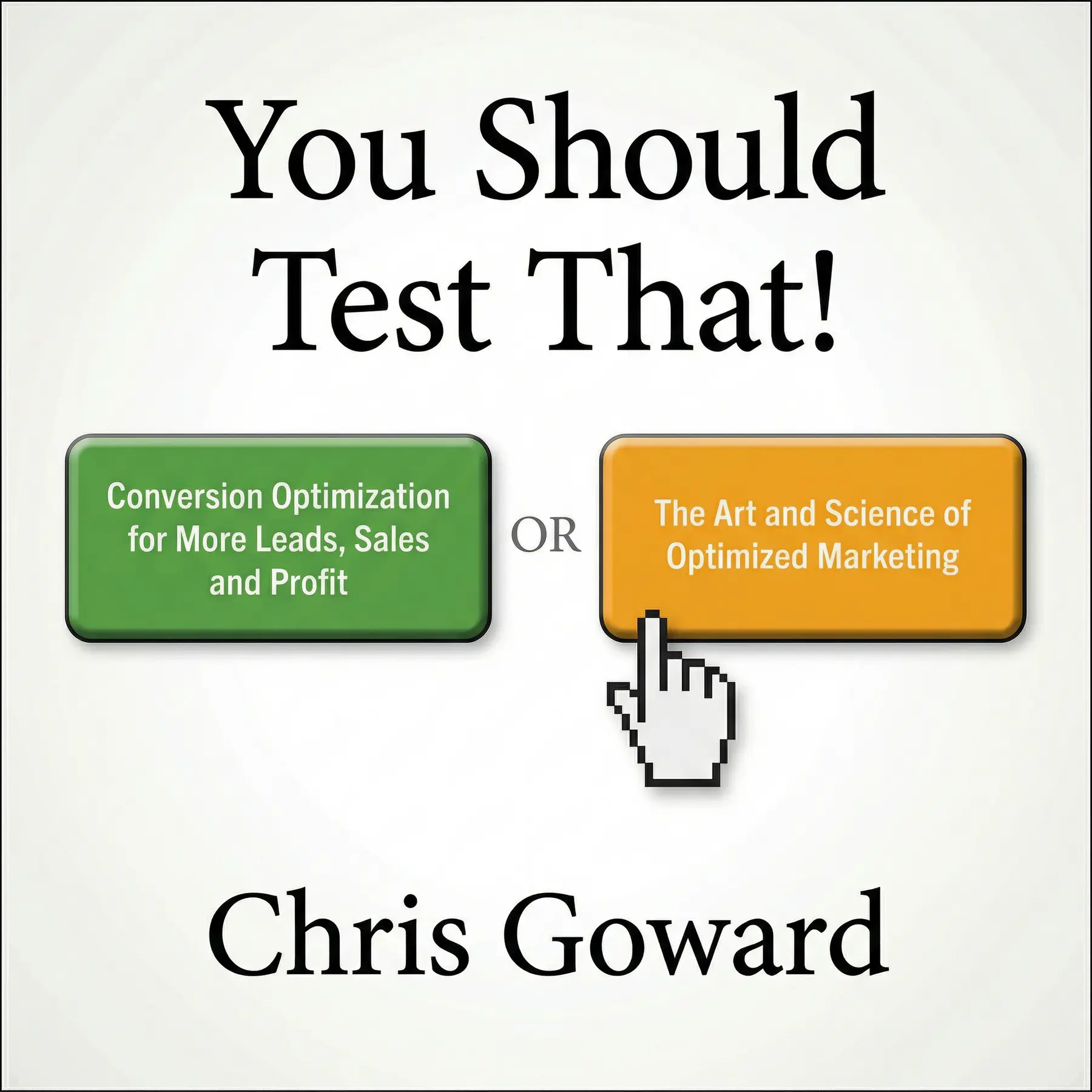
You Should Test That!: Conversion Optimization for More Leads, Sales and Profit or The Art and Science of Optimized Marketing
By Chris Goward
A comprehensive guide to boosting online conversions through scientific A/B testing, moving away from subjective design toward data-driven marketing strategies that prioritize user experience and measurable business growth.
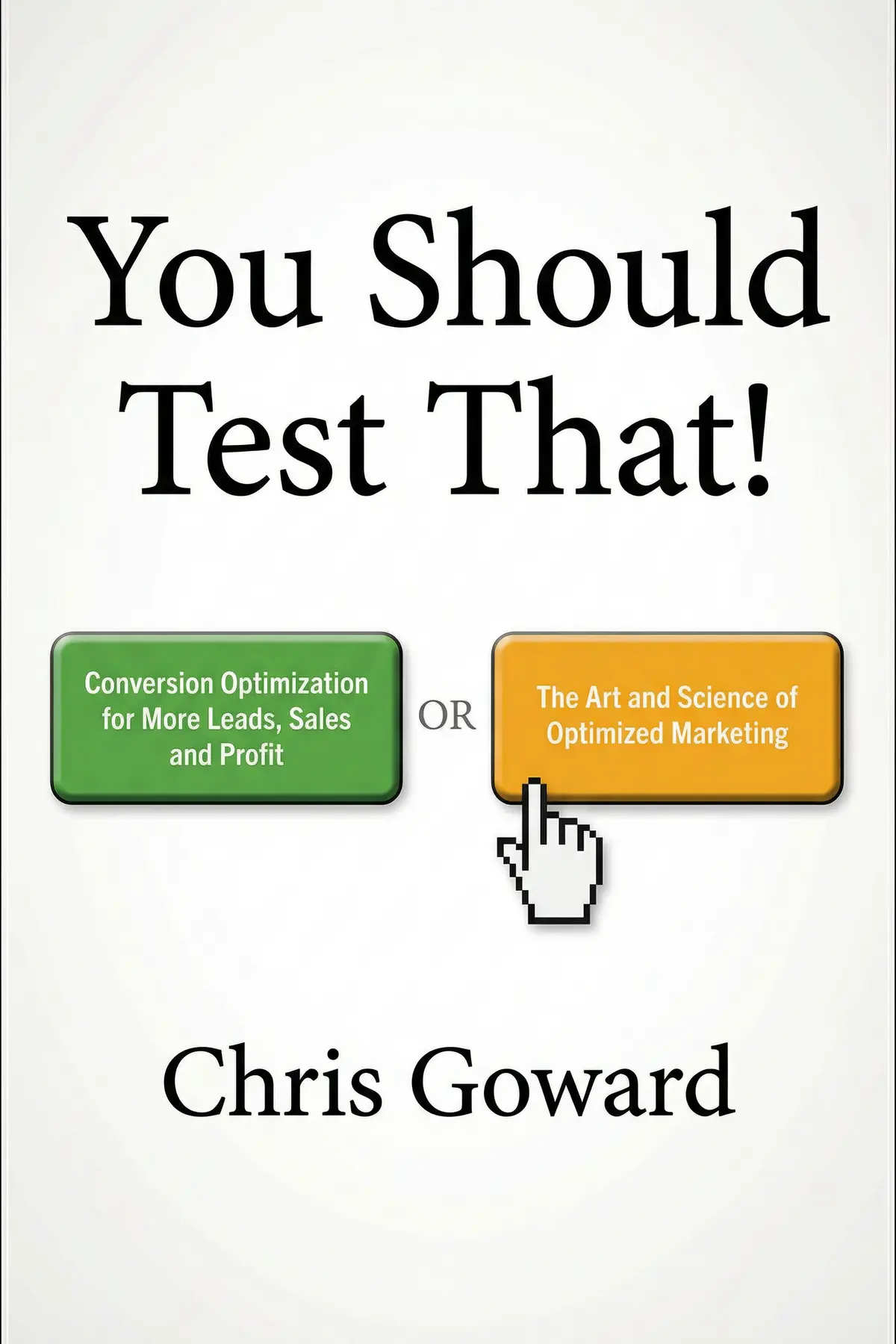
Table of Content
1. Introduction
2 min 11 sec
Imagine for a moment that you are looking at your company’s website. What do you see? Many people view their site as a digital masterpiece—a work of art where every pixel, every animation, and every carefully chosen color serves a romantic, aesthetic purpose. It’s a nice image, certainly, but it is one that might be costing you a fortune in lost opportunities. In the world of business, a website should not be treated like a delicate sculpture sitting in a gallery. Instead, it is much more effective to think of it as a high-performance motorcycle. It’s a machine built for a specific purpose: to move you toward your goals. And like any complex machine, it requires constant maintenance, parts need to be swapped out, and every component must be tested and tweaked to ensure the whole system is running as efficiently as possible.
This shift in perspective is at the heart of our exploration today. We are moving away from the idea of “good design” as a subjective preference and toward the idea of “optimized performance.” The metric that matters most in this journey is the conversion rate. This isn’t just a dry statistic; it is the heartbeat of your online presence. It tells you exactly how well your site is performing its primary job—turning curious visitors into committed customers.
In the coming sections, we will break down how to stop relying on guesswork and start using the scientific method to improve your bottom line. We will look at why search engine rankings and conversion goals are actually best friends rather than enemies. We will explore how to identify the psychological triggers that make people leave your site and, more importantly, the factors that make them stay. You will see how even small changes, like the tone of an error message, can significantly impact how a user feels about your brand. By the time we finish, you will understand that the secret to a successful website isn’t a single stroke of genius, but a continuous cycle of testing and refinement. Let’s dive into how you can start turning your website into the powerful engine your business deserves.
2. Unlocking Profits Through Conversion Rate Optimization
2 min 25 sec
Discover why focusing on conversion rates is more valuable than just chasing traffic, and learn how a poor website can create a negative halo effect on your products.
3. Moving Past Opinions and the HiPPO Method
2 min 13 sec
Learn why relying on the highest-paid person’s opinion can be a recipe for failure and how to adopt a customer-tested approach to design.
4. The Harmony Between SEO and Conversion Optimization
2 min 13 sec
Explore the synergistic relationship between search engine rankings and conversion rates, and learn how to improve both simultaneously.
5. Establishing a Goal Waterfall for Your Website
1 min 54 sec
Understand the importance of defining clear, hierarchical objectives before you begin any testing or optimization process.
6. Applying the LIFT Model to Identify Conversion Factors
2 min 05 sec
Dive into the six core factors of the LIFT model to analyze how value proposition and psychological triggers affect your visitor’s behavior.
7. Crafting and Refining Testable Hypotheses
2 min 13 sec
Learn the formula for creating scientific hypotheses that turn your website’s weaknesses into measurable strengths.
8. Reducing Anxiety Through Trust and Usability
2 min 15 sec
Explore how to combat visitor hesitation by addressing privacy concerns and making your website’s forms and functions feel safe and simple.
9. Eliminating Distractions for a Focused User Path
2 min 19 sec
Learn how to manage the two stages of website interaction by simplifying visuals and narrowing choices for your visitors.
10. The Cycle of Continuous Testing and Analysis
2 min 14 sec
Discover the practical steps for executing a test, from setting triggers to the importance of the ten-day rule and ongoing iteration.
11. Conclusion
1 min 54 sec
As we wrap up our journey through the world of conversion optimization, it is worth returning to our original image of the website as a machine. We have seen that the most successful websites aren’t the ones that are simply ‘pretty’ or ‘modern’ by some subjective standard. Instead, they are the ones that have been rigorously tested, analyzed, and refined through a scientific process. By moving away from the ‘HiPPO’ method and embracing a customer-tested approach, you place the power of your business’s growth exactly where it should be: in the hands of the data.
The LIFT model provides you with a powerful diagnostic tool to find the friction on your pages, whether it is a lack of clarity, a weak value proposition, or an abundance of anxiety-inducing forms. By turning these weaknesses into testable hypotheses, you create a systematic way to improve your site day by day, week by week. You’ve learned that SEO and CRO are partners in creating a better user experience, and that by reducing distractions and building trust, you can guide your visitors toward the actions that drive your revenue.
The most important takeaway is that optimization is a journey, not a destination. The ‘perfect’ website doesn’t exist, because the needs of your audience are always changing. However, by adopting the mindset of a tester—someone who is always curious, always skeptical of gut feelings, and always ready to let the data lead the way—you ensure that your website remains a high-performance engine for your business. So, take a look at your site again. Don’t ask if it looks good. Ask what it’s doing, how it’s performing, and most importantly, what you should test next. Your hidden profits are waiting to be found.
About this book
What is this book about?
Many businesses treat their websites like static brochures or digital art projects, focusing on aesthetics while ignoring functionality. This book argues that a website should be viewed as a high-performance machine that requires constant tuning and testing to reach its full potential. By shifting the focus from gut feelings and high-level opinions to customer-tested data, companies can unlock significant hidden profits. The core promise of the text is a systematic framework for optimization. It introduces the LIFT model—a six-factor tool designed to analyze and improve landing pages. Readers will learn how to identify the psychological barriers that stop visitors from converting, how to formulate testable hypotheses, and how to balance search engine optimization with conversion rate optimization. Ultimately, it provides the tools needed to stop guessing and start growing through rigorous, iterative experimentation.
Book Information
About the Author
Chris Goward
Chris Goward is the founder of WiderFunnel, a prominent marketing-optimization agency. Throughout his career, he has provided expert guidance to a diverse range of high-profile clients, including technology giant Google, gaming leader Electronic Arts, and the retail site Babyage.com.
Ratings & Reviews
Ratings at a glance
What people think
Listeners find this book highly beneficial for conversion optimization, with one individual pointing out its in-depth look at web conversion strategies and another emphasizing the LIFT Model framework. Additionally, the writing is clear and engaging, as one listener specifically values the sections focused on hypothesis development. Listeners also regard it as required reading for digital marketing experts. However, there are conflicting perspectives concerning its overall value for money.
Top reviews
Samart
Digital marketing professionals who aren't currently testing their landing pages are essentially leaving money on the table. Goward makes a compelling case for why conversion rate optimization should be an ongoing process rather than a one-time project. I loved the emphasis on 'scent trails' and ensuring that the most prominent message on a page matches the search terms closely. It’s about creating a seamless, painless, and enjoyable experience for the user. The book is packed with actionable insights, such as moving SEO-centric content below the fold if it isn't helping the funnel. To be fair, some of the case studies feel a little dated now, but the underlying methodology is timeless. If you want to increase revenue without increasing your ad spend, this is the blueprint you need. It’s easily one of the most practical business books on my shelf.
Show moreSaovapa
The chapter on hypothesis creation was a total game-changer for our internal marketing team. We used to just throw things at the wall to see what stuck, but Goward’s structured approach changed our entire workflow. We now focus on isolating variables and understanding the 'fuzzy edge' of emotional decision-making. I was especially intrigued by the section on 'anchoring' and how font sizes can influence a prospect's perception of savings. Small tweaks, like putting the sale price in a smaller font, are things we never would have considered without this book. Look, the result is what matters: increased revenue. We’ve already seen a jump in our average order value by applying the principles outlined here. It’s a must-read for anyone who actually wants to understand the psychology of their customers.
Show moreWatcharin
Picked this up on a whim after seeing it referenced in a few case studies and I’m so glad I did. It’s a much more condensed and inspiring study of CRO than Tim Ash’s work, which can sometimes feel a bit overwhelming. Goward uses an inspiring language that makes you want to go out and start an experiment immediately. The way he breaks down 'Anxiety'—from brand equity to the fear of post-purchase disappointment—is brilliant. I also appreciated the technical notes on using 301 redirects and monitoring tests to ensure they run properly. It’s a comprehensive guide that covers everything from copy to layout to psychological triggers. In my experience, this is the best starting point for anyone who wants to take their digital marketing to the next level. Absolutely essential reading.
Show moreJom
After hearing so much about the LIFT Model, I finally dove into Chris Goward's work. Frankly, I expected a dry manual. Instead, I found a highly accessible guide to the psychological triggers behind conversion. Goward breaks down complex ideas into manageable pillars like Relevance and Anxiety, which helps demystify why certain landing pages fail. I particularly enjoyed the focus on making goals as close to revenue as possible. However, the book does gloss over the more rigorous statistical analysis required for true A/B testing. If you are looking for deep math, you might be disappointed. Still, for a marketer trying to convince a skeptical manager to invest in CRO, this is a goldmine. It’s an inspiring read that encourages you to stop guessing and start measuring.
Show moreSelin
Look, most people think a great product is enough, but this book argues that the process of scrutinizing and experimentation is what actually moves the needle. Goward explains how to turn weaknesses into strengths by addressing fulfillment anxiety and managing expectations with clear language. I found the tips on form design particularly useful, especially the advice to move optional fields to a post-signup page. The book is very readable and avoids overly dense jargon, which makes it great for sharing with team members. My only gripe is that it can feel a bit like a long-form advertisement for the author's agency at times. Regardless, the strategies regarding 'intangible benefits' like comfort and control are worth the price of admission alone. It’s a highly practical manual for building a better user experience.
Show moreSiraporn
Ever wonder why users bounce within milliseconds of landing on your page? This book provides the answer by looking at the intersection of persuasion marketing and experience design. The concept of the 'scent trail' resonated with me because it explains how search engine visitors are actively hunting for specific solutions. If your page doesn't match their search terms immediately, they are gone. Goward’s 7-step testing process is a clear roadmap for anyone looking to professionalize their marketing efforts. Not gonna lie, I was skeptical about how much I could learn from a book about A/B testing, but the insights into cognitive load and visual cues were eye-opening. The CrystalReports landing page example is absolutely gorgeous and worth studying. It’s a great resource for anyone involved in web design or sales.
Show moreAmy
Finally got around to finishing this and the biggest takeaway for me was the focus on relevance. Goward points out that synonyms are often invisible to users who are pattern-matching, which is a huge insight for keyword strategy. I’ve already started re-evaluating our headlines to match our inbound search terms more closely. The advice to use image captions because they are the most-read text on the page is another small but powerful tip. Gotta say, the book is full of these 'aha' moments that make you rethink your entire site layout. I do wish there was more information on mobile-specific optimization, as the web has changed a lot since this was published. However, the core principles of reducing distraction and building urgency remain incredibly relevant today. It's a solid, practical guide for any digital professional.
Show moreYindee
Brushing up on conversion optimization is always a good idea, but I found this specific guide to be a bit of a mixed bag. On one hand, the case studies are fun and offer plenty of inspiration for my next design sprint. The LIFT model is clearly explained and easy to apply to any landing page. On the other hand, the book is quite misleading when it comes to the actual statistics of testing. It brushes over the complexities of sample sizes and analysis, making CRO look a bit easier than it actually is in practice. Personally, I think it’s a fantastic start for those unfamiliar with the 'why' of testing, but it lacks the 'how' for advanced users. It’s a solid 3.5 stars that provides a good high-level overview without getting its hands too dirty in the data.
Show moreBrooklyn
Not what I expected in terms of statistical depth, yet the inspiring language kept me turning pages until the end. Frankly, I was not the target demographic for this one as a developer, but I can see why a marketer would love it. It’s very focused on the 'persuasion' side of the web, explaining how adjectives and image captions can influence a user's intent. While I found the LIFT model informative, I felt the book ignored some of the technical challenges of modern web frameworks. To be fair, it’s a great way to show doubting managers why we need to test instead of just following 'best practices.' It’s a good overview, but if you are already an expert in CRO, you might find the insights a bit elementary. A decent read, but not revolutionary.
Show moreAva
This book feels like it’s stretching a handful of excellent blog posts into a full-length manuscript, which makes the value for money a bit questionable. Truth is, if you’ve followed the WiderFunnel blog for any length of time, most of these frameworks will feel like retreads of old content. While the LIFT model is undoubtedly a powerful way to look at value propositions, the repetitive nature of the chapters can be frustrating. I wanted more technical depth on isolating variables and less marketing fluff. The advice to keep your control page untouched is solid, but the surrounding filler is hard to ignore. It’s a decent overview for a complete novice, but seasoned digital professionals will likely find themselves skim-reading most of the sections. It just didn't provide the level of new insight I was hoping for.
Show moreFeatured in
Readers also enjoyed

AUDIO SUMMARY AVAILABLE
Listen to You Should Test That! in 15 minutes
Get the key ideas from You Should Test That! by Chris Goward, plus 5,000+ more titles in English and Thai.
- 5,000+ titles
- Listen as much as you want
- 7-day free trial
- Cancel anytime







