
18 min 31 sec
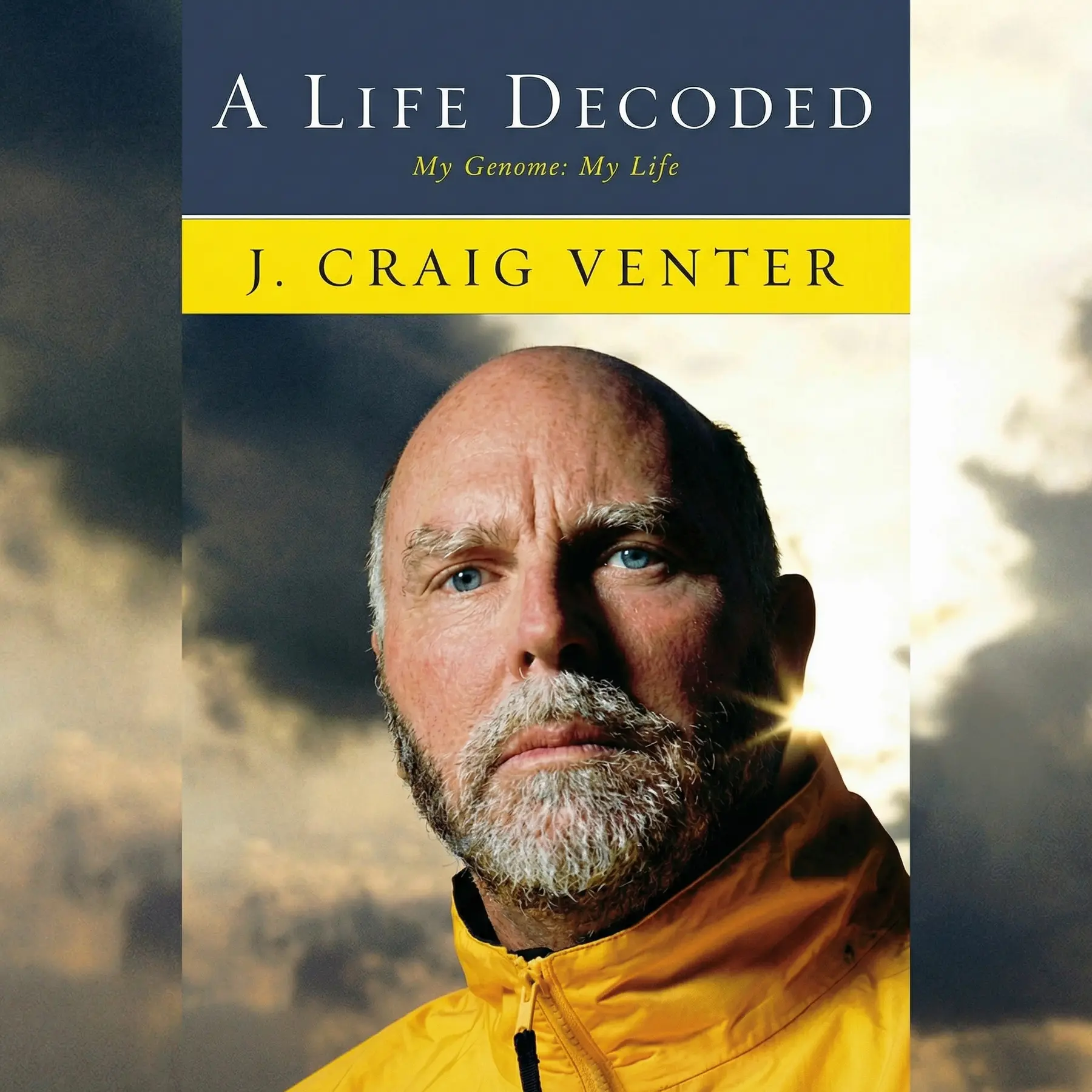
A Life Decoded: My Genome: My Life
A Life Decoded explores the boundary-breaking journey of J. Craig Venter, the scientist who revolutionized genetics by sequencing the human genome, forever changing our understanding of the biological code of life.
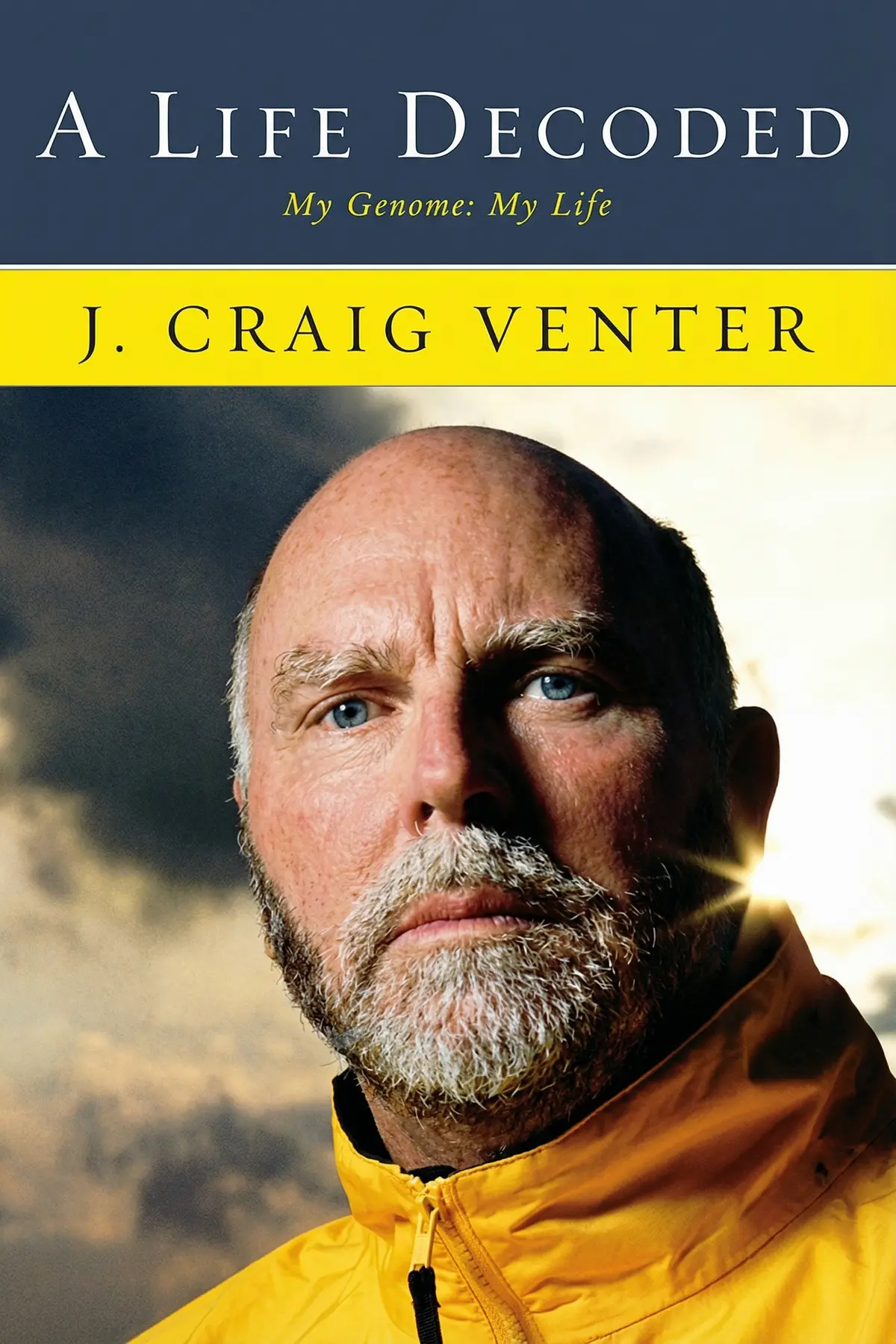
Table of Content
1. Introduction
1 min 44 sec
Imagine standing at the edge of a frontier so vast that most experts deemed it impossible to map. This wasn’t a physical territory like the moon or the deep ocean, but something much more intimate: the very chemical instructions that make us human. For decades, the idea of sequencing the entire human genome was the ultimate scientific Everest. It was a task of such staggering complexity that it seemed destined to take generations. Yet, one man decided that the traditional pace of discovery simply wasn’t fast enough.
That man was J. Craig Venter, and his story, as told in A Life Decoded, is far more than a dry collection of laboratory notes. It is a high-octane narrative of a free-spirited American who refused to follow the rules, whether he was as a boy racing airplanes on a runway or as a scientist challenging the global establishment. This throughline of rebellion and relentless ambition is what defines Venter’s life and his monumental achievements.
In this journey, we’ll explore how a traumatic stint in the Vietnam War transformed a lackluster student into a driven seeker of biological truth. We will see how his unconventional methods sparked fierce controversies that rippled through the halls of government and the ivory towers of academia. Most importantly, we’ll witness the moment the human code was finally broken. This isn’t just a story about genes and molecules; it’s a story about the spirit of inquiry and the courage to look at the most fundamental questions of existence through a completely new lens. From the shores of California to the stage of the White House, let’s dive into the life of a man who decided that decoding life itself was the only challenge worth his time.
2. A Foundation of Risk and Construction
2 min 09 sec
Discover how a childhood defined by unsupervised freedom and high-stakes games on an airport runway forged a scientist who wasn’t afraid to challenge the status quo.
3. The Transformative Crucible of Vietnam
2 min 13 sec
Witness how the horrors of war and a brush with death in the Pacific Ocean provided the ultimate motivation to uncover the essence of human life.
4. A Prodigy in the Laboratory
1 min 39 sec
Follow Venter’s rapid ascent through academia as he bypassed traditional timelines and proved his theories on how the body reacts to stress.
5. The Grand Vision of Genomics
1 min 51 sec
Learn how a shift to the National Institutes of Health introduced Venter to the daunting, ‘impossible’ task of decoding the entire human blueprint.
6. Innovation Sparking Controversy
1 min 54 sec
Explore the heated debate that erupted when Venter’s new, faster methods for gene identification collided with the traditional ethics of science.
7. The Power of Shotgun Sequencing
1 min 53 sec
Discover the revolutionary ‘shotgun’ method that allowed Venter to shatter records and sequence the first genome of a living organism.
8. The Finish Line at the White House
1 min 42 sec
Relive the historic moment when the race to decode humanity ended in a tie, bringing global recognition to Venter’s radical vision.
9. New Frontiers in the Deep Blue
1 min 45 sec
See how Venter combined his love for sailing and science to discover millions of new genes in the ocean and pioneer the creation of synthetic life.
10. Conclusion
1 min 41 sec
The life of J. Craig Venter is a powerful testament to the impact one individual can have when they refuse to accept the status quo. From his early days of building hydroplanes to his high-stakes race to sequence the human genome, Venter’s story is defined by a relentless curiosity and a willingness to take enormous risks. He showed the world that science doesn’t always have to move at a glacial pace and that sometimes, a radical shift in perspective is exactly what’s needed to solve the world’s most complex puzzles.
By decoding the human genome and then turning his sights toward the hidden biological wealth of the oceans, Venter has provided us with the tools to understand our past and potentially secure our future. His work in synthetic biology suggests a world where we can engineer solutions to our most pressing environmental problems. But perhaps the most important lesson from his memoir is the value of following one’s own path. Venter’s success didn’t come from fitting in; it came from his courage to be an outsider.
As we close this summary, the most actionable advice we can take from Venter’s journey is to let your natural curiosity be your compass. Whether you are a student, a professional, or an artist, don’t be afraid to challenge the systems that try to keep your thinking inside a box. The greatest breakthroughs often come from the people who are willing to ask “why not?” when everyone else is saying “it can’t be done.” Keep your curiosity alive, embrace the challenges that come your way, and remember that the most profound secrets of life are waiting for those bold enough to go looking for them.
About this book
What is this book about?
A Life Decoded provides an inside look at the high-stakes world of modern science through the eyes of one of its most polarizing and productive figures. The book follows J. Craig Venter from his rebellious youth and harrowing experiences as a medic in the Vietnam War to his meteoric rise in the field of genomics. It details the intense competition and technological breakthroughs required to map the human genetic blueprint. Beyond the laboratory, the memoir offers a glimpse into the controversies surrounding gene patenting and the friction between public and private scientific endeavors. Ultimately, the book promises a deeper understanding of the drive required to achieve the impossible. It illustrates how one man's pursuit of the essence of life led to the decoding of our own species and opened new frontiers in environmental science and synthetic biology.
Book Information
About the Author
J. Craig Venter
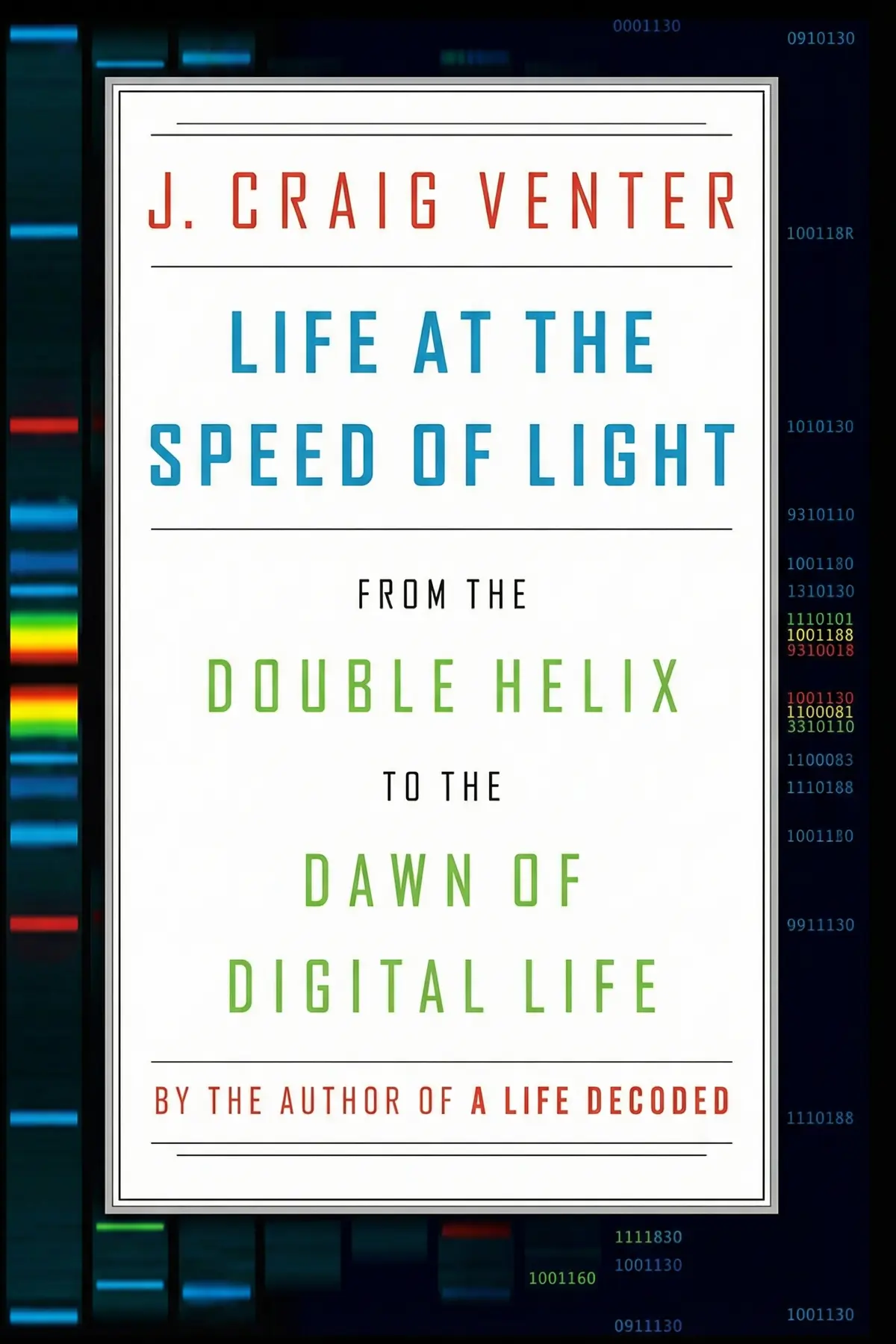
J. Craig Venter is a world-renowned biochemist and geneticist who rose to global prominence for his leadership in sequencing the human genome in 2001. A pioneering figure in twenty-first-century science, he founded several landmark institutions, including Celera Genomics, The Institute for Genomic Research (TIGR), and the J. Craig Venter Institute (JCVI). In addition to his memoir, he has authored Life at the Speed of Light, continuing his exploration of the intersection between technology and biology.
Ratings & Reviews
Ratings at a glance
What people think
Listeners find the work both gripping and simple to follow, with one listener highlighting the particularly engaging accounts of sailing trips. Furthermore, the prose is effectively written, and listeners admire the author's ability to provide straightforward descriptions of difficult concepts. They also find the book's perspectives valuable; specifically, one listener mentions how well it explains the evolution of the field. Listeners celebrate the author's successes and personal growth, with one listener focusing on a bold American spirit characterized by initiative and risk-taking.
Top reviews
Yaowaluk
This book provides an exhilarating look at the high-stakes world of modern genetics. Venter's narrative captures a bold, risk-taking spirit that feels quintessentially American, showing how he moved from a struggling student to a global pioneer. The clarity with which he explains the shotgun sequencing method is impressive. It makes complex concepts accessible to a layperson without being condescending. While his confidence is palpable, it feels justified given the sheer scale of the Human Genome Project’s completion. I particularly loved the sections about his time on the water. His sailing adventures serve as a perfect metaphor for navigating uncharted scientific territory. It’s an essential read for anyone wanting to understand how politics and personality drive the biggest discoveries of our age.
Show morePete
The chapter on the Vietnam War provides such a jarring, necessary context for the rest of Venter’s aggressive career path. You see exactly where that "first place or nothing" mentality comes from. It makes his later battles with the NIH much more understandable. This is a masterclass in science communication. He breaks down the mapping of the human genome without ever talking down to the reader. I appreciated how he highlighted the necessity of automation and new technology, even when the rest of the community was stuck in old-fashioned methods. It’s a fast-paced, educational journey through one of the most important decades in biological history. Definitely a must-read for anyone curious about the intersection of business, government, and pure discovery.
Show moreChanikarn
Venter represents a uniquely American brand of scientific ambition—unapologetic, well-funded, and incredibly driven by the desire to win. This book is a fascinating deep dive into how he managed to beat a government-backed consortium at their own game. The level of detail regarding the technological hurdles of sequencing is brilliant. I found his character development from a "surf bum" to a world-class scientist truly inspiring. He makes no apologies for his ego. I actually found that refreshing compared to the false modesty often found in academic circles. It’s a large book, but it moves quickly thanks to the heavy doses of intrigue and the clear, effective prose. I came away with a much deeper appreciation for the genomic revolution.
Show morePrasarn
As someone who follows biotech, I found the "big biology" power plays in this memoir absolutely riveting. Venter illustrates how the race to sequence human DNA was less of a polite scholarly pursuit and more of a brutal corporate war. He doesn’t hold back when describing his rivals. This makes for some very juicy drama, even if the perspective is obviously biased. To be fair, the little boxes containing info on his own genome were a clever touch. They connect the abstract science to a real person, even if that person is a bit full of himself. The pace is generally good, though the middle sections regarding funding and board meetings drag slightly. Still, it's a fascinating peek behind the curtain of government-funded research.
Show moreSudarat
Picked this up mostly for the history, but I stayed for the surprisingly entertaining sailing stories. Venter’s passion for the ocean seems to mirror his approach to genetics; he’s an explorer who isn't afraid to go against the current or take massive risks. The way he describes the transition from his service in Vietnam to the lab is handled with a lot of emotional weight. It really helps you understand the "man of action" persona he adopted during the genome wars. My only gripe is that he occasionally gets bogged down in attacking specific bureaucrats. That can feel a bit dated to modern readers. Nevertheless, his contributions to science are undeniable and this book documents that legacy with great energy and detail.
Show moreTakeshi
After hearing about Venter's reputation for years, I wanted to hear the story in his own words. What I found was a compelling account of how a single determined individual can disrupt a massive government bureaucracy. The book shows that it pays to be bold in academia, even if it earns you a few dozen high-profile enemies along the way. His writing style is surprisingly punchy. It makes the "dry science" parts move much faster than I anticipated. I did feel like he glossed over some of his own mistakes while magnifying those of his rivals, but that's typical for a memoir. It’s a great resource for understanding the fierce competition that defines modern research.
Show morePairot
Ever wonder what the most competitive man in science looks like? Venter gives us the answer. It’s a polarizing mix of brilliance and absolute arrogance. The truth is, the science here is top-notch. He explains the development of the field with remarkable precision. However, the tone is frequently so superior that I found myself rolling my eyes every few pages. He treats every obstacle like a personal vendetta and every collaborator like a potential traitor. It’s an interesting life story, particularly the shift from his aimless youth in Vietnam to his obsessive research, but I wish he had more self-reflection. It's a solid 3-star read: informative for the brain, but quite exhausting for the spirit.
Show moreOtt
Look, the science is undeniably ground-breaking, but I struggled with Venter’s relentless need to be the hero of every single anecdote. He spends a significant amount of time recounting personal triumphs that don't always feel relevant to the broader scientific narrative. The book is essentially one long tantrum against the people who doubted his shotgun sequencing method. While he was eventually proven right, the delivery is exhausting. I liked the inclusion of the genome sidebars in theory, but they often disrupted the flow of the more interesting political segments. It’s worth reading for the technical insights, but be prepared for a very healthy dose of "I told you so" throughout the entire narrative.
Show moreKung
Finally got around to reading this and I’m left with mixed feelings about the man, even if the work is stunning. Venter is clearly a genius. However, he writes about himself like he’s a Nobel laureate who hasn't been given his due yet. Some of the TMI regarding his personal life and his "thrill-seeking" genes felt unnecessary and distracted from the core story of the genome. In my experience, the best parts of the book were the descriptions of the actual lab work and the scaling of the sequencers. Those moments of genuine discovery are what kept me turning the pages despite the constant sniping at his peers. It’s a bit too self-serving to be a 5-star book, but too important to ignore.
Show moreNarongrit
Not what I expected at all. Frankly, it was a bit of a slog to get through the author's vanity. Venter uses these pages to settle every petty grievance he’s ever had with the scientific establishment. Every chapter seems to alternate between dense, dry data and a "Toot Toot" session where he blows his own horn about how special his own genome is. The sidebars about his specific genetic traits felt less like science and more like an exercise in narcissism. If you can ignore the constant self-aggrandizement, there is a story about the genome here, but you have to dig through a lot of mud to find it. I’d suggest finding a more objective account of the era instead of this self-serving manifesto.
Show moreReaders also enjoyed

A Promised Land
Barack Obama


A River in Darkness: One Man’s Escape from North Korea
Masaji Ishikawa

A Spy Among Friends: Philby and the Great Betrayal
Ben Macintyre


A Year in the Life of William Shakespeare: 1599
James Shapiro


AUDIO SUMMARY AVAILABLE
Listen to A Life Decoded in 15 minutes
Get the key ideas from A Life Decoded by J. Craig Venter, plus 5,000+ more titles in English and Thai.
- 5,000+ titles
- Listen as much as you want
- 7-day free trial
- Cancel anytime







