
A Planet of Viruses
Carl Zimmer
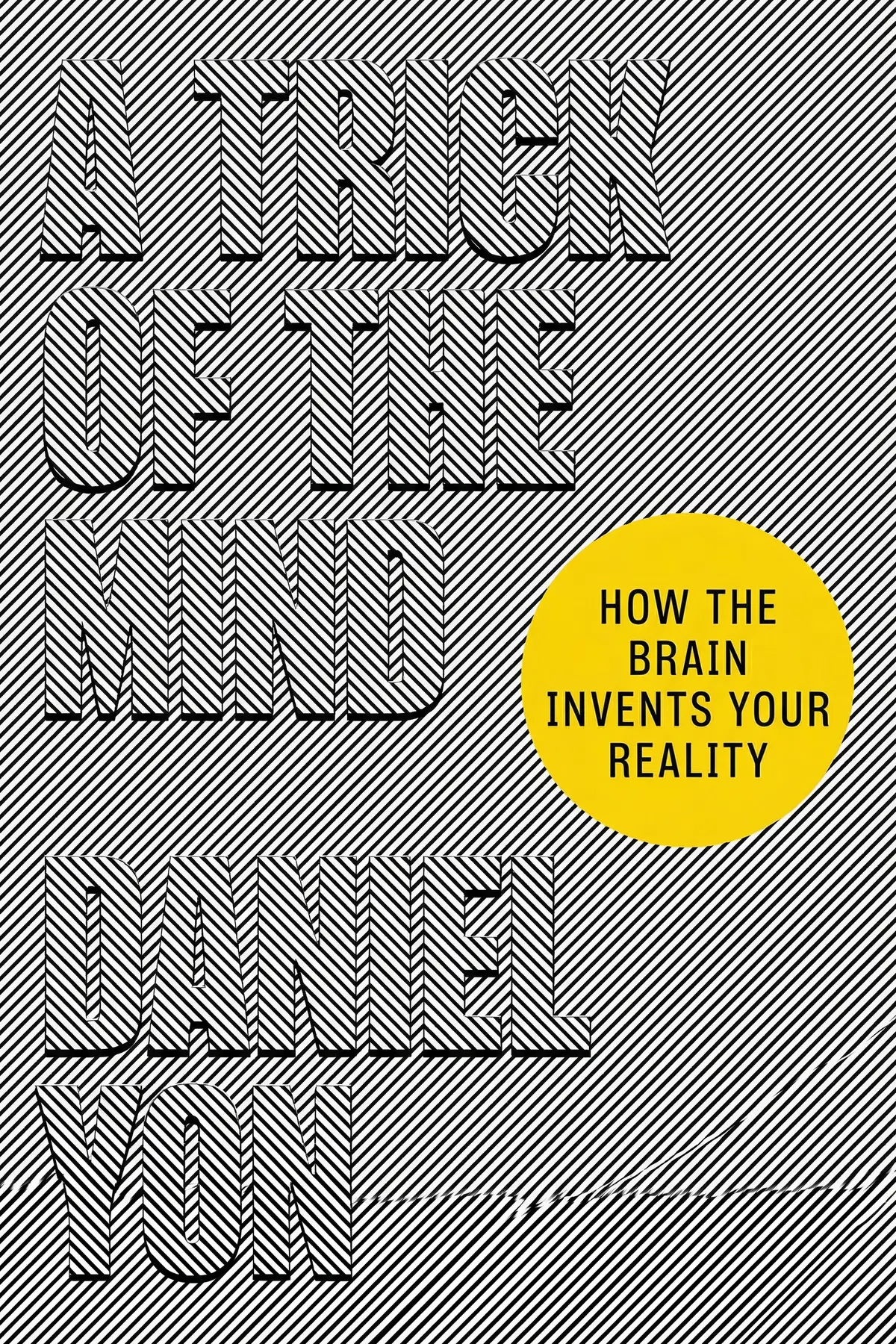
Explore how the human brain functions as a tireless scientist, constantly predicting and inventing the reality we experience, from our physical perceptions to our social interactions and sense of self.
2 min 14 sec
Imagine, for a moment, that you aren’t actually looking at the world through a window, but rather through a sophisticated internal projector. We often assume that our eyes and ears are passive recorders, capturing a solid, objective reality that exists exactly as we see it. But as Daniel Yon explores in A Trick of the Mind, the reality we experience is far more subjective and far more constructed than we realize. Our brains are not just mirrors of the world; they are proactive storytellers, constantly generating hypotheses, testing predictions, and refining models of how everything works—from the laws of physics to the hidden intentions of the person standing across from us.
To understand this, we can look to the philosopher Karl Popper, who famously proposed that we inhabit three distinct, overlapping worlds. First, there is the material world—the realm of molecules, gravity, and physical objects. Second, there is the mental world—the private landscape of our own thoughts, feelings, and perceptions. And third, there is the world of ideas—the collective storehouse of language, myths, and scientific paradigms that exist beyond any single individual. In each of these three realms, your brain acts like a tireless scientist. It doesn’t just wait for information to arrive; it anticipates it. It builds theories to explain why things happen and uses those theories to filter the overwhelming flood of data hitting its senses.
In this exploration, we are going to dive deep into the machinery of the mind to see how this ‘scientist in the skull’ operates. We’ll look at how your brain builds a visual world out of mere shadows and light, and how it constructs a sense of personal agency and ‘self’ through action and effect. We will also investigate how we use our own internal instruments to decode the mysteries of other people’s minds, and why our brains are wired to find the act of learning itself more rewarding than any physical prize. Finally, we’ll see what happens when the world becomes volatile—when our mental models fail us, leading to everything from simple illusions to the rise of conspiracy theories. This is the story of how your brain invents your reality, and why that invention is the most important tool you have for navigating life.
2 min 36 sec
Discover why your eyes don’t just see the world as it is, but instead participate in a complex negotiation between light, shadow, and your own expectations.
2 min 32 sec
Learn how your brain builds a model of ‘you’ by tracking the outcomes of your actions and how that sense of control can shift unexpectedly.
2 min 13 sec
Explore the ‘Galileo maneuver’—the brain’s clever way of using your own feelings as a template to understand what others are thinking and feeling.
2 min 25 sec
Discover how your past successes and failures create a feedback loop that shapes your future confidence and colors how you see the truth.
2 min 16 sec
Why is learning so satisfying? Uncover the biological secret behind curiosity and why our brains value information as much as food or money.
2 min 15 sec
As AI gets better at mimicking us, we must ask: what makes human creativity truly unique? The answer lies in how we mix our worlds together.
2 min 26 sec
When the world feels chaotic, our brains struggle to stay grounded. Learn how meta-learning helps us decide when to change our minds.
2 min 00 sec
As we have seen throughout this journey into A Trick of the Mind, the reality you experience every day is a magnificent, ongoing construction. From the moment you wake up, your brain is acting as a tireless scientist, weaving together threads of sensory data, past memories, and future expectations to create a coherent world. It’s a process that allows us to see depth in shadows, to find meaning in speech, and to connect with the inner lives of others. But it’s also a process that is inherently prone to error, bias, and illusion.
The core message of Daniel Yon’s work is that our perceptions and beliefs are not fixed truths; they are hypotheses. Whether we are assessing our own capabilities, interpreting a friend’s mood, or trying to make sense of a global crisis, we are always working with models that are subject to revision. This realization is incredibly empowering. It means that we aren’t just passive victims of our circumstances or our biology. If our ‘reality’ is built on predictions, then we have the power to change that reality by seeking out new data, diversifying our experiences, and remaining curious about the things we don’t yet understand.
In a world that often feels increasingly volatile and polarized, understanding the predictive nature of the mind is more important than ever. It teaches us the value of ‘meta-learning’—the ability to know when to trust our old habits and when to pivot to new ideas. It encourages us to approach others with more empathy, recognizing that their ‘movement vocabulary’ and mental models might be different from our own but no less valid. Ultimately, your mind is a work in progress. It is a storyteller that is always writing and rewriting the draft of your life. By embracing that uncertainty and staying open to the ‘eureka moments’ of surprise, you can turn the ‘tricks’ of the mind into a tool for a deeper, richer, and more authentic connection to the world around you.
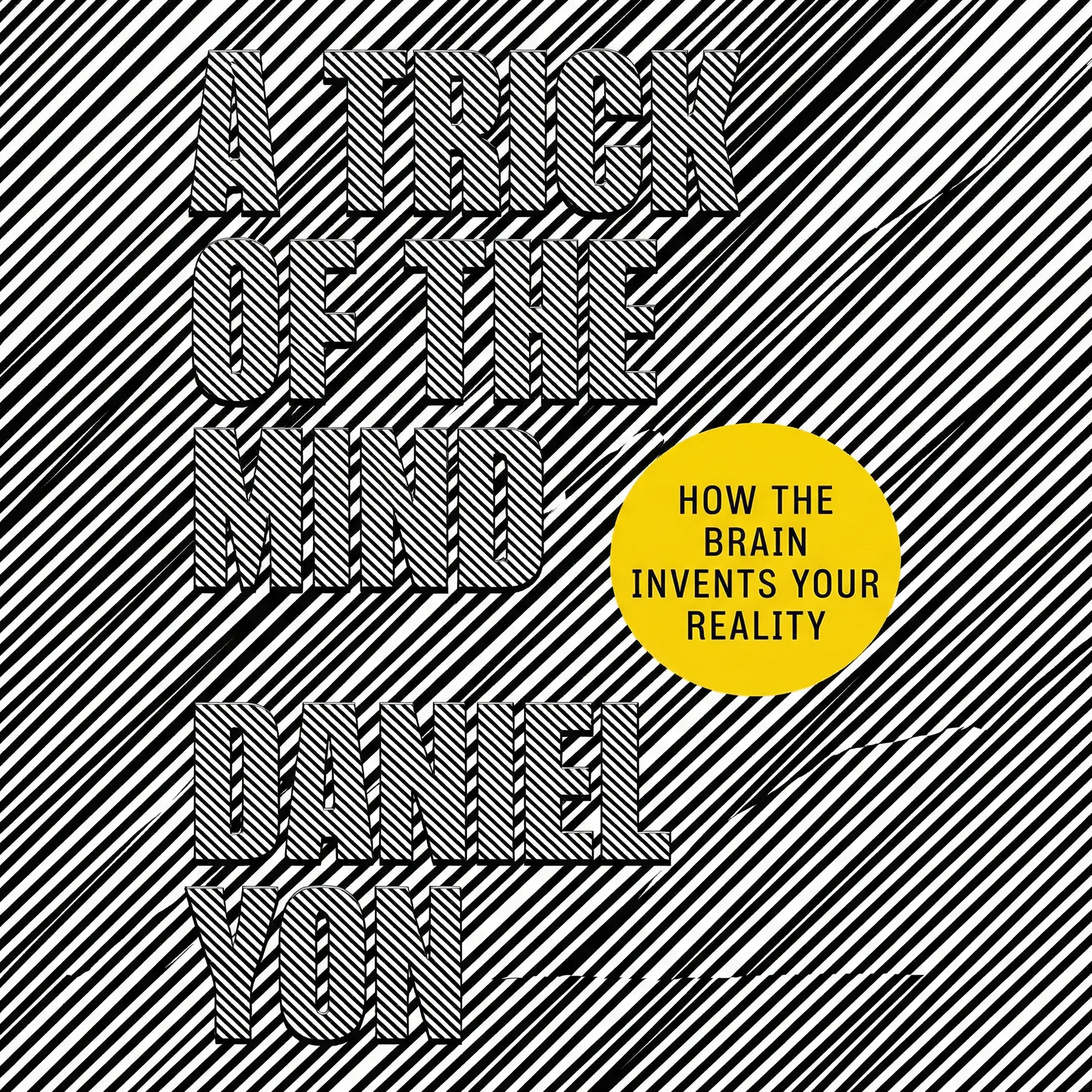
A Trick of the Mind explores the fascinating intersection of neuroscience and psychology to reveal that reality is not something we simply record, but something we actively construct. Daniel Yon explains how the brain uses 'predictive processing' to make sense of the world, acting like a scientist that builds and tests internal models to interpret everything from visual light to the hidden intentions of others. The book promises a deeper understanding of the 'scientist in your skull,' explaining why we experience illusions, how our confidence is shaped by early successes, and why we are biologically wired to find learning and surprise more rewarding than simple prizes. By the end, readers gain a new perspective on human creativity, the rise of conspiracy theories in uncertain times, and the fundamental ways our mental models shape our every decision and belief.
Daniel Yon is an experimental psychologist and cognitive neuroscientist at Birkbeck, University of London, where he directs the Uncertainty Lab. His research explores how our brains build theories of the world, of other people, and of ourselves – and how those models shape perception, belief, and decision-making.
Listeners find *A Trick of the Mind* to be a captivating and reachable look at how neural predictions shape our perception of the world. They enjoy the way the work combines contemporary neuroscience with thought-provoking case studies, like the "double empathy problem" and delayed gratification research. Additionally, listeners value the author’s skill in clarifying technical notions such as "prediction error" for a wider audience. While some listeners suggest the tone can occasionally include "cheap shots" or lacks sufficient real-world application, most describe the insights as profoundly engaging. In particular, one listener mentioned that the book’s description of learning as a process of updating mental models is truly transformative.
As someone who designs educational workshops, I found the core argument here—that we learn by updating predictions rather than just absorbing facts—to be a total game-changer. Daniel Yon frames the brain not as a recording device, but as a proactive guesser constantly trying to stay one step ahead of the senses. This perspective makes sense of why students cling to old misconceptions; their internal models are just doing their job! The writing is sturdy and technical enough to be credible without becoming a slog. Truth is, I would have loved more specific classroom applications, but the conceptual shift alone is worth the price of admission. It’s an intriguing, generally convincing dive into why we see what we expect to see.
Show moreAfter hearing about Karl Popper’s three worlds for years, seeing them applied to modern neuroscience was a revelation. Yon masterfully weaves together the material world, the mental world, and the world of ideas to show how they all collide inside our skulls. The marshmallow study reimagining was a highlight for me, showing how children's risk decisions are based on the reliability of their environment rather than just willpower. It’s rare to find a book that balances deep philosophy with hard data so effectively. This isn't just about how the brain works; it's about how we inhabit a reality that is essentially a collaborative construction. If you want a book that makes you question your own eyes, this is it.
Show moreDaniel Yon has managed to take the incredibly complex world of cognitive neuroscience and make it feel like a dinner party conversation. He explains how our retinas only receive flat patterns, yet our minds solve the "ill-posed inverse problem" of constructing a 3D world with startling ease. I found the discussion on the "double empathy problem" particularly enlightening, especially the study involving animated figures and the disconnect between neurotypical and autistic interpretations. It’s a sobering reminder that our objective reality is often just a negotiated agreement between our expectations and our evidence. While the author occasionally takes a few cheap shots at other fields, the sheer depth of the research makes it a must-read for anyone curious about the machinery of the mind.
Show moreEver wonder why we're so obsessed with learning things that have no immediate practical value? Yon argues that our brains are actually wired for the joy of discovery, treating new information with the same dopamine-fueled reward system as food or money. This "hedonic treadmill" of knowledge explains why we build particle accelerators or stay up late reading philosophy. I loved the way he connects these high-level human drives back to the basic mechanics of prediction error. The book is full of specific examples that make the predictive processing model feel tangible. It’s a bit technical in the middle, but the author’s passion for the subject keeps the momentum going through the drier bits of data.
Show moreThe chapter on noradrenaline and decision-making really changed how I view my own anxiety. Understanding that our brains can be signaled to treat the world as volatile—making us latch onto flimsy evidence—is a powerful insight. Yon discusses how medications like beta-blockers or Ritalin can shift this balance, which provides a fascinating look at the chemistry of belief. I did find some of the tone a bit dismissive of earlier psychological theories, but the perspective he offers is incredibly intriguing. It’s a sturdy piece of science writing that manages to be both informative and slightly unsettling. Frankly, I haven’t looked at a flat pattern of light the same way since finishing the first chapter.
Show moreThis isn't your typical pop-science book that promises to change your life in five easy steps. Instead, it’s a deep dive into the predictive machinery that builds our sense of self and the world. I was particularly fascinated by the idea of the "Galileo maneuver," where the brain looks inward to interpret the outward world. It explains why we struggle to understand people whose rhythms don't match our own. The book is approachable and playful, though it demands your full attention. My only real gripe is that I wanted more on the creativity side of things, as the ending felt a bit rushed compared to the detailed sensory chapters. Overall, it’s a very solid four-star read.
Show moreFinally got around to reading this, and that specific section on the marshmallow supply really stuck with me. It’s such a clever way to illustrate how our logic is always dependent on our internal models of how reliable the world is. Yon is a practicing neuroscientist, and it shows; the examples are precise and the data feels current. He argues that our sense of agency is dynamic, shaped by whether we feel we have control or are just following orders. It’s a bit mind-blowing to realize how much of our free will is actually just a story the brain tells itself after the fact. Highly recommended for anyone who likes their psychology with a side of existential dread.
Show moreLook, the science here is undeniably fascinating, but I struggled with the delivery in places. Yon does a brilliant job explaining the predictive mind, but his tone felt strangely at odds with a book meant to expose our cognitive biases. It’s hard to take a lecture on avoiding stereotypes seriously when the author slips into the very same kind of snarky generalizations he’s warning against. That said, the section on how noradrenaline affects our learning rate during times of volatility was incredibly timely. It explains so much about why we latch onto flimsy evidence when the world feels unsteady. It’s an accessible guide, though I’d recommend taking some of the author’s editorializing with a grain of salt.
Show moreThe most striking part of this book wasn't the stuff about optical illusions, but the "double empathy problem." As the parent of an autistic child, seeing the research on how different movement styles lead to mutual misunderstanding was eye-opening. However, the book as a whole felt a bit like a collection of interesting studies looking for a stronger central narrative. I appreciated the BLUF-style structure in some chapters, but the transitions between Popper's philosophy and the biology of dopamine felt a bit disjointed. It’s definitely not a self-help book, and if you’re looking for five steps to a better brain, you’ll be disappointed. It’s more of a dense, occasionally mind-blowing exploration of why our reality is a hallucination that usually works.
Show moreMaybe my brain just wasn't predicting a book this dense when I picked it up, because I found this a real struggle to get through. I was hoping for something more practical, but this is a very theoretical look at cognitive psychology. While the stuff about the "Galileo maneuver" and how we project our own feelings onto others was okay, much of the rest felt repetitive. The writing style also rubbed me the wrong way; it felt a bit patronizing at times, which is a shame because the core concept—that we guess the world into being—is actually really cool. To be fair, if you’re a neuroscience student, you’ll probably love the technicality, but for a casual reader, it’s a lot of work for a small payoff.
Show moreCarl Zimmer
Bill Bryson
Jeff Hawkins
Steven C. Hayes
Deborah Gruenfeld
AUDIO SUMMARY AVAILABLE
Get the key ideas from A Trick of the Mind by Daniel Yon, plus 5,000+ more titles in English and Thai.







