
14 min 23 sec
Available in:English
Bringing Up Bébé: One American Mother Discovers the Wisdom of French Parenting
A journalist discovers how French parents raise calm, independent children without sacrificing their own adult lives, offering a transformative look at sleep, eating habits, and the importance of firm boundaries.
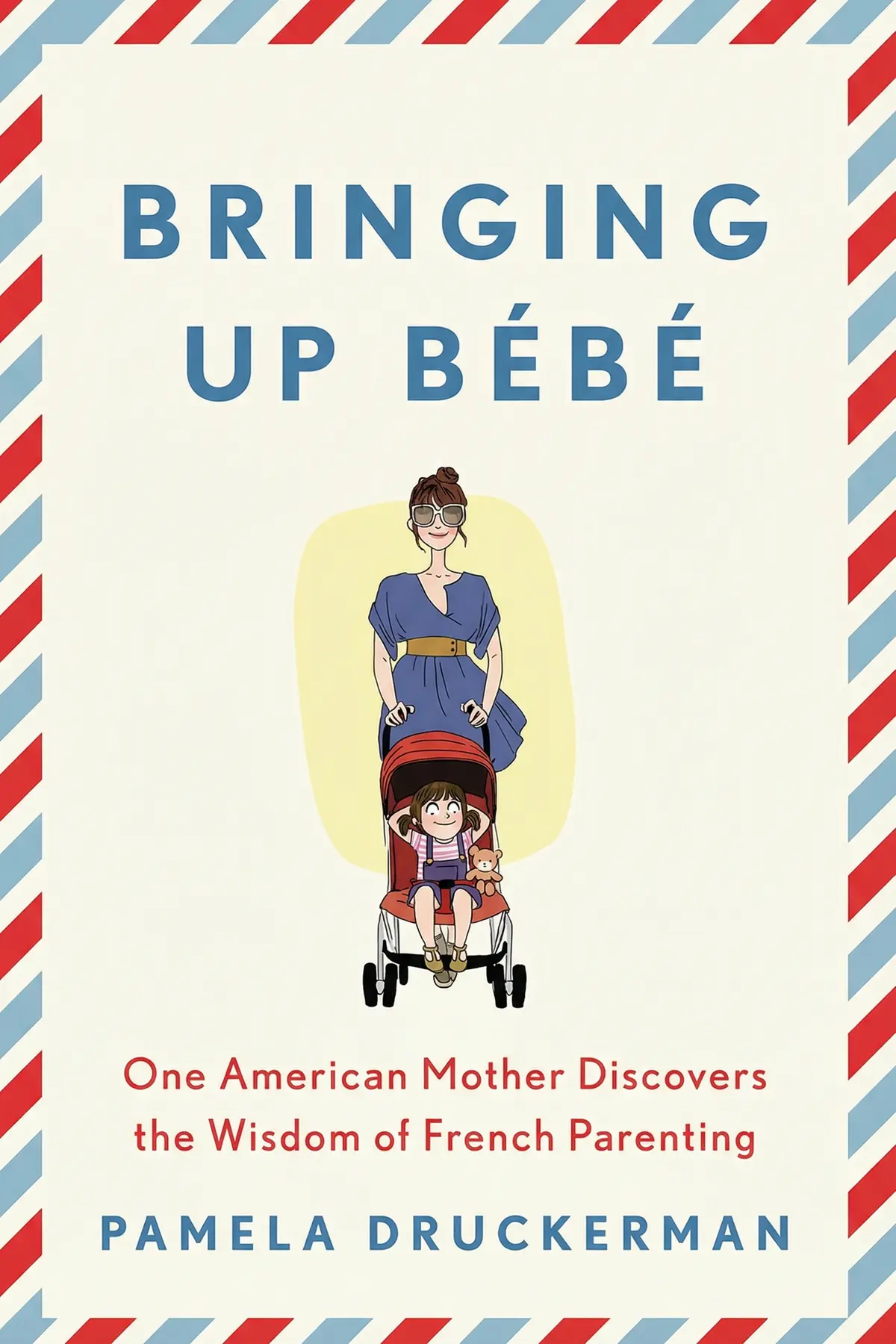
Table of Content
1. Introduction
1 min 46 sec
Picture yourself sitting in a charming Parisian bistro. All around you, the atmosphere is sophisticated and calm. At the next table, a family is enjoying a multi-course meal. But here is the part that might shock an American visitor: the toddler is sitting quietly in their chair, patiently waiting for the next course, and happily nibbling on braised leeks or blue cheese. There are no tantrums, no iPads propped up against water glasses, and no parents hovering frantically to prevent a meltdown.
For many parents raised in the high-stakes, child-centered culture of the United States, this scene feels like a miracle or a mirage. When journalist Pamela Druckerman moved to France and started her own family, she couldn’t help but notice that French children seemed to exist in a different reality. They slept through the night at a few weeks old, they didn’t snack constantly, and their parents didn’t seem to have surrendered their entire identities to the demands of child-rearing.
This isn’t just about different manners; it’s about a fundamentally different philosophy of what it means to be a child and what it means to be a parent. The French approach suggests that children are rational beings capable of learning patience and self-control from the very beginning. It also insists that for a family to be healthy, the parents must remain individuals with their own needs, passions, and romantic lives.
In the following minutes, we are going to explore the specific techniques and cultural shifts that make this possible. We will look at the ‘Pause’ that helps babies sleep, the culinary education that prevents picky eating, and the concept of ‘the frame’ that balances freedom with firm authority. Prepare to discover how a little bit of French wisdom might just be the key to a more balanced and joyful family life.
2. The Art of the Pause
1 min 54 sec
Discover why rushing to a crying infant might actually disrupt their sleep, and how a short delay helps babies learn to soothe themselves.
3. A Culinary Education
1 min 59 sec
Learn how the French avoid the ‘chicken nugget’ trap by treating eating as an educational journey rather than a battle of wills.
4. The Virtue of Waiting
1 min 52 sec
Explore how structured mealtimes and the absence of constant snacking help children develop essential self-control and patience.
5. Preserving the Adult Sanctuary
1 min 52 sec
Discover why French culture emphasizes that parents must remain individuals and partners, not just caregivers.
6. Embracing the Domestic Reality
1 min 46 sec
Learn how French parents navigate gender roles and household chores to minimize conflict and foster a more relaxed home environment.
7. Freedom Within the Frame
1 min 52 sec
Understand the concept of ‘the cadre’—the French approach to discipline that combines firm rules with a surprising amount of autonomy.
8. Conclusion
1 min 22 sec
The journey of discovery through French parenting reveals that raising children doesn’t have to be a frantic, self-sacrificing ordeal. By adopting the ‘Pause,’ we can help our children find the gift of sleep. By treating food as a culinary adventure, we can end the battles over vegetables. And by implementing the ‘frame,’ we can create a home where authority is respected but freedom is celebrated.
Perhaps the most important takeaway is the reminder that parents are people, too. When we reclaim our adult lives and refuse to let parenting consume our entire identity, we aren’t being selfish; we are being role models. We are showing our children that a life well-lived involves balance, patience, and a respect for the needs of others.
As you move forward, try starting small. The next time your child makes a demand or a fuss, try the ‘Pause.’ Give them a moment to figure it out for themselves. Look for opportunities to reinforce your ‘frame’ while stepping back and letting them explore the space inside it. You might find that by doing a little less ‘parenting’ in the traditional, hovering sense, you end up with a child who is more capable, and a life that is much more your own. After all, a happy, relaxed parent is one of the greatest gifts you can give to your child.
About this book
What is this book about?
This summary explores the cultural differences between American and French parenting styles through the eyes of an American mother living in Paris. It challenges the high-pressure, child-centric approach common in the United States, suggesting that a more relaxed yet structured philosophy can lead to happier families. The book promises to reveal why French infants sleep through the night, why French children enjoy gourmet vegetables without complaint, and how parents can reclaim their personal time and romantic lives. By focusing on the concept of 'the frame'—strict boundaries coupled with significant autonomy—it provides a roadmap for raising self-reliant children who understand patience and respect.
Book Information
About the Author
Pamela Druckerman
Pamela Druckerman is a former staff reporter for the Wall Street Journal and has written op-eds for The Guardian, The New York Times and The Washington Post. She is also author of Lust In Translation: Infidelity from Tokyo to Tennessee.
Ratings & Reviews
Ratings at a glance
What people think
Listeners find this parenting guide to be a charming and revelatory experience, especially for those navigating life with their first child. The work provides thoroughly researched observations and useful advice, with one listener pointing out that it includes 100 helpful suggestions. Listeners value the author's relatable tone which keeps the topics engaging, and they frequently enjoy the humor woven throughout, with many reporting they laugh out loud while listening. Listeners consider the material thought-provoking, as it offers fresh ways to view life with kids while remaining both educational and entertaining.
Top reviews
Fatou
Wow. This was exactly the reality check I needed before my due date. While most American parenting books seem designed to make you feel like a nervous wreck, Druckerman’s tone is incredibly refreshing and funny. The concept of 'La Pause'—just waiting a few minutes before rushing to a crying infant—was a total revelation for me. It’s about teaching the baby to self-soothe rather than treating every whimper like a 911 call. I laughed out loud at her descriptions of 'Manic Mommy Narration' where we feel the need to narrate every single shelf in the grocery store just to prove we are 'engaging' our kids. This book makes me feel like I can actually have a life and a marriage after the baby arrives, rather than just becoming a snack-dispensing zombie. It is easily the most delightful and thought-provoking guide I’ve picked up so far.
Show moreMaksim
Finally got around to reading this and I couldn't stop laughing at the 'Manic Mommy Narration' section; it perfectly describes the performance art of modern parenting. I’ve seen so many moms at the park doing that high-pitched play-by-play for their toddlers, and it was such a relief to have someone call it out as unnecessary. Druckerman’s journey as an expat in Paris is charming and self-deprecating. She doesn't pretend to be an expert, but her journalistic curiosity leads to some genuinely well-researched insights into why French children don't throw food in restaurants. The focus on 'frustration' as a life skill is something every parent needs to hear. We spend so much time trying to make our kids happy in the moment that we forget to teach them how to wait. This is a must-read for anyone who wants to raise a civilized human being.
Show moreBoss
Picked this up during my first pregnancy and it’s been a total game-changer for my overall anxiety levels. The author’s voice is so soothing and humorous that it immediately lowered my heart rate. I love that the French view children as rational beings who can understand logic and rules from a very young age. This book isn't just about kids; it's about maintaining your status as a woman and a wife after the baby arrives. The stories about the state-run daycares were fascinating, and I really wish we had that kind of support here. Even without the social safety net, the psychological tips on setting a 'cadre' are incredibly useful. If you want to raise a child who actually eats vegetables and sleeps through the night, buy this book immediately.
Show moreIff
In my experience, the best parenting books are the ones that make you feel more capable rather than more guilty, and this one delivers. I was struggling with a toddler who refused anything green, and after reading the chapter on 'food education,' we’ve actually made progress! The French approach of treating food like an exploration rather than a battleground is genius. Druckerman is a fantastic storyteller; I felt like I was sitting at a Parisian café with her. She addresses the guilt many American moms feel about daycare and working, showing that it’s actually healthy for kids to see their parents as independent people. It’s a funny, educational, and deeply practical book. I've already recommended it to every parent in my playgroup, even the ones who live in their Lululemons.
Show moreRafael
As someone who spent time in Europe, I found Druckerman's observations on 'le cadre' or the framework of rules absolutely fascinating. The idea that children can be both highly independent and strictly disciplined at the same time is something we’ve lost in the US. I especially appreciated the sections on food and avoiding the 'chicken nugget' trap. Why do we assume kids can’t eat leeks or braised lamb? The book offers about 100 practical suggestions that are easy to implement without feeling like you're following a rigid manual. My only minor gripe is that the author occasionally sounds a bit too desperate to be accepted by her chic French neighbors, which can get a little repetitive. Still, it’s an eye-opening read that actually makes parenting feel like something you can enjoy rather than just survive.
Show moreAey
After hearing so much hype, I expected a dry manual, but what I got was a witty, self-deprecating memoir that happens to have great advice. The truth is, our culture has become obsessed with child-centered households, and this book is a necessary antidote. I love the idea that 'no' is a complete sentence and that parents deserve to have their own 'adult time' in the evening. Some of the cultural comparisons are a bit hyperbolic, but the core message is solid: kids thrive when there are clear boundaries. It’s also very encouraging for moms who are worried about losing their identity. I did find the parts about the pressure to lose baby weight a bit disturbing, as it seems the French can be quite harsh about appearance. However, as an overall philosophy of raising kids to be patient and adventurous eaters, it's brilliant.
Show moreMuk
Ever wonder why French kids sit quietly in restaurants while ours are throwing bread rolls and screaming for nuggets? This book actually answers that question without being a boring textbook. It’s written in a very approachable style that makes the 100-plus tips feel like advice from a funny friend. I particularly loved the focus on teaching children to wait. In an era of instant gratification, the French emphasis on 'en attendant' is a gift. The author is very honest about her own parenting failures, which makes her much more relatable than most 'experts.' I gave it four stars instead of five only because some of the medical advice felt a bit dated, but the behavioral insights are gold. It’s a great gift for any first-time parent who is currently drowning in 'What to Expect' anxiety.
Show moreChatchai
Look, there's some solid advice here, but the author puts French mothers on such a high pedestal it eventually becomes grating. She portrays them as these effortlessly chic creatures who never struggle, which just can't be true. While I agree that American parents can be over-involved, Druckerman's disdain for 'attachment parenting' feels a bit one-sided. She ignores the potential downsides of the more detached French style, like the rigid gender roles she briefly mentions. The book is definitely entertaining and well-written, but I found myself rolling my eyes at her constant 'French people do this better' refrain. It’s worth a read for the tips on 'The Pause' and introducing varied foods, but take the cultural fetishization with a grain of salt. It’s more of a fun playground read than a definitive parenting bible.
Show morePruet
Gotta say, a lot of what Druckerman calls 'French wisdom' is just old-school common sense that our grandparents used before we all became obsessed with 'enrichment.' Don't give in to every whim, make them eat what you're eating, and don't let them interrupt adult conversations. It’s basic stuff, but I guess we need a book to tell us it’s okay to be the boss again. My main issue is that the author treats the French way as this magical secret while downplaying the massive government subsidies that make it possible. It’s easy to be a 'relaxed' parent when your childcare is practically free and you have 30 days of vacation. It’s an entertaining read and I laughed quite a bit, but the lack of deep research into the long-term effects of this parenting style left me wanting more.
Show moreOoi
This book is quite frustrating coming from a supposed journalist who relies so heavily on anecdotal evidence from a tiny circle of wealthy Parisians. To be fair, her writing style is engaging, but her assertions about 'all Americans' being neurotic helicopter parents felt like a lazy caricature. She constantly cites one or two friends as proof of a national parenting crisis. Furthermore, she completely glosses over the fact that French parents have massive state support—like free daycare and long vacations—that makes their 'superior' patience much easier to maintain. If I had state-funded 'vagina tightening' physical therapy and a government-paid nanny, I’d probably be a more relaxed mom too! The advice on 'The Pause' is just basic sleep training repackaged as exotic wisdom. It feels more like a work of light fiction meant to make us feel inferior for not wearing slim-fit jeans three months postpartum.
Show moreReaders also enjoyed

AUDIO SUMMARY AVAILABLE
Listen to Bringing Up Bébé in 15 minutes
Get the key ideas from Bringing Up Bébé by Pamela Druckerman, plus 5,000+ more titles in English and Thai.
- 5,000+ titles
- Listen as much as you want
- 7-day free trial
- Cancel anytime







