

13 min 51 sec
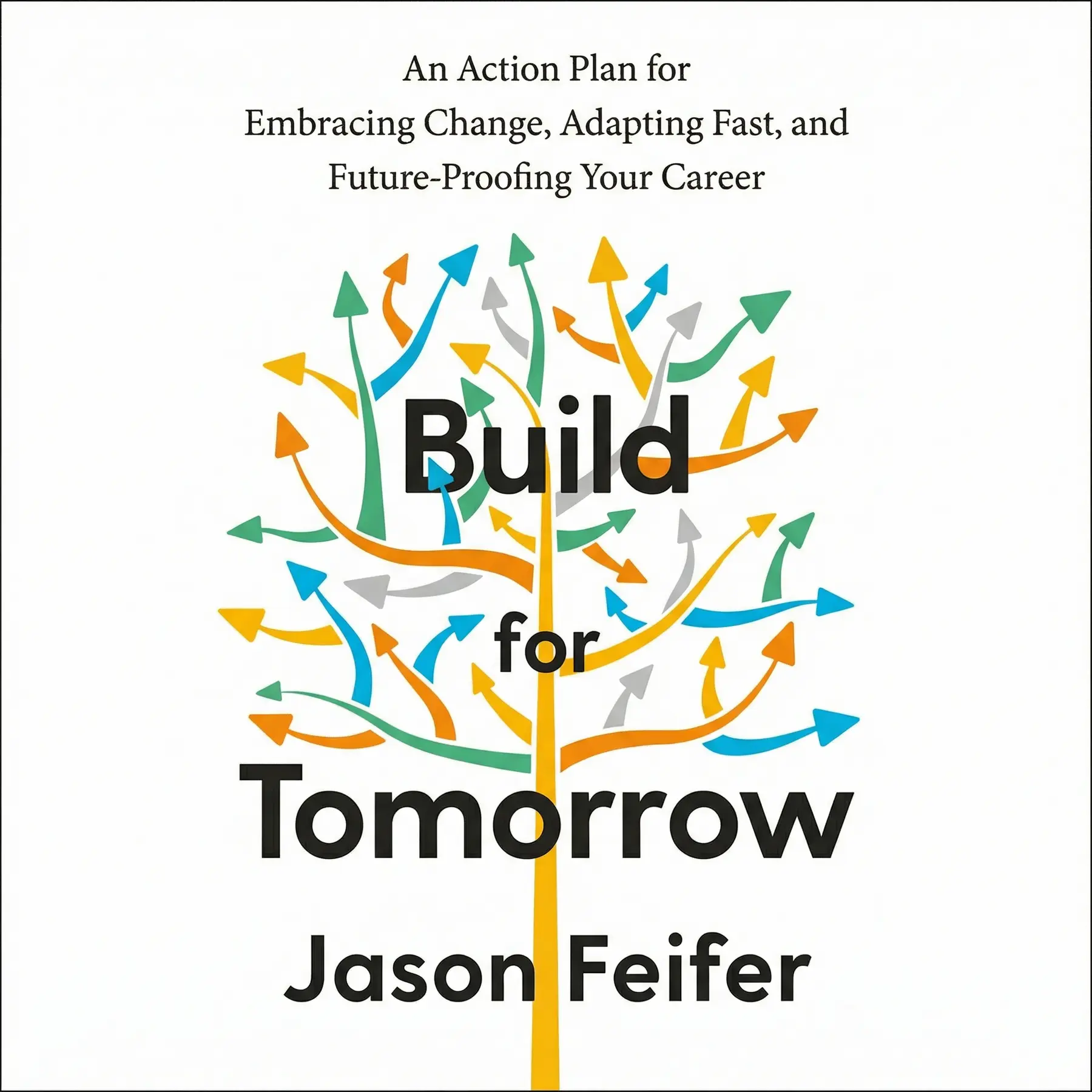
Build for Tomorrow: An Action Plan for Embracing Change, Adapting Fast, and Future-Proofing Your Career
By Jason Feifer
A guide to navigating transition by mastering the four phases of change—Panic, Adaptation, New Normal, and Wouldn’t Go Back—offering actionable strategies to thrive during periods of uncertainty and professional evolution.
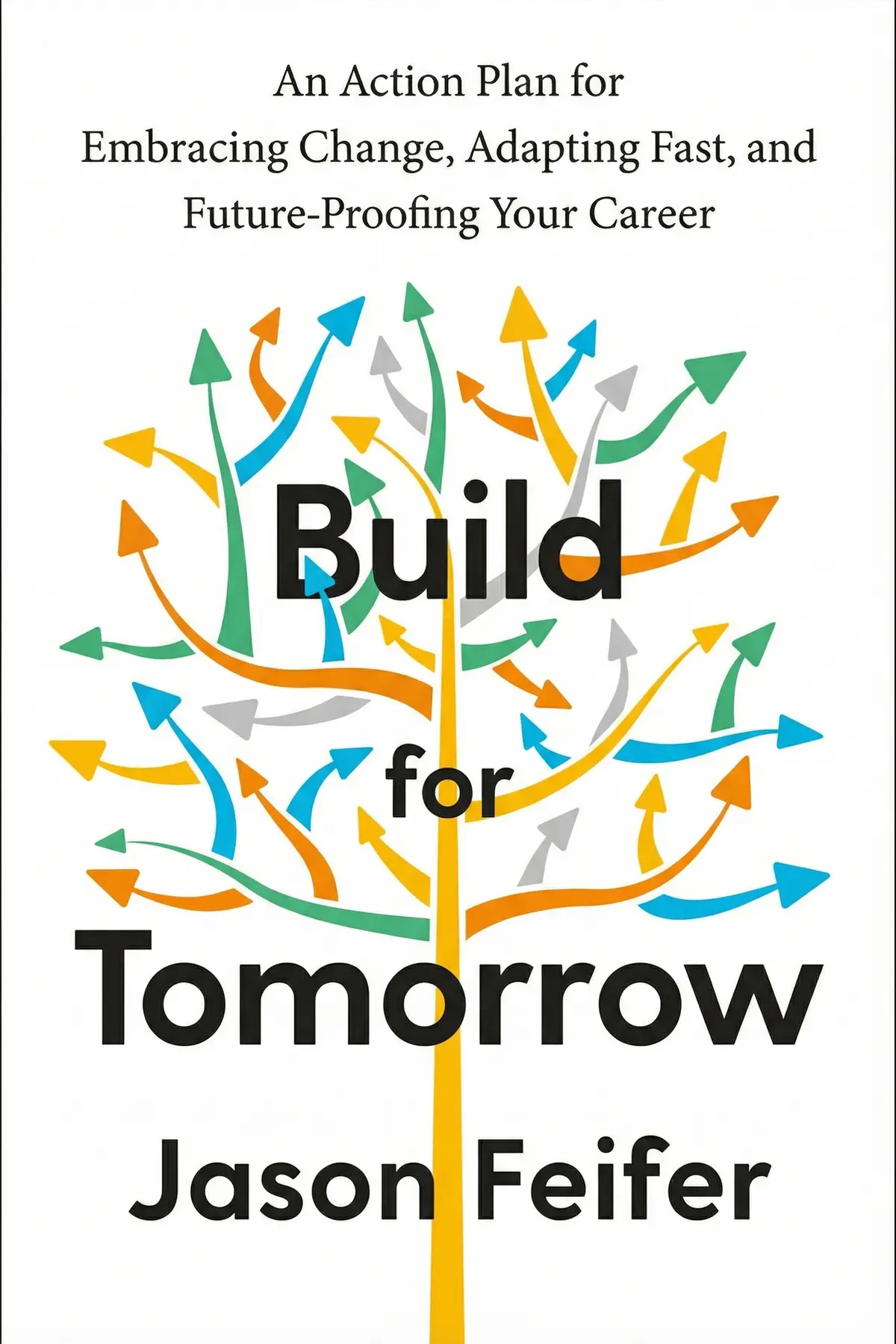
Table of Content
1. Introduction
1 min 47 sec
Think back to the moment the world seemingly came to a standstill during the 2020 global health crisis. For most of us, that period represents a monumental shift in how we live, work, and interact. It was a time of profound uncertainty, and the natural reaction for many was a desperate desire to simply return to the way things used to be. But if we look closer at our lives, we realize that while a pandemic is an extreme example, we are actually surrounded by constant, smaller-scale disruptions. Whether it is a business venture that fails to take flight, a sudden relocation to a new city, or a technological shift in our industry, change is an ever-present force. Most of the time, our default setting is to view these shifts with a sense of dread or even paralysis.
However, there is a different way to experience transition. What if change didn’t have to be a source of fear? What if you could develop a toolkit that allows you to greet the unknown with curiosity and strategy rather than panic? This exploration of Jason Feifer’s insights provides exactly that. We are going to look at a journey through four distinct stages: Panic, Adaptation, the New Normal, and finally, the Wouldn’t Go Back moment.
By understanding these phases, you can begin to see change not as a destructive wave, but as a series of doors opening toward a more resilient future. The goal is to move beyond mere survival and reach a point where you realize that the changes you once feared have actually led you to a better version of your life or career. Throughout this discussion, we’ll uncover techniques that help you bridge the gap between who you were and who you are becoming, ensuring that you are always building for the tomorrow you actually want to inhabit. Let’s dive into how we can stop resisting the inevitable and start using it to our advantage.
2. The Root of Panic
1 min 53 sec
Discover why our initial reaction to change is often centered on a deep fear of loss and how that anxiety can lead to damaging mistakes.
3. Shifting Toward Opportunity
1 min 39 sec
Learn to break the cycle of fear by deliberately looking for the potential benefits hidden within every disruption.
4. Identifying Your Core Purpose
1 min 51 sec
Differentiate between what you do and why you do it to maintain a stable identity when your circumstances shift.
5. Taking the Lead on Change
1 min 41 sec
Discover the power of proactive disruption and why initiating change yourself is safer than waiting for it to happen.
6. Building a Bridge to the New Normal
1 min 46 sec
Explore how to use familiar elements to ease the transition into new and intimidating situations.
7. Reaching the Point of No Return
1 min 54 sec
Learn to identify the final details that transform a new situation from a struggle into something you would never want to leave.
8. Conclusion
1 min 20 sec
In the end, the process of building for tomorrow isn’t about avoiding the storms of life, but about learning how to navigate them with intention. We’ve seen how the journey begins in the natural, albeit often irrational, grip of panic—where we obsess over what is being lost. By shifting our focus toward potential gains, we unlock the door to adaptation. We’ve learned that by anchoring ourselves in our core purpose, or our ‘Why,’ we can remain steady even when our ‘What’ is in total flux.
We’ve also explored the power of being the one who starts the change, rather than waiting to be pushed. By building bridges of familiarity, we make the transition to a New Normal feel less like a leap and more like a step. And finally, by addressing those last few hurdles—the ‘but really’ factors—we reach that incredible moment where we realize we wouldn’t go back to the old ways even if we had a time machine.
Change is coming, whether we want it to or not. But you now have a framework to handle it. The next time you feel that familiar sting of anxiety at a new development, remember the four phases. Take a breath, look for the gain, and start building. The future isn’t something to fear; it’s something you are actively creating, one decision at a time. Go forth and embrace the opportunity to build the tomorrow you deserve.
About this book
What is this book about?
What if change wasn't an obstacle but a blueprint for growth? This summary explores how the world’s most resilient leaders move through the inevitable disruptions of life and business. It introduces a structured four-part framework designed to take you from initial anxiety to a state where you wouldn't return to the old ways even if you could. By examining historical shifts—like the transition from live to recorded music—and modern business pivots, the guide reveals why we instinctively resist the new and how to reprogram that response. It promises to equip you with the mental tools to identify your core purpose, bridge the gap between the familiar and the foreign, and proactively disrupt your own success to stay ahead of the curve. Whether you are facing a career shift or a global upheaval, you will learn to see the gains instead of the losses and build a future that is resilient, adaptable, and purposeful.
Book Information
About the Author
Jason Feifer
Jason Feifer serves as the editor in chief of Entrepreneur magazine. Beyond his editorial leadership, he is a prominent voice in the business community through his podcasts, including Build for Tomorrow and Problem Solvers. His expertise in change adaptation is highly sought after by global corporations, leading him to share his techniques and insights with teams at organizations such as Microsoft, Chipotle, and Pfizer.
Ratings & Reviews
Ratings at a glance
What people think
Listeners find the book engaging and skillfully composed, featuring practical advice throughout the text. They value the distinctive historical insights, with one listener highlighting how the author masterfully bridges the past with the present. Listeners consider the material to be both inspiring and mentally stimulating.
Top reviews
Wanphen
Ever wonder why we're so terrified of things that eventually become mundane? Feifer masterfully uses history—like the bizarre initial fear of recorded music—to show that our current tech panics aren't unique. It's incredibly grounding to realize that humans have been reacting this way for centuries. The 'Wouldn’t Go Back' phase is a mindset I’m actively trying to adopt now. While some parts feel a bit like a collection of articles rather than a cohesive narrative, the overall message is deeply motivating. If you’re feeling stuck in the 'Panic' phase of a life change, this provides a much-needed perspective shift that reminds us we are more in charge than we think.
Show moreYanin
The chapter on the history of automatic elevators was a total lightbulb moment for me regarding how we perceive safety and 'the new.' Jason has this unique ability to take a seemingly boring piece of history and turn it into a vital lesson for the modern entrepreneur. This book isn't just about business; it’s about the psychology of how we evolve as a species. I found the 'Wouldn’t Go Back' moment to be a powerful goal to work toward during my own recent career transition. It’s rare to find a book that is both an entertaining history lesson and a motivational kick in the pants. Absolutely worth the read for the perspective shift alone.
Show moreSelin
Not what I expected from an editor of Entrepreneur magazine, as it felt much more human and less focused on just making millions. Instead of telling you to just work harder, Feifer gives you a roadmap for understanding why your brain is fighting the future. The 'Wouldn't Go Back' phase is such a perfect way to describe that feeling of finally hitting your stride after a disaster. I've already started applying the 'but really' technique to my own business hurdles to find that missing 1% that makes the difference. Look, if you’re looking for a step-by-step business plan, this isn't it. But if you want to fix your mindset around change, this is the gold standard.
Show moreAmelia
Feifer’s framework for navigating change—Panic, Adaptation, New Normal, and Wouldn’t Go Back—is surprisingly practical for a business book. I especially appreciated the 'Bridge of Familiarity' concept, which explains why we need a little bit of the old to accept the new. It's a quick, punchy read that doesn't get bogged down in too much academic jargon or boring data points. However, some of the strategies felt a bit vague when it came to real-world application. You can definitely tell he’s a storyteller first and a consultant second. Still, it’s a solid resource for anyone whose life has been upended lately and needs a roadmap to get back on their feet.
Show moreWararat
Picked this up during a major career shift, and the 'Bridge of Familiarity' concept was exactly what I needed to stop spiraling. Transitioning to a new field is terrifying, but Feifer’s breakdown of the four phases made me realize that my panic was just a standard part of the process. I loved the story about the 60 Minute IPA and why you should instigate change before you’re forced to by the market. My only gripe is that it occasionally veers into 'hustle culture' territory, which isn't always my vibe. But the historical context—like the teddy bear controversy—was so fascinating it kept me hooked until the final page.
Show moreGoy
Jason Feifer writes with a contagious kind of optimism that makes even the scariest life transitions feel like a puzzle waiting to be solved. As someone currently navigating a 'New Normal' in my personal life, seeing how people throughout history survived similar upheavals was incredibly comforting. The writing is snappy, energetic, and avoids the dry, clinical tone that usually plagues these types of self-help books. I found the section on finding your 'why'—your core purpose that doesn't change—to be the most impactful part of the whole experience. It's a fast read, but it’s packed with enough 'aha' moments to make it feel like a valuable investment of my time.
Show moreSupaporn
After hearing Jason speak on a panel, I wanted to see if his book lived up to his stage presence, and I wasn't disappointed by the structure. The four phases—Panic, Adaptation, New Normal, Wouldn’t Go Back—are easy to remember and actually helpful to visualize when things go sideways. The stories about the waltz and novels being considered 'dangerous' were hilarious and remind us that every generation thinks the world is ending. It's a great blend of history, psychology, and business advice that doesn't take itself too seriously. Some parts are a bit repetitive if you read it in one sitting, but the message is vital for anyone living through today’s chaos.
Show moreJames
I'm a big fan of Jason's podcast, so I went into this with high expectations, but I found much of the content to be recycled from his episodes. It felt like a hodgepodge of random anecdotes that didn't always tie back to the core thesis perfectly. There were moments of brilliance, particularly when discussing the '99% there' problem, but then it would pivot back to generic advice like 'don't fear change.' It’s a decent primer for someone who hasn't followed his work, but long-time listeners might find it a bit redundant. I’d say it’s a 3-star read—entertaining and well-written, but not exactly life-changing if you've already been paying attention to his brand.
Show moreCooper
To be fair, there are some great nuggets of wisdom buried in here, but you have to wade through a lot of tech-bro success stories to find them. The author’s background as the editor of Entrepreneur magazine is very evident in the way he prioritizes 'making it big' over finding simple contentment. I liked the historical anecdotes about the telegraph and the phonograph, yet they sometimes felt disconnected from the practical advice offered. It’s an easy read and certainly kept me entertained, but I’m not sure how much of it will actually stick with me a month from now. Good for a plane ride, but maybe not a permanent spot on the reference shelf.
Show moreHana
Maybe I'm just not the target audience, but the level of 'grind' and 'disrupt everything' energy here felt exhausting. The author seems to think everyone wants to 'go big' and 'make fast leaps,' but some of us just want stability without being told we're stagnating. I found the history lessons interesting, but they took up about 80% of the book, leaving very little room for actual, actionable advice for regular people. It’s heavy on Silicon Valley HypeSpeak and anecdotes about rich founders that I just couldn't relate to. Frankly, the 'unknown knowns' and constant pressure to pivot made me want to delete all my apps and move to the woods rather than 'build for tomorrow.'
Show moreReaders also enjoyed

A Guide to the Good Life: The Ancient Art of Stoic Joy
William B. Irvine
A High-Performing Mind: Strengthen Your Mind and Live Your Best Life
Andrew D. Thompson
Abundance: The Inner Path to Wealth
Deepak Chopra
60 Seconds & You’re Hired!
Robin Ryan
AUDIO SUMMARY AVAILABLE
Listen to Build for Tomorrow in 15 minutes
Get the key ideas from Build for Tomorrow by Jason Feifer, plus 5,000+ more titles in English and Thai.
- 5,000+ titles
- Listen as much as you want
- 7-day free trial
- Cancel anytime







