
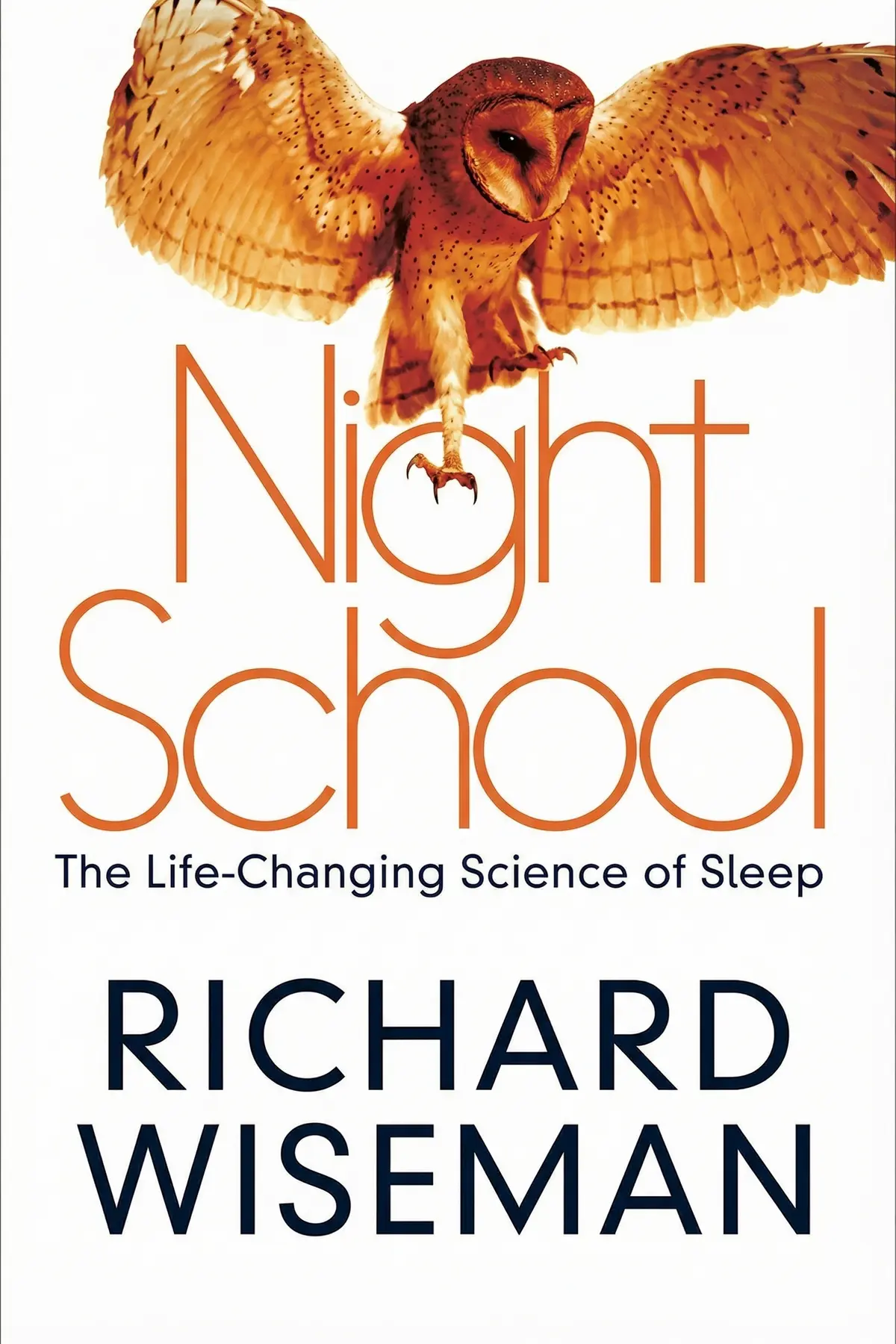
Night School: The Life-Changing Science of Sleep
Richard Wiseman
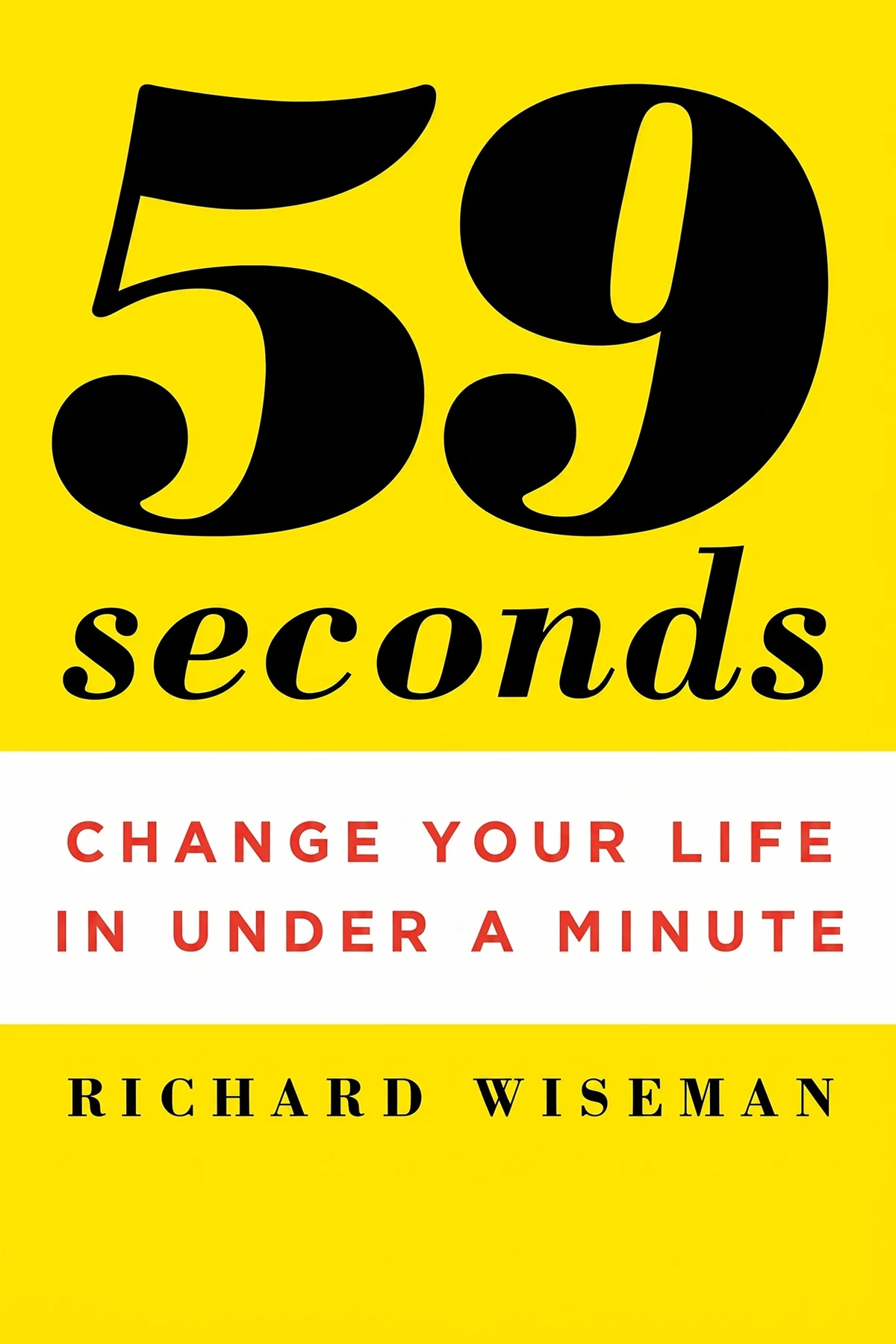
59 Seconds by Richard Wiseman reveals science-backed techniques for rapid self-improvement. Moving beyond traditional self-help myths, it offers psychological hacks to enhance happiness, creativity, and success in under a minute.
2 min 04 sec
There is a well-known story about a man and a malfunctioning boiler that perfectly captures the modern struggle with self-improvement. After weeks of failing to fix the machine himself, the man finally calls in a professional. The engineer arrives, takes a small hammer, and gives the boiler a single, sharp tap on its side. Instantly, the machine hums back to life. When the man receives a bill for several hundred dollars, he is outraged. He complains that he shouldn’t have to pay so much for a few seconds of work. The engineer’s reply is a classic: you aren’t paying for the tap; you’re paying for the years of experience required to know exactly where to hit it.
This anecdote reflects a core truth about human psychology: effective change doesn’t always require an agonizingly long process. In our search for a better life, we often assume that meaningful transformation must be difficult, expensive, or time-consuming. However, as Richard Wiseman explores in his work, many of our most persistent problems can be addressed with simple, science-backed interventions.
In the world of self-help, we are frequently bombarded with advice that sounds good but lacks empirical evidence. We are told to visualize our success until it manifests or to gather in large groups to brainstorm our way to innovation. But what if these popular methods are actually holding us back? By looking at the actual data from psychological experiments, we can find “boiler-tap” solutions—hacks that take less than a minute but can radically shift our mood, our productivity, and our relationships.
This summary will walk you through these rapid psychological shifts. We will explore how to ace an interview by being more authentic, why your mistakes might actually make people like you more, and why common motivation techniques often fail. By the end, you’ll have a toolkit of sixty-second strategies to help you navigate life with more clarity and success, all grounded in the rigors of experimental science.
2 min 36 sec
Think your resume is the most important part of your job hunt? Scientific research suggests that being likeable is the real key to getting hired over others.
2 min 29 sec
Striving for perfection can actually make people trust you less. Discover why making a mistake might be the best way to win others over socially.
2 min 26 sec
Traditional self-help tells you to imagine your goals to achieve them, but science says this can actually drain your motivation and lead to failure.
2 min 05 sec
Think your team’s brainstorming sessions are productive? Research shows that working in groups often kills creativity rather than sparking it.
2 min 05 sec
Struggling with a creative block? The secret might be to stop thinking about the problem altogether and let your unconscious mind do the work.
2 min 15 sec
Small changes to your surroundings—like adding a plant or thinking of a specific person—can have a massive impact on your creative output.
2 min 06 sec
When life gets difficult, the key to happiness isn’t just distraction. It’s about finding the silver lining in even the darkest experiences.
2 min 26 sec
Improving your relationship doesn’t require hours of therapy. It can be as simple as changing one word in your vocabulary or writing for a few minutes a day.
1 min 56 sec
As we have seen, the path to a better life doesn’t have to be paved with months of grueling effort or expensive seminars. The science of psychology offers us a different way: a collection of rapid, effective interventions that Richard Wiseman calls the “59-second” approach. Whether it’s using the word “but” to soften a criticism in your relationship, adding a plant to your desk to spark creativity, or being the first to admit a flaw in an interview, these small shifts can lead to massive changes in your overall quality of life.
The throughline here is a move away from intuition and toward evidence. Our instincts often tell us to visualize success or to hide our mistakes, but the data shows that these strategies frequently backfire. By embracing a more scientific approach to self-improvement, we can stop wasting time on what feels good and start doing what actually works.
To leave you with a final actionable tip, consider the “eulogy exercise.” It sounds somber, but it is one of the most effective ways to find clarity in your life. Take a few minutes to write down how you would like to be remembered by your friends and family. This isn’t about death; it’s about life. By defining your legacy, you gain an immediate understanding of your true long-term goals. It cuts through the daily noise and tells you exactly where you should be focusing your energy right now.
And if you’re ever worried about being lied to, remember the digital trick: people are significantly less likely to lie in an email than they are over the phone or in person, simply because their words are being recorded. These are the small hammers of psychology. When you know where to tap, you can fix almost anything. Start with one small change today, and see how much your world shifts in less than a minute.
Have you ever felt that personal growth takes too much time or relies on vague, unproven theories? 59 Seconds challenges the slow-burn approach to self-help by offering evidence-based strategies that produce results in less than sixty seconds. Psychologist Richard Wiseman explores the hidden triggers of human behavior, dispelling popular myths like the power of positive visualization and the effectiveness of group brainstorming. Instead, he provides actionable tips rooted in rigorous scientific research. You will learn how to improve your likability in interviews, foster deeper connections in your relationships, and boost your creative output by simply changing your surroundings or your mindset. This book serves as a practical guide for anyone looking to make immediate, meaningful changes to their life without the fluff of traditional motivational literature.
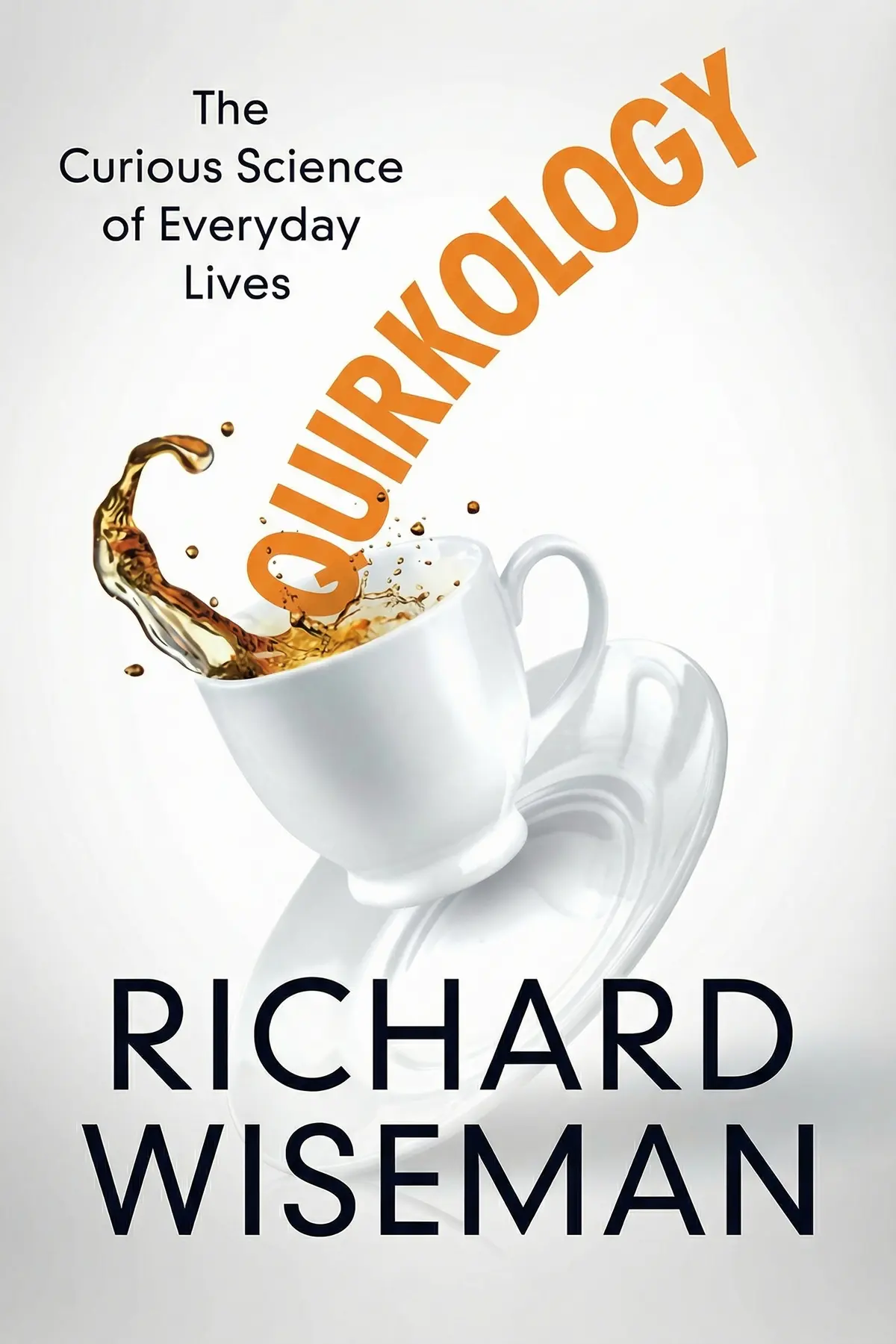
Richard Wiseman is a professor and psychologist who has been described as the most interesting and innovative experimental psychologist in the world today by a columnist at Scientific American. He is a frequent keynote speaker for major corporations like Amazon and Google. Wiseman is also the author of several best-selling books, including The Luck Factor and Quirkology.
Richard Wiseman
Richard Wiseman
Listeners find this book accessible and engaging, offering evidence-based perspectives on daily life. They appreciate the actionable suggestions and useful techniques for self-improvement, with one listener mentioning it acts as a manual for significant areas of life. The text is well-crafted and brief, and listeners value the way it relies on actual scientific research.
Ever wonder why positive thinking cults keep failing people while charging exorbitant workshop fees? Wiseman dismantles that entire industry with wit, clinical precision, and verifiable psychology. Suppressing negative thoughts is like trying not to think of a pink elephant; it backfires spectacularly. Instead of vague affirmations, this book delivers genuinely useful micro-actions supported by published data. Want to ace an interview? Disclose your minor shortcomings right at the start to seem grounded, while saving notable strengths for the finish line. Planning a memorable first date? Skip the silent candlelit dinner and head straight for a rollercoaster where shared adrenaline boosts natural attraction. The prose moves at a blistering pace, free of academic jargon. Brilliant, refreshingly practical, and immensely fun to read.
Show moreMost personal development books demand months of meditation or drastic habit overhauls, but Richard Wiseman takes the exact opposite approach. He sifts through psychological literature to unearth tiny, instantaneous behavioral shifts that yield disproportionate psychological dividends. Writing down your feelings for just a couple of minutes to defuse emotional baggage, or positioning a baby photo in your wallet to boost the odds of it being returned if lost, are brilliant examples of everyday behavioral engineering. His background as an illusionist gives him a sharp eye for the ways human brains mislead themselves. Gotta say, this book permanently altered how I approach problem-solving and goal tracking. Essential reading for skeptics who still want to optimize their daily routines.
Show morePicked this up on a friend's recommendation and ended up bookmarking half the practical experiments. Unlike bloated motivational titles that demand total lifestyle overhauls, Wiseman’s focus centers on micro-interventions grounded in academic research. Truth is, small behavioral tweaks often work far better than grand resolutions. I especially appreciated the research showing that praising a child's effort rather than their innate intelligence fosters long-term resilience. The facial feedback tip—holding a pencil between your teeth to force a smile—sounds completely ridiculous until you try it during a miserable afternoon slump. My only gripe lies with the frequent self-assessment questionnaires scattered across the chapters, which interrupt the prose and feel a bit gimmicky. Nevertheless, the actionable takeaways make this well worth your time.
Show moreAfter wading through endless fluffy self-help manuals, Wiseman’s focus on peer-reviewed psychological experiments felt like a breath of crisp air. He strips away mystical nonsense and addresses common problems—procrastination, social awkwardness, lack of creativity—using controlled behavioral observations. The advice on handling creative blocks was revelatory: stop straining at your desk and deliberately distract your conscious mind with a routine puzzle so subconscious associations can assemble uninterrupted. Admittedly, some experiments lean heavily on quirky, small-scale university cohorts, which makes you wonder how well every single finding replicates in messy, everyday life. Look, even with minor skepticism, the practical value is undeniable. It is a concise, highly readable toolkit for self-improvement that respects the reader's intelligence.
Show moreThis book delivers exactly what the title promises: sixty-second psychological hacks without the spiritual nonsense. Adding a potted plant to an office desk to stimulate creative problem-solving sounds absurdly simple, yet the study behind it makes total sense. Wiseman writes with dry British charm, keeping chapters punchy and directly applicable. A few arguments feel somewhat rushed to fit the concise format. Even so, the sheer volume of useful, evidence-based nuggets makes it an exceptional desk reference for everyday dilemmas.
Show moreColor me surprised: sticking a pencil between your teeth really does nudge your brain toward a better mood. Wiseman’s exploration of the facial feedback hypothesis demonstrates how physical actions instruct mental states rather than the other way around. The book excels whenever it turns common assumptions on their head, particularly the myth that venting reduces rage. The advice is digestible, engaging, and delightfully rapid. Sometimes the leap from a laboratory scenario to general everyday application feels a bit stretched, but the exercises are completely harmless to test on yourself. It serves as an entertaining manual for running personal experiments on your own brain.
Show moreRichard Wiseman has crafted a wonderfully compact antidote to pop-psychology folklore. Rather than recycling exhausted clichés about visualization, he explains why visualizing the agonizing process of completing a project generates far better outcomes than daydreaming about the final victory. The strategies for spotting dishonesty in digital communication versus face-to-face conversations are remarkably astute. While certain studies cited would struggle to survive modern replication scrutiny, the broad behavioral frameworks remain dependable. It is accessible, smartly organized, and packed with practical wisdom that takes virtually no time to implement.
Show moreThe chapter debunking venting anger—showing how pummeling pillows actually elevates hostility rather than purging it—was easily the highlight here. Wiseman compiles several clever behavioral counter-intuitions throughout these pages. You learn why group brainstorming sessions choke original thinking, and how placing an ordinary mirror near a buffet table curtails junk food binging. In my experience, though, the relationship chapters feel somewhat dated and overly reliant on rigid, heteronormative bar-scene dynamics where men chase and women react. The overarching concept remains decent. You receive bite-sized psychological summaries at the conclusion of every section that genuinely take under a minute to digest. It functions well as light, conversational non-fiction, provided you keep your expectations grounded.
Show moreNot what I expected from the audio edition, mostly because the text relies so heavily on interactive checklists. Hearing someone read multiple-choice personality grids aloud becomes tedious within the first twenty minutes. The core content itself offers solid, intriguing psychology. Wiseman does a fine job demonstrating how deceptive individuals rely less on self-referential words like 'me' and overload their speech with filler. Frankly, the sixty-second summaries are clever, but the audiobook format simply fails to accommodate them cleanly without supplementary PDF handouts. If you plan to explore these techniques, buy a physical copy so you can skim the questionnaires and focus straight on the empirical takeaways.
Show moreAs someone drawn to empirical science, I went into this expecting rigorous skepticism, but came away disappointed by the methodology. Wiseman rightly mocks the absurdities of positive visualization and the broader self-help industry. However, the alternative research he presents often feels equally flimsy. Entire behavioral theories get built upon tiny sample sizes, such as dropping forty wallets with baby pictures to measure return rates, or the questionable hotel housekeeper exercise experiment. To be fair, the writing style is brisk and engaging. His critique of pop-psychology myths makes for entertaining reading during a commute. Still, exchanging untested folklore for poorly controlled laboratory studies does not equate to solid science. If you scrutinize the footnotes, you will notice just how many grand life conclusions rest on shaky, un-replicated undergraduate trials.
Show more
Steven C. Hayes

Deborah Gruenfeld
AUDIO SUMMARY AVAILABLE
Get the key ideas from 59 Seconds by Richard Wiseman, plus 5,000+ more titles in English and Thai.







