

31 min 43 sec
Built: The Hidden Stories Behind Our Structures
By Roma Agrawal
Built explores the hidden science and history of structural engineering, revealing how ingenious designs and materials allow our most iconic buildings to withstand the forces of nature while shaping human civilization.
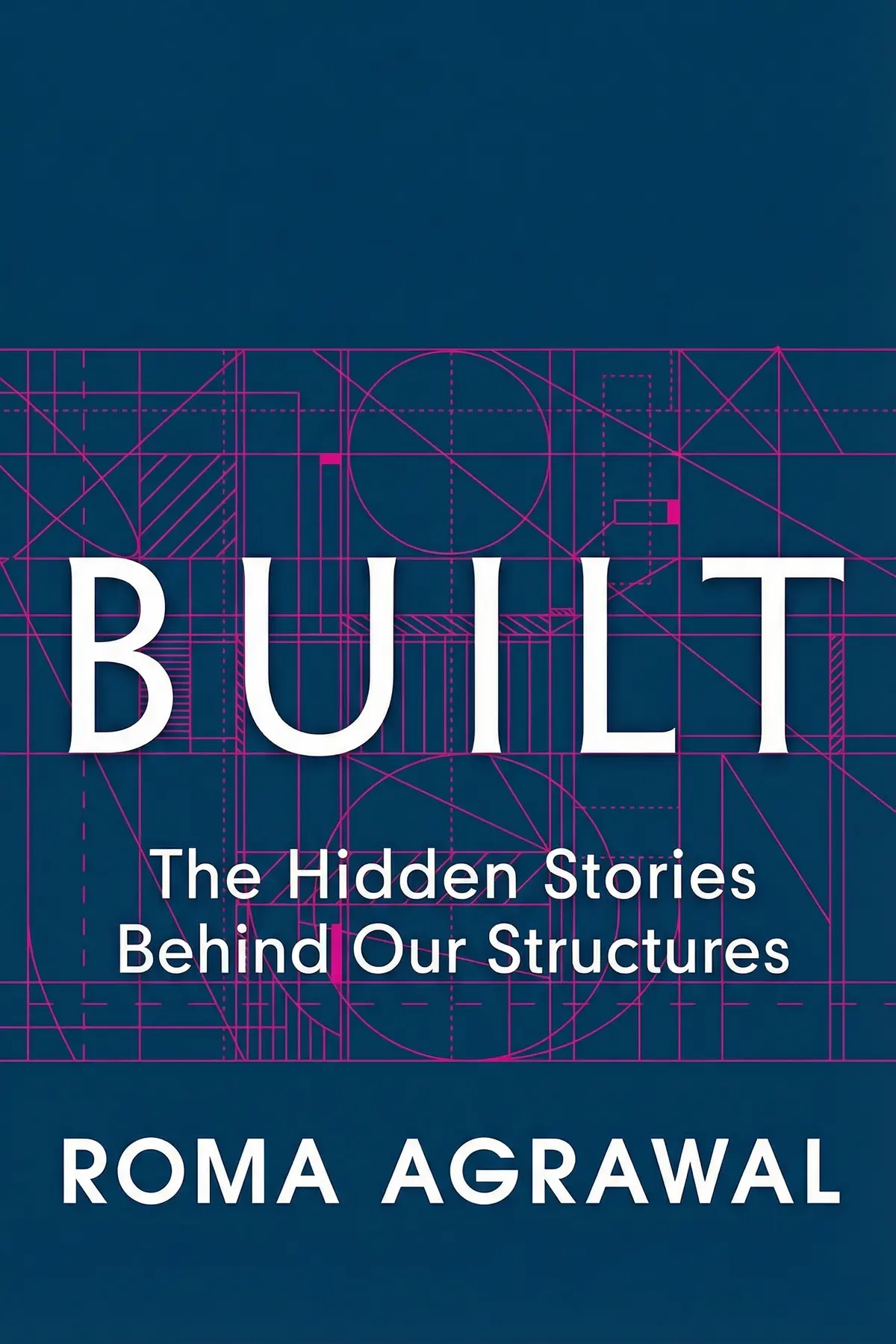
Table of Content
1. Introduction
2 min 07 sec
When we walk through a modern city, we are surrounded by miracles of physics that we rarely stop to acknowledge. We see the glass facades reflecting the sun and the soaring heights of towers that touch the clouds, but we often ignore the invisible skeleton that makes it all possible. Structural engineering is the silent language of our urban environment. It is a discipline that is frequently only noticed when things go wrong—when a bridge buckles or a tower leans. However, the true story of engineering is one of constant, quiet triumph over the relentless forces of nature. Every building that remains upright, every bridge that safely carries traffic over a chasm, and every tunnel that holds back the weight of a river is a testament to human ingenuity and rigorous problem-solving.
In this exploration of the built world, we are going to look behind the scaffolding and the concrete to understand the science that keeps our world stable. We will look at how engineers interpret the laws of physics to channel weight and resist the wind. We will travel back through history to see how our ancestors experimented with mud and logs, and how their early intuitions paved the way for the steel and glass giants of the twenty-first century. This isn’t just a story about materials like brick and cement; it is a story about the people who dared to build higher and safer than ever before.
Throughline: The history of structural engineering is a journey of understanding natural forces, learning from past disasters, and utilizing material science to create the foundations of modern civilization. By the end of this journey, you will see the structures around you not just as static objects, but as dynamic participants in a constant tug-of-war with gravity and the elements. We will see how engineering has solved the most basic human needs—from accessing water in the desert to managing waste in crowded cities—and how it continues to push the boundaries of what is possible, merging the rigor of science with the beauty of art.
2. The Fundamental Tug-of-War: Compression and Tension
2 min 43 sec
Discover the two invisible forces that every structure must master to stay standing, and see how our ancestors first harnessed them using simple mud and logs.
3. The Anatomy of a Building: Beams, Columns, and Cores
2 min 47 sec
Explore the skeletal components that give modern structures their shape and stability, from the artistic pillars of Greece to the hidden spines of skyscrapers.
4. Taming the Elements: How Towers Survive Wind and Quakes
2 min 48 sec
Learn the high-tech secrets engineers use to stop skyscrapers from swaying in the wind and surviving massive earthquakes without their occupants even noticing.
5. The Wisdom of Failure: Learning from Catastrophe
2 min 45 sec
Discover how tragic mistakes and structural collapses have forced engineers to reinvent building codes and create the ultra-safe structures we live in today.
6. The Alchemy of Materials: From Ancient Bricks to Bessemer Steel
2 min 51 sec
Trace the 11,000-year history of the materials that define our world, from the Roman mastery of clay to the industrial breakthrough that gave us steel.
7. The Concrete Revolution: The Power of Reinforced Stone
2 min 47 sec
Uncover the secret recipe behind the world’s most common building material and how a French gardener accidentally revolutionized the way we use it.
8. Vertical Ambition: The Race to the Clouds
2 min 42 sec
See how humanity broke the height limit of the Great Pyramid and how a simple safety mechanism in a New York warehouse changed the shape of our cities.
9. The Invisible Foundation: Engineering the Ground
2 min 38 sec
Understand why the most important part of a building is the one you can’t see, and how engineers are fighting to keep historic cities from sinking into the mud.
10. Engineering for Life: Water, Waste, and Survival
2 min 51 sec
Learn how ancient Persians found water in the desert and how a ‘Great Stink’ in London led to the birth of the modern sewer system.
11. The Human Element and the Robot Future
2 min 54 sec
From the woman who finished the Brooklyn Bridge to the robots modeled after sea urchins, explore the people and tech shaping the next century of building.
12. Conclusion
1 min 50 sec
In the end, we see that structural engineering is far more than just a collection of blueprints and calculations. It is a story of how we, as a species, have learned to negotiate with the planet. From the moment our ancestors first stacked mud bricks in the desert to the day we finished the soaring heights of the Shard, we have been on a quest to master the forces of nature. We have learned that strength often comes from flexibility, that the most important lessons are often found in the wreckage of our failures, and that the ground beneath us is as dynamic and alive as the structures we build on top of it.
As you walk away from this summary and move back into the world, take a moment to really look at the buildings around you. Notice the patterns of the trusses on a bridge, the sheer verticality of a skyscraper, and the way a historic cathedral anchors its street. Remember the invisible tug-of-war between compression and tension that is happening within those walls every second of every day. Think of the pioneers like Emily Roebling who fought for their place in history, and the visionary engineers like Joseph Bazalgette who built the systems that keep us healthy and safe.
The throughline of this journey is that our built world is a living testament to human curiosity and resilience. The structures we create define who we are and what we value. As we move into an era of 3D printing, biomimicry, and robotic construction, the relationship between humans and their environment will only become more intimate. We aren’t just building shelters anymore; we are building a future that is more efficient, more sustainable, and more imaginative. The next time you see a new tower rising against the horizon, you’ll know that it’s not just a stack of steel and glass—it’s a masterpiece of physics, history, and human will.
About this book
What is this book about?
Have you ever paused to wonder why the massive skyscrapers in our cities don't topple over in a storm, or how ancient structures have survived for millennia? This summary dives deep into the invisible world of structural engineering, the discipline that sits at the intersection of high-level physics and breathtaking artistry. It explores the core principles that keep our world standing—like the constant battle between compression and tension—and looks at the specific components, from trusses to cores, that give buildings their strength. Beyond just the math, you will learn the dramatic history of construction, including the hard-won lessons learned from catastrophic failures and the evolution of materials from Roman bricks to modern steel. The book also highlights the human stories behind engineering, from the struggle for gender equality in the field to the visionary techniques used to manage water and waste. Ultimately, it promises a new perspective on the built environment, showing how engineering ingenuity turns our most ambitious architectural dreams into solid, safe realities.
Book Information
About the Author
Roma Agrawal
Roma Agrawal is a prominent structural engineer based in London. She gained international recognition for her work on the Shard, which stands as the tallest building in Western Europe. Beyond her technical achievements, Agrawal is a passionate advocate for the field, leading various initiatives designed to encourage people—with a particular focus on women—to pursue careers in engineering and STEM.
Ratings & Reviews
Ratings at a glance
What people think
Listeners find the work both educational and accessible, with one listener mentioning the short chapters on various engineering technologies. The prose is expertly written, and listeners admire how the author simplifies sophisticated topics. Additionally, the book’s design-focused content is well-received, with one listener drawing attention to the discussion of stormwater and sewer networks. However, the transparency of the explanations gets varied feedback, as some listeners find them easy to follow while others find them confusing.
Top reviews
Nam
This book is a masterclass in making the invisible visible for the average person walking down a city street. I was particularly captivated by the sections on the Shard, where Agrawal’s personal involvement adds a layer of intimacy you don't usually get in technical science writing. She has a gift for explaining how forces like tension and compression dictate the shape of our world without making the reader feel overwhelmed by calculus. Occasionally, the narrative drifts into personal anecdotes that feel a bit self-indulgent, but her infectious enthusiasm usually carries the reader through those moments. It’s refreshing to see a woman leading the conversation in such a male-dominated field, providing a much-needed perspective on the built environment. If you’ve ever looked at a bridge and wondered 'how does that stay up?', this is your answer. It is a stylish, smart, and highly readable journey through the history of human ingenuity.
Show moreSomkid
Ever wonder why the skyscrapers in London don't just sink into the clay or how Mexico City's cathedral was saved from a slow-motion disaster? Agrawal answers these questions with a blend of historical storytelling and basic physics that makes structural engineering feel like a high-stakes adventure. The segment regarding the stabilization of the Cathedral of the Assumption was particularly gripping, detailing how engineers used cylindrical shafts to correct centuries of uneven sinking. Not gonna lie, I found some of the diagrams a bit too simplistic for my taste, and the hand-drawn text was occasionally hard to decipher. However, the book excels at providing a 'how it works' overview of the infrastructure we take for granted every day. It covers everything from the ancient kariz water systems to the complex drainage and sewer networks beneath our feet. For a general audience, this is a perfect entry point into understanding the skeletons of our cities.
Show moreJong
Picked this up for my niece who is interested in STEM, but I ended up devouring the entire thing myself over a single weekend. The way Agrawal breaks down complex concepts into chapters titled 'sky' or 'earth' makes the daunting world of civil engineering feel incredibly approachable. I was especially fascinated by the history of the London sewer system and the evolution of waste management, which is something most people never stop to think about. The book manages to be both educational and inspiring, showing that engineering is as much an art as it is a science. Look, it’s not a textbook, but it does a fantastic job of sparking curiosity about how our world is constructed. It’s the kind of book that makes you look up at the ceiling of a train station and actually see the trusses for the first time. Highly recommended for young readers and curious adults alike!
Show moreEmma
Wow, I never expected a book about structural engineering to feel this human and personal. Agrawal’s storytelling turns what could have been a dry subject into a series of fascinating vignettes about how humanity overcomes physical obstacles. The way she describes the challenges of building in earthquake zones or on soft soil is both terrifying and enlightening. In my experience, most science writers struggle to balance the technical with the emotional, but she finds that sweet spot with ease. The stories about the Brunel family and the Thames Tunnel were particularly evocative of a time when engineering was a wild, dangerous frontier. While the hand-drawn elements are a bit 'cutesy', they do help to demystify the core concepts for a layperson. This is the perfect gift for anyone who enjoys learning about the hidden mechanics of our world. It’s an uplifting, eye-opening read that stays with you long after the final page.
Show morePalm
To be fair, the writing style is breezy and engaging, but I found the author’s tendency to ignore the collaborative nature of construction quite jarring. Agrawal writes about massive projects like the Shard as if she were the sole designer, rarely acknowledging the architects or the hundreds of other stakeholders involved in such mega-structures. It creates this strange 'me-centric' narrative that doesn't reflect how modern engineering teams actually function in the real world. While the diagrams are helpful, they sometimes feel a bit 'YA' and lack the technical depth I was hoping for as an adult reader. Frankly, it’s a decent introduction for the general public, but the omissions of team dynamics made it feel a bit hollow. I wanted to love it more given the author's impressive credentials, yet it still serves as a solid primer for anyone curious about the basics of buildings.
Show moreChatchai
The chapter on bridge foundations and the use of caissons was a standout moment for me in an otherwise light read. Agrawal explains the terrifying pressure of working underwater with a clarity that made my own lungs feel heavy. While the book leans heavily into the author's own career highlights, her personal stories provide a grounded context for the abstract physics she describes. I did notice a few oversimplifications in the historical segments that felt a bit like reading a Wikipedia summary, but for a popular science book, it’s acceptable. The focus on the John Hancock Center and other iconic skyscrapers provided a great look at how wind and gravity are managed at scale. It’s an easy, digestible read that doesn't require a math degree to enjoy. My only real complaint is that I wanted more detail on the materials science side of things. Still, it’s a very solid four-star effort.
Show moreNing
As someone who appreciates the 'How It’s Made' aesthetic, Agrawal’s breakdown of materials like steel and glass felt incredibly rewarding. She manages to weave together the ancient history of mud bricks with the futuristic glass of the Shard in a way that feels seamless and logical. I particularly appreciated the coverage of stormwater systems, as urban drainage is such a vital but ignored part of our modern lives. Some critics might find her 'I-heavy' narrative voice annoying, but I found it made the professional world of engineering feel more human and less like a series of blueprints. The book is well-executed, though some of the photos were a bit grainy and didn't quite show the details mentioned in the text. Overall, it’s an informative look at the built environment that successfully avoids being dry or overly academic. It definitely changed the way I look at my commute through the city.
Show moreLeah
Finally got around to reading 'Built' and I must say the diagrams really helped clarify some of the more complex physics concepts for me. I’ve always been curious about the London underground and the sewers, so those chapters were a real treat to read. Agrawal’s writing style is punchy and direct, which keeps the pacing fast even when she’s talking about soil density or concrete pouring. There were times when the focus on her personal feelings about a project felt a little out of place, but it didn't ruin the experience for me. The book does a great job of highlighting the beauty in functionality, something we often overlook in our daily lives. It’s a quick read that packs a lot of information into a very manageable format. Even with the minor criticisms about the illustrations, I’d still recommend this to anyone looking to understand the world around them. It turns a walk through a city into a much more interesting experience.
Show moreAnchalee
After hearing so much buzz about this title, I found the actual experience of reading it to be a bit of a mixed bag. The writing is certainly accessible, but it often borders on being too simplistic, making it feel more like a Young Adult book than a serious exploration of engineering. I was disappointed that Agrawal didn't spend more time discussing the collaborative relationship between engineers and architects, which is a massive part of the building process. The chapters are brief and move quickly, which is great for a light read, but I often found myself wishing for more technical depth. To be fair, her passion for the subject is obvious and her career at the Shard is impressive. However, the factual errors regarding Roman history and the transition into the Iron Age were distracting enough to pull me out of the narrative. It’s a fine introductory text, but seasoned builders might find it a bit thin.
Show moreAhmed
While Roma Agrawal's passion is undeniable, the book is riddled with frustrating historical inaccuracies that make it hard to trust the technical portions. For instance, claiming that Roman bricks were mostly sun-dried adobe is factually wrong, as fired brickwork is what actually survives in those ancient ruins today. Furthermore, her explanation for the end of the Bronze Age felt overly simplistic and ignored the actual metallurgical shifts regarding iron smelting. I also struggled with the hand-written legends on the illustrations because they were nearly unreadable at times, which is a real shame for an engineering book. Truth is, a good editor should have caught these glaring errors before publication. It’s a breezy read, sure, but the lack of depth in basic material science left me skeptical about the rest of the content. I found myself skimming large sections just to get to the end.
Show moreReaders also enjoyed


Alien Earths: The New Science of Planet Hunting in the Cosmos
Lisa Kaltenegger



A Life Decoded: My Genome: My Life
J. Craig Venter

A Planet of Viruses
Carl Zimmer

A Short History of Nearly Everything
Bill Bryson
AUDIO SUMMARY AVAILABLE
Listen to Built in 15 minutes
Get the key ideas from Built by Roma Agrawal, plus 5,000+ more titles in English and Thai.
- 5,000+ titles
- Listen as much as you want
- 7-day free trial
- Cancel anytime







