
17 min 32 sec
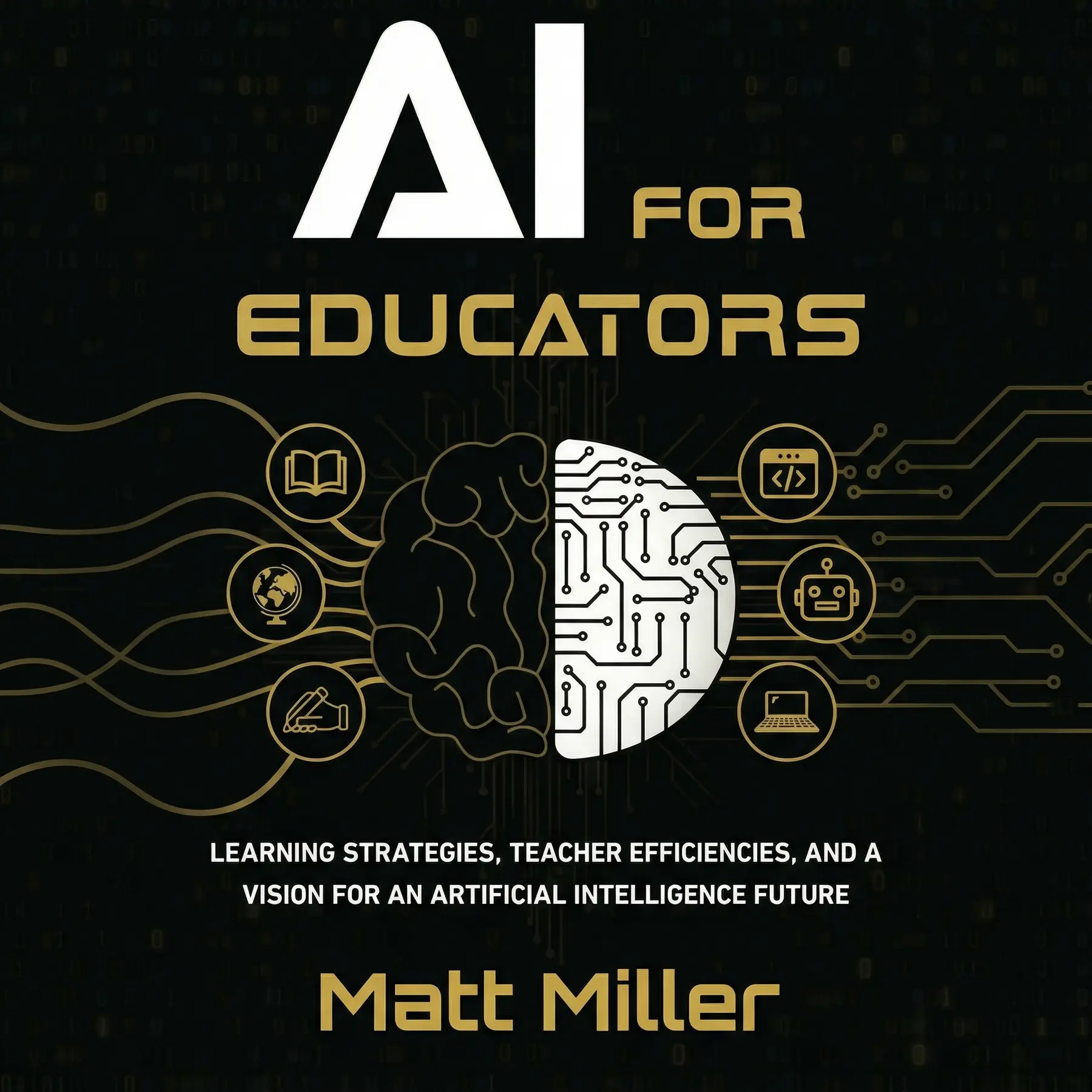
AI for Educators: Learning Strategies, Teacher Efficiencies, and a Vision for an Artificial Intelligence Future
By Matt Miller
AI for Educators provides a forward-thinking roadmap for teachers to integrate artificial intelligence into classrooms, focusing on authentic assessment, instructional efficiency, and preparing students for a tech-driven future through human-centered learning.
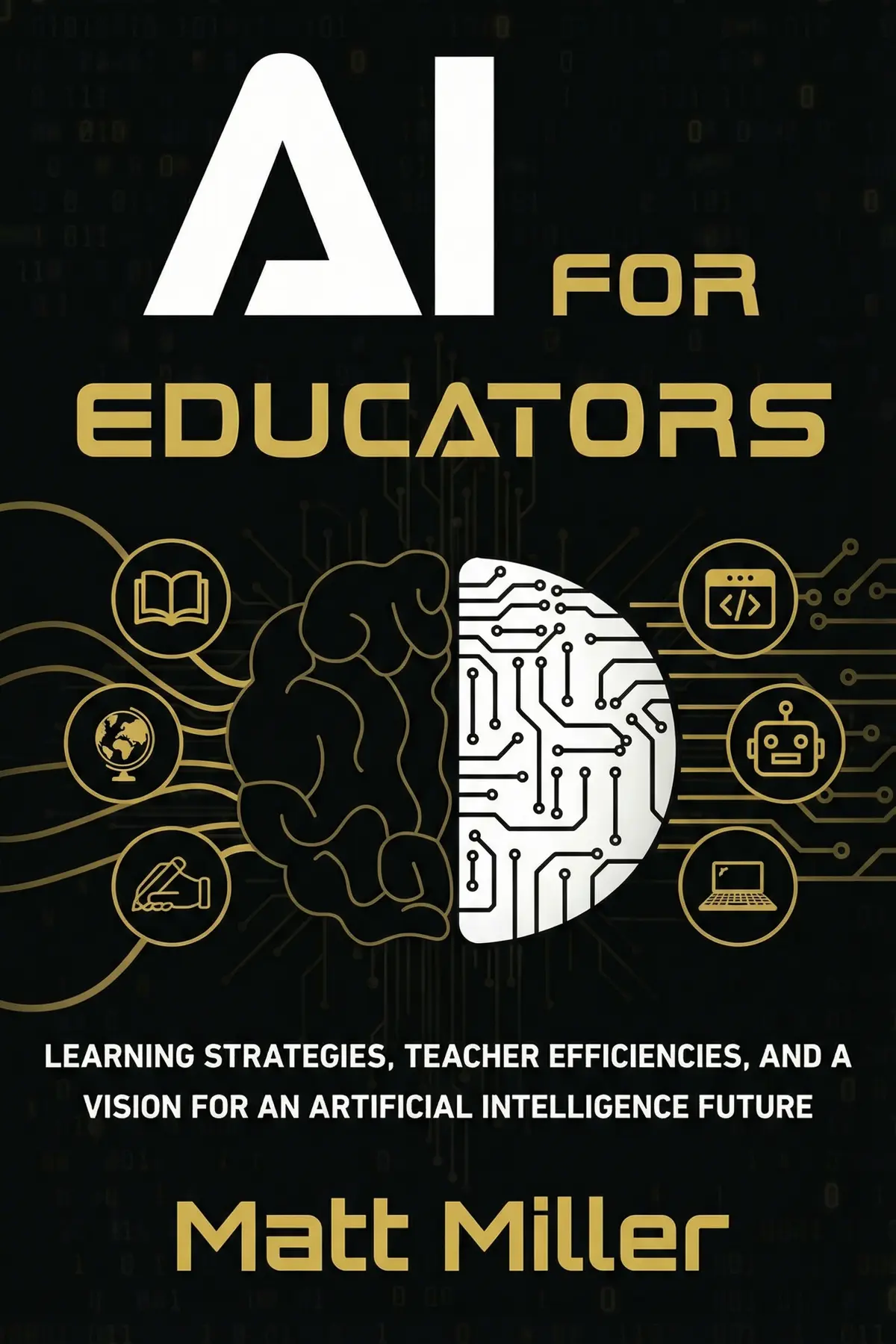
Table of Content
1. Introduction
1 min 47 sec
The sudden rise of powerful artificial intelligence has sent shockwaves through the world of education. For many teachers, the initial reaction was one of concern. We’ve all seen the headlines or heard the anecdotes about students turning in perfectly polished essays that were generated in seconds by a chatbot. It feels like the very foundations of how we measure student knowledge are being shaken. If a machine can write a paper or solve a complex problem instantly, how can we be sure our students are actually learning anything?
However, if we look past the immediate panic, a much more exciting reality begins to emerge. We are currently standing at a crossroads. We could choose to fight a losing battle against these new tools, or we could choose to evolve. The introduction of AI into the classroom isn’t just a challenge to the old way of doing things; it is an invitation to create something better. It is a chance to move away from rote memorization and towards a style of education that values deep understanding and genuine human connection.
In the following discussion, we are going to explore a new framework for teaching in the age of artificial intelligence. We will look at how to rebuild our assessments so they are resistant to shortcuts, how to use AI to make our lessons more dynamic, and how to reclaim hours of a teacher’s week by letting technology handle the repetitive work. This isn’t just about surviving the AI revolution—it’s about leading it. By the end of this journey, you’ll see how these tools can actually help us become more human in the classroom, not less. Let’s explore how we can prepare the next generation for a future where human creativity and artificial intelligence work hand in hand.
2. Redesigning Assessments for Authenticity
2 min 19 sec
Traditional essays are no longer a foolproof way to measure knowledge. Discover how shifting toward verbal exams and creative projects can reveal true student understanding.
3. Learning from the History of Innovation
2 min 27 sec
Technology has disrupted the classroom before, from calculators to search engines. See why the arrival of AI is the next chapter in a long story of adaptation.
4. Enhancing the Classroom Experience
2 min 16 sec
AI isn’t just for students; it’s a powerful assistant for teachers. Explore how it can help you generate ideas and improve classroom discussions.
5. Using AI to Unlock New Perspectives
2 min 21 sec
Imagine your students debating a historical figure or a machine that can argue both sides of an issue. Discover how AI facilitates deep empathy and critical inquiry.
6. The Efficiency Revolution for Educators
2 min 19 sec
Burnout is a real threat to the teaching profession. Learn how AI can take over the ‘drudge work’ of grading and admin so you can focus on your students.
7. Preparing Students for a Fluid Future
2 min 26 sec
The job market is changing fast. Find out how to teach the skills of ‘prompt engineering’ and critical skepticism to ensure students thrive in an AI-powered world.
8. Conclusion
1 min 37 sec
As we have seen throughout this exploration of AI for Educators, the rise of artificial intelligence is not an end point for traditional teaching, but a beginning of a new chapter. We have the chance to move away from the ‘factory model’ of education, where every student is expected to produce the same standardized output, and move toward a more personalized, dynamic, and human-centric approach.
By redesigning our assessments to focus on authentic understanding, we can ensure that learning remains genuine. By using AI to handle the time-consuming administrative tasks, we can free ourselves to be the mentors and guides our students truly need. And by teaching our students to use these tools with both skill and skepticism, we are giving them the best possible chance to succeed in an uncertain future.
The throughline of this journey is simple: technology should serve humanity, not the other way around. In the classroom, this means using AI to enhance the magic of discovery and the power of connection. The future of education isn’t about machines teaching children; it’s about teachers using every tool at their disposal to help students realize their full potential. As you move forward, look for one small way to integrate these ideas into your daily routine. Whether it’s using an AI to brainstorm a lesson or trying out a verbal assessment, remember that every step you take toward embracing the future is a step toward a better experience for your students. The tools are here, and the potential is limitless. It’s time to get started.
About this book
What is this book about?
AI for Educators explores the intersection of modern technology and the classroom environment. It acknowledges the immediate anxieties many teachers feel regarding academic integrity and automated writing, but it moves quickly toward a more constructive vision. The core premise is that artificial intelligence should not be viewed merely as a tool for cheating, but as a transformative partner that can elevate how we teach and how students learn. The book offers a mix of high-level philosophical shifts and granular, practical strategies. It promises to show educators how they can reclaim their time by automating routine administrative tasks and grading, while simultaneously deepening student engagement through AI-assisted debates, historical roleplays, and personalized learning materials. Ultimately, it suggests that by embracing these tools, teachers can focus more on the human elements of education—mentorship, inspiration, and critical thinking—that no machine can replicate.
Book Information
About the Author
Matt Miller
Matt Miller is a veteran educator and author with more than a decade of experience navigating technology in the public school system. He is the creator of the widely respected educational technology resource, DitchThatTextbook.com. In addition to his work online, Miller has authored several books focused on modernizing the classroom, including Ditch That Textbook, Ditch That Homework, and Tech Like A Pirate.
Ratings & Reviews
Ratings at a glance
What people think
Listeners find the material beneficial for teachers, especially those just starting with AI in schools, and they value the actionable tips and useful perspectives on integrating AI into lessons. This guide is clear and effectively composed, using an informal tone that ensures accessibility, while listeners also commend its fast-moving tempo.
Top reviews
Pop
Matt Miller has a knack for making tech feel approachable rather than intimidating for the average classroom teacher. Truth is, I walked in expecting a dense manual but found a conversational guide that reads more like an inspiring, long-form blog post. I specifically loved the 'think-pair-ChatGPT-share' strategy because it integrates the tool into existing routines without reinventing the wheel entirely. While it is a slim 125 pages, the brevity is actually a strength for busy educators who do not have hours to spare on academic theory. Some might find the links to his 'Ditch That Textbook' site a bit repetitive, yet those templates are exactly what I needed for Monday morning. It is a fantastic way to kick off a faculty discussion about moving past rote memorization toward deeper human connection.
Show moreCherry
Ever wonder if AI will eventually replace the human element in our classrooms or make our roles obsolete? Miller argues the opposite, suggesting that as routine tasks are automated, things like empathy and communication become even more precious. I loved the section on verbal assessments; it is a brilliant way to cut through the AI noise and see what a student actually knows. The book is written in a very accessible, jargon-free style that makes it easy to digest during a single planning period. I did feel the outlook was a bit overly optimistic at times, perhaps ignoring some of the environmental costs of these massive models. However, the focus on using AI to support teaching rather than just policing students is exactly the shift we need.
Show morePetch
If you are terrified of ChatGPT and what it means for your grading pile, buy this book immediately. It is a perfect, low-stress introduction that focuses on how AI can actually save you time on lesson prep and routine tasks. Matt speaks like a fellow teacher, not a Silicon Valley salesperson, which made me much more willing to listen to his ideas. I specifically enjoyed the 'think-pair-ChatGPT' routine as a way to model ethical use for my middle schoolers. The book is straightforward and does not get bogged down in technical jargon or complex coding. It gave me the confidence to finally try using a chatbot to help differentiate a reading passage for my diverse learners.
Show moreKanokwan
As someone who teaches world languages, I was thrilled to see the author's specific background shine through in these pages. He tackles the fear of cheating head-on by comparing AI to the introduction of the calculator in math classes decades ago. Frankly, it is refreshing to read something that isn’t doom and gloom about the end of the student essay. The chapter outlining 30 practical ways to use AI was the goldmine for me, especially the ideas for historical role-play. My only real gripe is that it feels a bit light on the technical side, but for a general overview, it is perfect. It is a fast-paced read that manages to provide immediate value for the classroom without being overwhelming.
Show moreOm
Picked this up for a professional development session and found it to be a solid conversation starter for our high school department. The most valuable takeaway was definitely the '30 ways' chapter, which gives you concrete ideas like using AI for instant feedback or brainstorming lesson hooks. I have already tried the idea of having students critique an AI-generated paragraph, and the results were surprisingly insightful. My colleagues and I did debate the author's comparison to the calculator, as AI is significantly more unpredictable and halluncination-prone. It is a very succinct read, though some sections felt a bit like a promotional tool for his existing platform. Still, for a teacher looking to overcome the 'blank page' problem with lesson planning, it is a win.
Show moreNadia
Finally got around to reading this, and I appreciate how Matt Miller addresses the 'it is cheating' sentiment with such grace and logic. Instead of banning the tech, he suggests monitored in-class work and creative demonstrations like podcasting to gauge true comprehension from our students. This perspective shift is vital because the future is already here, and our students need us to explore this frontier with them bravely. The book is short enough to finish in a single sitting, which is a major plus for my hectic schedule. I appreciated the specific prompt ideas for language teachers, though I wish there were more examples for the hard sciences. It is a great tool to help teachers move from fear to curiosity.
Show moreWipada
Look, we all know the tech moves fast, but this book provides a much-needed framework for thinking about AI in the long term. It isn't just about the specific tools; it is about shifting our focus toward critical thinking and demonstration of mastery. I found the chapter on 30 ways to support learning to be the most practical part of the whole experience. From historical role-playing to generating unique perspectives, the activities are easy to implement right away in almost any subject area. Some might find the book a little too light on the 'dark side' of AI, like data privacy. However, as a starting point for teachers who feel overwhelmed, this conversational guide hits the mark perfectly.
Show moreSangduan
The truth is, this feels more like an introductory pamphlet than a comprehensive book on the future of educational technology. At only 125 pages, it barely scratches the surface of the complex ethical dilemmas we are facing with generative models today. I found myself frustrated by how often I was redirected to his website for the actual templates and 'meat' of the content. To be fair, Miller admits the book will be outdated quickly, but that doesn’t excuse the lack of depth in the pedagogical sections for veteran teachers. If you have already been playing with ChatGPT for a few months, you likely won't find anything revolutionary here. It is strictly for those who are just now opening their first browser tab to an AI tool.
Show moreKung
While the tone is incredibly encouraging, I have to be honest and say the book feels a bit dated already. Miller acknowledges this reality in the text, but it is still a bit jarring to read about tools that have already evolved ten times over since publication. Personally, I think the real value lies in the pedagogical shifts he suggests, like focusing on group discussions and oral exams. These are timeless strategies that happen to work well in an AI-saturated world. It is a very quick read with a lot of white space, making it feel more like a workbook than a deep dive. It serves its purpose as a 'Day 1' guide for the curious educator, but do not expect a masterclass in AI.
Show moreWanphen
I wanted depth, but I got a pamphlet that feels a bit too much like a marketing brochure for 'Ditch That Textbook.' For the price, I expected more than 125 pages of high-level ideas that most tech-savvy educators have already seen on social media. The book relies heavily on templates found elsewhere, and it spends a lot of time on basic concepts that felt like unnecessary filler. Not gonna lie, I was disappointed that it didn’t dive deeper into the future of assessment beyond the obvious 'ask them to explain it out loud.' It is a fine introduction for someone who has literally never heard of a chatbot, but for the rest of us, it is a skip. The tone is nice, but the content is just too thin.
Show moreReaders also enjoyed
AUDIO SUMMARY AVAILABLE
Listen to AI for Educators in 15 minutes
Get the key ideas from AI for Educators by Matt Miller, plus 5,000+ more titles in English and Thai.
- 5,000+ titles
- Listen as much as you want
- 7-day free trial
- Cancel anytime







