

14 min 26 sec
A Planet of Viruses
By Carl Zimmer
A compelling exploration of the microscopic world, revealing how viruses shape human history, drive our evolution, and remain a constant, unpredictable force in our interconnected global society.
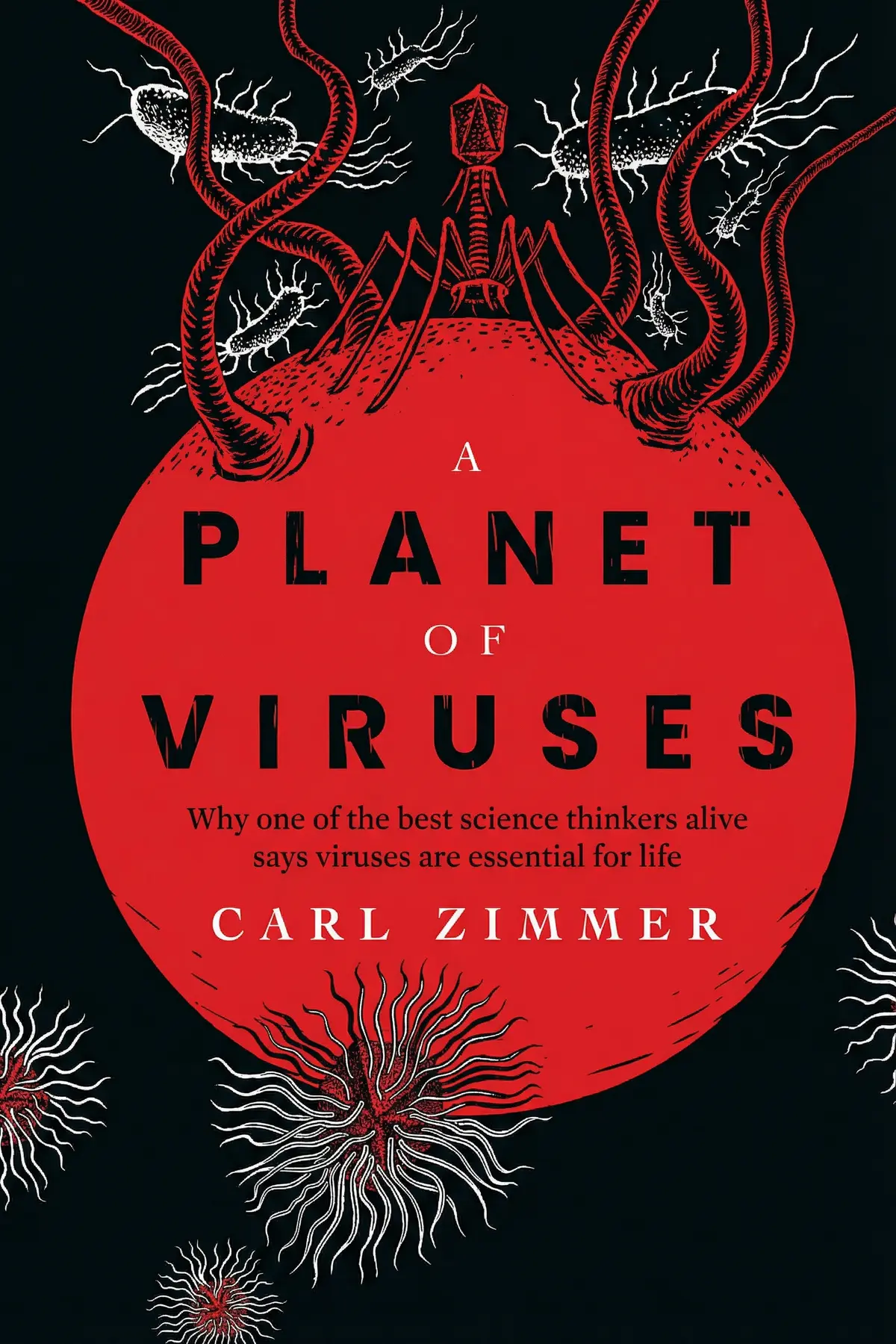
Table of Content
1. Introduction
1 min 45 sec
We live in a world that is defined by things we cannot see. While we focus our attention on the visible landscape of plants, animals, and other humans, there is a vast, invisible empire teeming all around us—and even inside us. These are the viruses. For most of human history, we were blissfully unaware of their existence, even as they shaped our civilizations, toppled empires, and influenced our very biology. Today, we often speak of them in the context of fear. We think of the seasonal flu that sweeps through our offices and schools, or the terrifying headlines regarding global outbreaks that threaten to halt modern life.
But what if viruses are more than just enemies? What if they are actually the most successful life forms on the planet, serving as both killers and creators? In this exploration, we are going to look beyond the microscope to understand the true impact of these tiny genetic packages. We will trace the path of the common cold from the time of the pharaohs to the present day and see why something so annoying might actually be beneficial for our long-term health. We will also examine the deadly dance of the influenza virus and why it remains one of the most unpredictable threats we face.
Beyond the diseases, we will discover the ‘good’ viruses—the ones that keep our oceans clean and those that integrated themselves into our ancestors’ genomes millions of years ago, making human life as we know it possible. The throughline of this journey is a shift in perspective: seeing viruses not as outside intruders, but as an integral part of the biological fabric of our planet. By the end of this summary, you will understand why we are truly living on a planet of viruses.
2. The Enduring Legacy of the Common Cold
2 min 27 sec
Explore why the world’s most frequent illness has persisted for millennia and why ancient Egyptian remedies might actually be more logical than Roman ones.
3. The Constant Evolution of Influenza
2 min 12 sec
Understand why the flu is a moving target for scientists and how it bridges the gap between different species to create global threats.
4. The Hidden Heroes of the Viral World
2 min 10 sec
Discover the ‘good’ viruses that protect our oceans from toxic bacteria and the ancient viral DNA that makes human birth possible.
5. Mapping the Migration of Modern Pathogens
2 min 10 sec
See how human activity and climate change have paved the way for viruses like HIV and West Nile to travel across the globe.
6. The Unpredictable Threat of Emerging Outbreaks
2 min 04 sec
Examine the terrifying speed of Ebola and the new risks posed by our ability to create synthetic viruses in a lab.
7. Conclusion
1 min 38 sec
As we have seen, the story of viruses is far more than a list of illnesses. It is the story of life itself on this planet. From the rhinoviruses that strengthen our immune systems to the ancient retroviruses that allow us to bear children, we are deeply and permanently intertwined with these microscopic entities. They are the great stabilizers of our oceans and the drivers of our genetic evolution. Yet, we must also respect their power to cause immense suffering through their ability to mutate, jump species, and spread through our global networks.
The reality of living on a planet of viruses is that we must remain perpetually vigilant. We cannot afford to be complacent, as the next outbreak could emerge from a forest or a laboratory at any time. The most important takeaway is that knowledge is our best defense. By studying the history and biology of these organisms, we can better prepare for the threats while appreciating the essential roles they play in our ecology.
One practical lesson you can take away today involves the way we treat the most common of these viruses. Remember that the common cold is viral, not bacterial. Taking antibiotics for a cold does nothing to stop the virus and instead helps bacteria evolve into dangerous, resistant ‘superbugs.’ When you feel the sniffles coming on, the best course of action is still the oldest: rest, fluids, and allowing your immune system to do the work it has been training for over thousands of years. We may never fully control the viral world, but by understanding it, we can learn to coexist with the invisible forces that shape our existence.
About this book
What is this book about?
When most people think of viruses, they think of sickness, masks, and hospital wards. We tend to view these microscopic entities as invaders that exist only to cause harm. However, this exploration of the viral world reveals a far more complex and surprising reality. This summary dives into the hidden life of these tiny organisms, showing that they are not just pathogens, but essential components of life on Earth. Through a journey from the ancient origins of the common cold to the modern threats of Ebola and synthetic biology, you will see how viruses have steered the course of human history. The book promises to change your perspective on what it means to be alive. It highlights how viruses protect our oceans, help us digest nutrients, and even played a crucial role in how human beings reproduce. While the dangers of pandemics are real and terrifying, the story of viruses is also a story of adaptation, survival, and the fundamental building blocks of our own DNA.
Book Information
About the Author
Carl Zimmer
Carl Zimmer is a columnist for the New York Times and a lecturer at Yale University, where he teaches how to write about science and the environment. He writes for National Geographic and is the author of thirteen books, including Parasite Rex and Microcosm.
Ratings & Reviews
Ratings at a glance
What people think
Listeners find the material both educational and current, with one listener highlighting its capacity for simplifying intricate science. Furthermore, the text is approachable and skillfully composed, ensuring it is understandable for a wide audience. Listeners also describe the subject matter as fascinating.
Top reviews
Kenji
This book is a masterclass in making the invisible visible without drowning the reader in dense jargon. Carl Zimmer takes a subject that could easily feel like a dry textbook and turns it into a series of compelling, interconnected stories about our microscopic neighbors. I appreciated how the third edition includes recent developments like COVID-19, providing much-needed context for the global situation we just lived through. Truth is, most science writing feels inaccessible, but Zimmer has this gift for breaking down complex viral mechanisms into something digestible for the average person. My only real complaint is that I wanted even more depth on certain topics, but as an introductory guide, it is nearly perfect. It manages to be both educational and a genuine page-turner.
Show moreIff
As someone who tends to get bored with science non-fiction, I was pleasantly surprised by how Zimmer keeps the energy high throughout this entire book. He doesn't just list facts; he tells the history of discovery, from the first glimpses of contagious fluids to the modern era of genomic sequencing. Look, the reality is that viruses are often portrayed as purely villainous, but this book paints a much more nuanced picture of their role in the global ecosystem. I was especially gripped by the chapters on giant viruses and the ongoing debate regarding their status as living organisms. It’s refreshing to find an author who can translate such high-level concepts into a narrative that feels like a conversation at a dinner party. Highly recommended for anyone who wants to understand the hidden forces driving life on Earth.
Show moreJan
Wow. I never realized how much viruses have influenced everything from the air we breathe to the very genes that allow a human placenta to function. Zimmer has a way of making complex science feel like a thriller, especially when discussing the globalization of West Nile or the tragic history of Smallpox. The book is remarkably up-to-date, which is crucial given how fast our understanding of things like COVID-19 has evolved over the last few years. Personally, I think this is the perfect gift for that friend who is always asking why about the world. It’s interesting, it’s accessible, and it manages to be profound without being overly long-winded. A great reminder that even the smallest things can have the biggest impact on our history and our future.
Show moreEmily
Ever wonder why we haven't cured the common cold despite all our medical advancements? This slim volume explains exactly why rhinoviruses are such resilient little hitchhikers while also diving into the terrifying world of Ebola and Smallpox. Personally, I found the section on bacteriophages—the viruses that eat bacteria—to be the most fascinating part of the entire narrative. It’s a bit of a departure from his work in Parasite Rex, which felt a little more visceral and gross, but the insights here are just as profound. While it's a very quick read, it manages to pack an incredible amount of information into its few pages. The discussion on whether these entities are actually alive or just contagious living fluids will keep you thinking long after you close the cover.
Show moreWatcharin
Picked this up on a whim and was immediately struck by how much of our own DNA isn't actually ours. Zimmer explains endogenous retroviruses in a way that is both mind-bending and strangely humbling, showing how these parasites helped shape human evolution. Not gonna lie, I was expecting a scary book about pandemics, but I ended up learning more about the viruses in the ocean that regulate our climate. The pacing is brisk—almost too brisk at times—and I found myself wishing he’d spend more than ten pages on things like West Nile or the origin of HIV. Still, the way he breaks down the science is incredibly clear, making it accessible even if you haven't taken a biology class in twenty years. It’s a sharp, illuminating look at the world we usually ignore.
Show moreEllie
Not what I expected, but in the best way possible. Instead of a gloom-and-doom lecture on the next plague, this is a poetic exploration of the virosphere and its staggering diversity. From the rabbits with horns to the phages being used in Russian medicine as an alternative to antibiotics, every page offers a new perspective on things we can't even see. I'll admit that the book is quite short, and you could easily finish it in a single afternoon if you're a fast reader. In my experience, that's actually a strength here because it prevents the dense biology from becoming overwhelming or tedious. It’s an up-to-date, punchy guide that manages to be both informative and genuinely entertaining without sacrificing scientific integrity. If you're curious about the tiny things ruling our planet, start right here.
Show moreChokdee
After hearing so many people talk about Zimmer, I finally delved into this updated edition to see if the hype was real. It definitely delivers on the promise of being an easy-to-read overview, particularly regarding the sections on SARS-CoV-2 and how it fits into the broader history of coronaviruses. To be fair, there are moments where the brevity works against it, leaving you with more questions than answers about specific viral behaviors. I specifically wanted more on the behavior of rabies, as that's one of the most fascinating viruses out there, but it was largely absent from the discussion. Nevertheless, the book succeeds in making you realize that we are living on a planet that belongs to them, not us. It’s a humbling realization delivered through crisp prose and very clear, logical explanations.
Show moreOrawan
Finally got around to reading this after finishing She Has Her Mother's Laugh, and while it's much shorter, it’s no less insightful. The book does an amazing job of explaining how viruses are basically the original hackers of the biological world, hijacking cells to do their bidding instead of their normal functions. I was particularly interested in the discussion on why smallpox was able to be eradicated while the flu continues to reinvent itself every single year. My only beef is that the book ends just as it feels like it’s getting into the real meat of the is it alive debate. Still, Zimmer's ability to break down the virosphere into something understandable is unmatched in modern science writing. It’s a quick, enlightening journey through a world that is literally everywhere, inside and out.
Show moreSiriphen
The chapter on the Tobacco Mosaic Virus actually left me a bit skeptical about the research quality here. It claims that boiling won't kill TMV, but standard scientific literature suggests that sustained high heat definitely denatures its protein structure. Beyond that specific gripe, the book feels more like a collection of disjointed essays than a cohesive deep dive into virology. To be fair, Zimmer’s writing style is fluid and easy to follow, which makes it a decent entry point for someone with zero background. However, if you are looking for the same level of intellectual rigor found in books by authors like Mukherjee, you might find this a bit too surface-level. It’s an okay primer, but it lacks the weight I expected from such a big name in science journalism.
Show moreRung
Frankly, I found the author's suggestion to use zinc for the common cold a bit questionable, as the medical evidence on that is still pretty mixed. This isn't a deep-dive textbook, and if you're already well-versed in biology, you might find yourself feeling like a parrot—repeating metaphors without gaining a deep, functional understanding of the cellular mechanics. That said, Zimmer is a fantastic storyteller, and the way he describes the alien nature of giant viruses is genuinely thrilling. I appreciate how he avoids the dry, academic tone that plagues so many other science books on the market today. It’s a three-star read for me because it felt a little too much like a series of blog posts rather than a fully developed thesis. Good for a flight, but don't expect it to change your life.
Show moreReaders also enjoyed


A Life Decoded: My Genome: My Life
J. Craig Venter
A Short History of Nearly Everything
Bill Bryson

A Thousand Brains: A New Theory of Intelligence
Jeff Hawkins

Alien Earths: The New Science of Planet Hunting in the Cosmos
Lisa Kaltenegger
AUDIO SUMMARY AVAILABLE
Listen to A Planet of Viruses in 15 minutes
Get the key ideas from A Planet of Viruses by Carl Zimmer, plus 5,000+ more titles in English and Thai.
- 5,000+ titles
- Listen as much as you want
- 7-day free trial
- Cancel anytime







