
16 min 20 sec
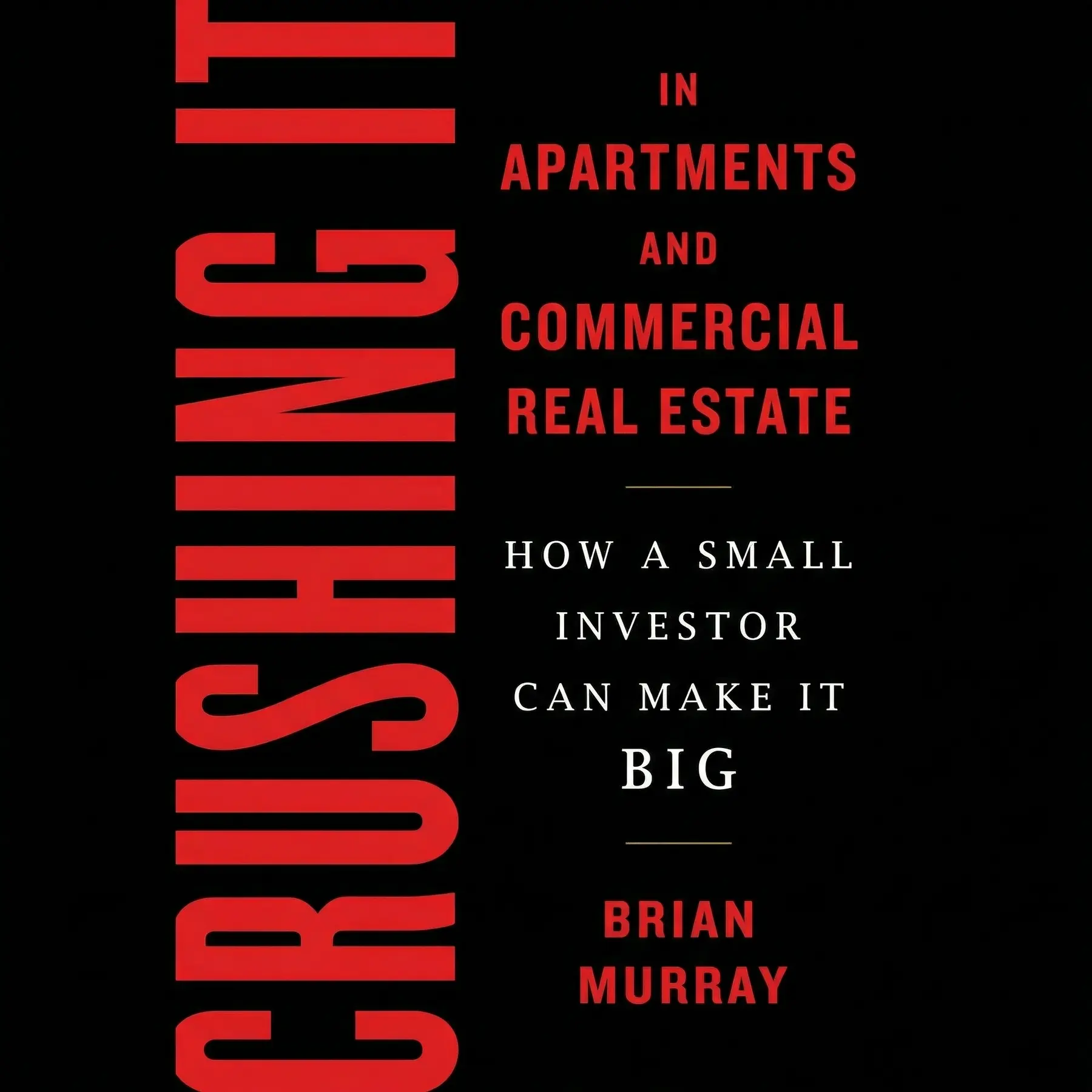
Crushing It in Apartments and Commercial Real Estate: How a Small Investor Can Make It Big
By Brian Murray
A comprehensive manual for aspiring real estate moguls, Brian Murray’s guide demystifies commercial property investment through the lens of active management, financial discipline, and a long-term, value-driven growth strategy.
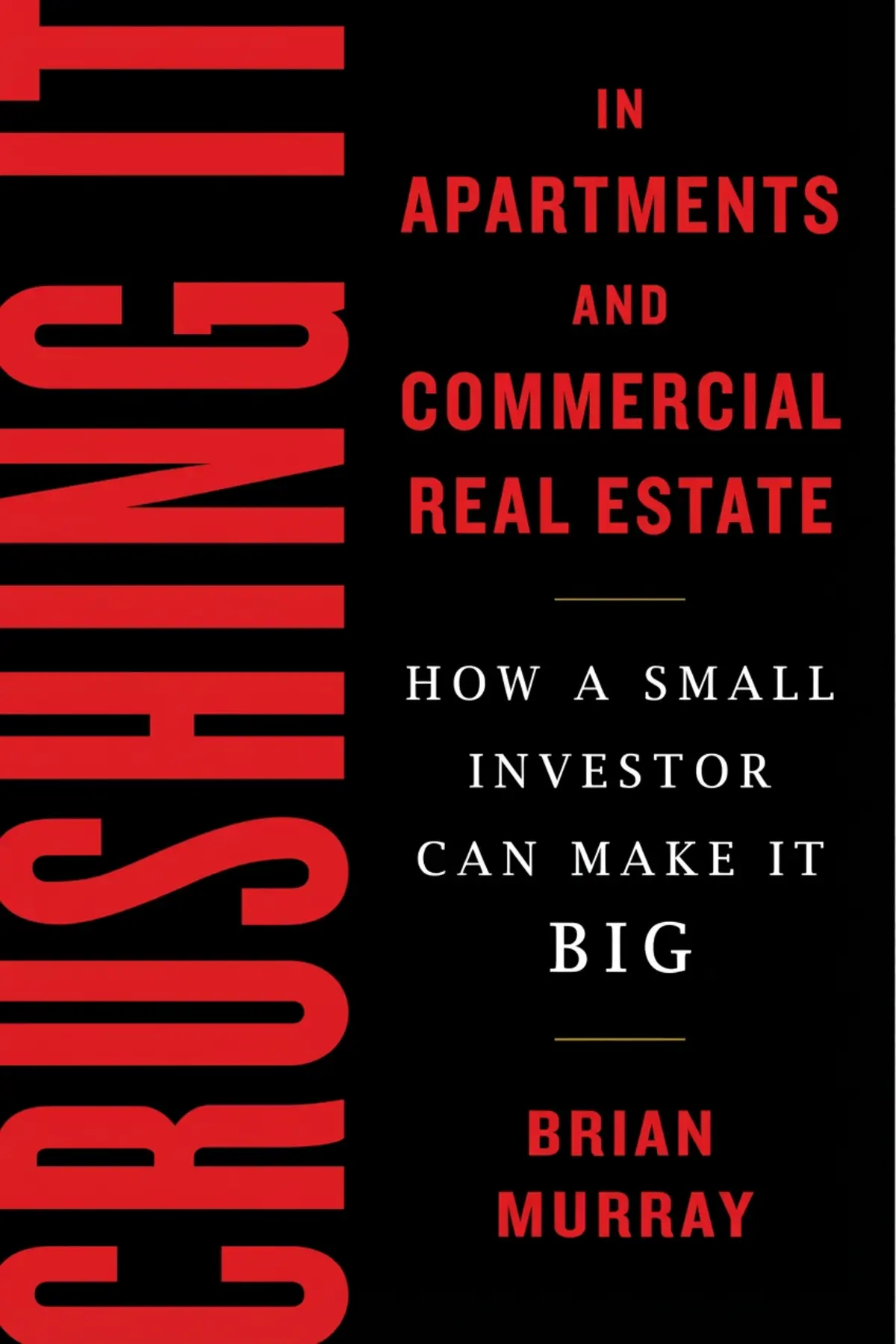
Table of Content
1. Introduction
2 min 01 sec
Imagine for a moment the typical image of a real estate tycoon. You probably see someone in a high-rise office, wearing an expensive suit, collecting rent checks while vacationing on a remote beach. This image of ‘passive income’ is what draws many people to the world of property investment. They see real estate as a safe harbor, a place where money grows on its own even when the rest of the economy is in a tailspin. But if it were really that easy, wouldn’t everyone be doing it?
The truth is that commercial real estate can indeed be a path to incredible wealth, but the journey looks very different from the glamorous fantasy. It involves late-night calculations, managing difficult tenants, and sometimes, even rolling up your sleeves to handle maintenance yourself. The real secret to success in this field isn’t about having a massive inheritance or a stroke of luck; it’s about treating property investment as a dedicated business rather than a hands-off hobby.
In this guide, we are going to explore the hard-won wisdom of Brian Murray, a professional who didn’t start with a silver spoon but instead built a real estate empire through trial, error, and a relentless focus on the fundamentals. We will break down the essential financial metrics you need to know before you even sign a contract. We’ll look at why you might want to keep your day job a lot longer than you think, and why the best office you can have starting out might be a tiny closet in a basement.
We will also dive into the human side of the business. Real estate isn’t just about bricks and mortar; it’s about the people who live and work within those walls. You’ll learn how to pick the right tenants and why charging them a little less than the market rate can actually make you more money in the long run. By the time we finish, you’ll have a clear throughline for your own investment journey: a path built on active management, financial caution, and a long-term vision that prioritizes creating value over making a quick buck. This is about more than just buying buildings; it’s about building a legacy.
2. Mastering the Financial Safety Net
2 min 09 sec
Before you sign any papers, you must master two critical numbers that determine whether a property is a golden goose or a sinking ship.
3. The Power of the Lean Startup Mindset
2 min 01 sec
Discover why the most successful investors start in the basement and why keeping your nine-to-five job is actually a strategic advantage.
4. Demystifying the Passive Income Myth
1 min 53 sec
The most profitable properties aren’t hands-off; they require an active owner who is willing to get their hands dirty.
5. Cultivating the Ideal Tenant Ecosystem
2 min 05 sec
Learn why charging less than your competitors can actually lead to higher profits and a more stable investment.
6. Finding a Purpose Beyond the Profit
1 min 59 sec
Money is a poor motivator during the tough times; discover how to ground your business in values that ensure longevity.
7. The Strategic Patience of the Long-Term Holder
2 min 05 sec
Explore why the biggest fortunes in real estate are made by those who refuse to sell, and how to maximize your property’s value over time.
8. Conclusion
2 min 07 sec
As we reach the end of our journey through the strategies of a real estate professional, the throughline should be clear: success in this field is a product of discipline, active participation, and a long-term perspective. We have learned that the true value of a property isn’t in its appearance, but in its ability to generate consistent cash flow, measured through net operating income and cash-on-cash returns. We’ve seen that starting small, being frugal, and keeping your day job can provide the financial stability needed to weather the early years of business growth.
Perhaps most importantly, we’ve debunked the myth of passive income. Real estate is a service business. By managing your properties personally, you cut out unnecessary expenses and gain the expertise required to scale. By treating your tenants as valued partners and charging fair, sustainable rents, you create a stable environment that protects your investment from turnover and market volatility.
Before you go, here is one final, actionable piece of advice to take with you: always be looking for ‘hidden’ value in the way a property is used. Sometimes, the best way to increase your revenue isn’t to buy a new building, but to rethink the one you already have. Can a large, underutilized common area be partitioned into storage units that you can rent out? Can an old, struggling hotel be converted into efficient studio apartments? This kind of creative repurposing can dramatically increase a property’s value without the need for a massive new acquisition.
Real estate investment isn’t a get-rich-quick scheme. It’s a craft that requires patience, a do-it-yourself attitude, and a commitment to your core values. If you are willing to roll up your sleeves, do the math, and stay the course, the path to financial freedom is wide open. Now, it’s time to stop dreaming about the penthouse and start looking for your first ‘basement office.’ The journey to crushing it starts today.
About this book
What is this book about?
Many people view commercial real estate as a playground reserved for the ultra-wealthy or a source of effortless passive income. Crushing It in Apartments and Commercial Real Estate shatters these misconceptions, offering a blueprint for the small investor to break into the market and scale a massive portfolio. The book moves beyond the theoretical, providing a gritty, field-tested approach to identifying properties, managing them personally to maximize profit, and building a sustainable business from the ground up. At its core, the book promises that anyone with discipline and a willingness to learn can achieve financial freedom through property. It emphasizes the importance of 'bootstrapping'—starting small and being frugal—while teaching the vital metrics that separate a winning deal from a financial disaster. By the end of this summary, you will understand how to transition from a passive spectator to an active, successful property manager who creates genuine value for tenants and long-term wealth for themselves.
Book Information
About the Author
Brian Murray
Brian Murray is the founder and CEO of Washington Street Properties, a leading commercial real estate investment firm that has been recognized as one of the fastest-growing private companies in the United States. His expertise and leadership in the field were highlighted in 2015 when he received the Gold Stevie Award for Real Estate Executive of the Year at the Annual American Business Awards.
Ratings & Reviews
Ratings at a glance
What people think
Listeners find this real estate guide to be well-crafted and approachable, offering lucid breakdowns of core concepts and a thorough collection of resources for additional investigation. The text delivers useful strategies for novice and veteran investors alike, and listeners are grateful for its encouraging message. They specifically appreciate the concentrated look at commercial and apartment properties, with one listener pointing out how comprehensively it covers different property type factors.
Top reviews
Siriphen
Murray’s perspective as a former professor brings a unique, grounded academic rigor to a field often dominated by flashy personalities and empty promises. Frankly, it is refreshing to see an author advocate for a slow, cautious build instead of suggesting you hire a massive team of attorneys and brokers before your first deal. The chapters on bootstrapping are particularly enlightening, showing exactly how to leverage existing resources and sweat equity to create value where others see none. I was struck by the focus on the human element, especially the advice to keep rents slightly below market to reduce turnover costs and foster a better community. While some might find the lack of complex algorithmic market analysis a downside, the practical focus on NOI and cash-on-cash returns is exactly what a beginner needs. This is a brilliant template for how to write an informative and engaging business book.
Show morePor
Finally got around to reading this, and it’s a total breath of fresh air compared to the usual 'no money down' infomercial garbage. Brian Murray’s journey from a solo investor to a multi-million dollar business owner is genuinely inspiring because it feels attainable through hard work and tact. He explains the 'puzzle' of investment beautifully: every piece, from financing to maintenance, must fit perfectly or the risk of overpaying becomes too high. The book emphasizes a long-term hold strategy and the importance of improving properties rather than just flipping them for a quick buck. Look, if you want to understand how to actually manage a property and treat tenants with respect while still hitting your cash-on-cash targets, this is your bible. The writing style is easy to follow, making even the most complicated commercial concepts feel like a simple conversation over coffee.
Show moreOn
What truly sets this book apart is the emphasis on finding a deeper purpose for your real estate ventures beyond just the bottom line. Murray argues that improving the community keeps you going when the market gets tough, and in my experience, that kind of integrity is rare in this business. The book is filled with practical strategies for extraordinary value creation, specifically regarding how to calculate net operating income accurately. It’s an easy read that doesn't sacrifice depth, providing a clear roadmap for anyone tired of the low margins in single-family rentals. I loved the Thomas Edison quote about opportunity being dressed in overalls; it perfectly summarizes the author's 'get your hands dirty' philosophy. Whether you are a long-time business owner or a first-time investor, the insights on efficiency of scale are absolutely invaluable for your growth.
Show moreWaree
I've been looking for a real estate roadmap that doesn't require a massive corporate team on day one, and this is exactly it. The author’s 'geeky' but energetic approach to the numbers makes the financial modeling side of things feel much less like a chore. I was particularly impressed by the focus on 'sweat equity' and the reality that most success comes from doing the work that others are too lazy to do. The chapters are strategically placed, the quotes are relevant, and the overall tone is incredibly motivating without being 'salesy.' It’s rare to find a business book that is this informative while remaining genuinely fascinating from cover to cover. Murray reminds us that while you can't account for every unknown, you can mitigate risk by never overpaying and staying disciplined with your dollars. A must-read for anyone serious about apartments.
Show moreDaranee
Ever wonder how people actually make the jump from small duplexes to massive, multi-unit apartment complexes without losing their minds? This book provides the answer through a combination of tactical property management and smart financial modeling. Murray’s 'nuggets of truth' about why terrain decides the winner in a fight between a bear and an alligator are metaphors I'll never forget. The book is packed with helpful information on structuring deals and bootstrapping, making it an essential resource for those of us who aren't starting with a million-dollar trust fund. I loved the focus on being your own biggest investor and treating landlord duties as a high-standard profession rather than a side-hustle. It’s an inspiring, fun read that balances the hard numbers with the human reality of real estate. Highly recommend this for any entrepreneur who wants to build something that lasts.
Show moreHana
This is a solid resource for anyone looking to move beyond single-family flips and into the more complex world of commercial assets. The author does a fantastic job explaining how to structure a deal and perform proper due diligence without making the reader feel overwhelmed by jargon. Truth is, many real estate books are just long-winded brochures for a coaching program, but this one provides actual nuggets of truth regarding property evaluation and maintenance. I particularly appreciated the detailed glossary and appendices; they are essentially worth the price of admission alone for a newcomer. My only real complaint is that I wish there were more deep-dives into specific market cycles and macro-economic data rather than just generic strategies. However, the focus on turning hotels into studio apartments and finding non-monetary purposes for investing makes this a fascinating, high-value read.
Show moreSomrutai
As someone who has always been slightly intimidated by the sheer scale of commercial real estate, I found Murray's incremental approach incredibly grounding. He doesn't tell you to break the bank immediately, but rather to invest gradually and perform your landlord duties to a high standard yourself. The section on repurposing assets—like turning a hotel into studio apartments—opened my eyes to the creative side of the business that I hadn't considered. I do think the book could have spent more time on the 'what if it goes wrong' scenarios, as it leans quite heavily on the success stories. Still, the tactical advice on asking sellers if they've considered selling is a goldmine for anyone hunting off-market deals. It's an honest look at the industry that stresses the importance of balancing work, health, and home life while you're grinding.
Show moreNatnicha
The math is where this book earns its keep, providing clear explanations of NOI and cap rates that even a total beginner can grasp. Personally, I found the breakdown of how to evaluate properties against one another to be the most helpful part of the entire text. It’s a refreshing change of pace to see an author who was a professor while building his empire, proving you don't need to dive in full-time right away. I would have appreciated a bit more detail on the legal hurdles of commercial zoning, as that can be a huge barrier to the 'repurposing' strategies he suggests. Regardless, the book is exceptionally well-written and serves as an excellent template for business owners. It’s a practical, no-nonsense guide that favors incremental growth over risky, massive leaps. Definitely a high-quality addition to any investor's personal library.
Show moreRohan
To be fair, the title suggests a much more aggressive, high-speed approach than what is actually inside these pages. It is a well-written book, but I felt the advice was occasionally too geared toward the absolute novice who has never heard of a cap rate. The personal anecdotes about the author's success are motivating, yet they sometimes veer into the territory of luck rather than a repeatable scientific hypothesis. I was looking for more technical spreadsheets and complex financial modeling, but instead, I found mostly common-sense tips like 'don't quit your day job' and 'watch your spending.' It’s a lovely read if you are just starting out or need a motivational boost, but seasoned investors might find themselves skimming through the more basic sections. It is a decent introduction, just not the masterclass in advanced analysis I was anticipating.
Show moreNoah
Not what I expected given the hyped-up title, as it feels more like a memoir of one man's success rather than a step-by-step technical manual. Don't get me wrong, the writing is great and the advice about keeping your day job is sound, but I wanted more 'meat' on market analysis. It felt a bit light on the actual numbers for someone who already has a few properties and is looking for advanced scaling techniques. Gotta say, the glossary is excellent and the advice on tenant retention is smart, but much of the value-add strategy felt like stuff you'd find on a basic real estate blog. It is a solid introduction for someone who is brand new to the concept of commercial investing, but if you've been in the game a while, you might only find a few new things here.
Show moreReaders also enjoyed
7 Powers: The Foundations of Business Strategy
Hamilton Helmer
Alibaba: The House That Jack Ma Built
Duncan Clark
AUDIO SUMMARY AVAILABLE
Listen to Crushing It in Apartments and Commercial Real Estate in 15 minutes
Get the key ideas from Crushing It in Apartments and Commercial Real Estate by Brian Murray, plus 5,000+ more titles in English and Thai.
- 5,000+ titles
- Listen as much as you want
- 7-day free trial
- Cancel anytime







