
15 min 06 sec
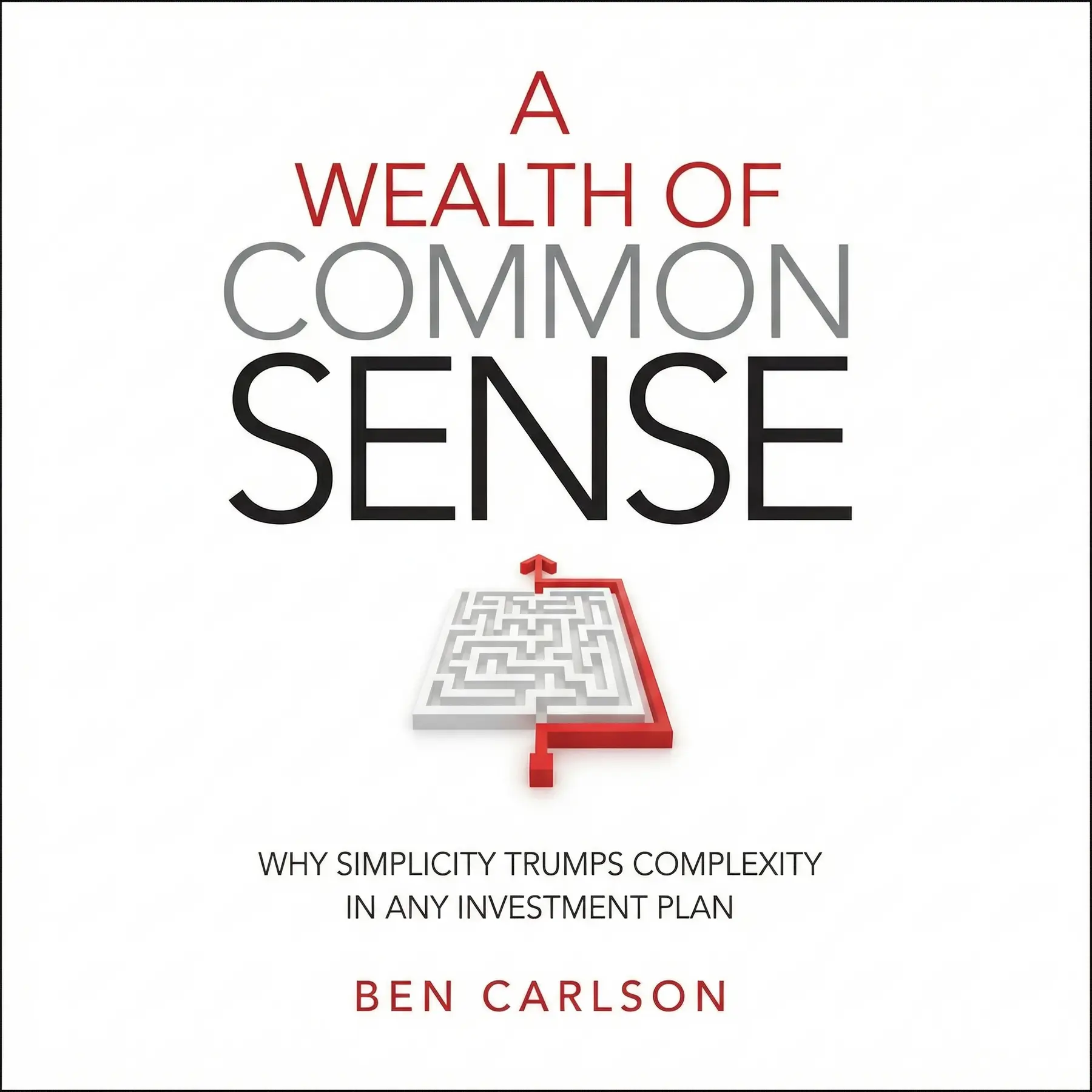
A Wealth of Common Sense: Why Simplicity Trumps Complexity in Any Investment Plan
By Ben Carlson
Discover why successful investing is less about complex algorithms and more about mastering your own behavior, keeping things simple, and adhering to a personalized, common-sense plan for long-term growth.
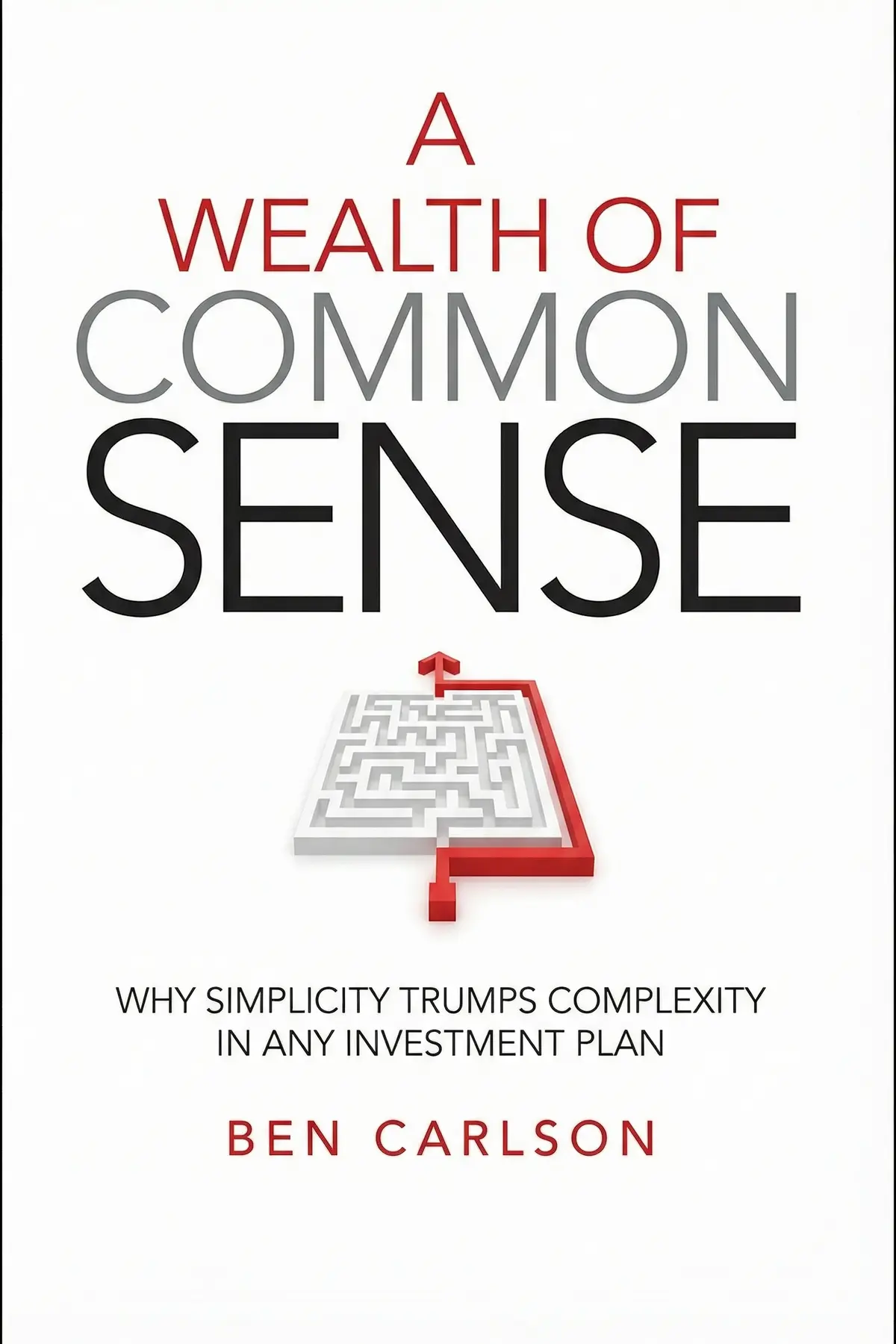
Table of Content
1. Introduction
1 min 32 sec
We often think of the world of high-stakes investing as a realm of secret handshakes, complex algorithms, and mysterious jargon that only a select few can truly master. It’s easy to get swept up in the idea that if we just found the right ‘trick’ or the most sophisticated software, we could unlock a treasure chest of immediate wealth. But if you spend any amount of time listening to the loudest voices in the financial media, you’ll start to notice something: their advice often feels more like a fairy tale than a reality. They promise instant riches, but the path they describe is usually paved with unnecessary risk and overwhelming complexity.
In reality, becoming a successful investor doesn’t require you to spend years in a library studying the history of finance or mastering calculus. Instead, the most powerful tool you have at your disposal is something you already possess: common sense. This isn’t about finding a shortcut to wealth; it’s about building an unbreakable foundation that can withstand the inevitable storms of the market.
In this exploration, we are going to look at how to move past the noise and focus on what actually moves the needle. We’ll examine why the strategies of giant universities won’t work for you, how your own emotions can be your greatest enemy, and why the best thing you can do for your money might be to simply leave it alone. The goal here is to help you craft a personal investment roadmap—one that doesn’t just look good on paper, but one that you can actually live with when times get tough. By the end of this journey, you’ll see that simplicity isn’t just a convenience; it’s the ultimate advantage in any investment plan.
2. The Pitfall of Imitating Institutional Giants
2 min 02 sec
Trying to copy the investment strategies of massive institutions like Yale is often a recipe for failure because individual investors operate under entirely different rules and constraints.
3. Mastering the Art of What to Avoid
1 min 55 sec
While most financial advice focuses on what you should buy, true success often comes from knowing which common behaviors and traps you must avoid.
4. The Critical Role of Emotional Intelligence
1 min 58 sec
Investing is often presented as a numbers game, but it is actually a battle of temperament where emotional stability counts more than high IQ.
5. Balancing the Scales of Risk and Reward
2 min 06 sec
Understanding that every gain comes with a corresponding level of risk is essential for building a portfolio that won’t leave you stranded.
6. Designing a Strategy Around Your Identity
1 min 53 sec
A generic investment plan is useless; you need a personalized roadmap that accounts for your unique behavioral habits and long-term values.
7. The Hidden Power of Doing Nothing
2 min 04 sec
Often, the most effective action an investor can take is no action at all, as constant tinkering and emotional reallocation frequently lead to lower returns.
8. Conclusion
1 min 36 sec
As we wrap up this journey through the landscape of common-sense investing, the most important takeaway is that your biggest advantage isn’t your bank balance or your access to information—it’s your behavior. By choosing simplicity over complexity, you avoid the traps that snare even the most ‘sophisticated’ investors. You don’t need to be a Wall Street insider to succeed; you just need to be someone who can stay calm when others are panicking and who has the discipline to stick to a plan that was built for the long haul.
Remember that you aren’t Yale, and you don’t need to act like them. You are an individual with your own unique goals and your own unique temperament. Successful investing is about aligning your money with your life, not the other way around. It’s about understanding that risk is the price you pay for returns, and that the best way to manage that risk is through a diversified, simple approach that you don’t feel the need to tinker with every time the headlines turn sour.
To put these ideas into practice today, here is one actionable step you can take: write down your investment plan. It doesn’t have to be a fifty-page manifesto. It can be a simple page that outlines why you are investing, what your target mix of assets is, and under what specific conditions you would allow yourself to make a change. The very act of putting these thoughts on paper forces you to be specific and creates a contract with your future self. When things get turbulent in the markets—and they will—that piece of paper will be the common-sense guide that keeps you on the path to financial freedom. Stick to your guns, keep it simple, and let time do the heavy lifting for you.
About this book
What is this book about?
Many people believe that to conquer the financial markets, they need a secret formula or an incredibly complex strategy used by the world's elite institutions. This book completely dismantles that myth. It argues that the real secret to financial success isn't found in complexity, but in simplicity and emotional control. By focusing on what you can control—like your behavior, your plan, and your costs—you can outperform those who are constantly chasing the latest trends or trying to outsmart the market. You will learn why imitating giant endowment funds is a losing game for individual investors and how common psychological traps, such as overconfidence and herd mentality, lead to expensive mistakes. The book provides a roadmap for building a resilient portfolio that aligns with your specific life goals and temperament. Ultimately, it promises that by embracing a wealth of common sense, you can navigate market volatility with a clear head and secure your financial future without needing a degree in finance.
Book Information
About the Author
Ben Carlson
Ben Carlson is a highly respected voice in the world of finance, currently serving as the director of institutional asset management at Ritholtz Wealth Management. In this role, he focuses on the intricacies of financial planning and the management of diverse assets. He is perhaps most well-known for his popular blog, A Wealth of Common Sense, where he provides accessible and vital insights into market psychology and wealth management for a broad audience.
Ratings & Reviews
Ratings at a glance
What people think
Listeners find this investment guide to be a must-read for every investor, praising its talent for demystifying intricate financial scenarios in an approachable manner. They appreciate the succinct, high-quality writing and the emphasis on enduring strategies for lasting prosperity. Listeners value the straightforward and intuitive methodology, with one listener noting how the book connects investment principles to various other fields.
Top reviews
Pensuda
Ben Carlson delivers a masterclass in stripping away the unnecessary noise that plagues the modern financial world. He argues convincingly that the greatest enemy of a successful portfolio isn't a lack of data, but rather our own irrational emotions and the industry's obsession with complexity. The truth is that most of us don't need a PhD to manage our money; we just need the discipline to stick to a simple, diverse plan. I loved the emphasis on how diversification acts as an emotional hedge during market turbulence. It’s not just about the numbers; it’s about surviving the psychological burden of a crash without making irreversible mistakes. While some might find the advice repetitive, that’s actually the point—consistency is the secret to success. This is a must-read for anyone who feels overwhelmed by the constant feed of market news.
Show moreEye
Finally got around to reading this after following Ben's blog for years, and it lives up to the hype. The central thesis—that simplicity trumps complexity—is backed by historical data that shows how even the boring 60/40 split can outperform the pros. Carlson explains that markets are more complex than rocket science because they involve human feedback loops, which makes them impossible to predict with certainty. This book teaches you how to automate productive behavior so you aren't constantly second-guessing your decisions when the news cycle turns negative. I found the section on true risk being irreversible losses particularly insightful. It shifted my perspective from trying to win every month to simply making sure I don't lose the game entirely. A truly thoughtful approach to wealth.
Show moreMilk
Picked this up on a whim and was pleasantly surprised by how Carlson connects investing to broader human behavior. He treats the market as a psychological battlefield rather than just a series of charts and graphs. The writing is incredibly accessible, making it a perfect gift for someone who is intimidated by the math of finance. He correctly identifies that a plan is useless if you can't stick to it during the bad times. By focusing on a system that automates your decisions, you remove the burden of having to be right all the time. I've read plenty of finance books that are dry as toast, but this one kept me engaged throughout. It’s short, punchy, and packed with timeless principles that won't go out of style.
Show moreClara
Wow, I wish I had read this a decade ago before I lost a fortune trying to time the tech sector. This book is a powerful argument for the buy and hold strategy and the importance of a simple 60/40 or 70/30 allocation. Carlson explains that while complexity feels sophisticated, it often introduces new types of risks that can lead to permanent losses. I loved the international perspective, especially the data showing how different regions outperform at different times. It really cured my home-country bias. Though it can be a bit basic for those who have been in the game for a long time, the reminders to stay cool and stay wary are always valuable. It’s one of those books you keep on your nightstand to read during a market correction.
Show moreWin
Ever wonder why we make things so difficult for ourselves when it comes to money? Carlson dives deep into the psychology of why we are drawn to complex financial products that often serve the seller more than the buyer. He pulls no punches when discussing how high fees and over-engineered strategies eat away at long-term returns. Frankly, the book is a refreshing reminder that common sense is a rare commodity in the investing world. I particularly appreciated the discussion on how to build a plan tailored to your own personality rather than following a one-size-fits-all model. My only slight gripe is that the structure felt a little loose in the middle sections, but the core message remains incredibly potent. If you want to avoid the trap of overconfidence, keep this on your shelf.
Show moreTod
As someone who tends to overthink every market dip, this book was the cold shower I desperately needed. It’s easy to get caught up in the get-rich-fast mentality that dominates social media, but Carlson reminds us that those shortcuts are usually dead ends. The book focuses heavily on behavior economics, showing how our own overconfidence leads to extra trading costs and tax headaches. I really liked the checklist provided for how to behave when the market gets volatile. It's concise, well-written, and makes the intimidating world of finance feel manageable for the average person. My only criticism is that the author is clearly biased toward the stock market, which might not suit everyone's risk tolerance. Nevertheless, the emphasis on letting time work in your favor is a lesson every investor needs to hear.
Show moreIsabella
The chapter on why complexity sells but simplicity performs is worth the price of admission alone. Carlson highlights how the financial industry thrives on making things look hard so they can charge higher fees. In my experience, most people lose money because they try to be too smart for their own good. This book helps you embrace the boring path to wealth. It covers asset allocation as the most important decision you'll make, which is a point that cannot be overstated. I also appreciated the data points comparing US and international stocks over the decades; it really puts the recent performance of the S&P 500 into context. It’s a great reality check for anyone who thinks they can time the market.
Show moreLars
Look, you aren't going to find a secret formula to get rich by next Tuesday in these pages. In fact, Carlson spends a lot of time telling you exactly why that’s impossible. This book is for the person who wants to build wealth slowly and steadily over thirty years without losing their mind in the process. He argues that the largest risk isn't a market crash, but rather not taking enough risk to allow compounding to work its magic. I found the sections on emotional awareness particularly helpful, as they helped me identify my own triggers for panic selling. The focus on a tailored investment plan makes it feel personal rather than prescriptive. It’s a solid, common-sense guide that respects the reader's time.
Show moreBird
To be fair, this is a solid entry point for a beginner, but seasoned investors might find themselves skimming quite a bit. If you have zero knowledge of how markets work, Carlson provides a clear and accessible roadmap that avoids the usual jargon. However, for someone looking for a technical step-by-step guide or deep-dive asset analysis, it might feel a bit light on meat. I was hoping for more concrete advice on specific sectors, but instead, I got a lot of generalities about staying cool and avoiding mood swings. It’s essentially a collection of wise platitudes that are true but not necessarily groundbreaking if you've already read Bogle or Bernstein. Still, for a younger person just starting their first 401k, it’s a good starting point. For me, it’s just a middle-of-the-road refresher.
Show moreUbolrat
Not what I expected given the glowing recommendations from some of the bigger finance influencers. Not gonna lie, I found the content to be a bit repetitive and lacking in original research. Most of the chapters felt like expanded blog posts that didn't quite bridge the gap into a cohesive narrative. If you've read The Little Book of Common Sense Investing, you've already covered about 90% of what's in here. I was searching for a more granular guide on how to actually execute the rebalancing he suggests, but it remained very high-level. It’s not a bad book, but it certainly isn't the investment bible I was led to believe. It's fine for a quick airplane read, but don't expect it to change your life if you're already familiar with index funds.
Show moreReaders also enjoyed

Cashing Out: Win the Wealth Game by Walking Away
Julien Saunders
Charlie Munger: The Complete Investor
Tren Griffin
AUDIO SUMMARY AVAILABLE
Listen to A Wealth of Common Sense in 15 minutes
Get the key ideas from A Wealth of Common Sense by Ben Carlson, plus 5,000+ more titles in English and Thai.
- 5,000+ titles
- Listen as much as you want
- 7-day free trial
- Cancel anytime







