
23 min 57 sec
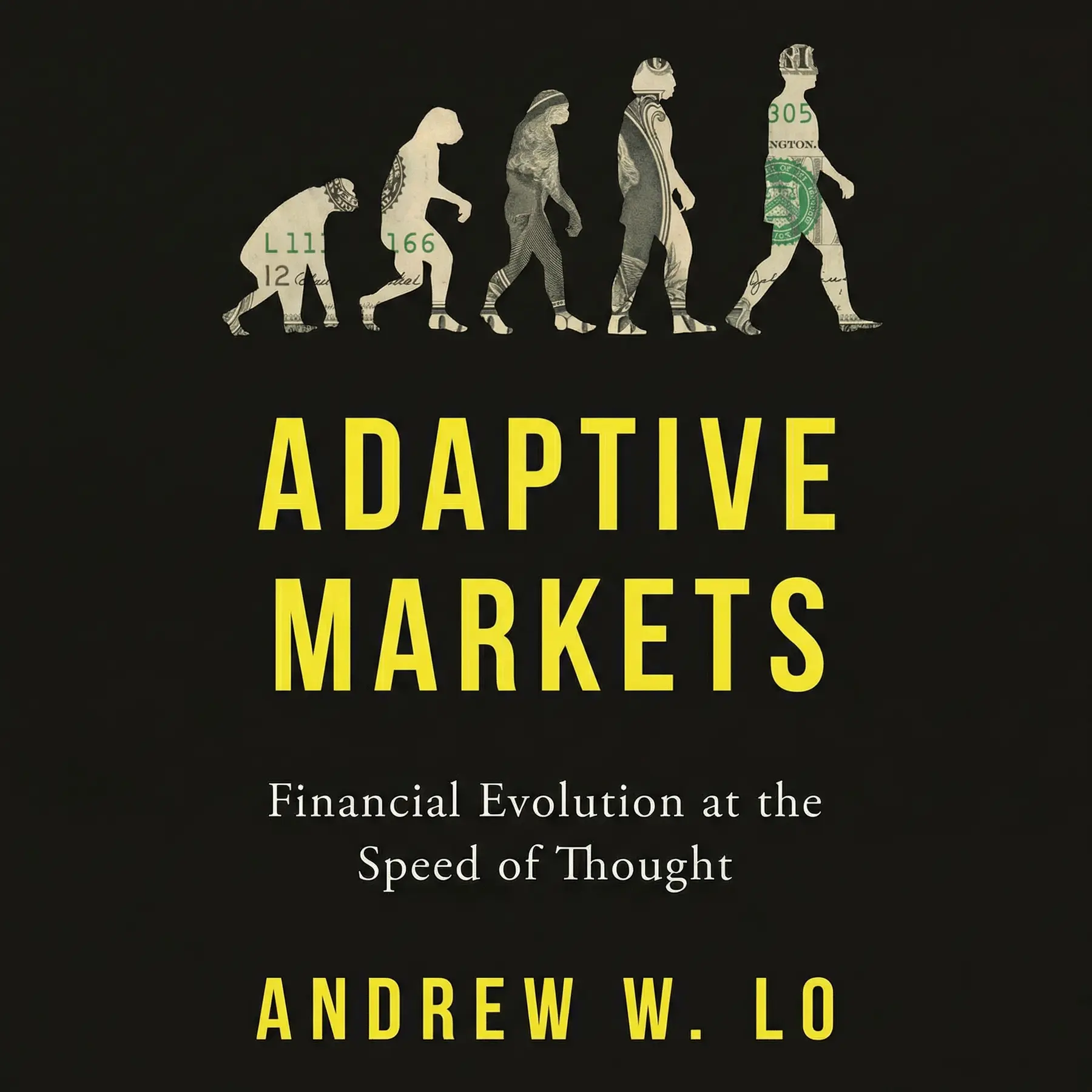
Adaptive Markets: Financial Evolution at the Speed of Thought
By Andrew W. Lo
Explore the evolution of financial theory as it shifts from rigid efficiency to biological adaptation, revealing why human psychology and environmental shifts are the true drivers of global economic stability and market behavior.
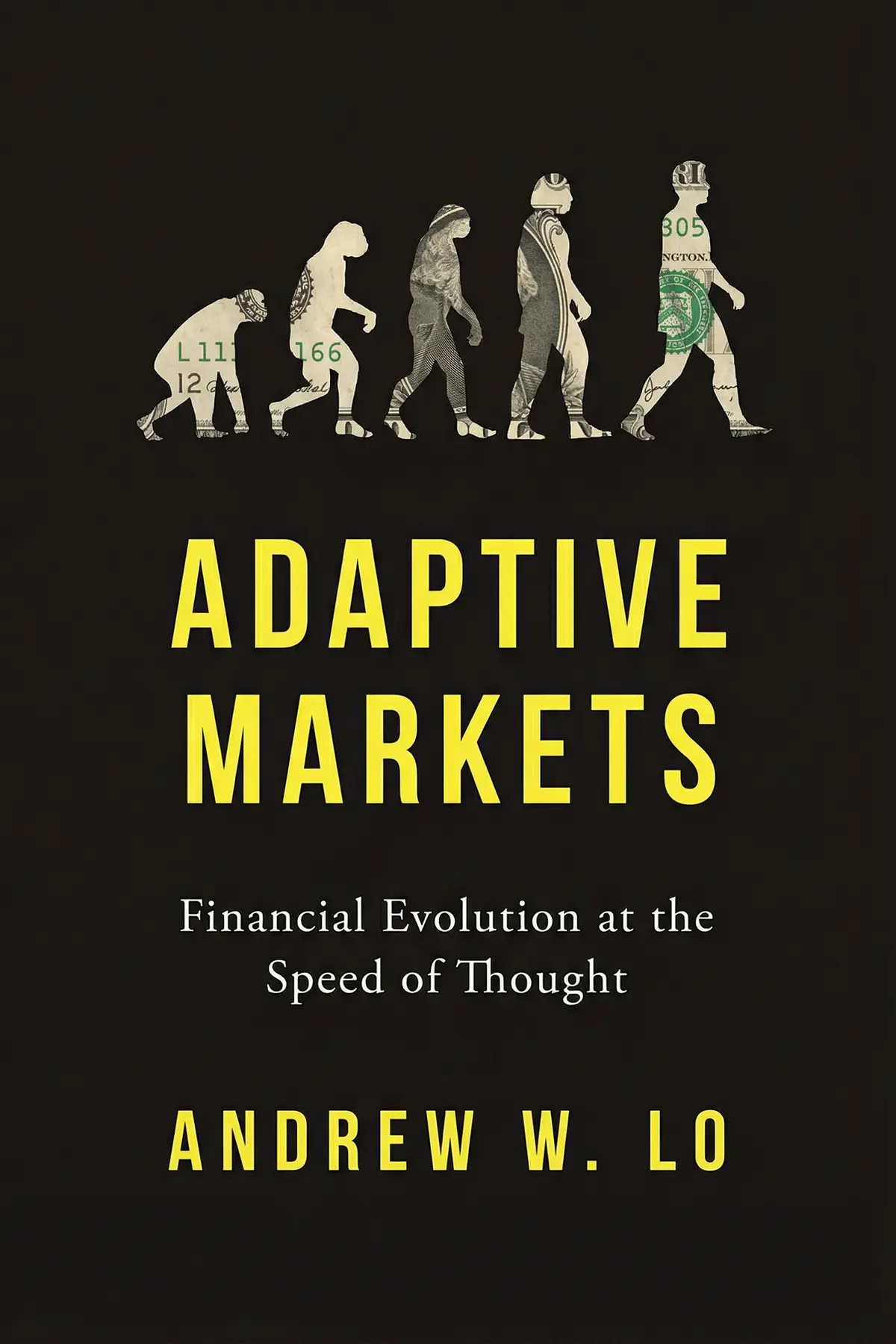
Table of Content
1. Introduction
1 min 57 sec
Money is more than just numbers on a screen or paper in your wallet; it is the lifeblood of our global society. Whether you are a seasoned trader or someone who has never touched a stock, your daily life is inextricably linked to the pulse of the financial markets. We saw this reality play out vividly during the 2008 financial crisis. When the markets stumbled, the consequences weren’t confined to Wall Street; they reached into every neighborhood, affecting jobs, retirement savings, and the stability of everyday businesses. To understand our world, we must understand how these financial systems actually function.
For a long time, we relied on a specific set of rules to explain why markets move the way they do. These rules were built on the idea that humans are rational and that the system is efficient. But as history has shown, these theories often fail us when things get chaotic. Today, we are going to look at a shift in perspective—a move away from thinking of the market as a predictable machine and toward seeing it as a living, breathing ecosystem.
In this journey, we will bridge the gap between old-school economic theories and the new, biological understanding of finance. We’ll explore why our brains are wired to make bad financial decisions, how gambling addiction can reveal the inner workings of an investment portfolio, and why the same forces that cause market crashes might actually hold the key to curing some of humanity’s most devastating diseases. We are looking for a throughline that connects the survival instincts of our ancestors to the high-frequency trading of today. By the end, you’ll see the financial system not as a broken machine, but as an evolving entity that—if managed correctly—has the power to transform the future for the better. Let’s dive into how the adaptive nature of the market shapes our past, our present, and our potential.
2. The Dominance of Market Efficiency
2 min 47 sec
Discover the long-standing theory that suggests stock prices always reflect their true value, and why most experts believe that trying to beat the market is a losing game.
3. The Evolution of the Adaptive Mindset
2 min 33 sec
Learn why a new theory is needed to explain market crashes, combining the logic of traditional economics with the unpredictable nature of human biology.
4. The Trap of Irrational Decisions
2 min 42 sec
Explore the psychological biases that lead investors to take unnecessary risks and the strange ways we perceive wins and losses.
5. The Biological Drivers of Risk
2 min 38 sec
Investigate how the chemistry of our brains, particularly dopamine, influences our financial choices and creates a cycle of addiction and panic.
6. Financial Natural Selection
2 min 22 sec
See how the ‘survival of the fittest’ applies to the world of money, where the richest and most innovative strategies outlast the competition.
7. The Necessity of Active Adaptation
2 min 25 sec
Discover why the traditional advice to ‘just wait it out’ can sometimes fail, and why a more dynamic approach is required in changing markets.
8. Why Markets Fail
2 min 16 sec
Analyze the mechanics of the 2008 financial crisis through a biological lens, showing what happens when an environment changes faster than we can adapt.
9. Harnessing Finance for Global Good
2 min 24 sec
Imagine a world where the power of the market is used to solve humanity’s greatest challenges, from cancer to global poverty.
10. Conclusion
1 min 53 sec
The journey through the Adaptive Market Hypothesis reveals a fundamental truth: the financial world is not a cold, unchanging machine, but a vibrant, evolving ecosystem. We have seen how the traditional beliefs of market efficiency provide a useful baseline but ultimately fail to account for the messy, emotional, and biological reality of human nature. Our brains are wired for a world that no longer exists, leading us to chase dopamine hits and run from fear in ways that can destabilize the global economy. Yet, in that very adaptability lies our greatest strength.
By recognizing that markets are shaped by the same forces of natural selection and environmental pressure as the natural world, we gain a more accurate map of how to navigate the future. We learn that being a passive observer isn’t always enough; sometimes, we must be as dynamic as the world around us. More importantly, we see the potential to fix the systemic flaws that led to past crises. By introducing better oversight—like a financial equivalent to the aviation industry’s safety boards—we can catch the warnings of an environmental mismatch before it turns into a disaster.
Ultimately, the throughline of this summary is one of hope. Finance is a tool, and like any tool, its impact depends on the hands that hold it. We have the capital, the technology, and the mathematical models to move beyond mere profit-seeking. We can use the power of the markets to fund the next great leap in medicine, to stabilize our environment, and to build a more resilient world. The market is adapting every day; it is up to us to ensure it adapts in a direction that benefits all of humanity. Let this be the start of a more mindful, biological, and purposeful approach to the world of money.
About this book
What is this book about?
This exploration dives into the revolutionary concept that financial markets are not just cold, calculating machines, but living ecosystems governed by the laws of biology and evolution. For decades, the dominant theory was that markets were perfectly efficient, always reflecting the true value of every asset. However, this view failed to account for the regular occurrences of bubbles, crashes, and human panic. This summary introduces a new framework that reconciles rational economics with the messy reality of human emotion. By blending principles of neuroscience, psychology, and evolutionary biology, the narrative explains why investors act irrationally and how the market itself adapts to new challenges. You will learn how the same instincts that helped our ancestors survive are now driving modern financial crises. Ultimately, the promise of this work is a more resilient financial system—one that doesn't just manage risk but actively channels the power of capital to solve the world’s most pressing problems, like finding a cure for cancer.
Book Information
About the Author
Andrew W. Lo
Andrew W. Lo is a distinguished professor at the MIT Sloan School of Management and serves as the director of the Laboratory for Financial Engineering at MIT. Beyond his academic roles, he is the chairman and chief investment strategist for AlphaSimplex Group, an investment management firm. Lo is a prolific author whose expertise spans economics and finance; his notable works include the books Hedge Funds, A Non-Random Walk Down Wall Street, and The Econometrics of Financial Markets.
Ratings & Reviews
Ratings at a glance
What people think
Listeners find this work deeply insightful, especially valuing its explanation of how psychology and finance intersect. They describe it as a pleasure to consume and reflect upon, highlighting its expansive view of the financial world and stimulating material. The title earns praise for its overall worth, as one listener points out it is essential reading for anyone in investing. Views on the core concepts and market outlook are varied, and reactions to the tempo are similarly divided, with one listener noting the content feels overly technical.
Top reviews
Uraiwan
Lo delivers a masterful synthesis that finally bridges the gap between the cold mathematics of the Efficient Market Hypothesis and the messy reality of human biology. For years, we've been stuck in a binary debate between rationalists and behavioralists, but the Adaptive Market Hypothesis offers a much-needed third way. By viewing financial markets as an ecosystem governed by evolutionary principles rather than just physical laws, Lo explains why systems that seem stable can suddenly spiral into a flash crash. The way he integrates the neuroscience of the amygdala to explain market panic is deeply perceptive. It is a broad, ambitious perspective on finance that feels far more grounded in reality than the sterile models I studied in grad school. While it is quite a dense read, the intellectual payoff is immense for anyone trying to understand the deeper 'why' behind market volatility.
Show moreWorawit
The chapter on using finance to fund cancer research was a complete revelation to me. While much of the book focuses on why markets fail, the ending offers a surprisingly optimistic vision of how risk management can solve global problems. Andrew Lo isn't just pointing out flaws; he's proposing a way to harness our collective greed and fear to fund 'megafunds' for medical innovation. It’s a brilliant, thought-provoking pivot. The book provides a broad perspective on finance that goes way beyond just making a profit. Even when the text gets into the weeds of evolutionary biology, Lo’s passion for the subject keeps the narrative moving forward. This isn't just a book about money; it’s a book about human survival and the systems we build to facilitate it. It is easily one of the most important financial texts of the decade.
Show moreBrahim
This book completely reframed how I view financial history and current market trends. Andrew Lo manages to take incredibly complex topics—from quantum physics to the physiology of fear—and weave them into a narrative that explains why the financial world is so prone to boom-and-bust cycles. I’ve read a lot of finance books, and few offer this kind of multidisciplinary scope. It is an essential read for anyone involved in investment because it challenges the very foundations of how we calculate risk. The section on the 2010 flash crash was particularly gripping. Lo writes with the authority of an MIT professor but keeps the tone accessible enough for a motivated layman. It’s a heavy book, both physically and intellectually, but the insights into how our environment shapes our financial decisions are worth every page. Truly a must-read.
Show moreSaengdao
To be fair, it is a dense read, but the payoff for finishing this book is immense. Lo’s central thesis—that markets are a biological system rather than a physical one—is the most significant shift in economic thought since the 1970s. I was particularly struck by the discussion on how 'intelligence' in a market context is really the ability to create narratives. We aren't just calculating machines; we are storytellers who use money to navigate an uncertain world. The book is an absolute joy to read for anyone who likes connecting the dots between disparate fields. It is a broad perspective that makes sense of the chaos of the last twenty years of financial crises. It’s not a get-rich-quick scheme, but it is a get-smart-fast guide to how the world actually works. Highly recommended for any serious thinker in the space.
Show moreLillian
Finally got around to this after seeing it on several 'must-read' lists, and it is certainly an insightful journey through the evolution of economic thought. Lo’s writing is engaging, almost conversational at times, even when he is diving into complex topics like derivatives or Kahneman’s prospect theory. I particularly enjoyed how he framed the survival of hedge fund strategies as a form of natural selection—when the environment shifts, the old 'dinosaurs' of the trading world often fail to adapt and go extinct. My only real gripe is the pacing. At nearly 500 pages, the book occasionally feels like it’s meandering through too much historical filler before getting back to the core thesis. To be fair, though, the breadth of his knowledge is staggering. It’s a joy to think about, even if it requires a significant time investment to get through the more technical middle chapters.
Show moreMingkwan
As someone who has always found traditional economic models a bit rigid, this book was a breath of fresh air. Lo successfully argues that markets don't always trend toward a perfect equilibrium but instead adapt to the changing environment of human behavior. The fusion of psychology and finance is handled with more nuance here than in most behavioral economics books I’ve picked up recently. It is fascinating to see how our prehistoric fight-or-flight responses still drive global capital flows during a crisis. I do think the book struggles with an identity crisis—it wants to be a textbook, a history, and a manifesto all at once. This leads to some heavy-handed sections that could have been trimmed. Regardless, the core idea that markets are biological rather than mechanical is a powerful shift in perspective that every serious investor should consider.
Show moreSupatra
Ever wonder why the market behaves like a panicked animal one day and a calculating machine the next? Lo’s Adaptive Market Hypothesis provides the most convincing answer I’ve seen yet. By merging cognitive science with financial history, he shows that our 'rational' minds are often at the mercy of older, more primitive brain structures. This isn't just another book about how people are 'irrational' in the vein of Nudge; it’s a more profound look at how that irrationality is actually an evolutionary feature that simply hasn't caught up to modern technology. The writing is clear, though some of the math-heavy sections might slow down a casual reader. Truth is, the book could have been shorter, but the depth of research makes it feel authoritative. It is a solid, valuable contribution to the field that reframes the entire debate on market efficiency.
Show moreYui
After hearing so much about the 'death' of efficient markets, I found this bridge between biology and finance to be exactly what I was looking for. Lo doesn't just trash the old theories; he respects the work of Samuelson and Fama while showing exactly where their models hit the wall of human nature. The idea that financial 'fitness' is relative to the environment explains so much about why certain funds thrive and then suddenly collapse. I will admit, the book gets a bit self-indulgent with the biographical details toward the end, and the 'cancer megafund' idea feels a bit like a separate essay tacked on. Nevertheless, the integration of psychology into the mechanics of the market is handled brilliantly. It’s a thought-provoking read that will stick with me for a long time, especially during the next market downturn.
Show moreWoravit
Look, this is an ambitious project, but it occasionally buckles under its own weight. Lo attempts to reconcile the neat, mathematical beauty of efficiency with the messy, biological reality of human panic and greed. It’s a lot to take in. While the sections on evolutionary biology are illuminating, the book feels padded in places, almost as if the author is trying to prove his academic credentials across too many disciplines. I found the history of the Efficient Market Hypothesis well-trodden ground, and I’m not sure we needed another summary of the standard behavioral biases. However, when he talks about his own expertise—like the 2007 quant meltdown—the book truly shines. It’s a mixed bag of brilliant insights and academic rambling. If you have the patience for a 480-page trek, there are gems to be found, but it won’t be for everyone.
Show moreSukit
Not what I expected given the marketing blurb on the cover promising that this book would somehow 'make me rich.' If you are looking for a practical guide to trading or specific investment analysis, you will be sorely disappointed. This is an academic history of economic models disguised as a popular finance book. Frankly, it is much too technical and repetitive for the average reader. Lo spends hundreds of pages flexing his intellectual muscles on everything from neuroscience to Darwinian selection, yet he never quite manages to turn these high-level theories into actionable advice. The narrative is disjointed, and the author often prioritizes showing off his broad knowledge over maintaining a cohesive argument. It felt like reading a collection of loosely related research papers rather than a focused book. I found it quite tedious and far too long for the limited utility it provides to a working investor.
Show moreFeatured in
Readers also enjoyed
1929: Inside the Greatest Crash in Wall Street History--and How It
Andrew Ross Sorkin
23 Things They Don’t Tell You About Capitalism
Ha-Joon Chang
A Little History of Economics
Niall Kishtainy
A Splendid Exchange: How Trade Shaped the World
William J. Bernstein

Adults in The Room: My Battle With Europe’s Deep Establishment
Yanis Varoufakis
AUDIO SUMMARY AVAILABLE
Listen to Adaptive Markets in 15 minutes
Get the key ideas from Adaptive Markets by Andrew W. Lo, plus 5,000+ more titles in English and Thai.
- 5,000+ titles
- Listen as much as you want
- 7-day free trial
- Cancel anytime







