
14 min 55 sec
Mastering the VC Game: How to Get from Start-up to IPO on Your Terms
Mastering the VC Game demystifies the high-stakes world of startup financing, revealing how entrepreneurs and venture capitalists build transformative partnerships to turn visionary ideas into global, market-leading enterprises.
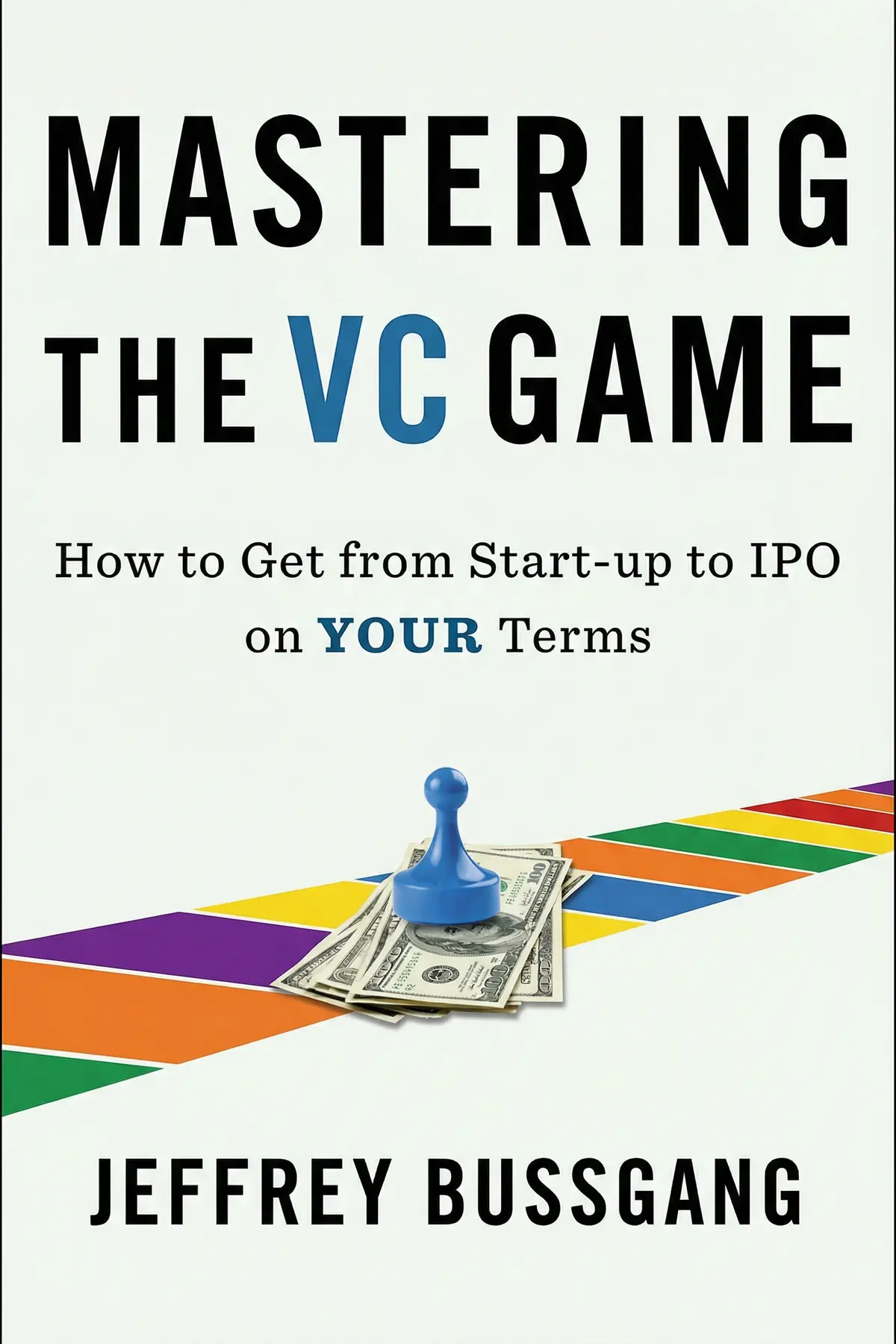
Table of Content
1. Introduction
1 min 29 sec
The journey of an entrepreneur is often described as a heroic solo mission, but the reality is that the most world-changing companies are born from a high-stakes collaboration. It starts with a spark—a vision of how the world could be better, faster, or more efficient. Yet, to move that vision from a garage or a coffee shop into the global marketplace, you almost always need a specific kind of fuel: venture capital.
But the world of venture capital is not just a bank where you go to withdraw money. it is a complex, insular, and deeply human ecosystem governed by its own rules, language, and social hierarchies. To succeed, you have to do more than just build a great product; you have to master the ‘game’ of partnership. This isn’t about manipulation; it’s about understanding the motivations, fears, and strategic goals of the people sitting across the table from you.
In the following pages, we are going to explore the blueprint for this journey. We will look at what truly drives the founders who make it big, and we will demystify the venture capitalists who hold the keys to the kingdom. You’ll learn how to navigate the social engineering required to get a meeting, how to present a vision that captures both the heart and the mind, and how to manage the inevitable friction that arises when a company grows from a small team into a massive corporation. Whether you are currently building a startup or just curious about how the titans of the tech world got their start, this throughline will show you how vision and capital come together to create the future.
2. The Psychology of the Visionary Founder
2 min 14 sec
Explore why the most successful entrepreneurs are driven by more than just money, blending intense optimism with a surprising trait known as healthy paranoia.
3. Understanding the Venture Capital Ecosystem
2 min 10 sec
Go behind the scenes of an exclusive industry to see how fund structures and investment strategies dictate which ideas get funded.
4. The Art of the High-Stakes Pitch
2 min 03 sec
Learn why a cold email is a waste of time and how to present your business as a developing movie rather than a static snapshot.
5. Choosing the Right Partner and Negotiating the Deal
1 min 44 sec
Negotiating a term sheet is about more than money; it is about hiring a boss you cannot fire and finding a strategic advisor.
6. Navigating the Drama of the Three Growth Phases
2 min 02 sec
Understand the inevitable shifts in leadership and strategy as a startup moves from the chaotic ‘jungle’ to the open ‘highway’.
7. The Strategic and Emotional Reality of the Exit
1 min 53 sec
Closing the loop on a startup requires balancing financial goals with the personal emotional weight of letting go of your creation.
8. Conclusion
1 min 20 sec
The world of venture capital is often portrayed as a cold, data-driven arena, but as we’ve seen, it is a deeply human endeavor. It is built on the foundations of trust, shared vision, and the ability to navigate complex relationships through periods of extreme stress and rapid change. Success in this game isn’t just about having the best code or the most innovative patent; it’s about finding the right partners and understanding the invisible mechanics of how ideas are funded and scaled.
As you move forward, remember that the relationship between a founder and an investor is a two-way street. You aren’t just looking for money; you are looking for a collaborator who will challenge you, support you, and help you see the patterns you might miss while you’re deep in the ‘jungle’ of daily operations. Be honest about your risks, be relentless in your execution, and stay focused on the ‘movie’ you are creating, not just the snapshot of today.
Ultimately, mastering this game allows you to build something that lasts. Whether your goal is to disrupt a legacy industry, solve a global problem, or simply create a better way for people to connect, the principles of the founder-VC partnership remain the same. Take these lessons and use them to turn your spark of an idea into a reality that changes the world. Your journey is just beginning, and with the right map, the road from startup to success is yours to navigate.
About this book
What is this book about?
This exploration into the startup ecosystem pulls back the curtain on the often-mysterious relationship between those with the big ideas and those with the capital to fund them. It delves into the specific psychological traits that define successful founders—such as a blend of extreme optimism and calculated paranoia—and contrasts them with the strategic, return-driven mindset of the venture capitalist. The promise of this narrative is to provide a roadmap for navigating the entire lifecycle of a venture-backed company. From the initial hurdle of securing a warm introduction to a top-tier firm, to the nuanced dance of negotiating a term sheet that protects your vision, and eventually to the high-pressure transitions of scaling a business. It offers a deep dive into the 'jungle,' the 'dirt road,' and the 'highway' of growth, concluding with the emotional and financial complexities of a successful exit. By understanding the inner workings of the VC world, entrepreneurs can move from being passive seekers of capital to being strategic partners in their own success.
Book Information
About the Author
Jeffrey Bussgang
Jeffrey Bussgang is an accomplished venture capitalist, entrepreneur, and academic who serves as a professor at Harvard Business School. At Harvard, he shares his extensive knowledge by teaching courses focused on the intricacies of startups and venture capital. As a co-founder of Flybridge Capital Partners, he oversees a firm managing more than $1 billion in assets and has personally backed over 300 technology startups. Beyond the classroom and the boardroom, he is a prolific writer, having authored The Experimentation Machine and Entering StartUpLand. He also maintains a strong connection with the entrepreneurial community through his blog and his popular LinkedIn newsletter, Bussgang’s Bullets.
Ratings & Reviews
Ratings at a glance
What people think
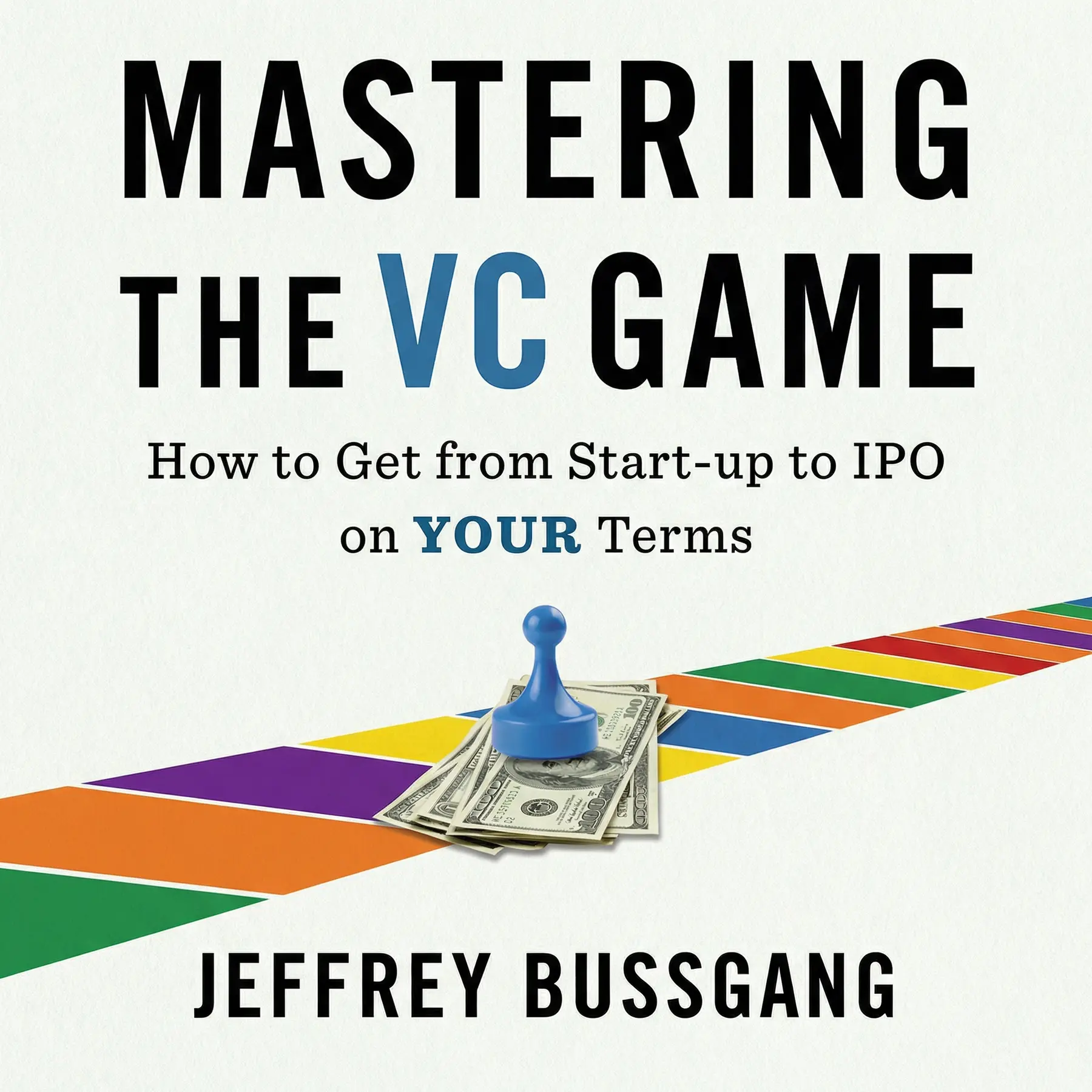
Listeners find this venture capital guide both absorbing and enjoyable, especially for those launching their first startup. The material offers deep dives into the funding journey and contains a wealth of data, with one listener praising the all-encompassing overview of the VC world. Listeners value the compelling narratives—including one who pointed out the practical startup plot examples—and they find the content straightforward and polished.
Top reviews
Jackson
Picked this up right as I was preparing for our first major capital raise, and it was exactly what I needed. Bussgang provides a tactical, actionable breakdown of the fundraising process that feels like a secret playbook for founders. I especially appreciated the deep dive into the four areas of value a VC should bring—strategy, recruiting, biz dev, and future financing—because it reminded me that the check is just the beginning. The advice on managing a board was equally gold; the tip about calling directors before a meeting to avoid surprises is something I’ll implement immediately. The writing is punchy and direct, avoiding the dry academic tone of most finance books. If you want to understand the archetypes of board members to avoid or what metrics matter at each stage, this is it. It’s a behind-the-scenes look that every entrepreneur dreams of having before they step into that pitch room.
Show moreUraiwan
Venture capital often feels like a mysterious black box to those of us on the outside looking in. Jeffrey Bussgang does an incredible job of demystifying the whole process, from the initial pitch to the eventual exit. I found the advice on being transparent with your board particularly powerful; the idea that 'no secrets' leads to better advice is something every CEO should take to heart. The book is packed with fascinating stories that make the concepts stick. For instance, Tim Draper’s perspective on the power of a 'positive vote' really changed how I think about risk and upside. It is rare to find a book that is this comprehensive while remaining so easy to read and understand. Whether you are an entrepreneur looking for funding or just curious about how the system works, this is an excellent resource that I’ll be recommending to my entire network.
Show moreDavid
Ever wonder why some pitches land a check while others get a polite 'no' before the third slide? This book answers that and so much more by diving into the motives and psychology behind the venture capital world. I loved the tactical advice on referencing specific partners rather than just the firm, as the board member relationship is so personal. The breakdown of the jungle, dirt road, and highway phases provided a clear roadmap for what to expect as a company scales. It’s straight to the point and incredibly insightful, despite being published over a decade ago. The truth is, the fundamental human elements of the VC game—trust, chemistry, and passion—don't change with the market. Bussgang has created a must-read playbook for anyone serious about building a venture-backed company. It’s engaging, well-researched, and ultimately very empowering for the first-time founder.
Show moreTawee
Bussgang manages to peel back the heavy curtain that usually hides the inner workings of venture firms. The book is absolutely stacked with startup stories and operational anecdotes that provide a realistic picture of the entrepreneurial journey’s highs and lows. I was particularly fascinated by the section on how VCs view different global markets, though I did notice a lack of coverage regarding the Indian market. The balance between being a personal memoir and a practical guidebook works for the most part, even if it occasionally loses depth. For a first-time entrepreneur, this is a must-read to understand the VC-founder dynamics during a company's growth phase. It’s well-written, concise, and provides much-needed clarity on how to select the right partner. You won't walk away an expert on liquidation preferences, but you will understand the mindset of the person sitting across the table.
Show moreFon
The 'jungle, dirt road, and highway' metaphor alone makes this worth the price of admission for any aspiring founder. Bussgang uses these phases to brilliantly illustrate the shifting metrics of success, from pure 'buzz' in the jungle to revenue growth on the dirt road. It is a compelling way to frame the evolution of a startup. The author’s experience as both an entrepreneur and a VC shines through in the way he discusses board management and the importance of honesty in pitches. Look, many founders try to hide risk, but the book argues that VCs actually want to see that you understand the gambles you’re taking. I found the advice from Reid Hoffman and Tim Draper to be particularly insightful additions. While the 2010 publication date might make some think it’s dated, the core principles of chemistry and trust remain incredibly relevant today.
Show moreViroj
Finally got around to finishing this after it sat on my nightstand for a month. It’s a very practical read that manages to avoid being purely theoretical by grounding every concept in real-world examples. I loved the emphasis on finding 'chemistry' with a VC, emphasizing that you’re essentially hiring a boss and customer combined. The specific questions to ask when considering an exit—like whether you still love running the business or if the major proof points are still ahead—offered a level of emotional intelligence I didn't expect from a business book. It’s not all sunshine and roses; the descriptions of 'f-up' scenarios and the pressures of the 'highway' phase are sobering. My only gripe is that the section on term sheets could have been more detailed. Overall, it’s a perfect balance of personal experience mixed with external perspectives from well-known investors.
Show moreSirinat
What sets this apart from other business guides is the unique dual perspective that Bussgang brings to the table. Having been on both sides of the pitch, he knows exactly what questions haunt entrepreneurs and what metrics keep VCs up at night. The book covers everything from term sheet nuances to the four areas of value VCs provide, and it does so without getting bogged down in too much jargon. I particularly liked the section on how to handle pitches—the advice about being honest about the 10% odds of success was refreshing. It’s a well-written, concise look at the fundraising landscape that feels authentic. While it might lack the extreme technical depth of a legal textbook, it more than makes up for it with practical wisdom and real-world scenarios. A great intro to the game that manages to be both informative and entertaining.
Show moreRania
Is this the holy grail of startup funding books? Not quite, but it’s a solid introduction for those new to the ecosystem. I found the storytelling throughout the chapters engaging, particularly the parts where the author shares common drama scenarios and motives. However, if you are looking for a technical deep dive into term sheets or legal nuances, you might be disappointed. Compared to Brad Feld’s book, this one feels much lighter on the financial and legal mechanics. Truth is, the end of the book feels a bit rushed, with random thoughts peppered in rather than a cohesive conclusion. It gives a great general sense of starting valuations and the time between rounds, but I wouldn't rely on it as my only resource when actually closing a deal. It serves better as a high-level overview of the 'game' rather than a technical manual.
Show morePing
To be fair, I think I would have appreciated this far more two years ago. Having already completed two financing rounds, I found that much of the book served as a review of things I’ve already learned the hard way. It is a fantastic primer for a novice, but seasoned founders might find themselves skimming. The notes on liquidation preferences and the three phases of a startup are good refreshers, but they aren't groundbreaking if you're already in the thick of it. That said, the section on board management—specifically spending 15-20% of your time on it—is a good reality check for those who think they can just ignore their investors once the check clears. It’s well-organized in the middle, but the ending feels like a collection of leftover notes. A solid 3-star read for the experienced, but probably a 5-star for the uninitiated.
Show moreMarco
Maybe I’m just not the target audience for this particular volume. Frankly, as someone actually working in the ecosystem, I found the content frustratingly light on technical substance and heavy on name-dropping. It feels like a long-winded celebration of the Harvard and Stanford pipeline rather than a guide for the rest of us. If you’re looking for the nitty-gritty of liquidation preferences or complex financial modeling, look elsewhere. It lacks the motivational spark I expected, focusing instead on a very specific, elite sliver of the startup world. The advice is far too general for anyone who has already spent time in the industry or completed a financing round. It’s mostly praise for a specific class of investors without providing the 'how-to' that the title promises. Not my cup of tea.
Show moreFeatured in
Readers also enjoyed
7 Powers: The Foundations of Business Strategy
Hamilton Helmer

Alibaba: The House That Jack Ma Built
Duncan Clark

Bad Blood: Secrets and Lies in a Silicon Valley Startup
John Carreyrou
AUDIO SUMMARY AVAILABLE
Listen to Mastering the VC Game in 15 minutes
Get the key ideas from Mastering the VC Game by Jeffrey Bussgang, plus 5,000+ more titles in English and Thai.
- 5,000+ titles
- Listen as much as you want
- 7-day free trial
- Cancel anytime







