
19 min 32 sec
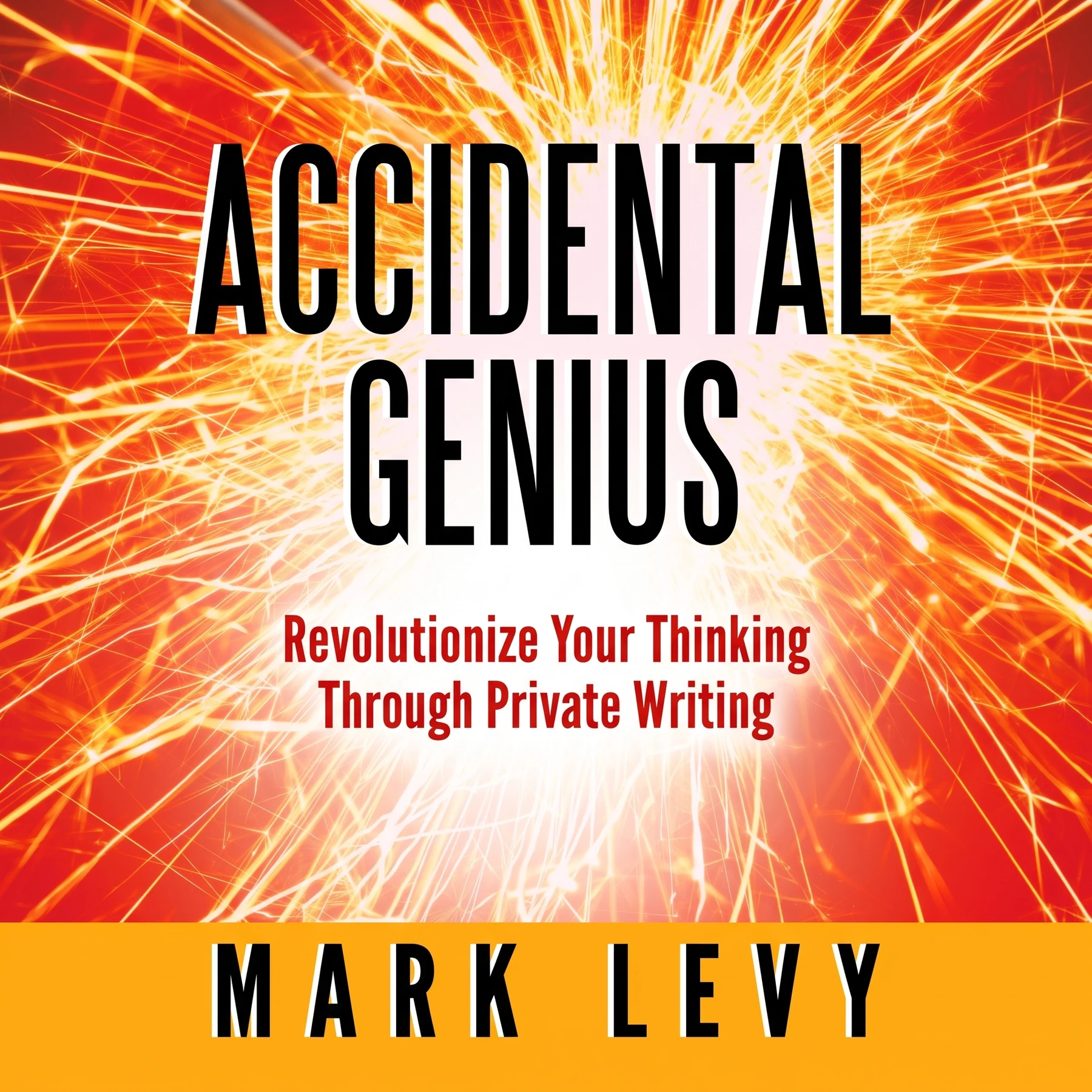
Accidental Genius: Revolutionize Your Thinking Through Private Writing
By Mark Levy
Accidental Genius explores freewriting as a revolutionary tool for generating breakthrough ideas. Mark Levy demonstrates how writing quickly and without judgment can bypass mental blocks and unlock your most creative, innovative solutions.
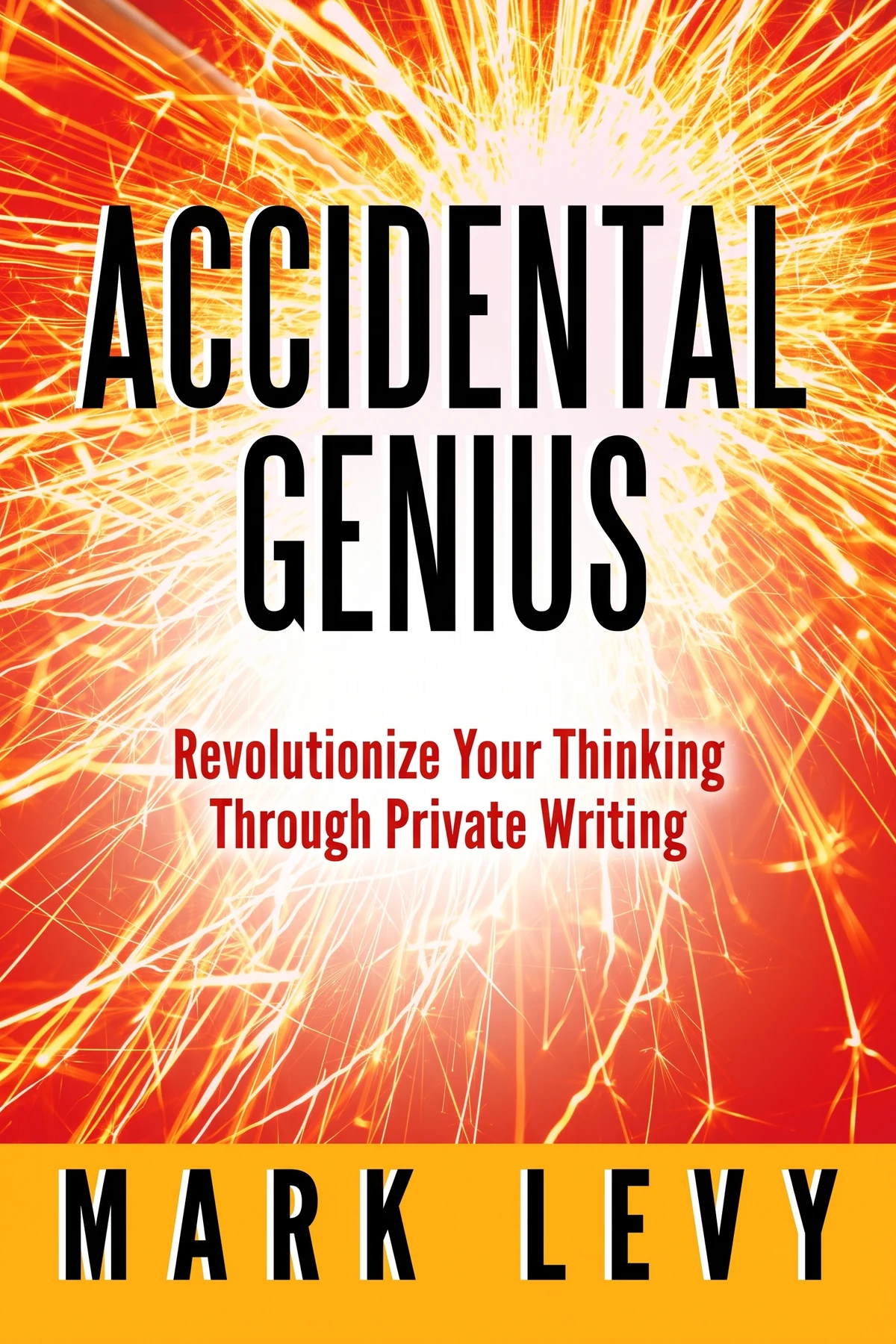
Table of Content
1. Introduction
1 min 42 sec
We have all been there: staring at a blank screen or a clean sheet of paper, waiting for inspiration to strike like a bolt of lightning. We imagine that great ideas are the result of sheer willpower or a sudden, lucky ‘eureka’ moment. But what if there was a way to make those moments happen on demand? What if your best ideas weren’t actually missing, but were simply buried under layers of self-doubt, over-analysis, and mental clutter?
This is the core premise of Mark Levy’s work. He suggests that the human mind is a powerhouse of potential, but it is also prone to laziness and a tendency to keep thoughts vague and indistinct. We often let our best reflections drift away because we don’t have a system to catch them. In this summary, we are going to explore a technique called freewriting. It is a deceptively simple process that allows you to bypass your inner editor and reach the raw, unpolished brilliance that lives in your subconscious.
Over the next several segments, we will look at how you can use the act of writing as a tool for thinking. We will move past the idea that writing is just for ‘writers’ and see it instead as a universal strategy for problem-solving and decision-making. By the end of this journey, you will have a toolkit of six golden rules and several advanced strategies designed to turn your brain into an idea-generating machine. We will see why trying less can often lead to more, why a little bit of fiction can lead to a lot of truth, and how you can archive your spontaneous thoughts to build a library of professional-grade content. Let’s dive into how you can become an accidental genius.
2. The Limitation of Pure Thought
1 min 32 sec
Discover why simply thinking through a problem often leads to a dead end and how writing serves as an essential external hard drive for your brain.
3. The Ninety Percent Rule
1 min 31 sec
Learn why giving 110 percent is often the enemy of creativity and how a ‘try easy’ attitude can actually improve your performance.
4. The Necessity of Speed
1 min 30 sec
Explore the mechanical secret of freewriting: moving your hands so fast that your inner critic can’t keep up with your thoughts.
5. Setting a Time Limit
1 min 11 sec
Discover how a simple timer can act as a container for your creativity, helping you stay focused and productive.
6. Writing for an Audience of One
1 min 30 sec
Break free from the constraints of grammar and style by learning to write exclusively for yourself.
7. Following the Thought to its End
1 min 19 sec
Learn the importance of sticking with a single line of reasoning, even if it feels like you’re taking a wrong turn.
8. Using Focus Changers to Pivot
1 min 07 sec
Discover how to use simple, powerful questions to jumpstart your brain when you feel stuck or repetitive.
9. The Strategic Use of Prompts
1 min 21 sec
See how short, open-ended phrases can serve as a ‘starting gun’ for your creative engine.
10. Facts Over Complexity
1 min 14 sec
Understand why stripping away theories and focusing on cold, hard facts can lead to clearer solutions.
11. The Power of Quantity
1 min 21 sec
Learn why generating 100 ideas is often more effective than trying to find the one ‘perfect’ idea.
12. Using Fiction to Find Truth
1 min 26 sec
Discover how ‘lying’ and imaginary conversations can break the boundaries of your everyday logic.
13. From Raw Notes to Finished Content
1 min 24 sec
Learn how to archive and organize your freewriting sessions to create a library of professional-grade material.
14. Conclusion
1 min 24 sec
As we reach the end of our exploration of Mark Levy’s methods, the most important takeaway is that your brain is more capable than you probably give it credit for. We often feel like we are ‘waiting’ for creativity, but freewriting shows us that creativity is a practice we can engage in at any time. By adopting the ‘try easy’ attitude and committing to the physical act of moving your pen or keyboard without stopping, you create a direct line to your subconscious mind. You stop being a passive recipient of thoughts and start being an active explorer of your own internal landscape.
Remember the core rules: give only 90 percent effort to stay relaxed, move fast to outrun your critic, work against a timer to stay focused, and write for yourself without the burden of grammar or judgment. Use focus changers to pivot your perspective and prompts to kickstart your engine. Most importantly, don’t let your insights vanish into the ether. Archive your work and treat it like the valuable resource it is.
Your actionable next step is simple: set a timer for just ten minutes right now. Choose a problem you’ve been chewing on—something that feels a bit stuck. Use the prompt ‘What I’m not saying about this situation is…’ and then write as fast as you can until the timer goes off. Don’t look back, don’t edit, and don’t stop. You might be surprised to find that the answer you’ve been looking for was already there, just waiting for you to get out of its way.
About this book
What is this book about?
Have you ever felt the pressure of needing a brilliant idea immediately, only to find your mind going completely blank? Accidental Genius provides a practical escape from this creative paralysis. The book is centered on the concept of freewriting—a technique that involves writing continuously at a high speed to outrun your internal critic. By following a set of specific rules, anyone can tap into a deeper well of thought that usually remains hidden beneath the surface of everyday logic. The promise of this book is that genius isn't something that only strikes by luck; it is something you can systematically coax out of your brain. Whether you are a business leader trying to solve a complex logistical problem, a writer struggling with a manuscript, or a professional looking for a fresh marketing angle, the methods described here show you how to organize your thoughts and generate a massive volume of ideas. You will learn how to lower your expectations to raise your output, how to use 'focus changers' to pivot your thinking, and how to create a personal archive of insights that can be transformed into finished, professional content.
Book Information
About the Author
Mark Levy
Mark Levy is a prominent figure in the world of professional positioning and creativity. As the founder of Levy Innovation, a marketing strategy firm, he has dedicated his career to helping clients find their unique voice and competitive edge. His expertise has been featured in the New York Times, and he has authored or co-authored five books. Beyond his work in strategy, Levy has taught research writing at Rutgers University and maintains a deep interest in the art of magic, which informs his unique perspective on perception and creativity.
Ratings & Reviews
Ratings at a glance
What people think
Listeners find the book highly effective, noting that its practical strategies and valuable exercises yield impressive results. They also appreciate the professional insights into the writing mindset, which help them navigate through writer's block. Additionally, the work is approachable and inspiring, leading one listener to label it an "encyclopedia of tips for creativity and productivity." Conversely, listeners hold differing views on whether the book's length is appropriate.
Top reviews
Roydao
Stop overthinking everything and just let the words hit the page. This book is a masterclass in bypassing that nagging internal editor that kills every good idea before it can even breathe. Levy’s approach to freewriting isn’t just about speed; it’s about discovery and using your body to outrun your brain's natural hesitation. I found the section on 'Notice Stories Everywhere' particularly transformative for my daily journaling routine. Frankly, it’s like a gym membership for your creativity, providing the structure you need to stop being a perfectionist. While some might say the advice is simple, the execution is where the genius lies. My productivity has spiked since I started applying these fifteen-minute brain dumps to my work projects. It’s an easy read that manages to be both inspiring and incredibly practical for anyone in a creative field.
Show moreMoon
As a professional copywriter, I'm always looking for ways to bypass the blank page syndrome. Accidental Genius is exactly what I needed to loosen up my rigid drafting process. The idea of 'forced creativity' through time-limited writing sessions has helped me generate way more raw material than my usual slow-and-steady method. I especially appreciated the advice on using freewriting to watch yourself think, which turns the act of writing into a diagnostic tool for your own logic. Some of the prompts are a bit quirky, but they definitely help in surfacing unusual thoughts that wouldn't come out otherwise. It’s a fast read, chock full of actionable advice that you can start using the very same afternoon. This is easily going on my permanent reference shelf for when the words stop flowing.
Show moreTitiluck
Mark Levy has managed to package what feels like a superpower into a very digestible format. I’ve tried freewriting before, but I never understood the nuance of using it to 'outrun' your own internal critic until I read this. The distinction between writing for yourself and writing for others is a game-changer for my workflow. I no longer feel the pressure to be coherent in the first draft, which has ironically made my final drafts much stronger. This book acts as a treasure trove of methods for anyone who needs to be creative on demand. If you’re a perfectionist who gets stuck or experiences constant blocks, I highly recommend picking this up immediately. It is easily one of the most practical guides on the writing mindset I have ever read.
Show moreChee
Finally got around to reading this after hearing it mentioned on several podcasts. The core message is that writing is a tool for thinking, not just a way to record thoughts that are already fully formed. I really enjoyed the specific prompts like 'I’d really impress myself if...' because they force you to dig past the surface-level junk. The book feels like a robust toolkit for productivity, which is great if you like jumping around between different techniques. However, I’ll admit that some of the anecdotes felt a little repetitive by the halfway mark. You could probably get the gist of the method in the first few chapters, but the later exercises are still worth a skim. It’s a solid resource for writers who feel stuck in their own heads most of the time.
Show morePalm
Ever wonder how some people just churn out content without breaking a sweat? This book explains that they aren't necessarily smarter; they just have a better system for managing their mental output. Levy breaks down the 'brain dump' into a disciplined exercise that feels both freeing and productive. I loved the emphasis on writing for yourself first and ignoring the audience until the very end of the process. My only gripe is that the book feels a little dated in its examples, focusing heavily on business situations that might not apply to every creative. Still, the underlying mechanics of bypassing the editor are universal and extremely effective. It’s an excellent guide for anyone who struggles with over-analyzing their work before it’s even finished.
Show moreBunyarit
The chapter on 'talking documents' changed how I view my rough drafts and project outlines. Instead of trying to be eloquent, I’ve started using Levy’s methods to just vomit thoughts onto the screen as they occur. It sounds messy, but it actually uncovers some really deep insights that I would have missed if I were being careful. I appreciate how the book isn't just about fiction; it's a general tool for problem-solving in any area of life. The writing style is very conversational and easy to digest, which fits the theme of the book perfectly. Some parts are definitely better than others—I didn't care much for the Portland workshop stories—but the overall value is high. It’s a great addition to any creator’s toolkit if you can ignore the occasional fluff.
Show moreJack
Pick this up if you're tired of staring at a blinking cursor for hours on end. Accidental Genius isn't just for writers; it's for anyone who needs to solve problems or generate new ideas quickly. The focus on speed and 'mechanical advantage' over the mind is a fascinating way to think about the creative process. I’ve started using the five-minute sessions to tackle business problems, and the results have been surprisingly coherent. Not gonna lie, I was skeptical at first about the lack of data-driven evidence, but the practical results speak for themselves. The short chapters make it easy to consume in small chunks during a commute. It's a very practical book that prioritizes action over theory, which I find refreshing in the self-help genre.
Show moreJun
To be fair, the core concept here could have easily been a long-form blog post rather than a full-length book. Mark Levy argues convincingly for the power of freewriting, but he spends a lot of time repeating the same basic instructions across different chapters. The truth is, if you’ve already read Peter Elbow or are familiar with the concept of morning pages, you might find this a bit redundant. There isn’t much scientific research to back up the claims, as most of the evidence is purely anecdotal. That said, the specific techniques for 'talking documents' and the improv-style 'agreeing and extending' are genuinely useful. It’s a decent introductory text for beginners, but seasoned writers might find themselves skimming the middle sections. It’s not a bad book, just a slightly padded one.
Show moreTariq
Brief and punchy, but maybe a bit too much fluff in the middle sections for my personal taste. The first fifty pages or so are absolute gold and explain everything you need to know about the method. After that, it turns into a series of techniques that feel a bit like variations on the same theme. Personally, I found the 'Notice Stories Everywhere' section interesting, but I didn't need ten different examples to get the point. It’s a helpful guide if you’re struggling with a specific block, but it’s not something you necessarily need to read cover-to-cover. I’d suggest reading the core chapters and then just keeping it nearby for the prompts. It’s a solid 3-star read that offers good value without being life-changing.
Show moreChamnong
Look, I wanted to love this because the premise is so promising, but it just didn't land for me. The entire book is essentially a collection of anecdotes telling you to write fast without stopping. While I agree that freewriting is a valuable skill, I don't think it requires a couple hundred pages of repetition to explain. There is zero scientific backing for why this works, which makes the whole thing feel a bit like 'trust me' advice. I found myself skimming through the later chapters because the examples started to feel like filler for a very simple idea. If you’ve never heard of freewriting, this might be a revelation, but for most people, a summary would suffice. I'm giving it two stars because the prompts were okay, but the rest felt like a stretch.
Show moreFeatured in
Readers also enjoyed

AUDIO SUMMARY AVAILABLE
Listen to Accidental Genius in 15 minutes
Get the key ideas from Accidental Genius by Mark Levy, plus 5,000+ more titles in English and Thai.
- 5,000+ titles
- Listen as much as you want
- 7-day free trial
- Cancel anytime







