
A High-Performing Mind: Strengthen Your Mind and Live Your Best Life
Andrew D. Thompson
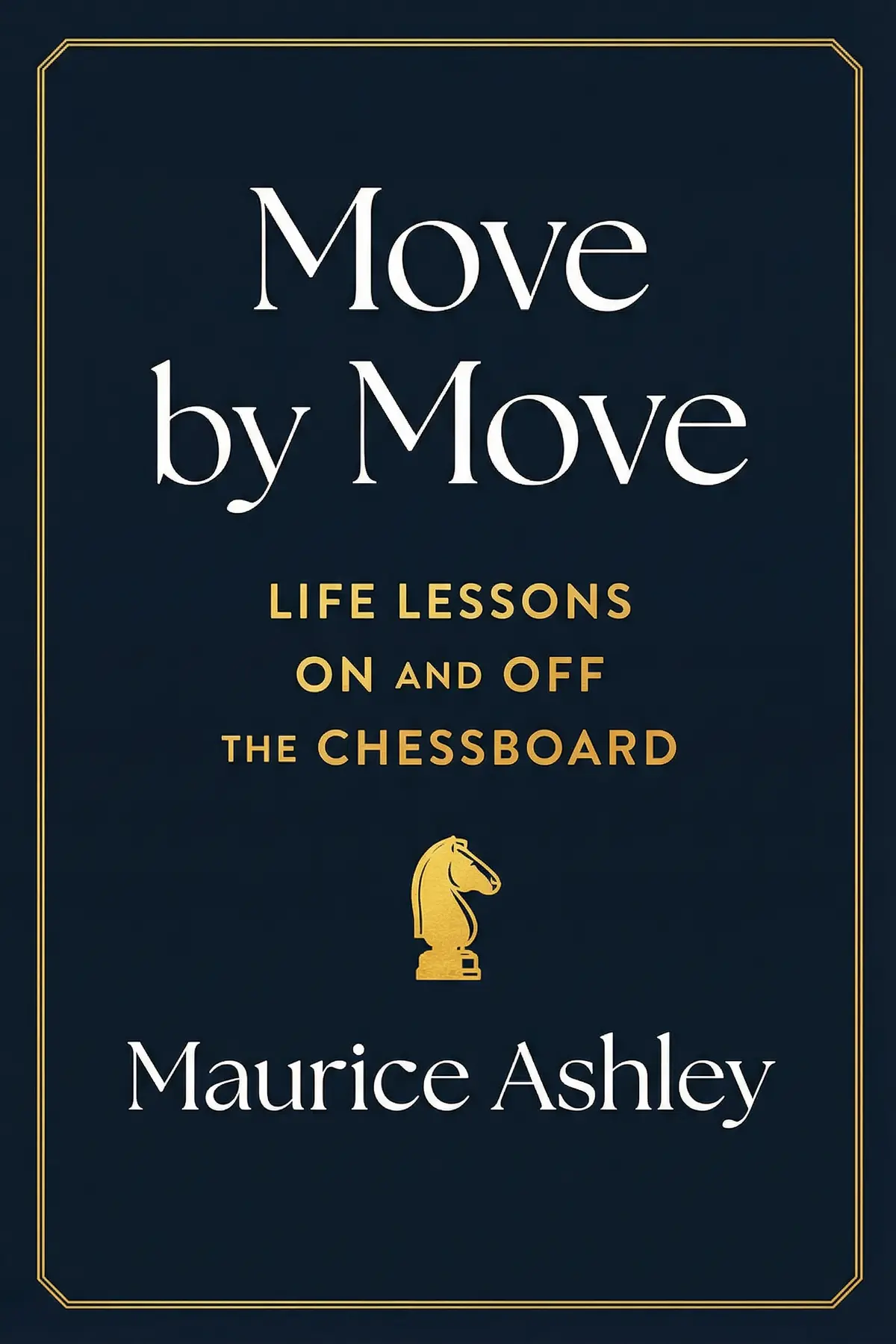
Discover how the strategic depth of chess translates into life's greatest lessons. Grandmaster Maurice Ashley explores how focus, resilience, and flexibility can transform your decision-making and personal growth beyond the board.
1 min 22 sec
Think about the last time you faced a truly difficult decision. Perhaps you felt overwhelmed by the sheer number of variables, or maybe you felt paralyzed by the fear of making a mistake that could ruin everything. In those moments, we often look for a framework—a way to simplify the chaos and find a clear path forward. For centuries, the world’s most profound thinkers and competitive spirits have turned to a single source for that framework: the game of chess.
In this exploration of Maurice Ashley’s insights, we aren’t just looking at how to move wooden pieces across a checkered board. Instead, we are looking at the chessboard as a laboratory for the human experience. To become a grandmaster is to do much more than memorize openings; it is to master the arts of patience, self-awareness, grit, and strategic reasoning. It’s no wonder that the United Nations recognizes World Chess Day not just as a celebration of a hobby, but as an acknowledgment of a tool that fosters fairness and mutual respect.
Whether you are a seasoned player or someone who barely knows how the knight moves, the wisdom of the grandmaster is accessible to you. The throughline here is simple: the qualities that make a person successful at the game—flexibility, continuous learning, and the ability to find opportunity in loss—are the exact same qualities that lead to a fulfilling and successful life. Let’s dive into how these move-by-move strategies can help you navigate the complexities of your own world.
1 min 53 sec
Maintaining success requires more than just experience; it demands a constant sense of wonder and the humility to return to the basics, even at the peak of your career.
1 min 53 sec
Contrary to popular belief, grandmasters don’t win by predicting the future; they win by being the most adaptable person at the table when plans go awry.
1 min 57 sec
Big wins are rarely the result of giant leaps; they are the culmination of breaking skills down into tiny parts and accumulating minor advantages over time.
1 min 59 sec
Success is often a poor teacher; it’s our mistakes and losses that provide the most valuable blueprints for future excellence and personal growth.
2 min 02 sec
Winning requires more than just knowing your own moves; you must step into the mind of your opponent and be willing to give up something today for a better tomorrow.
1 min 54 sec
To stay at the top, you must fight the urge to relax when you’re ahead and use visualization to work backward from your ultimate goals.
1 min 54 sec
Authentic success comes when you stop obsessing over the title and start embodying the qualities of a master in every action you take.
1 min 23 sec
As we fold up the chessboard and step back into the flow of our daily lives, the lessons we’ve gathered remain. We’ve seen that the game of chess is far more than a battle of logic; it is a mirror reflecting our own capacity for growth, resilience, and transformation. By maintaining a beginner’s curiosity, we keep our minds open to the infinite possibilities that surround us. By valuing flexibility over rigid planning, we prepare ourselves to dance with the unpredictability of the real world.
Remember that success is built on the accumulation of small, consistent advantages and the courage to learn from every defeat. Whether you are navigating a career change, leading a team, or simply trying to improve yourself, the grandmaster’s mindset offers a clear path. Focus on the process, not just the prize. Visualize your future and work backward to create your roadmap. And most importantly, start being the person you want to become right now, in this very moment.
Life, much like chess, is played move by move. You cannot control every piece on the board, and you cannot predict every challenge that will come your way. But you can control your focus, your discipline, and your willingness to adapt. If you take these principles to heart, you won’t just be playing the game of life—you’ll be mastering it. Now, the board is set, and it’s your move.
This summary explores the intersection of high-level chess strategy and the practical challenges of everyday life. Maurice Ashley, a history-making grandmaster, argues that the skills required to dominate the chessboard—such as deep concentration, the ability to learn from failure, and proactive adaptation—are the same skills needed to navigate a complex career or personal journey. The promise of the book is that by adopting the mindset of a grandmaster, anyone can improve their analytical thinking and emotional resilience. We dive into the importance of maintaining a beginner’s curiosity, the power of breaking down complex skills through disaggregated learning, and the necessity of embracing imperfection. Through the lens of chess legends and world-class athletes, we see how strategic patience and calculated risks lead to long-term success. This isn't just about winning a game; it's about mastering the moves that shape a meaningful and successful life.
Maurice Ashley is an esteemed chess grandmaster, commentator, and coach with over four decades of experience in the game. He made history in 1999 by becoming the first African-American to attain the title of grandmaster. Renowned for his engaging commentary and commitment to promoting chess worldwide, Ashley has dedicated his career to sharing the game's transformative power and strategic insights with audiences of all ages.
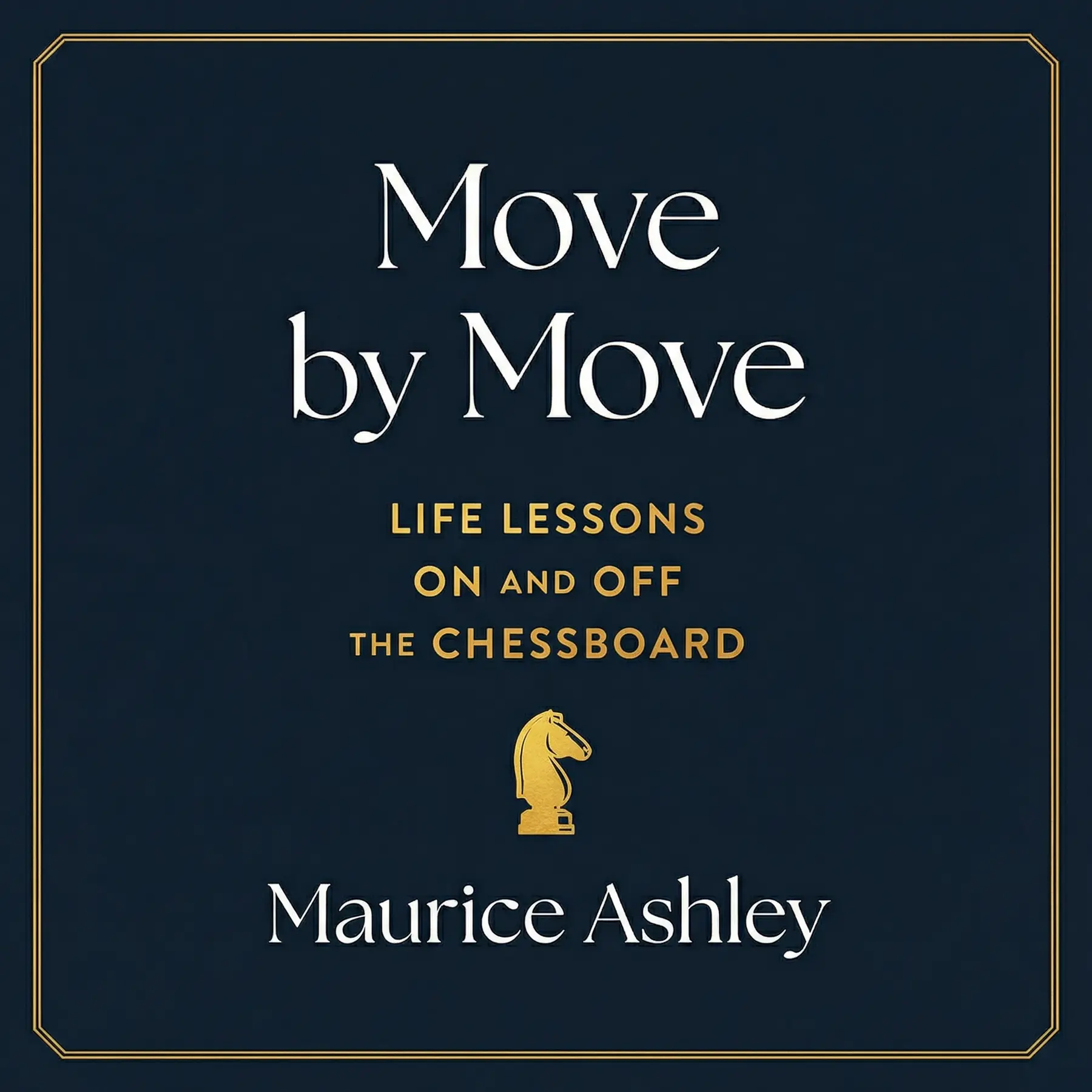
Listeners find this chess book to be a marvelous read that provides meaningful wisdom, with one listener highlighting how it offers practical life-changing tactics for all ages. The work is widely praised for being exceptionally readable and well-written.
This hardcover is absolutely gorgeous, especially that foil embossing, but the real treasure is inside. Ashley has managed to distill decades of elite competition into practical, life-changing tactics that anyone can use, regardless of whether they know a Sicilian Defense from a French Defense. It feels like a love letter to the game’s ability to level the playing field across culture and class. I was especially moved by the section on maintaining childlike curiosity; it's a reminder that even at the highest levels, fascination is the engine of success. Look, it’s not a technical guide, but it is a fountain of wisdom on focus and patience. It’s one of those rare books I know I’ll be re-reading whenever I feel my mental discipline slipping or when I need a reminder that losing is just another way of learning.
Show moreWow, what a refreshing take on the psychological side of performance. Maurice Ashley has always been one of my favorite commentators because of his energy, and that same spark is all over these pages. He tackles the importance of "disaggregated learning" and uses examples from legends like Steph Curry and Tiger Woods to show how elite performers stay at the top. The truth is, the book is less about chess and more about the grit required to master any craft. I loved the story about Alexander Shabalov telling him he had to be a grandmaster before he could become one. That’s a powerful mindset shift. My only minor gripe is that the second half relies a bit too heavily on quotes from others, but the core message of embracing complexity and finding joy in the struggle remains solid.
Show morePicked this up after hearing Maurice Ashley on a podcast, and I was immediately struck by his friendly, down-to-earth writing style. Unlike his technical manuals, this is a philosophical deep dive into how the board reflects our daily struggles and triumphs. He talks a lot about how mistakes are our greatest teachers, which resonated with me deeply. To be fair, if you’re looking for knight endgames or opening theories, you’ll be disappointed because there are zero puzzles here. It’s purely a mindset book. Personally, I found the chapter on "disaggregated learning" to be the highlight, showing how breaking down complex problems can lead to those tiny, accumulated advantages that eventually win the game. It’s a quick read but a thoughtful one that bridges the gap between grandmaster strategy and human resilience.
Show moreAs someone who only knows how the pieces move, I found this remarkably accessible. Ashley doesn't drown you in notation; instead, he explores the "why" behind the strategy. His explanation of retrograde analysis—working backward from a goal—is something I’ve already started applying to my project management at work. To be honest, I was surprised by how much he focused on empathy and understanding your opponent's perspective. It’s a skill we often forget in our daily "monologues." The book is quite short, maybe a bit too short for the price, but the quality of the insights makes up for it. It’s a great choice for a library or as a graduation gift for a young person starting their career. It teaches resilience and the importance of those small, incremental improvements that eventually build a winning position in life.
Show moreThe first half of this book is easily five-star material. Ashley’s ruminations on how chess acts as a universal language are poetic and insightful. However, as the book progressed, the chapters felt a bit redundant. It started to feel like the same few points about focus and adaptation were being recycled with different anecdotes. To be fair, his writing style is incredibly engaging and friendly, making it a very easy book to get through in a single afternoon. I did find it odd that he didn't delve deeper into his personal story of achieving the Grandmaster title later in life, as that would have added more weight to the "resilience" theme. Still, for a general reader looking for a motivational boost rooted in a fascinating subculture, this is a very solid and handsome little volume.
Show moreEver wonder why top-tier athletes like the Warriors study chess strategies? This book answers that by exploring the mental toughness and adaptability required to stay ahead of the competition. Maurice Ashley does a wonderful job of stripping away the "nerdy" stigma of chess to reveal it as a brutal, beautiful exercise in self-awareness and empathy. I found his point about "fighting complacency" especially relevant; it’s so easy to let your guard down when you think you’re winning. The book is well-written and flows smoothly, though some of the life lessons can feel a bit "cheesy" if you aren't in the right headspace for a motivational read. Overall, it’s a great reminder that the way we handle a loss on the board says everything about how we'll handle challenges in the real world.
Show moreFinally got around to reading this, and it’s essentially a love letter to the game. Maurice Ashley’s passion for chess as a tool for social inclusion and personal development is palpable. It’s a very engaging book full of accessible takeaways, though I should warn you that there isn't a single chess diagram in the whole thing. If you’re a beginner, don’t worry—you don’t need them to understand the philosophy here. Not gonna lie, the tone is quite upbeat and sometimes glosses over the more frustrating aspects of the game, but it’s hard not to be inspired by his perspective. The hardcover edition is particularly lovely with its foil cover, making it a perfect gift for someone who appreciates the mental art of strategy. It’s a sweet, thoughtful book that highlights how chess bridges the gaps between us all.
Show moreIs it a good book? Yes. Is it a groundbreaking one? Not necessarily. Truth is, I have mixed feelings about the way Ashley weaves life lessons into chess metaphors. While his enthusiasm is infectious, some of the analogies feel a bit forced, almost like he’s trying too hard to make every pawn move a symbol for personal growth. I couldn’t help but compare it to Anand’s Mind Master, which I felt handled the intersection of biography and strategy with more depth. The writing is accessible, which is a plus, but the second half of the book started to feel a bit formulaic and repetitive with all the quotes from other famous figures. It’s a sweet read and the physical hardcover is lovely, but I wanted more of his personal journey to becoming a grandmaster.
Show moreGotta say, I love Maurice's commentary, but this felt a bit like a collection of LinkedIn posts. The observations are pleasant and certainly true, but they aren't exactly revolutionary. "Mistakes are teachers" and "focus is key" are things we’ve all heard before. That being said, he illustrates these points with chess references that make them stick a bit better than your average self-help book. The book is short and has a nice "giftable" feel to it, which makes it perfect for a coffee table. Personally, I found the section on the "Theory of Accumulation of Small Advantages" to be the most practical part. It’s a fun, quick read, but if you’re looking for a deep intellectual challenge, this might feel a little light on the actual science of learning and psychology.
Show moreFrankly, I expected more from a Grandmaster of Ashley's caliber. The book is mostly a collection of superficial anecdotes that lack a rigorous scientific basis. At times, the advice even seems to contradict itself—one moment he's advocating for rigid discipline, and the next he's talking about jazz-like improvisation without providing a clear bridge between the two. Not gonna lie, the metaphors often feel like clichés polished up with chess terminology. It’s a very fast read, which some might like, but for me, it lacked the substance needed to be truly "life-changing." If you want deep chess theory or a detailed memoir of his climb to the GM title, you won't find it here. It’s a light, gift-style book that stays on the surface rather than diving into the complexities of the human mind.
Show moreAndrew D. Thompson
Deepak Chopra
Richard Wiseman
William B. Irvine
AUDIO SUMMARY AVAILABLE
Get the key ideas from Move by Move by Maurice Ashley, plus 5,000+ more titles in English and Thai.







