
25 min 12 sec
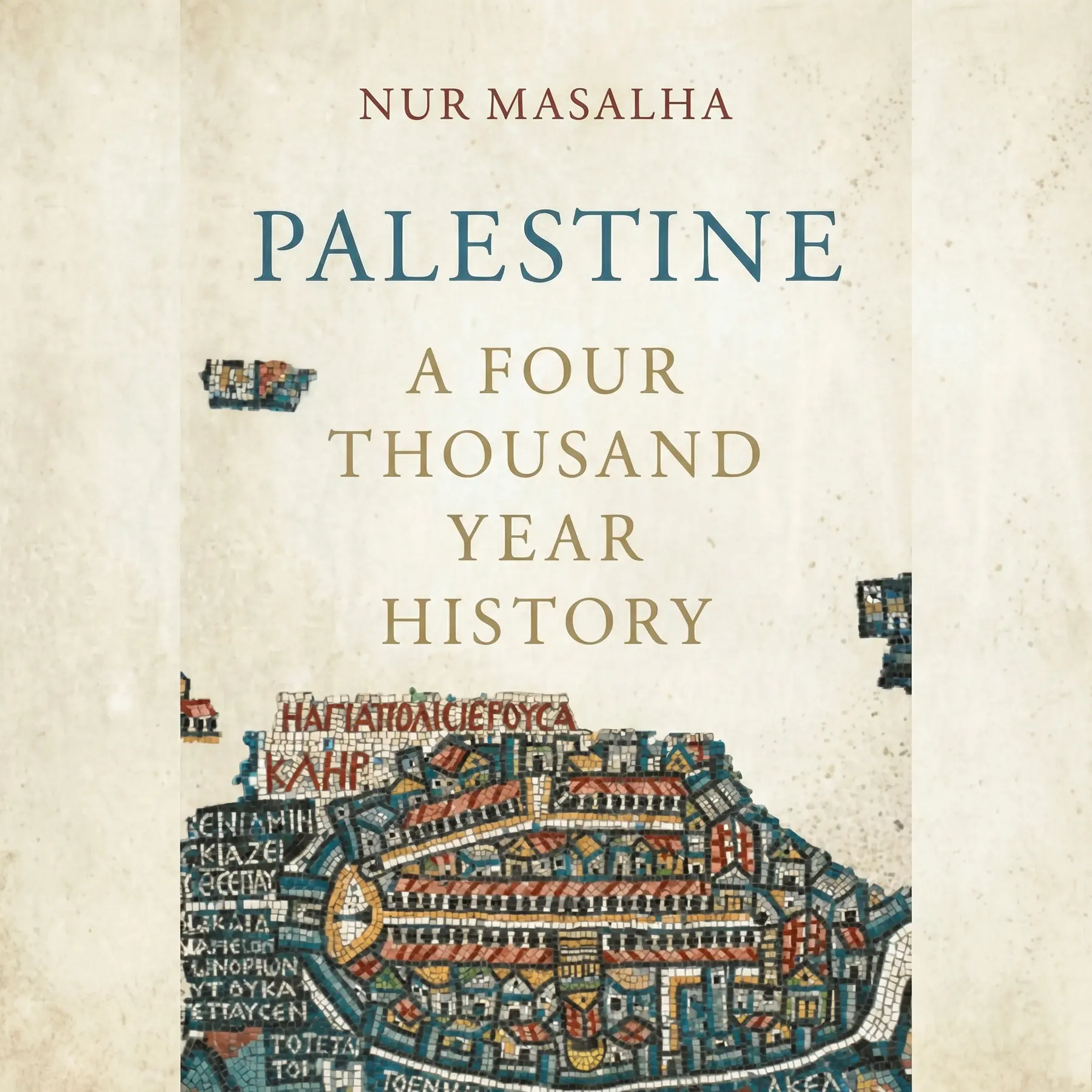
Palestine: A Four Thousand Year History
By Nur Masalha
Palestine offers an expansive exploration of the region’s 4,000-year history, detailing its multi-layered identity from ancient Philistia through the Byzantine and Islamic eras to the modern-day struggle for self-determination and cultural preservation.
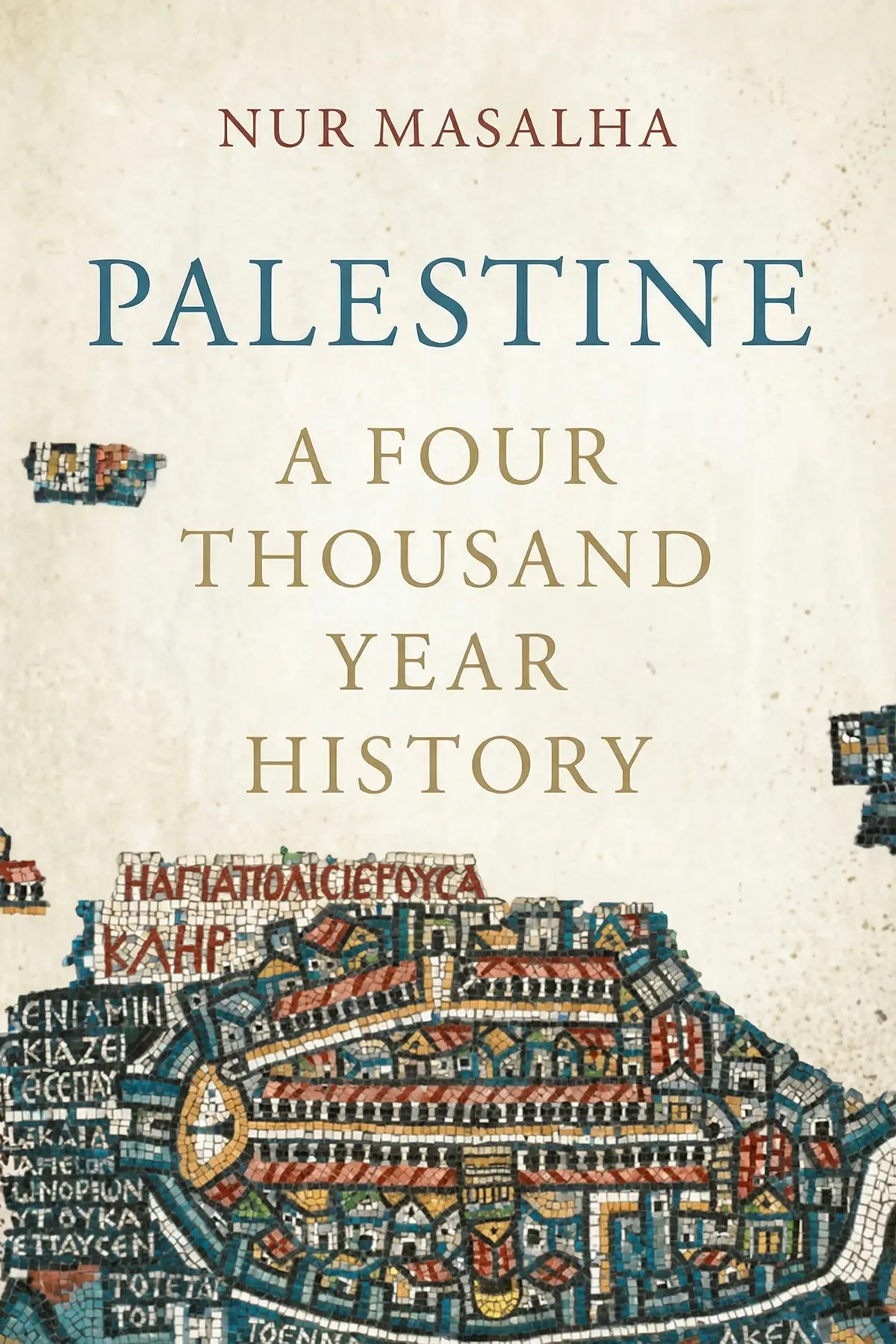
Table of Content
1. Introduction
1 min 46 sec
When we hear the word Palestine today, the mind often jumps immediately to the headlines of modern geopolitical struggle. We think of maps, borders, and a conflict that seems as though it has no beginning and no end. But if we pull back the lens, we see that the story of this land is not merely a twentieth-century political dispute. It is, in fact, a vibrant, four-thousand-year-old narrative that stretches back to the very dawn of civilization. This history is not just a collection of dates, but a continuous throughline of a multiethnic and multireligious society that has inhabited the eastern Mediterranean for millennia.
In this exploration, we are going to look past the common myths and the simplified media narratives to uncover the deep roots of the Palestinian people. We will see how this region served as a crossroads for the world, thriving under various empires while maintaining a distinct local identity. From the sophisticated shipbuilders of the Iron Age to the philosophers of the Byzantine era and the merchants of the Islamic Golden Age, Palestine has always been a place of high culture and significant economic power.
However, we must also confront the shifts that occurred in the nineteenth and twentieth centuries. We will examine how external colonial interests and the rise of the Zionist movement began to challenge this long-standing continuity. By understanding the systematic attempts to rename the landscape and displace its people, we gain a clearer view of why history is such a contested battleground today. This is not just a history of a place, but a history of a people’s persistence. By the end of this journey, you’ll see how the past isn’t just behind us—it is the very foundation upon which the future of the region must be built. Let’s begin by looking at what the earth itself tells us about the origins of this ancient land.
2. The Ancient Foundations of Philistia
2 min 35 sec
Ancient graveyards and linguistic clues reveal a society much older and more indigenous than modern theories often suggest, challenging the idea that Palestinians were merely nomadic outsiders.
3. Continuity Through the Greco-Roman Era
2 min 47 sec
Under the influence of Greece and Rome, the name and identity of Palestine were cemented in the global consciousness as a wealthy and multicultural hub.
4. The Intellectual Splendor of Byzantine Palestine
2 min 22 sec
Palestine became the spiritual and educational heart of the Byzantine Empire, boasting one of the greatest libraries of the ancient world.
5. The Islamic Golden Age and Prosperity
2 min 16 sec
The arrival of Islam brought linguistic unity and a period of unparalleled economic growth, making Palestine the wealthiest region in the Levant.
6. Restoration and Resilience under the Ayyubids and Mamluks
2 min 15 sec
Following the disruption of the Crusades, new dynasties restored Muslim rule and implemented unique urban strategies to protect the holy land.
7. The Eighteenth-Century Palestinian State
2 min 12 sec
A century before modern nationalism, a local leader led a peasant uprising to create a de facto sovereign Palestinian state that boomed with economic success.
8. The Rise of Modern Nationalism and Colonial Interest
2 min 16 sec
As the nineteenth century dawned, Palestine became a focus of British imperial strategy and evangelical fervor, just as local national identity began to peak.
9. The Nature of the Zionist Settler-Colonial Project
2 min 25 sec
Zionism introduced a different kind of colonialism to the region, one based on the replacement of the indigenous population rather than simple economic exploitation.
10. The Struggle Against Cultural Erasure
2 min 40 sec
Beyond physical displacement, the new state of Israel engaged in a systematic effort to rename the land and its language to reflect a biblical narrative.
11. Conclusion
1 min 38 sec
As we look back over the four-millennium-long journey of Palestine, the overarching theme is one of continuity and diversity. The name ‘Palestine’ is not a modern label, but a title that has been etched into the history of the Mediterranean for over 3,200 years. We have seen that the people of this land are not latecomers or outsiders, but the indigenous descendants of a long line of civilizations—from the industrious Philistines to the scholars of the Byzantine era and the sovereigns of the eighteenth century. This deep history proves that the region has always been a place where different cultures and religions found a way to coexist and prosper.
The challenges of the last two centuries—the arrival of colonial powers and the systematic attempts to displace the native population—have been a significant interruption to this long history, but they have not ended it. The resilience of Palestinian culture, language, and memory serves as a powerful testament to the people’s connection to their ancestral home. Understanding this history is essential because it reveals that the current situation is not just a conflict over land, but a struggle to preserve an identity that has been part of the human story for thousands of years.
Ultimately, the lesson of Palestine’s history is that no amount of renaming or displacement can truly erase the roots of a people who have lived in a land for forty centuries. By acknowledging the full, multicultural tapestry of Palestine’s past, we can move away from simplified myths and toward a more honest and just understanding of the present. The path to a brighter future for the region must begin with a deep respect for the incredible, uninterrupted history that has shaped it from the Bronze Age to today.
About this book
What is this book about?
This summary explores the deep historical roots of Palestine, a land often misunderstood through the lens of modern conflict. It challenges the colonial myth that the region was a barren wasteland by revealing a continuous, four-millennium-old narrative of a thriving, multicultural society. From the archaeological evidence of the Iron Age to the sophisticated urban centers of the Roman and Byzantine periods, the book illustrates how the identity of the Palestinian people was forged through centuries of trade, intellectual achievement, and religious diversity. Readers will discover the often-overlooked eighteenth-century Palestinian state founded by Dhaher al-Umar, a moment of sovereignty that predates modern nationalism. The narrative then shifts to the nineteenth century, examining how European settler-colonialism and the Zionist project sought to replace the indigenous population and erase their historical traces. By tracing the evolution of language, the naming of cities, and the resilience of cultural memory, this work provides a vital historical context for understanding the ongoing quest for justice and recognition in the region.
Book Information
About the Author
Nur Masalha
Nur Masalha is a distinguished Palestinian academic and a professor of history at the School of Oriental and African Studies, University of London. A prominent member of the SOAS Centre for Palestinian Studies, he serves as the editor of the Journal of Holy Land and Palestine Studies. His extensive body of work includes influential titles such as A Land Without a People and The Palestine Nakba, focusing on the history and displacement of the Palestinian people.
Ratings & Reviews
Ratings at a glance
What people think
Listeners find the text deeply enlightening concerning the millennia-long history of Palestine and value the detailed scholarship, with one listener highlighting the inclusion of ancient documents. Additionally, the quality of the writing gets favorable mentions, and listeners prize the objective tone. However, opinions on how easy it is to read are divided, as some feel it reads like a political manifesto. The portrayal of religious impact also garners mixed responses, including one listener who claims it intentionally eliminates Jewish influences. The volume’s size is a common complaint, with one listener mentioning the introduction is 54 pages long.
Top reviews
Methinee
Nur Masalha provides a breathtakingly deep dive into the four-millennia-long identity of a land that is often misunderstood. By utilizing ancient documents and archaeological records, he constructs a narrative that stretches far beyond the modern conflict. I found the section on Philistine naval technology especially enlightening for understanding the region’s early Mediterranean connections. While the text is undeniably dense and requires a high level of concentration, the wealth of knowledge is worth every second. To be fair, a few more maps would have helped visualize the shifting borders of the Bronze Age. However, the author’s commitment to decolonizing the history of the Levant remains the book's greatest strength. It is truly meticulous.
Show morePracha
Wow, I never realized how much of the linguistic history of the Levant had been obscured by modern political narratives until I picked this up. Masalha does an incredible job of restoring a forgotten past by tracing the word 'Palestine' through Greek, Roman, and Arabic sources. The book feels like a direct act of resistance against the erasure of a people's history and their long-standing connection to the land. I was particularly struck by the discussion of how Arabic toponyms preserved ancient Canaanite names better than modern Hebrew rebrandings did. It is a heavy volume, both physically and intellectually, but the emotional payoff of seeing this history laid out is immense. This is essential reading for anyone who wants to understand the region beyond the headlines.
Show morePakpoom
Finally got around to reading this massive volume and the meticulous research is simply undeniable, even if you don't agree with every conclusion. Masalha’s use of primary sources from ancient Greece and Egypt provides a solid foundation for his argument that Palestine has always been a distinct entity. I loved the way he explores the pluralistic nature of the land before modern borders were drawn, showing how different religions coexisted for centuries. The writing style is academic but accessible enough for someone who is already familiar with the basic timeline of the Middle East. It’s a bold, necessary correction to the Eurocentric histories that we are usually fed in the West. This book deserves a spot on the shelf of any serious historian.
Show moreAdam
Picked this up after seeing it recommended as a definitive history, and it certainly lives up to the reputation of being a massive undertaking. The way Masalha connects the modern struggle to ancient toponymy is fascinating and provides a much-needed depth to our current understanding of the conflict. I was particularly impressed by the discussion of how the Crusades and other colonial incursions failed to erase the underlying Palestinian culture. It is a dense book, and I agree with other reviewers that the editing could have been tighter to avoid some of the circular reasoning. That said, the amount of information packed into these pages is staggering and incredibly informative. It definitely changed the way I think about the history of the Mediterranean world.
Show moreNaomi
The introductory section alone is over fifty pages, which tells you exactly what kind of academic marathon you are in for when you open this. Masalha’s research is undeniably meticulous, drawing on sources from Egyptian inscriptions to Hellenistic records to prove the continuity of the name Palestine. I appreciated the way he challenges the traditional 'foundational myths' often taught in Western schools, even if his tone gets a bit fiery at times. Truth is, the book could have used a much tighter edit because many of the arguments about toponyms are repeated across multiple chapters. Despite the heavy repetition, the core message about the survival of indigenous culture is powerful. It is a dense, challenging read that rewards patient students of history.
Show moreRyan
Frankly, the repetition in the middle chapters almost made me put it down, but the sheer volume of evidence kept me hooked until the end. Masalha is trying to do a lot here—refuting Zionism, establishing a 4,000-year continuity, and analyzing linguistic shifts all at once. Some of his claims about the 'invention' of Jewish ethnicity are likely to be very controversial among other scholars in the field. To be fair, he backs up his perspectives with a massive array of footnotes that suggest a lifetime of dedicated study. The lack of maps is a major oversight that makes the more technical geographical arguments hard to follow for a layperson. Still, the book succeeds in providing a fresh perspective that is rarely found in mainstream circles.
Show moreHana
As someone who enjoys etymology, I found Masalha’s focus on toponyms and the evolution of the word 'Palestine' to be the strongest part of the work. He tracks the term from the Egyptian 'Peleset' all the way through the Roman 'Syria Palaestina' with impressive detail and archival support. I do think the book can be a bit one-sided, as it frequently dismisses Jewish historical claims as mere 'faith community' narratives rather than national ones. This approach might alienate readers looking for a more traditional, pluralistic view of the ancient Levant’s diverse ethnic makeup. However, the author's ability to weave together thousands of years of cultural history is an impressive feat of scholarship. It is a long, slow read that demands you take notes as you go.
Show moreRoydao
Look, this isn't a casual beach read, but it is an essential one for understanding the deep-rooted identity of the region over four millennia. The author does a great job of showing how the Palestinian identity isn't just a 20th-century invention but a long-standing cultural reality. Some of the linguistic arguments are a bit dry and the text gets bogged down in technical details about pottery and scripts. Personally, I found the sections on the Late Ottoman period to be the most engaging because they felt more grounded in lived experience. The book can feel a bit like a political manifesto at times, which might frustrate those seeking a strictly neutral tone. However, the sheer breadth of the historical survey is nothing short of magnificent.
Show morePrapaiwan
This book was incredibly frustrating for someone who actually wants a geographical history of the region rather than a linguistic one. It spends an exhaustive amount of time on etymology and the changing names of tiny villages without providing a single map to guide the reader. How am I supposed to track three thousand years of demographic shifts if the author refuses to show us where these places actually are? Masalha argues that the land exists as a rhetorical concept, yet he diminishes the physical reality of the geography in the process. I also found the claims regarding the total overlap of Phoenician and Canaanite identities to be quite muddled and confusing. It felt more like a political manifesto than a rigorous historical text.
Show moreJack
Not what I expected at all, as the author seems more interested in building a counter-narrative than presenting a balanced historical record of the region. While the claim of meticulous research is made, I found the dismissal of the Merneptah Stele and other archaeological evidence regarding Israelites to be quite disingenuous. The book frequently contradicts itself, claiming that Canaanites are Phoenicians and Philistines are Palestinians without ever clearly defining the genetic or cultural lines between them. It feels like a dismal and contradictory mess that aims to erase Jewish indigeneity while lionizing the Islamic empires that followed. If you are looking for a neutral history that explores the complex interactions of all groups, this is not it. The lack of maps only adds to the overall confusion.
Show moreReaders also enjoyed
A Splendid Exchange: How Trade Shaped the World
William J. Bernstein

A Spy Among Friends: Philby and the Great Betrayal
Ben Macintyre


1491: New Revelations of the Americas Before Columbus
Charles C. Mann
A Year in the Life of William Shakespeare: 1599
James Shapiro

1929: Inside the Greatest Crash in Wall Street History--and How It
Andrew Ross Sorkin
AUDIO SUMMARY AVAILABLE
Listen to Palestine in 15 minutes
Get the key ideas from Palestine by Nur Masalha, plus 5,000+ more titles in English and Thai.
- 5,000+ titles
- Listen as much as you want
- 7-day free trial
- Cancel anytime







