Mark Twain
Ron Chernow
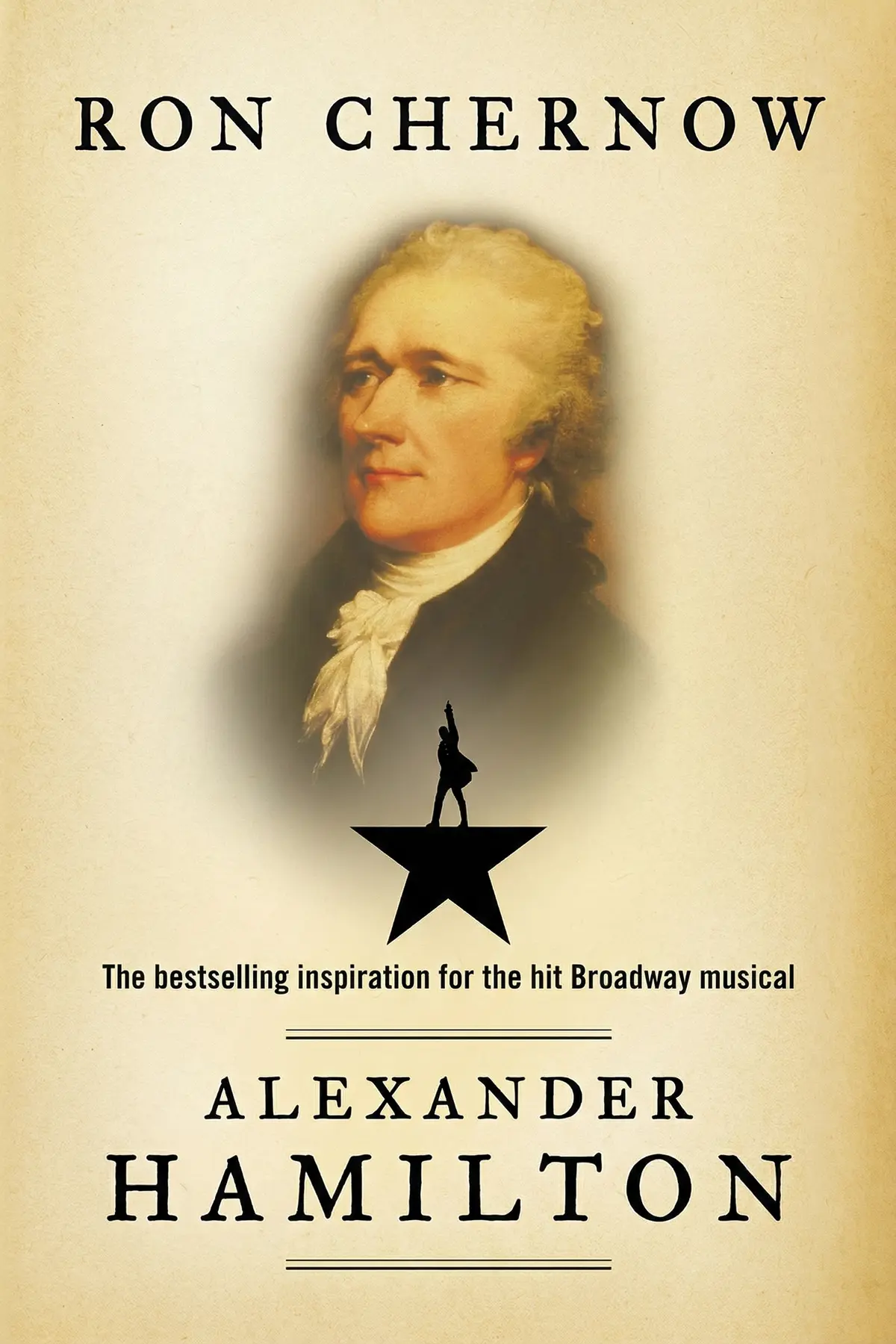
Explore the turbulent and brilliant life of Alexander Hamilton, the immigrant orphan who became a chief architect of American finance, government, and the enduring principles of the United States.
2 min 02 sec
When we look at the pantheon of American founders, we often see men who were born into the landed gentry of Virginia or the established social circles of New England. But Alexander Hamilton was different. He was a self-made man in the truest and most literal sense—an immigrant who arrived on American shores with nothing but his intellect and a relentless drive to succeed. His story is not just a biography; it is the story of the birth of a nation, told through the eyes of its most polarizing and perhaps its most misunderstood architect.
For a long time, the history books didn’t quite know what to do with Hamilton. While figures like Thomas Jefferson were celebrated for their soaring rhetoric about liberty and agrarian virtue, Hamilton was often seen as a cold, calculating technocrat, more interested in banks and balance sheets than the soul of the people. However, as we will explore in this journey through his life, that perspective misses the heart of the man. Hamilton was a visionary who saw, long before his contemporaries, that for America to survive, it needed to be more than a loose collection of farming states. It needed a robust financial spine, a powerful central government, and a place on the world stage.
In this summary, we will follow Hamilton from the desperate poverty of his Caribbean childhood to the highest corridors of power in the burgeoning United States. We’ll see how his words became weapons during the Revolution, how his tireless work ethic built the Treasury from scratch, and how his intense personal passions—both romantic and political—eventually led to his tragic end on a cliffside in New Jersey. This is a throughline of a man who lived his life at a frantic pace, as if he knew his time was limited, and who left behind a legacy that still dictates how the American economy and government function today. Let’s dive into the life of the man who arguably did more than any other to turn thirteen fractured colonies into a unified global power.
2 min 22 sec
Born into poverty and scandal, young Hamilton faced a series of tragedies that would have broken a lesser spirit, yet his resilience and intellect began to shine through.
2 min 20 sec
Arriving in a colony on the brink of rebellion, Hamilton quickly transformed from a student into a leading intellectual voice for American independence.
2 min 17 sec
Transitioning from the classroom to the battlefield, Hamilton’s bravery and administrative genius caught the eye of the revolution’s commander-in-chief.
2 min 10 sec
Hamilton’s desire for military command finally met with success at Yorktown, coinciding with his entry into New York’s elite through marriage.
2 min 20 sec
Recognizing the fatal flaws in the first American government, Hamilton began a tireless campaign to create a stronger and more unified federal structure.
2 min 09 sec
To ensure the ratification of the new Constitution, Hamilton orchestrated and largely wrote a series of essays that became the definitive defense of American democracy.
2 min 19 sec
As the first Secretary of the Treasury, Hamilton built the nation’s economic infrastructure from the ground up, facing immense pressure and opposition.
2 min 03 sec
The clashing visions of Hamilton and Jefferson gave birth to the American two-party system, defining a political divide that exists to this day.
1 min 59 sec
Beyond high-level finance, Hamilton created practical institutions like the Coast Guard to ensure the nation could collect the taxes it needed to survive.
2 min 10 sec
As the French Revolution fractured American opinion, Hamilton’s pragmatic focus on national stability led him to advocate for a policy of neutrality.
2 min 25 sec
Hamilton’s personal life took a disastrous turn when he became entangled in the first major sex scandal in American history, leading to a shocking act of self-exposure.
2 min 02 sec
As tensions with France escalated into a ‘Quasi-War,’ Hamilton found a way back into military service, but his influence began to wane under President John Adams.
2 min 13 sec
Hamilton’s attempts to manipulate the presidential election led to a spectacular failure that handed power to his political rivals and ruined his own standing.
2 min 02 sec
Hamilton’s life was shattered when his eldest son, Philip, was killed in a duel, a tragedy that prefigured his own demise and devastated his family.
2 min 38 sec
The long-standing animosity between Hamilton and Burr reached a breaking point, leading to the famous confrontation that would end Hamilton’s life.
2 min 01 sec
The death of Alexander Hamilton was a profound shock to the young American republic. He was a man who had lived his life at a breathtaking pace, as if he were constantly racing against time. In his short life, he had transformed from a destitute orphan into the architect of the American state. He left behind a country that was unified, financially stable, and possesses a government capable of meeting the challenges of a growing empire. While his enemies like Jefferson often get more credit for the philosophical ideals of America, it was Hamilton who built the machinery that made those ideals work in the real world.
His legacy is all around us today. Every time we use a dollar bill, every time the federal government enacts a national policy, and every time the Supreme Court interprets the powers of the Constitution, we are living in Hamilton’s world. He was the first to understand that for the United States to thrive, it needed to embrace the complexities of the modern world—cities, industries, and global finance. He was also a deeply human figure, flawed and prone to the same passions and errors that he tried so hard to control through institutional design. His story is a reminder that the founding of America was not a serene process of unanimous agreement, but a messy, high-stakes battle of ideas.
As we look back on his life, the most important lesson is perhaps the power of the individual to change the course of history through sheer force of will and intellect. Hamilton didn’t have the advantages of birth or wealth, but he had a vision and the courage to fight for it. His life teaches us that a nation’s strength is found in its institutions, its laws, and its ability to adapt to a changing world. Alexander Hamilton may have died in a duel on a cliffside in New Jersey, but the nation he helped create continues to be defined by his tireless energy and his unwavering belief in the potential of the United States. He was, in every sense, the man who made the American future possible.
This comprehensive biography examines the meteoric rise and tragic fall of Alexander Hamilton, one of the most influential yet controversial figures in American history. From his impoverished beginnings in the Caribbean to his pivotal role as George Washington’s right-hand man, the narrative follows Hamilton as he helps win the Revolutionary War and founds the nation's financial system. Beyond his political achievements, the book delves into Hamilton's complex personality—his relentless ambition, his mastery of the written word, and the personal scandals that threatened his reputation. It promises an in-depth look at the philosophical battles between the Founding Fathers that shaped the modern American state, culminating in the famous and fatal duel with Aaron Burr. Listeners will gain a deep understanding of how one man's vision for a strong central government and a modern industrial economy laid the groundwork for the global power the United States would eventually become.
Ron Chernow is an acclaimed journalist and biographer noted for his deep dives into the lives of influential American figures. His body of work includes celebrated biographies of John D. Rockefeller, the J.P. Morgan dynasty, and George Washington, for which he received the 2011 Pulitzer Prize. Chernow’s meticulously researched life of Alexander Hamilton served as the primary inspiration for the record-breaking Broadway musical, on which he also served as a historical consultant.
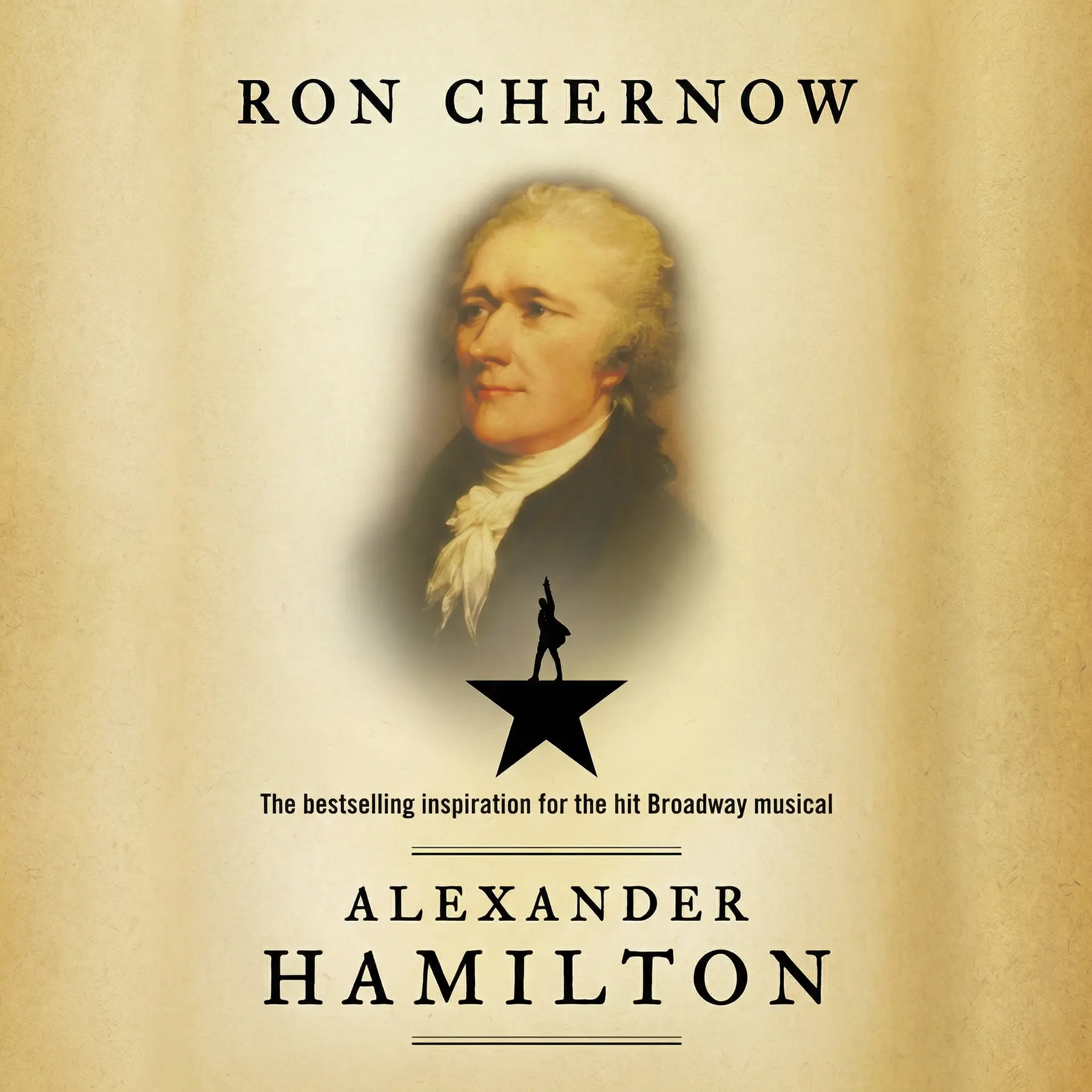
Listeners find this historical biography captivating and excellently composed, often describing the narrative as an absorbing experience that feels like reading a novel. The work is also deeply researched and full of information, granting clear insights into the mind of Alexander Hamilton. Additionally, listeners value how the book makes historical study enjoyable, with one listener mentioning it isn't a dull textbook and another pointing out its comprehensive look at vital years.
Wow. Chernow has this incredible ability to turn what should be a dry, dusty historical account into something that feels as propulsive as a modern thriller. I was skeptical about diving into an 800-page biography, but the narrative flow is so seamless that the pages practically turn themselves. You really get inside Hamilton’s head, feeling his relentless ambition and the chip on his shoulder from his Caribbean upbringing. It’s not just a list of dates and battles; it’s a psychological deep-dive into the man who built our financial infrastructure. While the detailed sections on early American banking might slow some readers down, I found them essential to understanding his vision. He was a flawed, brilliant, and deeply irritating man who somehow shaped the world we live in today.
Show moreEver wonder how a "bastard, orphan, son of a whore" actually changed the world? This biography provides every gritty detail of that journey without holding back on the scandals or the political missteps. Chernow is a master of the craft, balancing rigorous scholarship with a narrative voice that makes 18th-century New York feel alive. Look, the book is massive and heavy enough to be used as a blunt weapon, yet the writing is so engaging that I finished it faster than many shorter novels. It’s fascinating to see how Hamilton’s insecurities about his birth fueled his work ethic and his fatal sensitivity to insults. Even when he’s being his own worst enemy—like during the Reynolds Pamphlet mess—you can’t help but root for him.
Show moreNot what I expected from a political biography. I assumed it would be a dry recitation of legislative wins, but it reads much more like a character study of a tragic hero. The level of insight into Hamilton’s mind is staggering, particularly regarding his lifelong battle with his own reputation. Chernow’s descriptions of the West Indies and the brutal slave trade provide a necessary context for Hamilton’s later abolitionist leanings. It’s also a great look at the legal history of the time, showing how he basically invented modern law practice on the fly. The prose is elegant and sophisticated, though never so academic that it becomes inaccessible to a non-specialist. Highly recommended for anyone who wants to see the Founding Fathers as actual people.
Show moreDirect, thorough, and utterly fascinating. If you want a biography that covers every single angle of a person's life, this is it. Chernow manages to capture the energy of a man who was constantly writing, debating, and planning for a future he wouldn't live to see. The book perfectly illustrates why Hamilton remains such a controversial figure; he was simultaneously the most prepared person in the room and the most likely to blow it all up with a single letter. It provides a great lens through which to view modern politics, showing that our current divisions are nothing new. It’s a dense read, but the prose is so fluid that it never feels like a chore.
Show moreAfter hearing the soundtrack a thousand times, I needed to see where it all started. Truth is, this book is even more dramatic than the Broadway show, which is saying a lot. Chernow doesn’t just focus on the politics; he gives us a vivid look at Eliza Hamilton and her tireless efforts to preserve Alexander's legacy after his death. The way he describes the rivalry with Aaron Burr makes the final duel feel inevitable and heartbreaking rather than just a historical fact. I appreciated how the author humanized these founding fathers, showing them as petty, brilliant, and very much human. If you're looking for a light beach read, this isn't it, but if you want to understand the soul of American government, this is the gold standard.
Show moreThis book is an absolute unit, but worth every minute of the investment. Frankly, I learned more about the American Revolution and the messy birth of the Constitution here than I did in four years of high school history. Chernow dives deep into the complexities of the Federalist Papers and the internal cabinet battles that defined the early Republic. While he clearly favors Hamilton over the Virginia elite, he doesn't shy away from Alexander's arrogance or his tendency to overshare in ways that ruined his political prospects. The relationship between Washington and Hamilton serves as the emotional anchor of the book, showing how much the younger man needed a steadying hand. It’s a comprehensive, brilliant, and sometimes exhausting look at a man who lived at one hundred miles per hour.
Show moreAs someone who usually finds history books boring, this was a total revelation. I was gripped from the very first chapter describing the hurricane that devastated St. Croix and changed Hamilton's life forever. Chernow creates a sense of place so vivid you can almost smell the New York docks and the smoke from the Revolutionary War battlefields. My only real complaint is that the author’s bias is pretty blatant; he’s definitely on Team Hamilton in every single dispute. Still, the way he weaves together personal letters and public records makes for a compelling story about ambition and its costs. It’s a big commitment, but it pays off by giving you a deep understanding of why our government functions the way it does.
Show moreThe chapter on the duel with Burr is some of the most tense writing I've ever encountered. I already knew how the story ended, obviously, but Chernow builds the suspense so effectively that I was still holding my breath. Beyond the drama, the book is a masterclass in explaining complex financial systems without being condescending to the reader. Personally, I was most fascinated by the descriptions of Hamilton’s legal career and his role in the Federalist Papers. You really see the genius—and the madness—required to build a nation from scratch. It's a long, dense journey, but by the time you reach the end, you feel like you’ve actually known the man.
Show moreFinally got around to finishing this monster. To be fair, while the research is clearly impeccable, I struggled with the sheer density of the prose in the middle chapters. Chernow definitely has a serious crush on his subject and it shows; he tends to paint Thomas Jefferson and James Madison as the villains in every interaction. It’s an informative read if you want to understand the origins of the Coast Guard or the first national bank, but be prepared for a long haul. Some of the political bickering felt repetitive after a while, though the tragic ending still hits hard. It’s a solid resource for history buffs, but casual readers might find themselves skimming the more technical fiscal policy debates.
Show morePicked this up for a book club and I have mixed feelings. While I can’t deny the incredible level of research, the tone felt a bit too hagiographic for my taste. Chernow seems to excuse Hamilton's most toxic traits while demonizing his rivals, especially Adams and Jefferson, who are treated like caricatures at times. The writing is polished, yet the chapters on the establishment of the US banking system were a total slog for me. I think a good editor could have trimmed about 150 pages without losing the essence of the biography. That said, the prologue and epilogue focusing on Eliza were incredibly moving and provided a necessary perspective on the personal toll of Hamilton’s public life.
Show more
J. Craig Venter

James Herriot
William J. Bernstein

Ishmael Beah
Pankaj Mishra
Barack Obama
Masaji Ishikawa
AUDIO SUMMARY AVAILABLE
Get the key ideas from Alexander Hamilton by Ron Chernow, plus 5,000+ more titles in English and Thai.