

16 min 38 sec
Scaling Innovation: How Smart Companies Architect Profitable Growth
Scaling Innovation offers a strategic blueprint for transforming brilliant ideas into sustainable, profitable businesses by mastering the balance between rapid growth, effective monetization, and long-term customer retention.
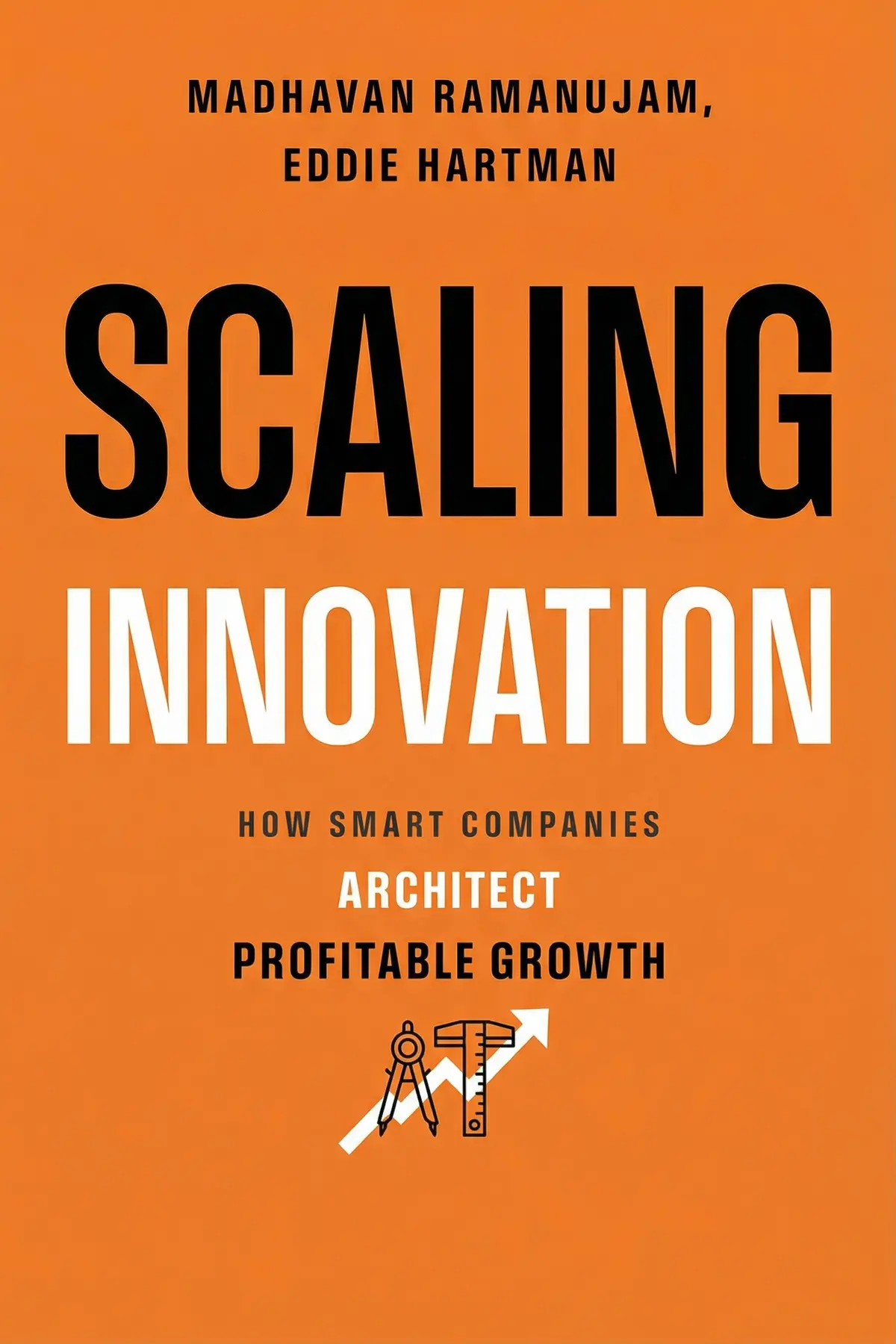
Table of Content
1. Introduction
1 min 34 sec
Think for a moment about the typical lifecycle of a high-flying startup. We see the headlines first: a massive funding round, a charismatic founder, and a product that promises to change the world. These companies often look invincible, yet many of them disappear as quickly as they arrived. They aren’t failing because their technology is bad or because their teams are lazy. They are failing because they are fundamentally misaligned. They have built an engine that can go fast in one direction but lacks the steering and stability to survive the long haul.
In this exploration of Scaling Innovation, we are going to look at why brilliance alone isn’t enough. We will dive into the structural reasons why promising companies hit a wall just as they should be taking off. The central theme here is that scaling isn’t just about doing more of what you did in the beginning; it is about architecting a new way of operating that balances growth with profitability.
We will examine the hidden traps that catch leaders who focus too much on just one aspect of their business—whether that is pure growth, pure profit, or pure customer happiness. You will see how the world’s most successful companies, like Asana and Superhuman, didn’t just stumble into success; they designed it by making pricing and packaging a core part of their strategy from the very start.
This isn’t just a list of business tips; it’s a blueprint for building something that lasts. By the end, you’ll understand how to shift your perspective from a builder to an architect, ensuring that your innovation doesn’t just launch, but truly scales. Let’s begin by looking at the most common mistakes that cause even the most promising rockets to fall back to earth.
2. The Danger of Unbalanced Growth Engines
2 min 54 sec
Many businesses fail because they lean too heavily on a single source of momentum, ignoring the essential balance required for long-term sustainability and market resilience.
3. Designing the Foundation of Value
2 min 56 sec
How you choose to bill your customers is just as important as the price itself, as the right model creates alignment and trust.
4. The Psychology of an Effortless Sale
2 min 34 sec
Simplicity and narrative framing are the secret ingredients that transform a standard product into an essential investment that customers feel smart for buying.
5. Navigating the Scale-Up Pivot
2 min 38 sec
As a company grows, the simple offers that fueled its early success can become constraints, requiring a complete rethink of how products are packaged and segmented.
6. The Art of Retention-Led Acquisition
2 min 35 sec
Sustainable growth isn’t just about how many people you bring in the door; it’s about making sure you attract the specific types of customers who will actually stay.
7. Conclusion
1 min 27 sec
As we conclude our look at Scaling Innovation, it’s clear that the path from a bright idea to a successful, enduring company is rarely a straight line. It is, instead, a series of deliberate architectural choices. We have seen that the most common reason for failure isn’t a lack of effort, but a lack of balance. When a company leans too hard into acquisition at the expense of profit, or monetization at the expense of value, it builds a structure that cannot support its own weight.
The most successful leaders are those who act as architects. They carefully design their pricing models to create trust. They use the psychology of simplicity to make the sales process effortless. They remain flexible, evolving their packaging and segmentation as they grow to meet the needs of a changing market. And perhaps most importantly, they understand that long-term survival starts with choosing the right customers from the very beginning.
If there is one key takeaway, it is this: growth and profitability are not enemies. They are the two engines that, when perfectly synchronized, allow an innovation to truly take flight. By applying these principles, you can move beyond the ‘single-engine trap’ and build a business that is not only fast but resilient. Now, it’s time to look at your own business or idea. Are your engines in balance? Is your foundation built for the scale you imagine? By thinking like an architect today, you can ensure your innovation survives and thrives in the world of tomorrow.
About this book
What is this book about?
This summary explores why many high-potential startups fail during their most critical growth phases and how to avoid those common pitfalls. It moves beyond the simple 'build it and they will come' mentality, focusing instead on the 'architecture' of a business—the deliberate design of pricing models, value propositions, and customer acquisition strategies that work in harmony. Readers will learn about the 'single-engine trap' that topples even the most well-funded companies and discover why pricing should never be an afterthought. By examining real-world success stories like Superhuman and Asana, the text provides a roadmap for shifting from a scrappy startup to a mature scale-up. The promise is a more resilient business model that prioritizes 'profitable growth'—a state where winning new market share and deepening current customer value are two sides of the same coin.
Book Information
About the Author
Madhavan Ramanujam
Madhavan Ramanujam is a managing partner at the prominent consulting firm Simon-Kucher & Partners, where he specializes in helping leaders develop robust growth and monetization strategies. He is also the coauthor of Monetizing Innovation. Eddie Hartman is an experienced entrepreneur and a board member at Simon-Kucher. Having founded LegalZoom, he brings first-hand experience in navigating the challenges of scaling a business.
Ratings & Reviews
Ratings at a glance
What people think
Listeners find the material highly useful, with one individual highlighting the thorough breakdown of scaling innovation. The work is also praised for providing an actionable strategy and is seen as a vital resource for corporate executives. Additionally, listeners value the book’s worth, and one person specifically noted its clear grounding in pricing excellence.
Top reviews
Max
The chapter on architecting profitable growth completely changed my perspective on how we approach our quarterly targets. While many business books offer vague theory, Ramanujam and Hartman provide a surgical breakdown of how to capture both market and wallet share simultaneously. I found the 'land and expand' tactics especially relevant for our current software-as-a-service transition. It feels like a direct successor to Monetizing Innovation but with a much sharper lens on the scaling phase. If you are navigating the complexities of the AI era, these frameworks aren't just helpful; they are essential for survival. My only minor gripe is that some of the pricing models get a bit dense, but the 'CEO questions' at the end of each section help bring the core principles back into focus. This is a manual for operators who actually want to build an enduring, profitable business.
Show moreChamlong
Wow, Scaling Innovation is exactly what I needed to hand over to my product management team this quarter. We’ve been struggling with how to package our new features without devaluing our core offering, and the 'gives and gets' framework provided an immediate solution. The authors don’t just tell you that pricing is important; they show you how it’s the responsibility of the entire organization to maintain value. Truth is, most companies treat pricing as an afterthought, but this book proves it’s the engine of growth. I loved the real-world examples of mistakes companies made, as it made the lessons feel more authentic and less like a lecture. Stop what you are doing and buy a copy for your head of finance and your head of product immediately. It is a masterclass in architecting growth that lasts.
Show moreMaya
Picked this up on a recommendation and it's already paying dividends for our strategy meetings. The concept of 'architecting profitable growth' isn't just a catchy phrase here; it's a detailed roadmap for any business leader. I was particularly impressed by how the authors addressed the challenges of the AI era, providing a forward-thinking perspective on value capture. Each chapter ends with specific questions for CEOs, which I found to be a brilliant way to summarize the actionable principles. The focus on pricing excellence as a team sport is a message that every department needs to hear. Not gonna lie, I was skeptical that a sequel could live up to Monetizing Innovation, but this might actually be the better book for established companies. It is a comprehensive, practical, and deeply insightful guide that should be required reading for every operator.
Show moreSienna
Finally got around to reading this sequel after keeping the first book on my desk for three years. The authors have managed to distill years of high-level consulting experience into a guide that feels both timeless and incredibly urgent for today’s market. I particularly appreciated the distinction between startup and scale-up approaches, which is a nuance often lost in generic business literature. While the focus on pricing excellence remains central, the expansion into broader business models provides a more holistic view of the organization. My team has already started using the 'CEO questions' to audit our current roadmap, and the clarity it provides is refreshing. It’s not a light read, but the actionable recommendations make it worth the investment of time. A few more visual diagrams would have helped clarify the more complex negotiation frameworks, but that’s a minor quibble.
Show moreAlejandra
Ever wonder why great products fail to scale? This book provides the answer by looking past the product itself and focusing on the commercial architecture behind it. Madhavan and Eddie argue that if you don’t bake your pricing and value strategy into the development process, you’re essentially flying blind. I found the '4 types of churn' breakdown to be an eye-opener for our customer success team. It’s rare to find a business book that balances high-level strategy with such granular, tactical advice. While some of the sections on market share felt a bit lengthy, the overall impact of the book is undeniably positive. It forces you to ask the hard questions about whether your business model is actually sustainable in the long run. Highly recommended for any leadership team trying to move beyond the initial startup phase.
Show moreWichai
This book acts as a continuous coach for anyone in a leadership position trying to navigate market shifts. It’s practical from the very first chapter, moving quickly from theory into the 'how-to' of scaling a business. I found the section on 'land and expand' strategies to be particularly sharp, offering a clear way to increase wallet share without alienating current customers. The authors’ experience working with hundreds of companies shines through in the nuance of their advice. While I felt some of the negotiation tactics were a bit standard for seasoned pros, the way they are integrated into the overall scaling framework is unique. It’s a comprehensive work that bridges the gap between product development and financial success. A must-read if you want to ensure your innovation actually generates the value it promises.
Show morePaisley
Is it worth the hype following the success of the authors' first book? To be fair, Scaling Innovation is a solid read, but it occasionally feels like it’s treading familiar ground for anyone who has already mastered value-based pricing. The frameworks are undoubtedly practical, especially the bits about avoiding the 'growth at all costs' trap that kills so many startups. However, I felt the prose was a bit dry in the middle sections, making it a bit of a slog to get through during a busy work week. The insights on churn are fantastic, but I wish there were more case studies from non-tech industries to broaden the appeal. It’s a useful toolkit for specific leadership roles, but maybe not the 'life-changing' revelation some are claiming it to be. Still, the focus on 'gives and gets' is a tactical win for any sales leader.
Show moreChamp
As someone who works in the pricing space, I had high expectations for this one. The good news is that the core methodology is sound and grounded in real-world expertise. The bad news is that it can be a bit repetitive if you are already well-versed in Ramanujam’s previous frameworks. I liked the focus on 'wallet share,' as that’s often overlooked in the race for new customer acquisition. However, the writing style is very corporate, which might make it hard for casual readers to stay engaged for the full duration. In my experience, the best parts are the specific tactics on negotiation and churn management, which offer immediate ROI. It’s a three-star read for content density but a four-star for practical application. I'll probably keep it as a reference guide rather than something I’d read cover-to-cover again.
Show moreSom
After hearing the buzz on LinkedIn, I decided to dive in and see what the fuss was about. The book is definitely packed with expertise, and you can tell the authors have spent years in the trenches with major companies. That said, I found the framework-heavy approach a bit overwhelming at times. It felt like every few pages introduced a new acronym or a four-quadrant matrix to memorize. Personally, I would have preferred more narrative-driven examples to illustrate the points rather than just the clinical analysis. To be fair, if you are a data-driven leader who loves structured thinking, this will be your bible. But for those of us who prefer a more intuitive or story-based business book, it might feel a bit stiff. It’s a solid resource, just not exactly the 'page-turner' I was hoping for.
Show moreOscar
Not what I expected based on the glowing testimonials. Look, I’m a fan of the previous work, but this felt like a collection of consulting slides turned into a long-form book without enough new substance to justify the price. The focus on the 'AI era' felt tacked on to stay relevant rather than being baked into the core philosophy of the text. I found the 'actionable' frameworks to be overly complex for a small business owner like myself, seemingly geared only toward enterprise-level corporations with massive data teams. Frankly, the tone felt a bit repetitive, hammering the same points about value-based approaches until they lost their impact. If you've read their earlier articles or seen their webinars, you might not find enough fresh material here to move the needle. Disappointing for such a highly anticipated release from these authors.
Show moreReaders also enjoyed
7 Powers: The Foundations of Business Strategy
Hamilton Helmer




Alibaba: The House That Jack Ma Built
Duncan Clark

AUDIO SUMMARY AVAILABLE
Listen to Scaling Innovation in 15 minutes
Get the key ideas from Scaling Innovation by Madhavan Ramanujam, plus 5,000+ more titles in English and Thai.
- 5,000+ titles
- Listen as much as you want
- 7-day free trial
- Cancel anytime







