
19 min 46 sec
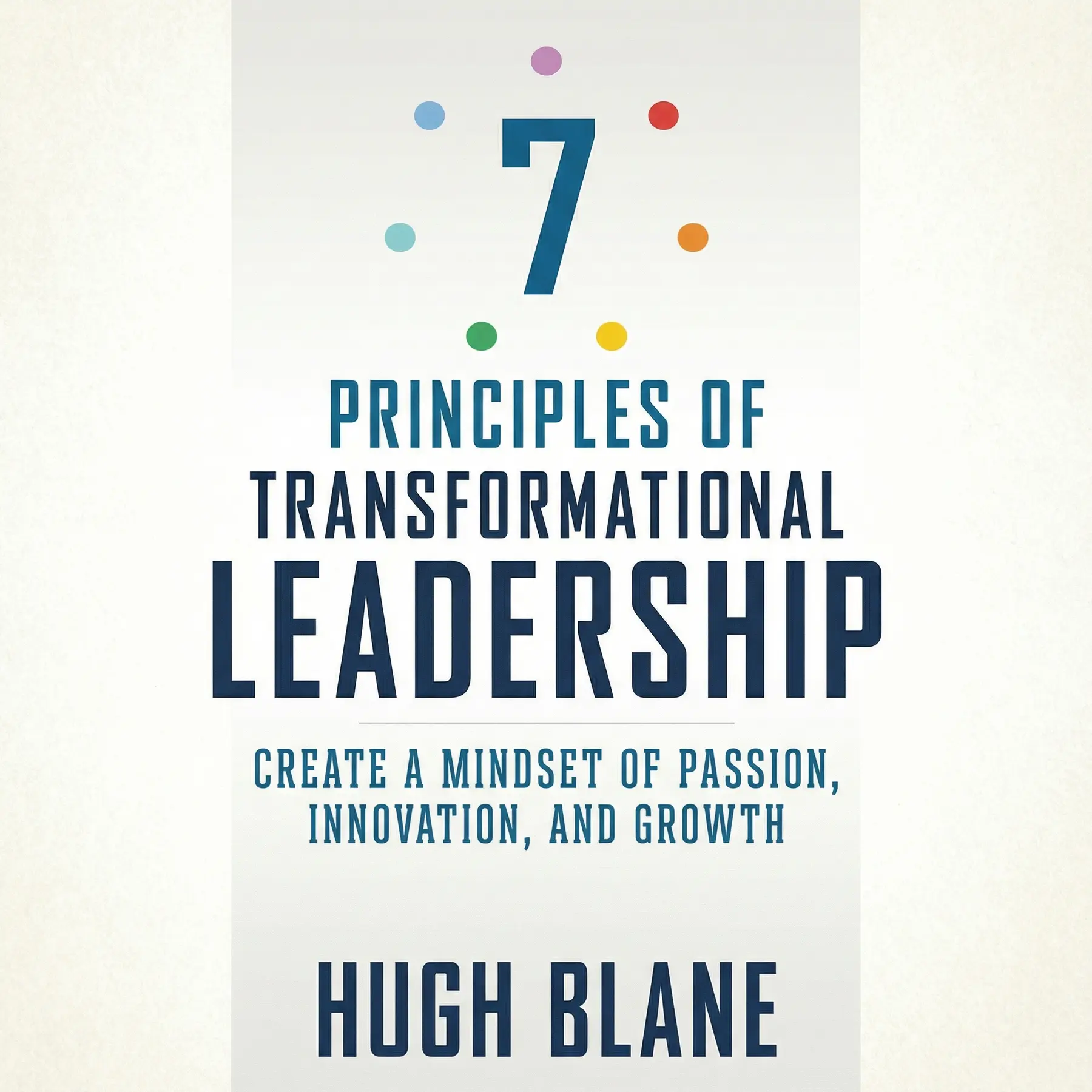
7 Principles of Transformational Leadership: Create a Mindset of Passion, Innovation, and Growth
By Hugh Blane
7 Principles of Transformational Leadership offers a blueprint for leaders to move beyond mediocrity. Hugh Blane details how shifting your mindset, building trust, and focusing on purpose can drive organizational excellence and personal fulfillment.
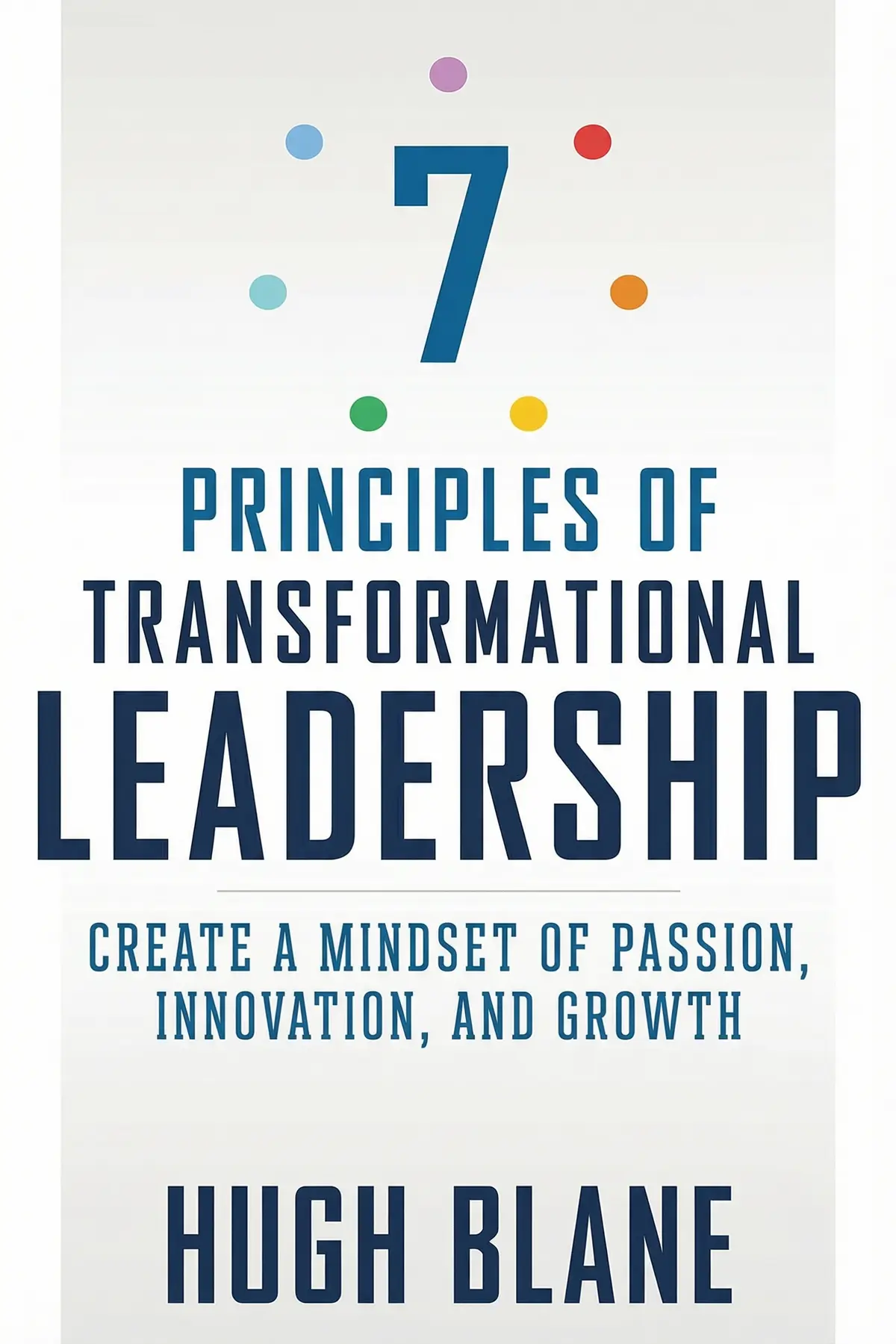
Table of Content
1. Introduction
1 min 58 sec
Imagine waking up every Monday morning feeling like you are about to drive into a thick, heavy fog. You know you have a destination, and you know you have a powerful engine under the hood, but the lack of visibility makes you hesitate. You grip the steering wheel tighter, you tap the brakes, and your body enters a state of high-alert survival mode. For many professionals in leadership roles, this isn’t just a metaphor for a bad commute; it is the daily reality of their work lives. They are busy, they are tired, and they are putting in immense effort, yet they feel like they aren’t actually getting anywhere. The visibility is low, the impact is minimal, and the sense of purpose is obscured by a mountain of emails and meetings.
This is the challenge of the ‘accidental’ leader—someone who has the title and the responsibility but lacks the clarity to truly transform their environment. To move from being a mere manager of tasks to a true catalyst for change, you need more than just a new set of productivity hacks. You need a fundamental shift in how you view yourself, your team, and your mission. You need a framework that moves you from a state of ‘human doing’ to one of ‘human being.’
In the following journey, we are going to explore a structured path toward excellence. We will dive into seven core principles that serve as the pillars of transformational leadership. These aren’t just abstract theories; they are practical shifts in mindset and behavior that have been used to turn around stagnant departments and propel Fortune 500 companies to new heights. We will look at how to define your purpose with surgical precision, how to build a level of trust that makes your influence undeniable, and how to foster an environment where your team members don’t just show up—they flourish. By the end of this exploration, you will see that the key to changing your organization isn’t about working harder at the same things; it is about working differently on the things that actually matter. Let’s begin by clearing the fog and finding your true north.
2. Defining a Clear Purpose
2 min 05 sec
When leadership lacks a clear direction, the entire organization slows down. Discover how to align your personal passions with the value you provide to others.
3. The Power of Promises and Trust
2 min 16 sec
Trust is the currency of influence. Learn how the commitments you make—and keep—form the bedrock of your credibility as a leader.
4. Projecting Leadership Through Outcomes
2 min 25 sec
A project isn’t just a list of tasks; it’s a way to magnify your impact. Explore how to shift your focus from processes to flourishing results.
5. Mastering the Art of Persuasion
2 min 14 sec
Influence is about more than just making a good argument. It involves understanding the needs of others and making it safe for them to follow you.
6. The Strategic Use of Praise and Purification
2 min 19 sec
Recognition is a powerful motivator, but it must be sincere and specific. Discover how to use praise to build confidence and remove barriers.
7. Cultivating Unwavering Perseverance
2 min 28 sec
Talent is only half the battle. True transformation requires the grit to push through obstacles and the resilience to fail forward.
8. Intentional Preparation and Self-Reflection
2 min 31 sec
Great leadership doesn’t happen by accident. Learn why focusing on your own personal growth is the essential first step toward leading others.
9. Conclusion
1 min 30 sec
As we conclude this exploration of transformational leadership, it is worth reflecting on the interconnected nature of these seven principles. They are not a menu of options where you can pick and choose; they are a cohesive system. Your purpose provides the direction, your promises build the trust needed to move, and your projects are the vehicles that take you there. Persuasion allows you to bring others along, while praise and purification keep the engine running smoothly. Perseverance gives you the grit to finish the race, and preparation ensures you are the kind of person who is fit to lead in the first place.
Transformation is not an event; it is a process of continuous alignment. It requires you to move away from the comfort of ‘how things have always been’ and embrace the challenge of ‘how things could be.’ The most important takeaway is that leadership starts with an internal shift. You cannot command passion, innovation, or excellence from others if you are not modeling those qualities yourself. By committing to these principles, you do more than just improve your business results. You create a legacy. You build a culture where people feel seen, valued, and empowered to do their best work. This is the true heart of transformational leadership: it turns the daily grind into a meaningful mission, and in doing so, it elevates everyone it touches. Now, the question is simple: which principle will you begin applying today to lift the fog and lead your team toward a brighter horizon?
About this book
What is this book about?
Many leaders find themselves trapped in a cycle of constant activity without seeing significant progress. They manage tasks but fail to inspire their teams or drive meaningful change. 7 Principles of Transformational Leadership addresses this common struggle by providing a clear framework for becoming a high-impact leader. It moves away from traditional management tactics and focuses on the psychological and relational foundations of influence. The book promises a journey of personal and professional transformation. By exploring core concepts like the power of promises, the importance of specific praise, and the necessity of unwavering perseverance, you will learn how to create a culture where people flourish. The end result is not just a more efficient organization, but a leadership style that is sustainable, purposeful, and deeply respected by everyone involved.
Book Information
About the Author
Hugh Blane
Hugh Blane is a respected leadership consultant and the president of Claris Consulting. He is widely recognized for his expertise in helping leaders transform their effectiveness and achieve superior business results. Throughout his career, he has worked with numerous Fortune 500 companies, providing a practical approach to leadership development that emphasizes the alignment of personal values with organizational goals.
Ratings & Reviews
Ratings at a glance
What people think
Listeners find the book highly accessible and value its leadership development content. They praise its clarity, with one listener noting the deliberately organized framework of the 7 Principles, and another highlighting the practical, grounded explanations.
Top reviews
Thanit
Ever wonder why brilliant strategic plans constantly fall apart during execution? Hugh Blane answers that dilemma by demonstrating that organizational results mirror the internal mindset of the leader. In my experience, most business authors overcomplicate leadership with dense matrices and endless acronyms. In contrast, this book strips away the noise with grounded, plain-English principles that force you to examine your everyday habits. Reframing projects as tangible expressions of personal values was an eye-opening moment for me. My only tiny gripe is that the pacing slows down during the middle chapters, but the closing insights on proactive preparation more than make up for it.
Show moreWillow
Finally got around to finishing this after having it sit on my desk for two months, and I regret not opening it sooner. What sets Blane apart from typical management gurus is his focus on intentionality over bureaucratic hustle. His formula for defining personal purpose—finding the exact intersection where your passion, professional skills, and customer value meet—was worth the price of admission alone. The conversational tone makes the entire book remarkably easy to digest without dumbing down the significance of the mindset shifts required. A fantastic, empowering read for anyone ready to stop merely managing tasks and start truly inspiring their people.
Show moreUbolrat
As someone leading a team of software engineers, I often struggle to bridge technical roadmaps with executive expectations. Hugh Blane's advice on communication hit home immediately. He reminds technical leaders that jargon and acronyms alienate stakeholders, urging us instead to position technology as a direct business enabler. The segmented seven-principle layout makes it easy to dip into specific areas, particularly the sections on alignment and influence. To be fair, some chapters read a bit like transcripts from an executive retreat rather than deeply researched literature. Still, the practical reminders about setting clear boundaries and keeping core commitments provided immediate value for my weekly team syncs.
Show moreSomboon
Picked this up because it was required reading for our quarterly leadership seminar, and it turned out far more practical than typical corporate assignments. The truth is, most management manuals dump abstract theory on you without any implementation mechanics. Blane keeps things down-to-earth by organizing everything around seven distinct focal points. I especially appreciated his take on the Promises Principle. He emphasizes that trust evaporates when managers fail to keep commitments or avoid delivering hard truths. Filling out his fill-in-the-blank purpose exercise helped clarify my team's core objective for the year. It gets slightly repetitive near the end, but the foundational advice is hard to argue with.
Show moreSven
After stepping into a director role last fall, I needed something actionable rather than academic theory. Blane’s seven principles gave me an accessible scaffolding to audit my daily routines and evaluate how I show up for my department. His breakdown of persuasion was particularly enlightening. He makes a compelling case that genuine influence starts with active listening and alignment rather than aggressive negotiation tactics. Down-to-earth explanations keep the pages turning quickly, even if a few client examples felt anonymized to the point of vagueness. It has earned a permanent spot on my reference desk.
Show moreMatteo
The chapter on the Preparation Principle completely altered how I schedule my mornings. Personally, I had fallen into the trap of managing by crisis, constantly reacting to incoming fires instead of intentionally designing my calendar around long-term impact. Blane forces you to slow down and create deliberate thinking space. The readable layout breaks complex executive behaviors into seven bite-sized disciplines that feel genuinely achievable. While a couple of chapters retread familiar ground regarding resilience and positive self-talk, the tactical focus on accountability and clear expectations makes this a worthwhile investment for any rising professional.
Show moreFah
The alliterative framework gives Hugh Blane’s model an orderly facade, yet the execution feels uneven. Dividing personal transformation into Purpose, Promises, Projects, Persuasion, Praise, Perseverance, and Preparation makes the material approachable and tidy. Look, I liked the analogy about designing intentional client touchpoints like Disney does, rather than letting company culture develop by accident. However, the book rarely dives deep enough into the messy realities of corporate politics or structural friction. Many solutions sound deceptively simple on paper, assuming an ideal work environment where everyone behaves rationally. It works reasonably well as a refresher for frontline supervisors, but experienced executives may find the guidance fairly standard.
Show moreWorawit
Decent leadership primer, though not quite the game-changer the title promises. Gotta say, the focus on specific praise really stood out to me. Most bosses only point out mistakes, so his reminder to catch people doing things right and acknowledge the exact impact of their work is valuable. That said, the book leans heavily on broad advice that seasoned managers have encountered dozens of times before. If you have never read a personal growth book, this provides a cohesive, readable summary. If your shelf is already lined with leadership classics, you will encounter few genuine surprises here.
Show moreDylan
Good ideas get drowned out when an executive coach writes a book that should have stayed a keynote. Hugh Blane clearly has deep expertise across boardrooms, but his writing relies far too heavily on standard motivational aphorisms and repetitive slogans. You can tell this material plays well out loud in front of a corporate audience, yet on the page, the lack of granular, named case studies leaves things feeling generic. Frankly, hearing that leaders need purpose and perseverance is hardly revolutionary. The chapters covering deliberate praise and follow-through on promises are solid, but digging through the clunky prose to extract those nuggets was an exhausting slog.
Show moreAhmed
There is an unfortunate gap between coaching charisma and compelling written prose. The core message here is undeniably well-intentioned: start with internal self-mastery so you can genuinely motivate others. But frankly, the delivery lacks analytical rigor. It reads like an extended motivational seminar where common sense is packaged as breakthrough philosophy. Where are the detailed organizational metrics or rigorous post-mortems examining when these principles failed? Without concrete corporate operational details, it feels like an extended lecture filled with familiar platitudes about grit, optimism, and keeping your promises. A disappointing purchase given the promising title.
Show moreFeatured in
Readers also enjoyed

Acting with Power: Why We Are More Powerful Than We Believe
Deborah Gruenfeld
All In: How Great Leaders Build Unstoppable Teams
Mike Michalowicz
7 Powers: The Foundations of Business Strategy
Hamilton Helmer

A Bigger Prize: How We Can Do Better Than the Competition
Margaret Heffernan
AUDIO SUMMARY AVAILABLE
Listen to 7 Principles of Transformational Leadership in 15 minutes
Get the key ideas from 7 Principles of Transformational Leadership by Hugh Blane, plus 5,000+ more titles in English and Thai.
- 5,000+ titles
- Listen as much as you want
- 7-day free trial
- Cancel anytime