

25 min 19 sec
The 22 Immutable Laws of Branding
By Al Ries, Laura Ries
Master the essential principles of brand building with insights from Al and Laura Ries. Discover how narrow focus, word ownership, and strategic publicity create market dominance and long-term brand identity.
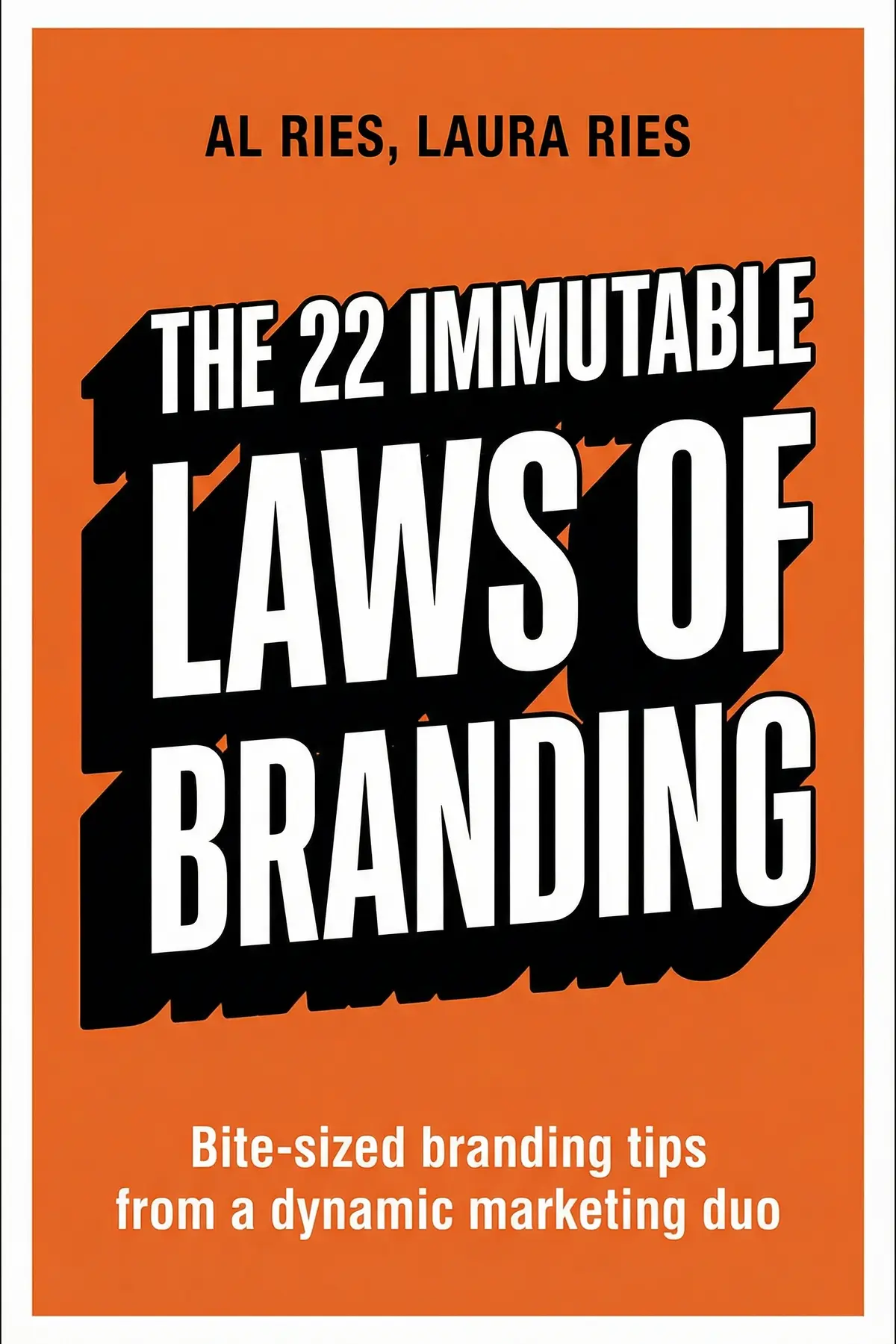
Table of Content
1. Introduction
1 min 56 sec
Every time you walk into a grocery store or scroll through an online marketplace, you are stepping into a battlefield. Thousands of products are screaming for your attention, yet most of them are destined to fade into the background. Why is it that some names, like Rolex or Coca-Cola, feel like permanent fixtures of our culture, while others disappear after a multi-million dollar launch? The difference isn’t always about the quality of the product itself; it is about the strength of the brand behind it. In their seminal work, Al and Laura Ries outline the foundational principles that govern this invisible force. They argue that branding isn’t just a marketing exercise—it’s a set of immutable laws that, when broken, lead to the slow death of even the most promising companies.
The core throughline of this journey is the concept of focus. In an era where companies are tempted to be everything to everyone, the most successful entities are those that have the discipline to narrow their scope. We often think that growth comes from expanding, but as we will see, true power comes from contraction. Over the course of this summary, we will explore twenty-two specific laws that dictate how a brand is born, how it grows, and how it survives in a competitive world.
We will look at why publicity is the oxygen that brings a brand to life, while advertising is the shield that protects it once it’s grown. We’ll examine the curious psychology behind why we trust market leaders and why the very shape of a logo can determine its effectiveness. By the end of this narrative, you’ll understand that branding is the art of owning a single word in the mind of the consumer. It is about creating an identity so distinct that it becomes synonymous with the category itself. Whether you are an entrepreneur starting from scratch or a veteran marketer looking to steer a corporate giant, these laws provide the map for navigating the complex terrain of consumer perception.
2. The Laws of Expansion and Contraction
3 min 02 sec
Discover why trying to sell everything to everyone actually weakens your brand and how narrowing your focus is the true secret to market dominance.
3. Publicity as Birth and Advertising as Defense
2 min 50 sec
Learn the vital distinction between building a brand through public interest and maintaining it through paid media, and why most companies get the order wrong.
4. The Power of Owning a Word
2 min 49 sec
Master the art of cognitive association by discovering how the world’s most successful brands claim a single concept in the consumer’s mind.
5. The Psychology of Credentials and Quality
2 min 44 sec
Understand why the perception of quality is often more important than the reality of the product, and how to use leadership to build unshakeable trust.
6. The Trap of Line Extensions and the Necessity of Consistency
2 min 31 sec
Uncover the hidden dangers of adding new products to an existing brand name and why maintaining a ‘boring’ consistency is the key to longevity.
7. Strategies for Expansion: Siblings and Borders
2 min 29 sec
Explore how to grow your business without destroying your brand, using the ‘Family of Brands’ approach and the safety of international markets.
8. The Visual and Verbal Identity
2 min 37 sec
From the shape of your logo to the psychology of color, learn why the physical presentation of your brand is a critical factor in consumer recognition.
9. The Lifecycle of a Brand: Change and Mortality
2 min 45 sec
Understand why brands eventually die, when it is appropriate to attempt a reinvention, and why sometimes the best move is to start over.
10. Conclusion
1 min 36 sec
The twenty-two laws of branding provide a rigorous framework for anyone who wants to cut through the noise of the modern world. At its heart, this philosophy is about the power of focus and the management of perception. We have seen that the strongest brands are not those that try to do everything, but those that have the discipline to stand for one specific thing. From the Law of Expansion to the Law of Mortality, the message is consistent: a brand is a singular idea in the mind of the consumer.
To build a lasting identity, you must start with the spark of publicity, claim a word that resonates, and maintain an unwavering consistency that builds trust over decades. You must respect the visual laws of shape and color, and you must avoid the temptation of line extensions that dilute your power. Most importantly, you must realize that branding is not about the product in the box; it is about the story in the customer’s head.
As you move forward, the most actionable step you can take is to look at your own brand—or the brands you use—and ask: ‘What one word do I own?’ If the answer is ‘many things’ or ‘nothing,’ it is time to contract. Narrow your focus until your identity is sharp enough to cut through the competition. In a world of endless choices, clarity is the ultimate competitive advantage. By following these immutable laws, you can ensure that your brand doesn’t just survive the market’s fluctuations but defines the very category in which it lives.
About this book
What is this book about?
The 22 Immutable Laws of Branding serves as a definitive guide for anyone looking to navigate the treacherous waters of the modern marketplace. Created by the powerhouse marketing team of Al and Laura Ries, this work dismantles the common myths that lead to corporate failure. Instead of chasing broad appeal, the authors argue that the most successful brands are those that have the courage to stand for one specific thing. Throughout this exploration, you will learn the psychological underpinnings of consumer choice. The book promises to reveal why advertising is often a secondary tool compared to publicity, how the visual shape of a logo can influence perception, and why line extensions are often the kiss of death for a healthy brand. By following these twenty-two distinct laws, businesses can move from being generic commodities to becoming household names that own a permanent space in the customer's mind. It is a masterclass in strategy that emphasizes consistency, category leadership, and the power of a well-chosen name.
Book Information
About the Author
Al Ries
Al and Laura Ries are a father and daughter marketing duo whose consulting firm Ries & Ries counts illustrious names like Disney and Ford among its clients. Besides The 22 Immutable Laws of Branding, the pair have co-authored four other titles. Al is also known for his influential book Positioning: The Battle for Your Mind, while Laura frequently appears as a guest and commentator on major news outlets.
Ratings & Reviews
Ratings at a glance
What people think
Listeners find this title to be a necessary read that delivers highly useful perspectives supported by various illustrations and clarifications. Furthermore, they value the guidance on branding, with one listener specifically noting the inclusion of the 11 laws of Internet Branding, and characterize it as an accessible read with high-quality writing. However, the work gets varied reactions concerning its narrative speed, and several listeners point out that the material feels out of date.
Top reviews
Naomi
As someone working in a startup, the chapters on the Law of Contraction and the Law of Focus felt like a cold bucket of water to the face. We’ve been trying to expand our product line far too quickly, and this book effectively explained why that strategy is essentially brand suicide. The Ries duo explains that a brand's power is inversely proportional to its scope, which is a hard pill to swallow for growth-obsessed executives. Not gonna lie, I had to ignore the mentions of Kodak and old microprocessor history to stay engaged with the actual theory. However, the logic behind the Law of Fellowship—where competitors actually help grow the category—was a total lightbulb moment for me. It’s an invaluable guide that forces you to think about branding from the perspective of human psychology rather than just flashy graphics or catchy slogans. Every entrepreneur needs this on their shelf, even if just to remind them to stay narrow.
Show moreHunter
Finally got around to finishing this, and the main takeaway is that limiting your brand is actually the key to growing it. The authors illustrate this perfectly with the Law of the Generic, proving that names like 'Microsoft' stick in the mind while generic descriptions just fade away. Gotta say, the advice about logotype shapes and the Law of Color felt a bit more like graphic design 101 than 'immutable laws,' but it was interesting nonetheless. The book is very Fortune 500-centric, so you have to do some mental gymnastics to apply it to a local service business. I appreciated the directness of the prose, as it doesn't waste time with unnecessary jargon or academic theorizing. While the Internet Branding section is laughably wrong about almost everything, the core principles of the first section are still remarkably sturdy. It’s a classic marketing text that serves as a great 'branding 101' for anyone starting their career.
Show moreChanpen
Look, you have to take the specific company examples with a grain of salt because half of them don't even exist anymore. Despite the dated references, the underlying psychology of how consumers categorize brands in their minds is still incredibly potent and useful. I found the Law of the Word to be the most compelling section, specifically the idea that a brand should aim to own a single attribute like 'safety' or 'prestige.' The authors' tone is undeniably arrogant, and they often ignore external factors that contribute to a company's downfall just to prove their branding point. However, the core message about the dangers of line extension is a lesson every CEO should learn before they dilute their company into oblivion. It is a quick, well-written read that provides a solid foundation, even if the 'Internet Laws' section feels like a relic from 1999. Definitely worth a spot on your professional bookshelf.
Show moreKomsan
This book is essentially a blueprint for anyone trying to cut through the noise of a crowded marketplace. Al and Laura Ries argue that the most powerful brands are those that stay laser-focused on a single, narrow category rather than trying to be everything to everyone. To be fair, some of the examples are incredibly old, referencing companies and technologies that haven't been relevant since the Clinton administration. Yet, the Law of Contraction still rings true today when you look at how successful modern specialists dominate their niches. The writing is punchy and moves at a brisk pace, making it an easy weekend read for busy professionals. You might roll your eyes at the outdated predictions regarding the internet, but the first half contains fundamental truths that haven't aged a day. It is a classic for a reason, providing a framework that simplifies the complex world of marketing into digestible, actionable rules.
Show moreNoi
Picked this up on a recommendation and I have to say, the writing style is incredibly punchy and accessible for a business book. You don't need an MBA to grasp the concepts, which is probably why it has stayed on the 'must-read' lists for so long. Personally, I was fascinated by the Law of the Name and how a generic title can basically sentence a brand to death before it even launches. My only real gripe is that the book feels repetitive at times, as many of the 'laws' are just slight variations of the same core principle. Also, the formatting of the digital version I read was a bit clunky, but the content itself is well-written and direct. It’s a great starting point for anyone new to the industry, though seasoned pros might find it a bit basic. Overall, it provides a solid set of rules that, while not always 'immutable,' are certainly worth considering.
Show moreThitima
Ever wonder why some brands just seem to 'own' a specific category while others struggle to even be recognized? This book breaks down that phenomenon through the Law of the Word, using the classic Volvo example to show how owning 'safety' makes you nearly invincible. In my experience, most marketing books are filled with fluff, but this one gets straight to the point with short chapters and clear, albeit dated, examples. The authors emphasize that being first in a new category is more important than having the 'best' product, which is a controversial but compelling argument. I did find the tone a bit overly certain, as if these laws are physical constants of the universe like gravity. To be fair, the world has changed since the late 90s, and some of these rules are definitely meant to be bent in the digital age. Still, it’s a well-written foundation that provides a much-needed reality check on the limits of brand extension.
Show moreRod
The chapter on the Law of Shape might seem trivial to some, but it highlights how every tiny detail contributes to the consumer's perception. This book is full of these small, insightful nuggets that make you look at everyday products and logos in a completely different light. Personally, I found the Law of the Category to be the most powerful, as it shifts the focus from 'how do we beat the leader' to 'how do we create something new.' The authors write with a level of confidence that is contagious, even if their examples of French lemonade or video cassettes are a bit dusty. It’s a well-written piece of marketing history that manages to be both informative and incredibly easy to digest in one or two sittings. Even though the internet has changed the medium, the human brain still processes brands in the way the Rieses describe. It is a must-read for anyone who wants to understand why some brands endure while others fail.
Show moreMai
After hearing so much about the Ries duo, I finally dove into this classic and found the first eleven chapters to be absolute genius. The way they explain the Law of Publicity versus the Law of Advertising is eye-opening, especially for small businesses with limited budgets. Unfortunately, the book loses a lot of steam in the second half, where the 'Immutable Laws' start to feel a lot more like 'Suggestions with many exceptions.' It gets quite repetitive, and I found myself skimming through sections that essentially just rehashed the Law of Expansion for the fifth time. There’s also the issue of the examples being stuck in a pre-Google era, which makes it harder for younger readers to relate to the success stories. It is a quick read, but the pacing is uneven and the insights are definitely front-loaded. I’d recommend reading the first half thoroughly and then just browsing the rest if you have the time.
Show moreSatit
Wow, the contrast between the first half of this book and the 'Internet Branding' section is almost jarring. While the initial twenty-two laws offer a masterclass in brand positioning, the subsequent eleven laws regarding the web feel like they were written by someone who had never actually used a computer. Frankly, it’s a bit embarrassing to read their predictions about the internet never replacing traditional entertainment while sitting in the age of Netflix. Despite that glaring flaw, I still find the Law of Publicity to be one of the most insightful concepts in the entire text. The idea that a brand is born through talk and maintained through advertising is a perspective that many marketing departments still fail to grasp. If you can treat the second half of the book as a historical curiosity rather than a guide, the first half makes the entire purchase worthwhile. It’s a mix of brilliance and obsolescence.
Show moreJames
Not what I expected given the 'legend' status of the authors, mostly because the examples feel like they were pulled from a time capsule. While the core theories about narrowing focus remain somewhat relevant, trying to learn about modern strategy through the lens of Kodak cassettes or French lemonade brands is a massive struggle. Truth is, the second section on Internet branding is almost comical in its inaccuracy, predicting that convergence devices like the iPhone would fail. It’s hard to respect the 'immutable' nature of these laws when the digital landscape has proven the authors so wrong. If you can ignore the prehistoric case studies, there are crumbs of wisdom, but the book desperately needs a 21st-century overhaul to remain useful for today's entrepreneurs. It’s more of a history lesson than a modern manual at this point.
Show moreReaders also enjoyed






AUDIO SUMMARY AVAILABLE
Listen to The 22 Immutable Laws of Branding in 15 minutes
Get the key ideas from The 22 Immutable Laws of Branding by Al Ries, plus 5,000+ more titles in English and Thai.
- 5,000+ titles
- Listen as much as you want
- 7-day free trial
- Cancel anytime







