
19 min 27 sec
The 22 Immutable Laws of Marketing: Violate Them At Your Own Risk!
By Al Ries, Jack Trout
Discover the fundamental principles of brand positioning and market dominance. This summary explores why perception outranks product quality and how to secure a lasting place in the consumer's mind.
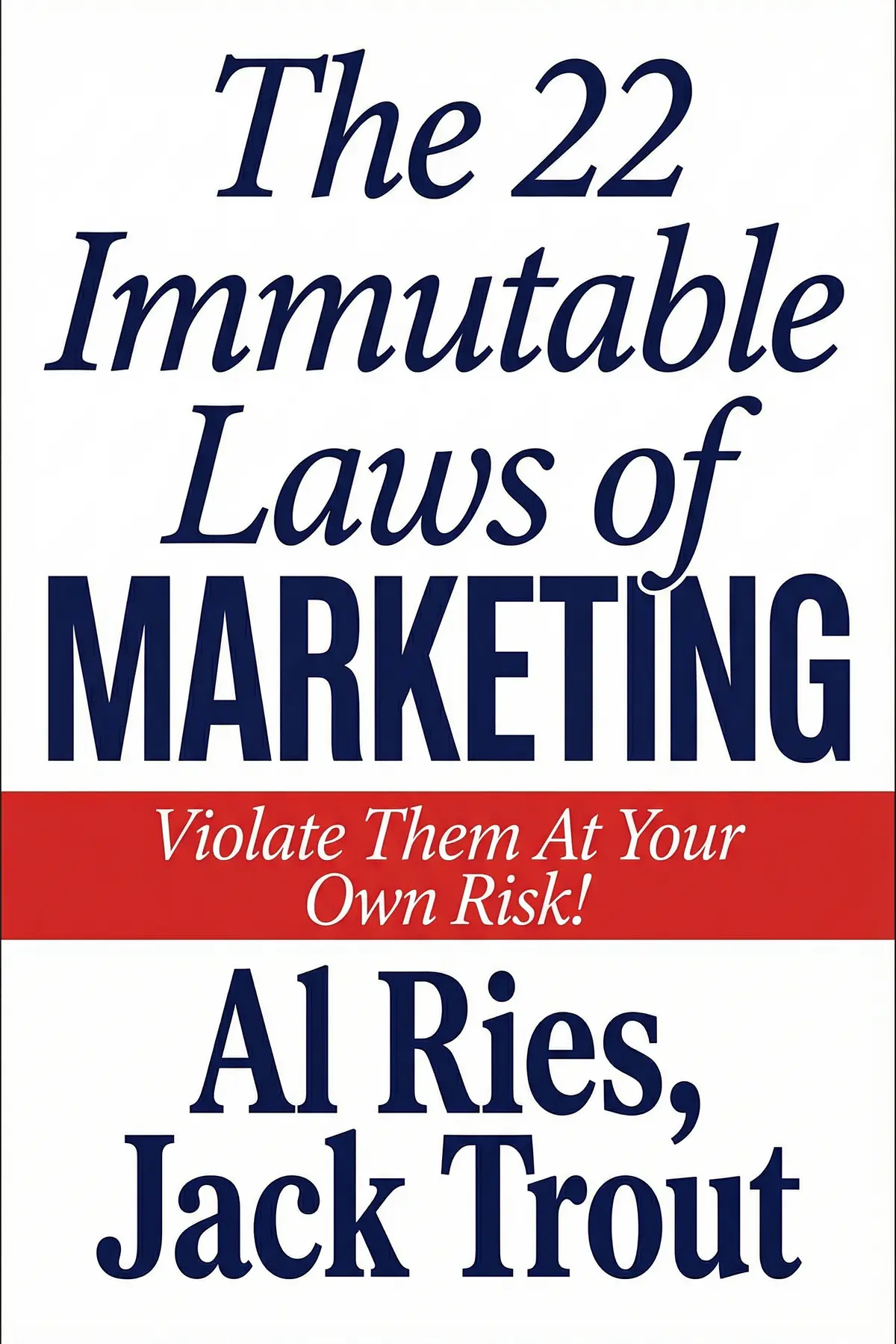
Table of Content
1. Introduction
2 min 13 sec
In the world of business, we often like to believe that the cream always rises to the top—that if you simply build a better mousetrap, the world will beat a path to your door. But the reality of the marketplace is far more complex and, in some ways, far more psychological. As we dive into the core concepts of marketing strategy, we have to start with a fundamental shift in perspective: marketing is not a battle of products. It is a battle of perceptions.
Think about it this way. Why is it that a brand can be a dominant leader in one country while struggling to gain a foothold in another, even when the product itself is identical? Consider the Japanese giant, Honda. In its home country of Japan, the public perception of Honda is inextricably linked to motorcycles. Because the Japanese consumer views Honda as a bike manufacturer, the company’s cars don’t see the same level of enthusiasm. However, if you look at the United States, the perception is completely different. There, Honda cars are consistently among the top-selling imports. The product is the same, but the perception is different, and that perception dictates the sales reality.
Many corporate leaders miss this point entirely. When sales begin to dip, the instinct is often to pour millions of dollars into product upgrades, believing that a higher-quality item will naturally win back the customer. But often, the problem isn’t the hardware or the software; it’s the mental space the brand occupies. The true goal of marketing is to manage those perceptions, to make your competition look outdated, and to build a brand that feels solid and irreplaceable. Over the course of this summary, we will explore the timeless rules that govern how brands succeed or fail. We will look at why being first is usually better than being better, how to own a single word in the mind of the public, and how even an admission of a mistake can be turned into a powerful marketing victory. Let’s begin by looking at why timing and mental real estate are the most valuable assets a company can possess.
2. The Power of Priority and Mental Real Estate
2 min 27 sec
Discover why being first to market is the ultimate advantage and how the battle for consumer attention is won or lost in the initial moments of contact.
3. Creating New Categories and Challenging the Leader
2 min 22 sec
Learn how to stay competitive when you aren’t the leader by inventing your own niche or positioning yourself as the bold alternative.
4. The Strategic Use of Focus and Exclusivity
2 min 30 sec
See how owning a single, powerful word can define a brand’s success and why trying to share that word with a competitor is a recipe for failure.
5. Growth Through Sacrifice and Brand Division
2 min 30 sec
Explore the counterintuitive idea that doing less can lead to more, and how to manage multiple brands without losing your competitive edge.
6. Avoiding the Pitfalls of Hubris and False Forecasts
2 min 32 sec
Uncover how success can lead to a dangerous arrogance and why trying to predict the future is often a fool’s errand for marketers.
7. The Dangers of Hype and the Power of Honesty
2 min 29 sec
Distinguish between media buzz and actual market success, and learn why admitting a weakness can be your most effective strategy.
8. Conclusion
2 min 24 sec
As we wrap up our journey through the fundamental rules of marketing, it’s worth returning to the central theme: marketing is a psychological game played on the battlefield of the human mind. The most successful brands are not necessarily the ones with the most advanced technology or the biggest budgets, although those things certainly help. Instead, the winners are those who understand how to navigate the laws of perception. They know that being first is a massive advantage, but being first in the mind is the ultimate goal. They understand that by narrowing their focus and owning a single concept, they can create a brand that is nearly impossible to dislodge.
We’ve seen that marketing requires a great deal of discipline. It requires the Law of Sacrifice—the willingness to give up certain markets or products to ensure that your core offering remains powerful and distinct. It requires the humility to avoid the traps of hubris and the wisdom to know that you cannot predict the future. Perhaps most importantly, it requires the courage to be honest. Whether you are inventing a new category like Charles Schwab or turning a medicinal taste into a badge of honor like Listerine, the goal is always to create a clear, honest, and unmistakable position in the mind of the consumer.
The most important takeaway is that these laws are, as the title suggests, immutable. They aren’t trends that change with the seasons; they are reflections of how human beings process information and make choices. If you try to violate them, you do so at your own risk. But if you align your strategy with these principles, you give your brand the best possible chance to succeed.
If you’re looking for an immediate way to apply these ideas, start by looking at your brand from the outside in. Step away from your internal data and your sales projections. Go out and talk to your target audience. Ask them what words come to mind when they think of your category. This will give you an objective view of where you stand on the ladder. Once you know your current position, you can use these laws to decide whether you need to narrow your focus, pivot to a new category, or double down on being the bold alternative to the leader. Success isn’t about winning an argument; it’s about winning the battle for perception.
About this book
What is this book about?
The 22 Immutable Laws of Marketing explores the psychological landscape of the business world, arguing that marketing is not a battle of products, but a battle of perceptions. It dismantles the myth that having the best product is enough to win. Instead, it offers a strategic framework for how brands can carve out unique spaces in the minds of consumers by being first, being different, or owning a specific concept. The book provides a roadmap for navigating competition, managing brand growth without diluting impact, and avoiding the common traps of corporate arrogance and over-expansion. By understanding these timeless rules, you will learn how to position your brand so it becomes synonymous with its category, how to turn a competitor's strength into a liability, and why honesty about a brand's flaws can actually be your greatest marketing asset.
Book Information
About the Author
Al Ries
Al Ries and Jack Trout are world-renowned marketing strategists and the minds behind some of the most influential concepts in the industry. They have co-authored several landmark books, including Marketing Warfare, Bottom-Up, and Horse Sense. Throughout their careers, they have served as consultants for many of the world's largest organizations, including Apple, AT&T, and Procter & Gamble. Their influence extends globally, having worked with high-performing companies across Latin America and Asia to refine their branding and market positioning.
Ratings & Reviews
Ratings at a glance

What people think
Listeners consider this marketing guide a fantastic resource for those in the business world, providing useful ideas and accessible information. The work breaks down fundamental marketing theories and shares beneficial tips for strengthening marketing strategies, proving especially helpful for beginners. While listeners praise the book's transparency and overall worth, they mention that the examples and advice are notably out of date.
Top reviews
Wichai
This book is essentially the marketing bible for a reason. Even though the examples like IBM and Hertz feel like ancient history, the psychological principles are timeless. I loved the emphasis on being first in the mind rather than just being first to market. Truth is, many people try to "better" their way to success when they should be trying to be "different." It’s a slim volume, barely 130 pages, but every chapter hits like a hammer. If you can look past the outdated references to minicomputers, the core logic about perception is invaluable for any modern business professional.
Show moreRoydao
Picked this up during my first week at a startup and it completely rewired how I think about our competition. The authors hammer home the idea that trying to be "better" is a losing game; you have to be the first in a new category. It's an easy-to-grasp philosophy that cuts through the noise of modern "growth hacking" buzzwords. Not gonna lie, some of the charts and examples feel like they were pulled from a 1970s archive. But if you can look past the age, the strategy of owning a single word in the customer's mind is pure gold for anyone building a brand.
Show moreSakura
The chapter on the Law of Division alone makes this worth the purchase price. Watching how categories split into sub-categories over time is exactly what we are seeing with the internet today, even if the authors were looking at minicomputers back then. This book simplifies core marketing concepts so effectively that a high schooler could grasp them, yet the implications for multi-million dollar brands are huge. I especially appreciated the Law of Sacrifice. You can't be everything to everyone. If you try to chase every customer, you end up standing for nothing at all. It's a mandatory read for my team.
Show moreValentina
Marketing isn't a battle of products; it's a battle of perception, and Ries and Trout prove it on every page. I found the Law of Candor particularly fascinating because it flies in the face of traditional "perfect" corporate messaging. By admitting a weakness, you gain the prospect's trust, which is a rare commodity these days. Gotta say, the writing is quite monotone at points, but the insights are sharp enough to keep you engaged. It’s a foundational text that every newcomer should read at least once to understand how the "big players" established their dominance in the mind of the consumer.
Show moreDaranee
After hearing my boss quote 'the law of leadership' for the tenth time, I finally grabbed a copy to see what the fuss was about. It is an incredibly quick read that simplifies high-level business concepts into digestible nuggets. Personally, I found the Law of the Ladder to be a total eye-opener regarding how customers rank brands in their heads. My only gripe is that the authors treat their observations like gravity, even when modern tech companies prove them wrong daily. Still, for the price, it provides a great framework for anyone new to the field who needs to understand the basics of positioning.
Show moreChanpen
Can you really distill an entire creative industry into 22 rigid rules? Ries and Trout certainly think so, and they write with a level of absolute certainty that is both refreshing and slightly annoying. The Law of Focus stood out to me as the most practical advice in the book. Owning a single word in the prospect's mind is a powerful goal, even if the examples provided—like Xerox—are a bit long in the tooth. Frankly, the book is a bit of a time capsule. Despite the dated feel, the fundamental logic regarding human perception remains surprisingly relevant for any small business owner today.
Show moreCarter
Wow, talk about a punchy read that doesn't waste a single second of your time. This book is a wonderful resource for business professionals who want to understand the "why" behind successful branding without wading through a 500-page textbook. The concept that perception is reality is the golden thread that ties everything together. While I agree with other reviewers that the data is severely outdated, the psychological triggers they describe haven't changed. It’s a low-investment, high-reward book that provides a solid mental model for evaluating any marketing plan, making it great value for money.
Show moreBank
As someone transitioning from sales into a marketing role, I found this to be the perfect introductory text. It gives you a clear vocabulary to discuss strategy with your team. To be fair, the lack of citations is a bit concerning, and some of the "facts" feel more like personal anecdotes from the authors' consulting days. However, the value for money here is undeniable. You get a distilled version of decades of experience in an afternoon. It’s not a scientific journal, but as a collection of rules of thumb for enhancing marketing plans, it’s practically unbeatable for newcomers.
Show moreNarong
Look, the core logic here is solid, but you have to filter out the 90s corporate examples to find the modern utility. The authors argue that the "Law of Extension" is a guaranteed failure, yet we see successful brand stretching every single day in the modern economy. It feels like they found a few case studies that fit their narrative and ignored everything else. In my experience, these are more like "22 helpful suggestions" rather than immutable laws of the universe. It’s a decent overview of basic principles for a beginner, but take the dogmatic, monotone tone with a massive grain of salt.
Show moreWoravit
Maybe these were "immutable" in 1993, but in the age of digital dominance, this felt like reading a manual for a rotary phone. The authors make these sweeping, arrogant claims without a single citation to back up their "facts." They scream about the Law of Extension being a death sentence, yet companies like Amazon and Google have built empires by doing exactly that. To be fair, the writing style is punchy and easy to follow. However, the blatant contradictions between chapters made me want to pull my hair out. It’s a relic that belongs in a museum, not on a modern strategist’s desk.
Show moreFeatured in
Readers also enjoyed






AUDIO SUMMARY AVAILABLE
Listen to The 22 Immutable Laws of Marketing in 15 minutes
Get the key ideas from The 22 Immutable Laws of Marketing by Al Ries, plus 5,000+ more titles in English and Thai.
- 5,000+ titles
- Listen as much as you want
- 7-day free trial
- Cancel anytime







