
20 min 54 sec
The End of Marketing: Humanizing Your Brand in the Age of Social Media and AI
By Carlos Gil
Discover why traditional advertising is failing and how to revitalize your brand by prioritizing human connection, authentic storytelling, and genuine social engagement over impersonal corporate messaging in the modern digital landscape.
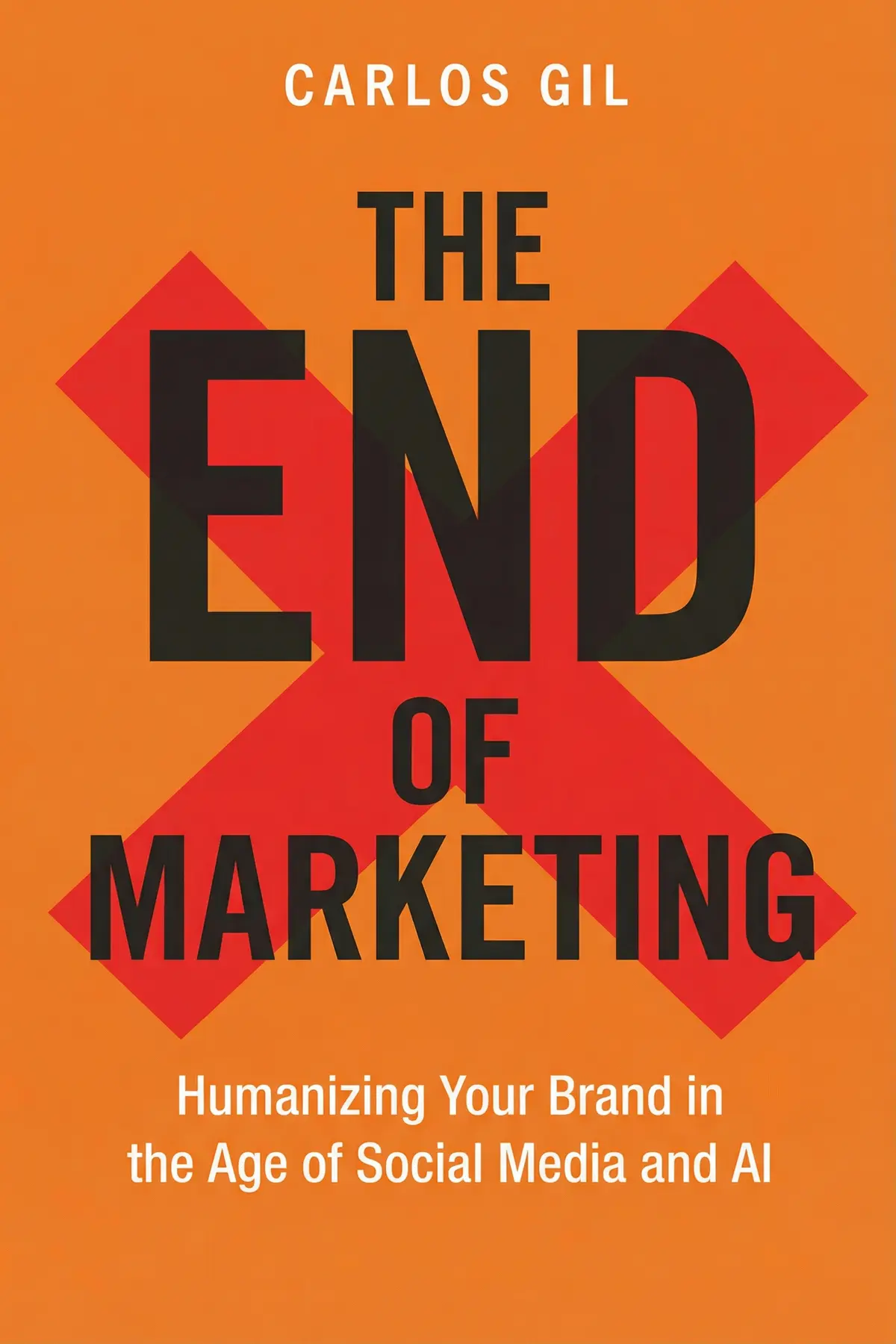
Table of Content
1. Introduction
2 min 02 sec
In the modern marketplace, a fundamental question sits at the heart of every transaction: do you want to buy from a cold, faceless corporation, or do you want to buy from a person you trust? For a long time, businesses operated behind a veil of polished logos and expensive ad campaigns, but the digital revolution has pulled back that curtain. Today, the landscape of commerce has shifted beneath our feet. We live in an era where social media doesn’t just provide a platform for connection; it demands it. Yet, despite having more tools than ever to reach their customers, many brands find themselves shouting into a void, ignored by an audience that has developed a natural immunity to traditional marketing.
This is the reality explored in Carlos Gil’s provocative work. The core premise is that the type of marketing we grew up with is no longer effective. People are tired of being treated like targets in a sales funnel. They crave authenticity, relatability, and real human interaction. If a brand spends its time on Twitter or Instagram simply broadcasting its desire for a profit, it will quickly find itself unfollowed and forgotten. The solution isn’t to walk away from these platforms, but to change the very nature of how we inhabit them.
In the following segments, we are going to explore how to navigate this new terrain. We’ll look at why the ‘hard sell’ is a relic of the past and how a more indirect, social approach can lead to much stronger long-term results. We will dive into the strategies for building a dynamic online presence that feels alive rather than automated. You’ll discover why your own employees might be your most valuable marketing assets and how to distinguish between superficial metrics and true engagement. The goal is to stop acting like a marketer and start acting like a human being. By the end of this journey, you’ll understand that humanizing your brand isn’t just a nice sentiment—it’s the only way to survive in the age of social media and AI.
2. The Obsolescence of Traditional Outreach
2 min 27 sec
Explore why the old ways of reaching customers through intrusive ads are failing and how personal recommendations have become the new currency of the digital marketplace.
3. Cultivating Engagement through Humanization
2 min 32 sec
Learn how to avoid the trap of digital isolation by using interactive content and consistent participation to build a community around your brand.
4. The Power of a Distinct Personality
2 min 30 sec
Discover why having a ‘brand voice’ isn’t enough anymore and how injecting genuine personality can create a competitive advantage.
5. Prioritizing Real Engagement over Vanity Metrics
2 min 22 sec
Uncover the dangers of chasing follower counts and learn why ‘Return on Engagement’ is the only metric that truly matters for your bottom line.
6. The Art of Storytelling and Brand Advocacy
2 min 30 sec
Examine the success of social media icons to understand how relatable storytelling turns products into lifestyle recommendations.
7. Leveraging the Humans within Your Organization
2 min 12 sec
Find out why your employees are your most underutilized marketing asset and how to empower them to become the face of your company.
8. Embracing Technology without Losing the Human Touch
2 min 15 sec
Navigate the future of marketing by balancing the efficiency of AI and automation with the irreplaceable value of real human connection.
9. Conclusion
2 min 04 sec
As we wrap up our exploration of the shifting landscape described in Carlos Gil’s work, the throughline is clear: the age of the faceless corporation is at an end. We have moved into an era where the social in ‘social media’ is no longer optional—it is the foundation of every successful brand. The traditional methods of shouting at customers through expensive, impersonal advertisements have lost their potency. In their place, a new model has emerged, one built on trust, authenticity, and the power of human storytelling. Whether you are a global brand or a person building a career, your success depends on your ability to be relatable and genuinely social.
The most important takeaway is that you must stop chasing vanity metrics and start building real relationships. A million followers mean nothing if none of them are listening. Instead, focus on Return on Engagement. Look for ways to turn your employees and your customers into your most passionate advocates. Give your brand a personality that isn’t afraid to be human, even if that means showing a little vulnerability or humor. Use technology and AI to support your efforts, but never let them replace the genuine connection that only a human can provide.
To put these ideas into practice, start by auditing your current digital presence. Ask yourself: does my brand sound like a person, or a corporate manual? Are we actually participating in conversations, or just broadcasting? Look at where your audience is spending their time and make sure you are meeting them there with content that educates, entertains, or inspires. The world has changed, and the ‘end’ of traditional marketing is actually a beginning. It’s an invitation to stop selling and start connecting. If you can embrace that shift, your brand will not only survive the digital age—it will thrive in it.
About this book
What is this book about?
The End of Marketing explores the fundamental shift in how businesses must communicate with their audiences in the age of social media and artificial intelligence. Carlos Gil argues that the era of the 'hard sell' and faceless corporate broadcasting is over. Instead, the book provides a roadmap for brands to become more relatable, social, and human. Readers will learn the importance of moving away from vanity metrics like follower counts and focusing instead on deep engagement and community building. The book offers strategies for leveraging personal branding, employee advocacy, and authentic storytelling to cut through the digital noise. By looking at successful examples from major brands and social media icons, Gil promises a path toward creating a brand presence that people actually want to interact with, ultimately leading to a higher return on engagement.
Book Information
About the Author
Carlos Gil
Carlos Gil is a digital storyteller with many years of experience developing social media strategies for leading brands such as LinkedIn, Winn-Dixie, Save-A-lot and BMC Software. He is CEO and founder of the LA-based Gil Media Co. The End of Marketing is his first book.
Ratings & Reviews
Ratings at a glance
What people think
Listeners find the material provides significant perspectives on social media's evolution and brand humanization, complete with excellent examples and practical advice. Additionally, the work is approachable for any experience level, proving simple to follow, and listeners view it as essential for digital marketing professionals. They value how it reveals innovative marketing strategies and encourages authentic relationships with customers.
Top reviews
Monthon
Carlos Gil hits the nail on the head regarding the "human" element of digital connection in this fast-paced guide. In an era where every brand feels like a faceless bot trying to steal your wallet, the advice to simply be relatable is incredibly refreshing. I loved the case studies; they provide a roadmap for anyone trying to navigate the noise of modern platforms. Transitioning from traditional "yelling" to actual listening is a huge shift, but Gil makes it feel achievable through his actionable tips. Not gonna lie, I was skeptical about the TikTok and Twitch sections at first, but the logic holds up. This is a must-read for any digital media marketer who feels like they are shouting into a void. It’s about building a community, not just a following.
Show moreKek
Wow, the concept of "Return on Engagement" (ROE) really shifted my perspective on what metrics actually matter for my business. I’ve spent years chasing likes, but this book taught me that a thousand silent followers are worth less than ten active participants. Carlos Gil writes with an energy that is contagious, and his examples are easy to relate to, regardless of your industry. I especially appreciated the actionable advice on how to audit your brand's current social presence. Are you asking questions? Are you telling stories? These seem like simple things, but seeing them laid out in a checklist format was super helpful. This is the kind of book you keep on your desk to flip through whenever your strategy feels stale.
Show moreBae
Stop chasing the algorithm and start talking to your customers like they are actual people—that’s the biggest takeaway from this gem. I've been in social media for years, and this is the most pragmatic content I’ve consumed in a long time. It’s full of to-do lists and ideas that you can implement the very next day. I loved the honesty regarding vanity metrics; it's so easy to get caught up in the numbers that don't actually drive sales. The book humanizes the author as much as it tells brands to humanize themselves. For anyone who wants to remain relevant as Generation Z takes over the market, this is essential reading. It’s bold, straightforward, and exactly what the industry needs right now to cut through the noise.
Show moreFon
Finally got around to reading this, and I was pleasantly surprised by the specific focus on emerging platforms like TikTok and the longevity of Facebook. Most marketing books are outdated by the time they hit the shelves, but Gil manages to capture the current pulse of the industry. The concept of "Growth Hacking" without cheating is something every brand needs to study closely. I’ve seen way too many people focus on vanity metrics like follower counts, only to realize their engagement is zero. This book forces you to look at ROE (Return on Engagement) instead. The only reason I'm not giving it five stars is that the tone can be a bit arrogant at times. Still, the information provided is genuinely useful for navigating the social media landscape.
Show moreSebastian
As someone who has been skeptical of the "social media is dying" narrative, this was a breath of fresh air. Gil argues convincingly that Facebook and other giants are here to stay, provided we learn how to use them as social tools rather than billboards. The section on Facebook Groups was particularly eye-opening for me. I’ve started implementing some of the engagement tactics he suggested for my brand, and the initial feedback from our community has been great. Truth is, we often forget that there is a person on the other side of the screen. While the book could have been about fifty pages shorter, the core message is vital. It’s a pragmatic look at how to stop being an annoying advertiser and start being a conversation starter.
Show moreCooper
To be fair, the advice here is largely targeted at larger organizations with existing budgets, but the "be human" philosophy is universal enough for a solo entrepreneur. I liked the focus on the "Data Office" and the shift away from traditional marketing departments. The author isn't afraid to tell you that what you're doing probably isn't working anymore. It’s a wake-up call for brands that are still stuck in the 2010s. The only downside is that the title is incredibly misleading; it’s not the end of marketing, it’s just the evolution of it. However, the case studies are fantastic and provide real-world proof that these methods work. If you want to future-proof your career, you should probably pay attention to what Gil is saying here.
Show moreHassan
Is this book ground-breaking for a seasoned marketing veteran? Probably not, but it certainly serves as a solid refresher for anyone needing to get back to basics. The writing style is very accessible and easy to digest, which makes it perfect for a weekend read or a gift for a recent graduate entering the workforce. However, I did find it quite repetitive in places. The central theme—that people buy from people—is hammered home so many times that I started skimming by the halfway point. To be fair, some people need that repetition for the message to stick. The advice is practical, even if it feels a bit geared toward massive corporations rather than small businesses. It’s a decent guide, just don’t expect an academic masterclass.
Show moreKamol
Picked this up during a commute and finished it in just two sittings because the prose is so conversational and direct. It’s definitely not a difficult read, which is a plus if you’re busy. That said, I found the "bragging" that other reviewers mentioned to be quite prominent. It’s very much an American style of business writing—lots of "I did this" and "I was the first to do that." If you can get past the ego, the insights on humanizing your brand are solid. It's a great choice for interns or junior specialists who need to understand the shift from traditional ads to social engagement. It won't change your life, but it will definitely give you a few new tricks for your toolkit.
Show moreOrm
Look, I wanted to love this because the premise of moving away from faceless corporate ads is solid, but the execution fell short for me. It felt more like a long, drawn-out LinkedIn post than a cohesive business book. The "End of Marketing" title is clearly just a hook to sell copies because the content is essentially "Social Media 101" with some updated app names. The truth is, if you’ve spent more than a year managing a professional account, you likely already know 80% of what is being discussed here. There is a lot of filler, and the cultural references felt a bit like the author was trying too hard to stay relevant. It’s an easy read, sure, but it lacks the depth required for a professional-level strategy book.
Show moreWan
The title is a total bait-and-switch. I expected a deep dive into the evolution of marketing psychology, but instead, I got a book that is exclusively about social media tactics. It’s frustrating because "The End of Marketing" sounds so revolutionary, yet Carlos Gil just tells us that marketing is now... well, marketing on Facebook and LinkedIn. Frankly, the constant self-promotion and bragging throughout the chapters made it difficult to stay focused on the actual message. While I appreciate the nerve it takes to claim the end of an entire industry, the reality is that this is just a collection of blog posts with a fancy cover. If you are already working in the field, there is almost nothing new here. It lacks the polish I expect from a high-level business text.
Show moreReaders also enjoyed
AUDIO SUMMARY AVAILABLE
Listen to The End of Marketing in 15 minutes
Get the key ideas from The End of Marketing by Carlos Gil, plus 5,000+ more titles in English and Thai.
- 5,000+ titles
- Listen as much as you want
- 7-day free trial
- Cancel anytime







