

17 min 14 sec
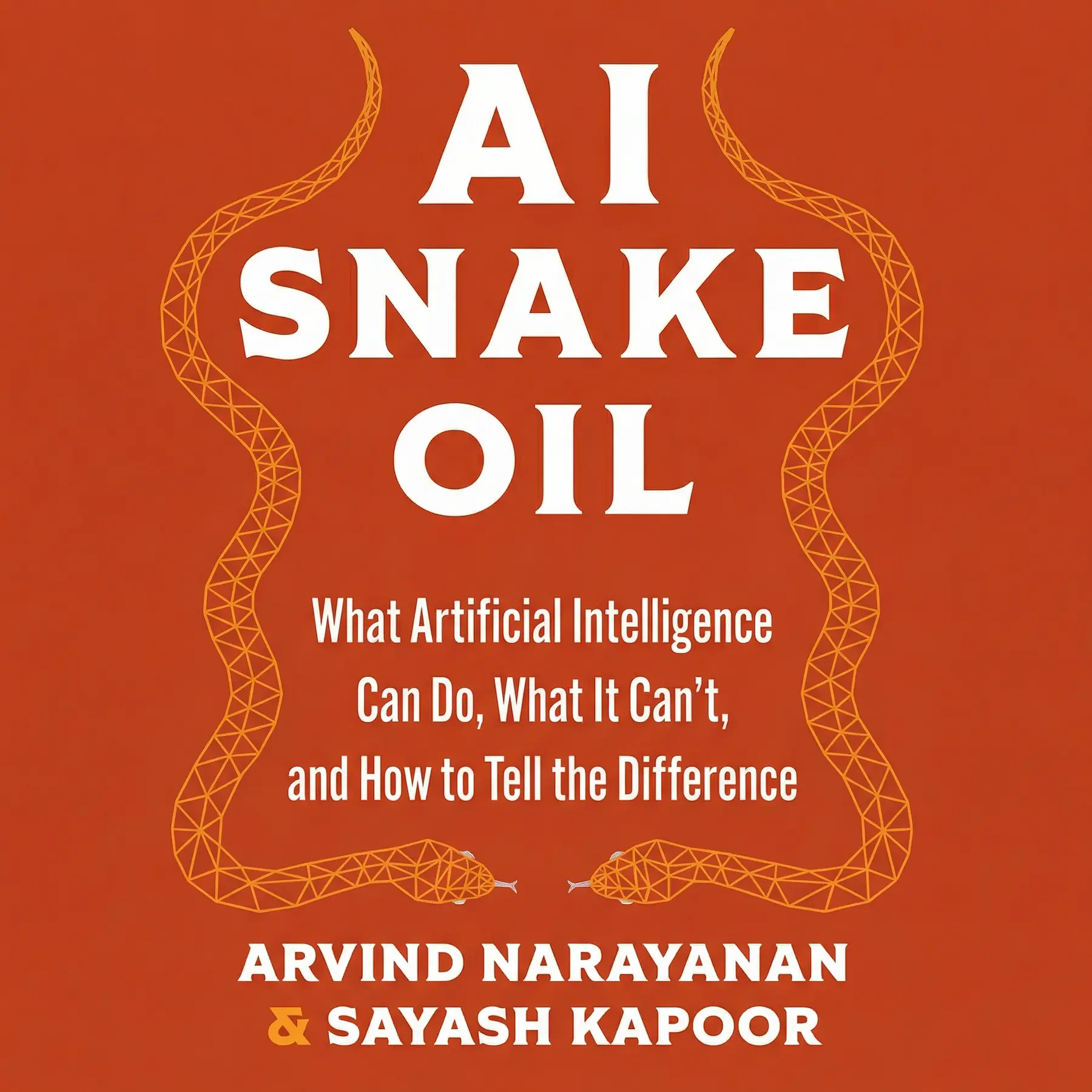
AI Snake Oil: What Artificial Intelligence Can Do, What It Can’t, and How to Tell the Difference
AI Snake Oil separates artificial intelligence breakthroughs from deceptive marketing. It offers a critical framework for evaluating technology, emphasizing the difference between generative tools, predictive models, and flawed automated decision-making systems.
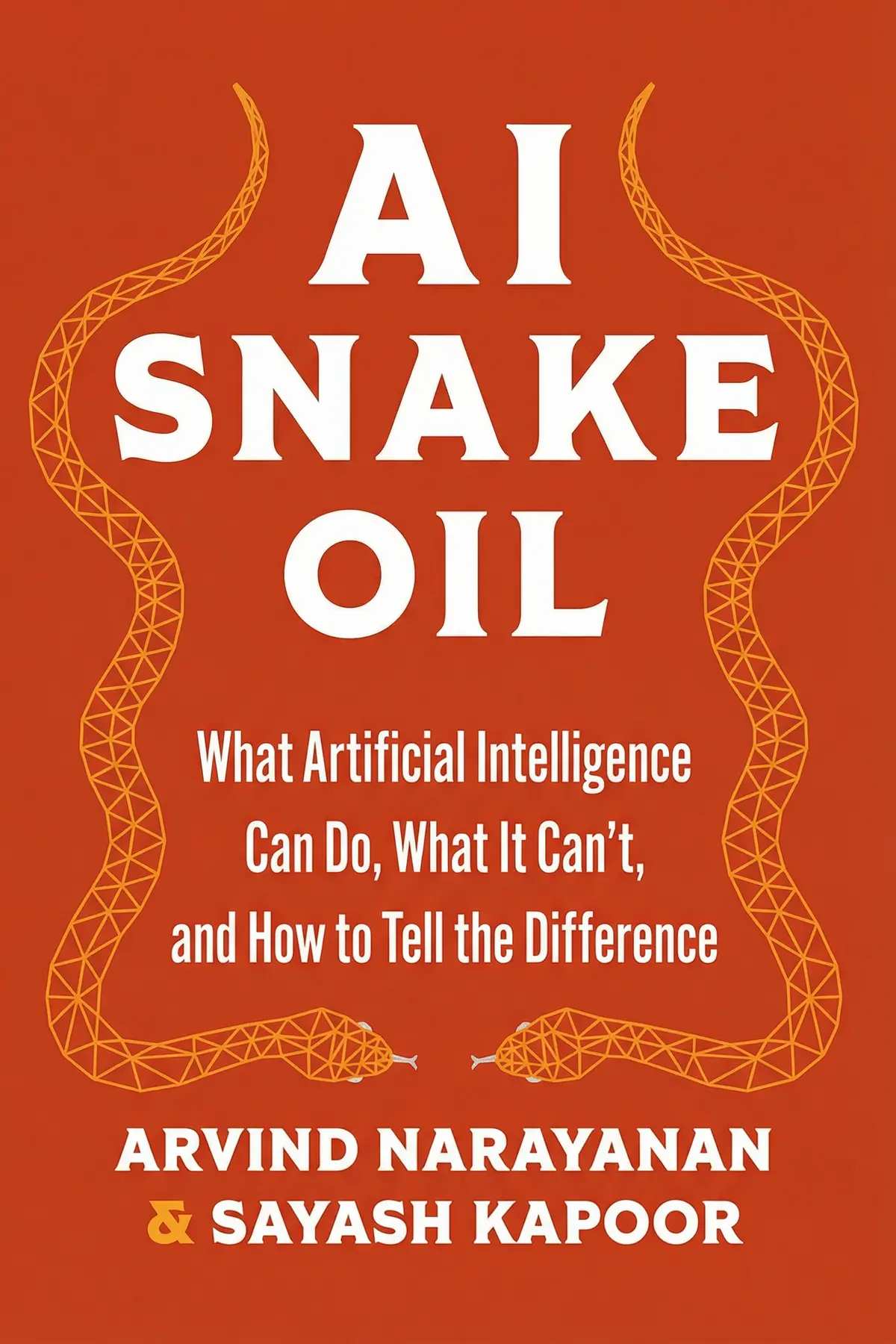
Table of Content
1. Introduction
1 min 44 sec
Every few decades, a new technology emerges that feels like magic. In the nineteenth century, it was electricity. In the late twentieth, it was the internet. Today, that mantle has been taken up by artificial intelligence. We are told that AI will cure every disease, solve the climate crisis, and perhaps even replace the need for human thought entirely. But as the buzz reaches a fever pitch, a vital question remains: how much of this is real, and how much is just clever marketing?
This is the central inquiry of AI Snake Oil. The term snake oil refers to deceptive products sold as panaceas, and in the digital age, this phenomenon has found a new home in the world of algorithms. While there are truly transformative AI tools being built today, there is also an enormous amount of technology being deployed that simply doesn’t work as advertised. This summary isn’t about dismissing AI; it’s about learning to see it clearly.
We will walk through the landscape of modern intelligence by breaking it down into manageable categories. We’ll look at generative AI, which can write essays and create art; predictive AI, which tries to guess what we will do next; and the AI that manages the vast, messy world of social media. Along the way, we’ll uncover the throughline of this exploration: that the most dangerous AI isn’t the one that’s too smart, but the one that’s just smart enough to look like it’s working when it isn’t. By the end of this journey, you’ll have a toolkit for identifying where the technology ends and the sales pitch begins, allowing you to engage with the future of tech on your own terms.
2. Generative AI and the Illusion of Understanding
2 min 53 sec
Explore the fascinating world of chatbots and image generators to understand why these impressive tools are actually masterful statistical mimics rather than conscious thinkers.
3. The High Stakes and Low Accuracy of Predictive AI
2 min 54 sec
Discover why using algorithms to forecast human behavior is fundamentally different from predicting the weather, and how these models often fail in the real world.
4. The Nuance Gap in Content Moderation
2 min 42 sec
Unpack the challenges social media platforms face when they task algorithms with the impossible job of understanding human culture, sarcasm, and slang.
5. Institutional Efficiency vs. Human Values
2 min 43 sec
Analyze why organizations are so quick to adopt unproven AI and what happens to our workforce when efficiency becomes the only metric of success.
6. A Blueprint for Responsible Innovation
2 min 38 sec
Moving beyond the hype requires a new approach to regulation and a commitment to transparency that puts the public good first.
7. Conclusion
1 min 40 sec
As we reach the end of this exploration, the core message of AI Snake Oil is one of cautious empowerment. We are living through a period of immense technological change, and it is easy to feel overwhelmed by the sheer volume of information—and misinformation—about artificial intelligence. But remember the three categories we’ve discussed: generative, predictive, and content moderation. By keeping these distinctions in mind, you can cut through the noise. When you see a new AI product, ask yourself: Is this creating something new, or is it trying to predict something fundamentally unpredictable? Is it being used to help people, or just to save a company money?
True innovation doesn’t hide behind jargon or empty promises. It stands up to scrutiny, it is transparent about its flaws, and it respects the people it is meant to serve. The ‘snake oil’ of today thrives on our collective desire for easy answers to hard problems. But there are no shortcuts to building a fair and functioning society. Technology can be a powerful ally in that journey, but only if we remain in the driver’s seat.
Going forward, let’s be the kind of people who value evidence over hype. Let’s support policies that prioritize transparency and protect the vulnerable from algorithmic bias. Most importantly, let’s remember that the most sophisticated intelligence on the planet is still the one sitting between your ears. AI may be able to mimic our words and predict our patterns, but it cannot replace our judgment, our empathy, or our capacity for change. The future of AI is still being shaped, and by staying informed and skeptical, you are helping to ensure that it’s a future worth living in.
About this book
What is this book about?
Artificial intelligence is currently surrounded by a whirlwind of hype, making it difficult for the average person to distinguish between genuine scientific progress and empty promises. AI Snake Oil provides a much-needed reality check, categorizing AI into three distinct types: generative, predictive, and content moderation. By examining each, the book reveals why some AI tasks, like image generation, are remarkably successful, while others, like predicting human behavior or social outcomes, are fundamentally flawed. The promise of this guide is to empower readers with the skepticism and knowledge required to navigate a world increasingly governed by algorithms. It exposes how companies often use the complexity of AI to hide inefficiency or bias, and it offers a blueprint for a future where technology is regulated, transparent, and designed to support human labor rather than replace it with inferior automated alternatives.
Book Information
About the Author
Arvind Narayanan
Arvind Narayanan is a professor of computer science at Princeton University and leads the Center for Information Technology Policy. His research focuses on the intersection of technology, ethics, and society. Sayash Kapoor is a computer science Ph.D. candidate at Princeton, having previously contributed to AI initiatives at Facebook and Columbia University. Together, they were recognized by TIME as two of the 100 most influential figures in the field of artificial intelligence.
Ratings & Reviews
Ratings at a glance
What people think
Listeners find this work highly educational and thoroughly investigated, offering a fair perspective on how AI affects society. Its accessible writing style is a highlight, with one listener mentioning that it is especially appropriate for a non-expert audience. The material earns praise for its in-depth information, practical utility, and overall worth for the price.
Top reviews
Chanpen
After hearing so much hype about AGI, this book felt like a much-needed splash of cold water. Narayanan and Kapoor do a stellar job breaking down why we keep falling for the same marketing tricks. They distinguish between predictive AI, which often fails to outperform simple statistics, and generative AI, which actually shows promise but carries its own risks. I found the section on how algorithms are used in the justice system to be particularly sobering. The authors don't just complain; they provide a well-researched framework for identifying when a company is selling you a solution that doesn't actually work. It’s accessible, yet deep enough to feel like you've actually learned something substantial. If you're tired of the breathless tech-bro narratives, this is your antidote.
Show moreMason
Wow, the chapter on existential risk should be mandatory reading for every lawmaker in Washington right now. The authors masterfully dismantle the 'AI doomer' narrative by focusing on tangible, present-day harms rather than sci-fi nightmares. It’s refreshing to see a focus on how humans misuse these tools instead of worrying about an autonomous Skynet. My only gripe is that they were a bit too sanguine about the environmental costs, which felt like a massive omission for a book so focused on ethics. Regardless, the way they separate 'snake oil' from genuine utility is brilliant. It changed the way I look at every 'AI-powered' startup pitch I see on LinkedIn. Highly recommended for anyone who wants to stop being fooled by the marketing machine.
Show morePakpoom
Finally got around to reading this, and it’s the most sensible take on the 'snake oil' side of the industry I’ve encountered. Many authors today seem to think AI is either magic or a demon, but Narayanan and Kapoor treat it like what it is: software. They expose how many 'AI' systems are actually just humans behind a curtain or broken statistical models that can’t predict the future any better than a coin toss. It’s a very informative read that doesn’t shy away from the gritty details of how these systems are trained and deployed. I loved the focus on reproducibility and the call for better laws against deceptive marketing. If you want to understand the reality behind the buzzwords, this is the book to buy. It’s easily the best tech book I’ve read this year.
Show moreCha
Ever wonder why AI seems to fail at the most basic human tasks while dominating the headlines? This book provides the answer by exposing the gap between what companies promise and what the tech actually delivers. The authors highlight how 'predictive AI' is frequently used to justify bias in hiring and bail decisions under the guise of objectivity. I was particularly struck by the chapter on social media moderation, which correctly identifies that human judgment is still the bottleneck. The writing is punchy and moves fast, though sometimes it feels a bit breathless in its attempt to cover every societal ill at once. Despite that, the insights into how we categorize different types of machine learning are incredibly valuable. It’s a necessary reality check for anyone living in the digital age.
Show moreMaksim
Narayanan and Kapoor have managed to turn a dense, jargon-heavy subject into something incredibly readable for the average person. I picked this up because I was confused by the conflicting news reports about AI taking our jobs and ending the world. This book provides a balanced, well-researched perspective that cuts through the noise. It’s worth the price of admission just for the explanation of why 'predictive' models for things like child welfare often cause more harm than good. The tone is informative without being condescending, which is a rare find in tech literature today. It’s a great value for anyone who wants to be a more informed citizen. You don't need a computer science degree to follow along, but you’ll feel like you have one by the end.
Show morePrinya
As someone who works in healthcare, the section on predictive AI in hospitals was particularly illuminating and slightly terrifying. We are often pushed to adopt these 'efficient' new tools without actually understanding if they work better than a seasoned nurse's intuition. This book gave me the vocabulary to push back against the hype and demand better evidence for the models we use. The authors' distinction between generative and predictive systems is a masterclass in making complex ideas accessible. I did find the content moderation chapter a bit out of place, as it felt more like a critique of Facebook than a deep dive into AI architecture. Still, the overall message is powerful and incredibly timely. It’s a balanced look at a technology that is too often either worshipped or feared.
Show moreDarawan
To be fair, the distinction between predictive and generative AI is a masterclass in clarity, even if the content moderation section felt a bit bolted on. The authors are at their best when they are deconstructing the failures of machine learning in high-stakes environments like hiring and policing. They show how 'bias' isn't just a bug, but often a fundamental feature of models trained on historical data. I wish they had engaged more with the literature on how these systems can actually outperform flawed human judges, rather than just pointing out the AI's mistakes. It feels a bit one-sided in that regard. However, the writing is sharp and the research is clearly top-notch. It’s a great starting point for a conversation, even if it doesn't provide all the answers.
Show moreTak
This book is clearly aimed at a non-technical audience, which is fine, but it left me wanting more depth. For those of us already working in data science, the explanations of 'leakage' or basic statistical models feel a bit like an undergrad lecture. I appreciated the skepticism toward AI hype, yet I was frustrated by the lack of discussion regarding recent breakthroughs in scaling laws. It feels a bit odd to read a 2024 release that leans so heavily on older studies involving GPT-2. Still, it serves as a decent primer for my non-tech friends who are worried about the 'robot apocalypse.' It’s a solid 3-star read—informative for some, but perhaps too surface-level for others who want a materialist narrative of the industry.
Show moreUbolrat
Frankly, I appreciated the skepticism toward tech-solutionism, but the authors seem to have a weird hang-up regarding capitalism that colors every conclusion. They make some excellent points about how predictive AI is often just a fancy way to automate discrimination. However, when they start critiquing the wages of data annotators in Kenya, it feels like they’re straying from the technology into pure political demagoguery. Why compare a low-wage worker’s salary to a top engineer’s? It’s a bit one-sided and ignores that these jobs might be the best available option for those workers. The technical sections are solid, especially the discussion on data leakage, but the policy recommendations feel deeply misguided at times. It’s a mixed bag that offers great warnings but flawed solutions.
Show moreTong
The truth is, I found this remarkably dated for a book published in 2024. How can you write a definitive guide to 'AI Snake Oil' without a deep dive into agents or the current hyperscaling race? Relying on examples from GPT-2 feels like bringing a knife to a gunfight in the current tech landscape. While I agree that much of the predictive AI on the market is garbage, the authors' dismissal of recent generative advances feels overly cynical. They seem more interested in critiquing capitalism than explaining the actual algorithmic breakthroughs that make this era different. It’s a shame because the core premise is vital, but the execution misses the mark by ignoring the very capabilities that are changing the world right now. Not recommended for technical readers.
Show moreFeatured in
Readers also enjoyed



AUDIO SUMMARY AVAILABLE
Listen to AI Snake Oil in 15 minutes
Get the key ideas from AI Snake Oil by Arvind Narayanan, plus 5,000+ more titles in English and Thai.
- 5,000+ titles
- Listen as much as you want
- 7-day free trial
- Cancel anytime







