
A Year with Peter Drucker: 52 Weeks of Coaching for Leadership Effectiveness
Joseph A. Maciariello
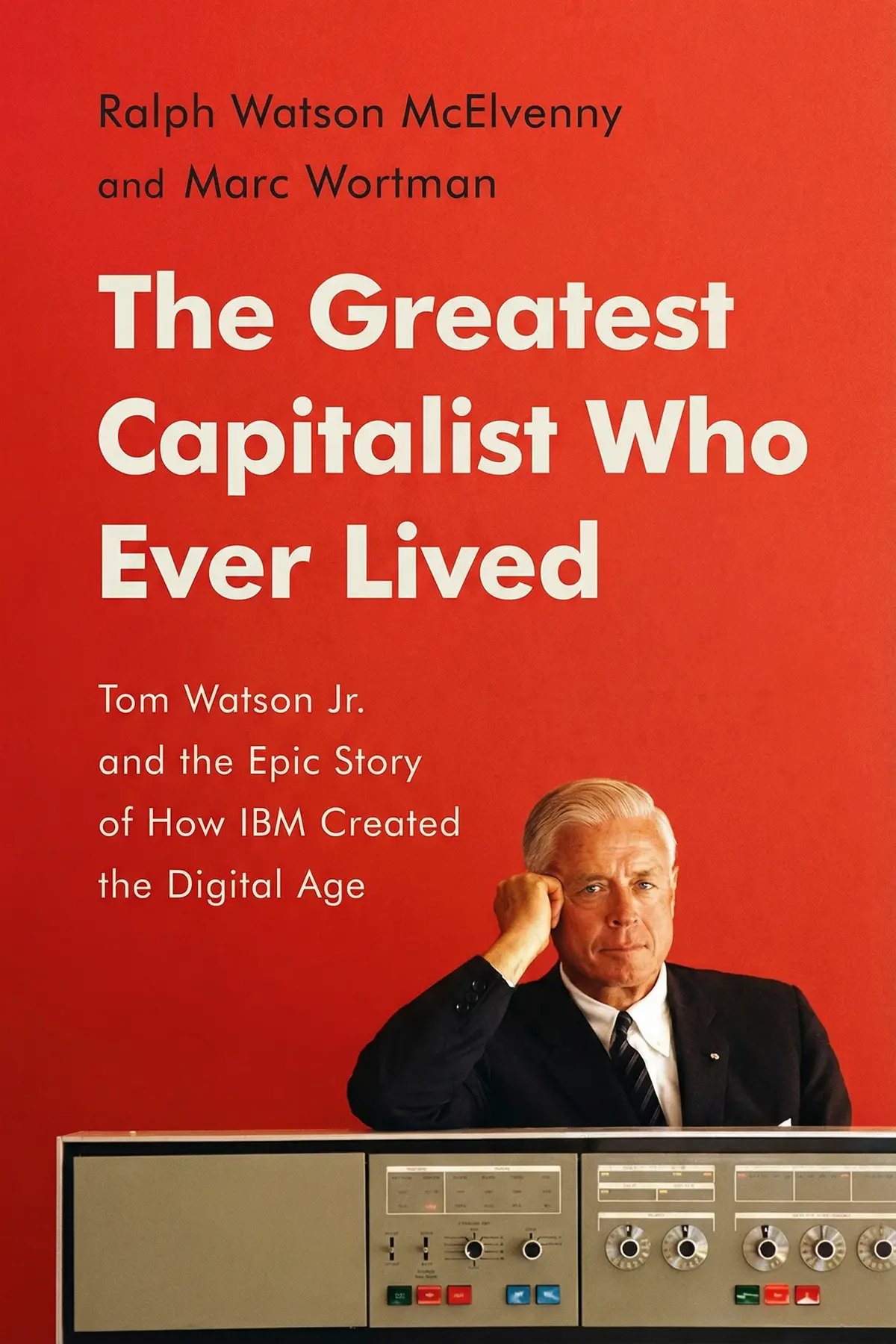
Explore the life of Thomas J. Watson Jr., the leader who transformed IBM into a computing titan by overcoming his father’s legacy and betting the company’s future on digital innovation.
1 min 47 sec
In the spring of 1964, a technological event occurred that quietly set the stage for the modern world. IBM introduced the System 360, a line of computers that might seem like ancient history now, but at the time, it was the equivalent of landing on the moon for the business world. Without the breakthroughs associated with this machine, the digital infrastructure we take for granted—things like instant credit card processing, global airline reservations, and the backbone of the internet itself—might never have materialized. This wasn’t just a new product; it was the birth of a new era.
However, the path to this revolution was anything but certain. IBM was a company built on a completely different foundation under its legendary founder, Thomas J. Watson Sr. The elder Watson had created a global empire based on mechanical systems, and he saw little reason to pivot toward the unproven, expensive world of electronic computing. It seemed that IBM was destined to become a relic of the industrial age, clinging to its past successes while the world moved on.
But the story took a turn because of the complicated, often explosive relationship between a father and his namesake son. Thomas J. Watson Jr. didn’t just inherit a company; he inherited a shadow. His journey from a rebellious youth to the helm of one of the world’s most powerful corporations is a study in how personal friction can spark industrial transformation. This narrative explores how Watson Jr. used his resentment and his vision to drag a reluctant giant into the digital age, ultimately proving that sometimes, the greatest act of leadership is the courage to dismantle what your predecessor built.
2 min 28 sec
Discover the early life of Thomas J. Watson Jr., a young man who struggled to find his own identity while living under the stifling influence of his famous father.
2 min 39 sec
IBM faced a classic innovator’s dilemma: whether to stick with their profitable but aging technology or risk everything on the unproven world of computers.
2 min 36 sec
Learn how massive government projects and a radical increase in research spending turned IBM into a high-tech powerhouse.
2 min 38 sec
Explore the multi-billion dollar gamble that created the template for modern computing and the software industry as we know it.
1 min 33 sec
The final chapter of Thomas J. Watson Jr.’s life was as active as his tenure at IBM. After stepping down in 1971 following a heart attack, he didn’t settle into a quiet retirement. Instead, he turned his formidable energy toward public service and his lifelong passion for adventure. He served as the U.S. Ambassador to the Soviet Union during a critical period of the Cold War and advised presidents on nuclear defense strategy. He spent his later years sailing the high seas and piloting aircraft across the globe, even becoming the first private citizen permitted to fly across all time zones of the Soviet Union. His spirit of exploration was as present in his personal life as it had been in the boardroom.
When Watson Jr. passed away in 1993, he left behind a world that looked nothing like the one he was born into. He had taken a company defined by mechanical cards and turned it into the engine of the digital revolution. His legacy is found in the very architecture of modern business. He showed that true leadership requires the ability to recognize when the foundations of the past are no longer strong enough to support the future. By embracing change, taking massive financial risks, and overcoming the suffocating influence of his own lineage, he earned his place as one of the most influential figures in the history of capitalism. His life remains a powerful reminder that the most successful leaders are those who are willing to reinvent themselves and their companies, even when they are already at the top.
This summary dives into the high-stakes world of mid-century business, chronicling the life of Thomas J. Watson Jr. and his role in building the modern digital landscape. It follows the dramatic shift of IBM from a manufacturer of mechanical tabulating machines to a global leader in electronic computing. The narrative explores the deep-seated tension between a father’s traditional success and a son’s rebellious vision, illustrating how that conflict eventually saved the company from obsolescence. Readers will learn about the immense risks involved in developing the System 360, a project that redefined how businesses interact with technology. Beyond the boardroom, the story touches on Watson Jr.’s personal evolution, his diplomatic service as an ambassador, and his spirit of adventure. It is a comprehensive look at the intersection of personality, technology, and capitalism, showing how one man’s refusal to follow the status quo created the foundations for the internet and the global financial systems we rely on today.
Ralph Watson McElvenny is a grandson of Thomas J. Watson Sr. With a background in investment and as a host of the book review program Intelligent Talk, McElvenny combines personal insight and professional experience in his writing. Marc Wortman is an acclaimed writer with several best-sellers to his name, including Admiral Hyman Rickover: Engineer of Power and 1941: Fighting the Shadow War. His work The Millionaires' Unit was adapted into an award-winning documentary.
Listeners find this work to be essential reading for business professionals, commending its engaging writing style and how easy it is to follow. Furthermore, the caliber of the information is well-regarded, with one listener highlighting its excellent job of explaining technical intricacies. Listeners also value the observations provided, as one mentions it offers a unique perspective on IBM while another characterizes it as a terrific study in leadership.
Ever wonder how a single company practically invented the modern corporate world? This book offers an incredible deep dive into the IBM machine and the man who steered it into the computer age. I was fascinated by the transition from mechanical punch cards to the groundbreaking System/360. The authors do a fantastic job of explaining the technical hurdles without making the prose feel like a manual. It’s a masterclass in understanding how a company can reinvent itself when the stakes are highest. Tom Watson Jr. wasn't a perfect man, but his vision for research and development set the stage for everything we see in tech today. To be fair, some might find the family dynamics messy, but that just makes the business success more impressive. This is a must-read for any aspiring leader who wants to see what 'betting the company' really looks like in practice.
Show moreFew business biographies manage to capture the sheer scale of risk-taking required to revolutionize an entire industry. This is a brilliant account of how IBM moved from tabulating machines to mainframes. The System/360 project was a gamble that could have ended the company, and reading about the internal delays and software bugs was gripping. I appreciated the way the authors addressed the Nazi collaboration allegations directly, attempting to set the record straight on Watson Sr.'s involvement. The prose is sharp and moves at a good clip, even when dealing with complex engineering shifts. It’s more than just a biography; it’s a history of how the modern world became digitized. Even with the family connection, the flaws of the Watson brothers—including Dick’s struggles—are laid bare. Truly an excellent study in leadership and corporate evolution.
Show moreIn my experience, the best corporate histories are the ones that treat their subjects as flawed humans rather than corporate statues. McElvenny and Wortman have achieved that here. They don't ignore Tom Watson Jr.’s bouts of depression or his legendary temper, but they balance it with his incredible business instincts. The way he managed the 1960s expansion is nothing short of miraculous. I especially liked the focus on how IBM essentially created the template for modern operating systems. To be fair, you can tell one author is a grandson, but he doesn't shy away from the family's internal scandals or Dick Watson's tragic downfall. The book is long, but every chapter feels necessary to understand the magnitude of what this family accomplished. It’s a compelling, readable, and deeply informative look at the man who truly shaped the computer age.
Show moreAfter hearing so much about modern tech titans like Gates or Jobs, it was grounding to revisit the original digital behemoth. This biography is a massive, well-researched undertaking that captures the intense friction between Tom Watson Sr. and his son. The 'THINK' culture and the rigid sales mantras are explored in great detail here. I particularly enjoyed the sections regarding Watson Jr.’s time as a pilot in WWII, as it finally explains how a spoiled rich kid found his discipline. The writing is generally very readable, though it does get a bit bogged down in the middle when discussing specific hardware models. Look, it’s a bit sympathetic to the Watsons, but the historical value of the IBM narrative is undeniable. It’s a solid study of how corporate culture can drive innovation if managed with enough grit and foresight.
Show morePicked this up because my grandfather was an 'IBMer,' and this book helped me finally understand the pressure he was under. The authors capture that unique, almost religious corporate loyalty that the Watsons demanded. The descriptions of the 'Greatest Capitalist' aren't just about money; they're about the immense scale of the organization he built. I was surprised by how much I enjoyed the chapters on Watson’s early life and his frequent, explosive clashes with his father. It’s a classic story of a son trying to escape a shadow, only to end up casting an even larger one. The book is long, and yes, it gets technical, but the insights into leadership and risk are top-tier. Not gonna lie, the favoritism toward Tom Jr. is obvious, but the sheer volume of information makes it a worthwhile investment for any business student.
Show moreThe complex dynamic between Thomas Watson Sr. and his son provides the real engine for this narrative. It’s a fascinating look at a family business that grew so large it became a national institution. I found the details about the early days of CTR and the transition to the IBM name to be particularly well-written. The authors provide a unique perspective on how the 'Blue Chip' image was meticulously crafted through sales quotas and strict dress codes. While some chapters on software engineering felt a bit dense, the overall story of Tom Jr.’s leadership is inspiring. He took a profitable, stagnant company and forced it to innovate when no one else saw the potential of computers. It’s a terrific study of how a leader must sometimes destroy their own legacy to build something better. Highly recommended for the historical context alone.
Show moreWatson Jr. was born into immense wealth, but this biography makes a compelling case that he earned his place in the history books. He didn't just inherit IBM; he rebuilt it from the ground up. The book does an excellent job of explaining how the shift to software and R&D saved the company from becoming a relic of the industrial age. I appreciated the specific details about the 360’s development and the antitrust challenges the firm faced. My only real gripe is that the ending feels a bit rushed compared to the painstaking detail of the early years. Still, the writing style is engaging and the information quality is high. If you want to understand why IBM was the most feared and respected company in the world for decades, start here. It’s a solid 4-star read that offers great insights into the mechanics of success.
Show moreThis book feels like a missed opportunity to humanize the massive workforce that actually built IBM. While the focus on the Watson family is understandable given the author's lineage, the narrative often feels like it's stuck in the C-suite. The truth is, the technical sections about the 1401 and the System/360 are interesting, but the pacing is uneven. I found myself skimming through the lengthy descriptions of computer architecture just to get back to the personal drama. The authors try to paint Tom Jr. as a visionary, and while he was, they tend to gloss over the more ruthless aspects of his management style by calling him 'mercurial.' It is a decent history of the industry’s early days, but it lacks the objective edge I look for in a definitive biography. Worth a read if you’re a business history buff, but take the praise with a grain of salt.
Show moreWait, the title is definitely an exaggeration, but the story itself is quite solid. I've been looking for a comprehensive history of IBM for a while, and this delivers on the facts even if the tone is a bit too reverent. The middle section of the book is a real slog. There are pages and pages of details about computer models that only an engineer could love. Personally, I was much more interested in the psychological battle between the two Watsons. The authors do a good job showing how Tom Jr. transformed himself from a failing student into a global leader, but they are very soft on his treatment of subordinates. It’s an informative read, but it lacks the critical bite that would make it a five-star masterpiece. It’s a bit too much of a 'company man's' book for my taste.
Show moreIs it actually possible to get an unbiased biography when it is co-authored by the subject’s own grandson? Frankly, I found this to be a frustratingly one-sided account of Tom Watson Jr.’s life. The book leans heavily on Watson’s own 1990 autobiography, treating it as an absolute source without much outside verification. I was particularly bothered by the way Vin Learson is portrayed as a villain throughout the text. Since Learson passed away in the 90s, his perspective is entirely missing, and the authors didn't seem to seek out his family for a more balanced take. Even more disappointing is the complete absence of voices from the actual IBM employees who worked on the factory floors and in the offices. Without the perspective of the rank and file, this feels less like a definitive history and more like a family-sanctioned tribute. It is sloppy research at best.
Show moreJoseph A. Maciariello


Ben Macintyre

Deborah Gruenfeld
Mike Michalowicz

Jacinda Ardern
AUDIO SUMMARY AVAILABLE
Get the key ideas from The Greatest Capitalist Who Ever Lived by Ralph Watson McElvenny, plus 5,000+ more titles in English and Thai.







