
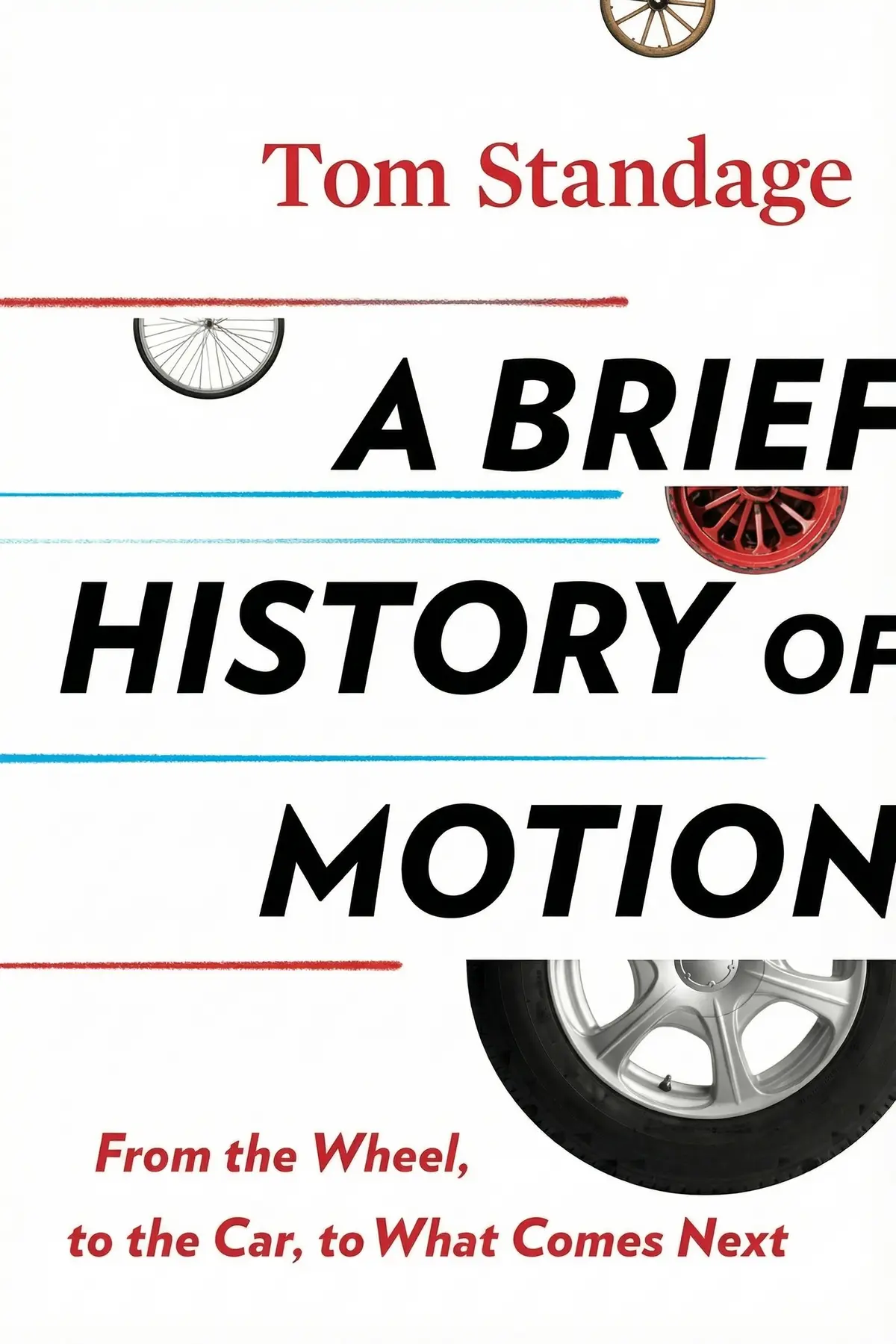
33 min 30 sec
A People’s History of the United States: 1492 to Present
By Howard Zinn
Discover the hidden narrative of the American experience through the eyes of the marginalized. This summary explores the struggles, resistance, and resilience of those often overlooked by traditional accounts of history.
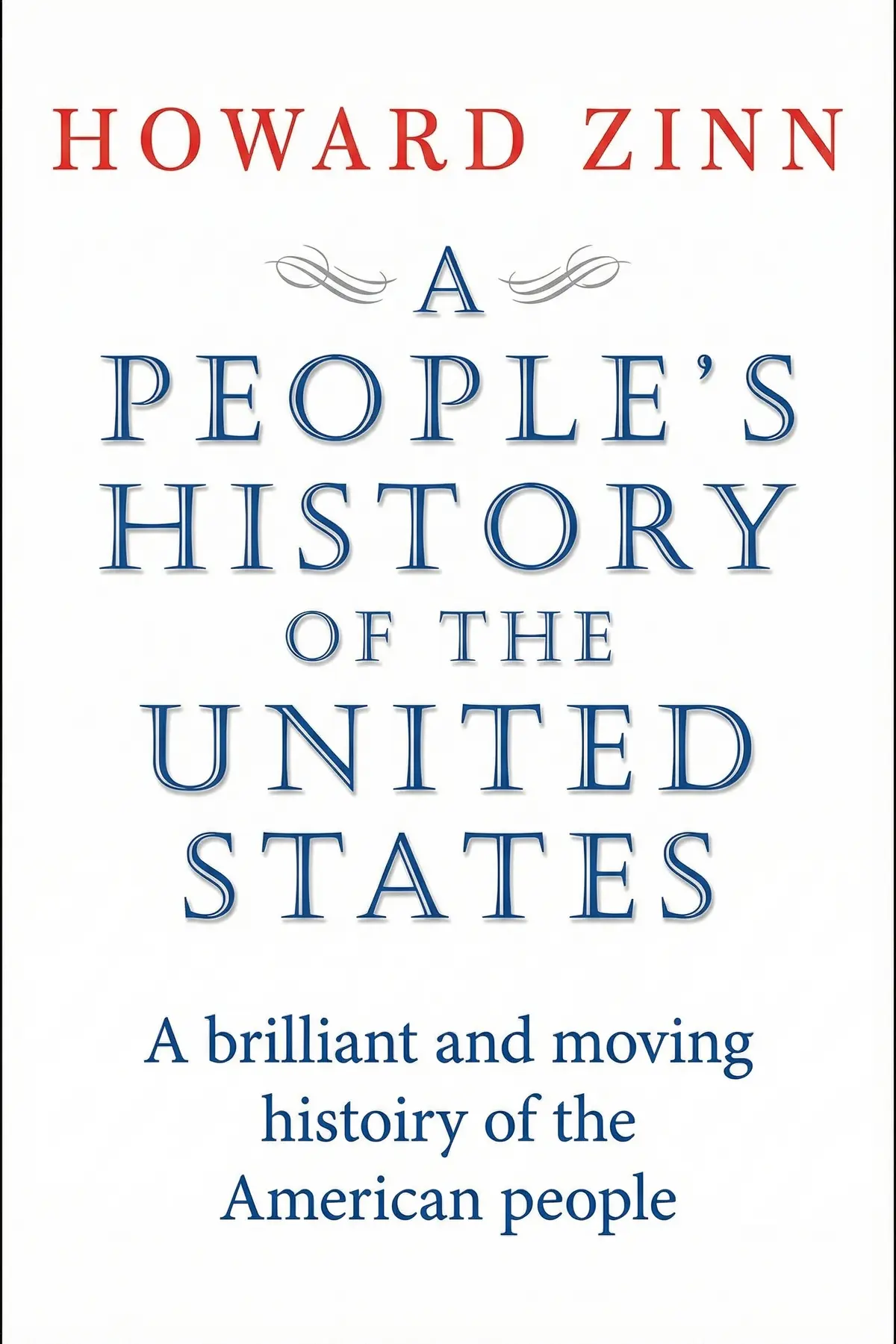
Table of Content
1. Introduction
1 min 52 sec
When we think about the history of the United States, we often conjure images of heroic pioneers, brilliant founding fathers, and a steady climb toward liberty and justice for everyone. We are taught that the American story is one of exceptionalism—a unique experiment in democracy that serves as a beacon for the rest of the world. But what happens if we shift our gaze? What if we stop looking at history from the top of the pedestal and start looking at it from the ground up?
This is the essential question posed by Howard Zinn. He suggests that the history we usually consume is a curated version of events, written by the victors to justify their power. When we look closer, we find a different narrative: one of intense struggle, systemic cruelty, and persistent resistance. This isn’t just a list of dates and battles; it’s an investigation into how the country was actually built—on the backs of the enslaved, through the displacement of indigenous peoples, and by the sweat of an exploited working class.
Throughout this exploration, we’re going to look at the throughline of American power. We will see how a small group of wealthy individuals has consistently managed the country’s laws, wars, and economy to protect their own interests. But more importantly, we’ll see how the “common people” have never truly been passive. From the very beginning, there has been a counter-narrative of strikes, rebellions, and demands for true equality.
By the end of this journey, you’ll have a clearer picture of why modern society is plagued by such deep inequality. You’ll understand the origins of the military-industrial complex and the reasons why the government often seems more responsive to corporations than to citizens. Most of all, you’ll see the American experiment not as a finished masterpiece, but as a site of ongoing conflict between those with power and those who refuse to be subjugated. Let’s dive into the stories that traditional textbooks often leave in the margins.
2. The True Legacy of Columbus
2 min 04 sec
Uncover the disturbing reality behind the legendary discovery of America. Move past the romanticized myths to see the primary accounts of conquest and their devastating impact on indigenous populations.
3. Indigenous Resistance and the Shift to Slavery
2 min 12 sec
Explore the clash between European structures and the communal societies of North America. Discover how the failure to subjugate native populations led to the rise of the trans-Atlantic slave trade.
4. Governance by the Elite
2 min 04 sec
Learn how the American legal system was designed from its inception to protect the wealthy. Examine the strategic ways early leaders prevented unity among the lower classes to maintain control.
5. The Hidden History of Women's Resistance
2 min 08 sec
Discover the grueling conditions faced by women in early America and their transition into a formidable political force. Witness the birth of the women’s rights movement in the shadow of industrial labor.
6. Expansion and the Cost of Progress
2 min 05 sec
Examine the violent reality of American expansionism in the 19th century. From the forced migrations of native tribes to the calculated provocation of war with Mexico, see how the map was redrawn.
7. The Civil War and the Maintenance of Order
2 min 10 sec
Deconstruct the traditional narrative of the Civil War as a purely humanitarian crusade. Explore the economic motivations and political pragmatism that guided the path to emancipation.
8. The Rise of the Labor Movement
2 min 03 sec
Witness the birth of collective power as workers and farmers realized their strength in numbers. Learn how the struggle against exploitation transformed the American landscape in the 1800s.
9. Socialism and Radical Solidarity
2 min 04 sec
Explore the influence of anticapitalist ideals on the American labor struggle. See how organizations like the IWW bridged divides to create a truly inclusive movement for the working class.
10. The Economic Engines of World War I
2 min 05 sec
Look past the slogans of ‘making the world safe for democracy’ to see the financial motivations behind the Great War. Discover how the conflict served the interests of America’s banking and industrial elite.
11. WWII and the Permanent War Economy
2 min 11 sec
Examine the shift toward a military-industrial complex during the Second World War. Learn how the conflict was used to secure global resources and establish a state of perpetual military spending.
12. Vietnam and the Architecture of Deception
2 min 07 sec
Analyze the systemic lies used to justify the Vietnam War and the grassroots movement that rose to challenge them. Witness the moment when public trust in the government began to fracture.
13. The Management of the Civil Rights Movement
2 min 08 sec
Learn how the US government attempted to co-opt and control the struggle for racial justice. Examine the strategic shift from nonviolence to militancy and the legal barriers used to suppress dissent.
14. Post-Vietnam: Continuing the Cold War Legacy
2 min 07 sec
Examine the deceptive foreign policy of the 70s and 80s as public trust reached an all-time low. See how secret deals and illegal interventions were used to maintain American business interests abroad.
15. The Modern War Machine
2 min 08 sec
Understand the political and economic drivers of contemporary American conflicts. From the Gulf War to the post-9/11 era, see how the cycle of military spending continues to benefit the super-rich.
16. Conclusion
2 min 02 sec
As we wrap up this journey through the hidden corners of the American past, the central message is clear: the history of the United States is not a static story of inevitable progress, but a dynamic, ongoing battle. It is a struggle between a small group of people who have controlled the land, the laws, and the money, and a vast, diverse population that has repeatedly stood up to demand something better. From the Arawaks who first resisted Columbus to the labor unions of the industrial age and the anti-war protesters of the modern era, there has always been a ‘people’s history’ running beneath the surface of the official narrative.
Howard Zinn’s work reminds us that the power of the elite relies on our silence and our division. When the poor are pitted against the poor, or when we accept the lies used to justify war, the status quo remains unchallenged. But the history of the common people shows that when we organize, when we find solidarity across lines of race, gender, and class, the machinery of the elite can be slowed or even stopped. The reforms we often take for granted—the end of slavery, the right to vote for women, the eight-hour workday—were not gifts from the government. They were hard-won victories snatched from the hands of those who would have preferred to keep things exactly as they were.
So, what does this mean for us today? It means that we have a responsibility to look critically at the stories we are told by those in power. It means recognizing that the inequality we see in our modern world is not an accident, but the result of centuries of deliberate policy. But most of all, it offers a sense of hope. If the history of the United States is a history of struggle, then we are part of that history. We have the same capacity for resistance and the same power of collective action as the generations that came before us. The story of America is still being written, and it is the common people who hold the pen.
About this book
What is this book about?
What if the history we were taught in school only tells half the story? This summary of Howard Zinn’s influential work challenges the traditional narrative of American progress by centering the experiences of the oppressed, the enslaved, and the working class. It offers a provocative look at how the United States was formed not just through high-minded ideals, but through conquest, systemic exploitation, and a relentless drive for profit by a small elite. From the arrival of the first Europeans to the modern era of global intervention, you will see how power has been consolidated and maintained through conflict and policy. The promise of this journey is a deeper understanding of the internal tensions that have shaped society. You’ll learn about the grassroots movements that fought back—labor unions, civil rights activists, and indigenous tribes—revealing a throughline of resistance that continues to define the American character to this day.
Book Information
About the Author
Howard Zinn
Howard Zinn was a prominent historian and dedicated social activist. He authored numerous works focusing on human rights and social justice issues. For decades, he served as a professor of political science at Boston University. Zinn remained an active voice for the disenfranchised until his death in 2010.
Ratings & Reviews
Ratings at a glance
What people think
Listeners view this title as the top history of the United States, loaded with data and rigorously documented content. Additionally, they deem it vital for all Americans, with one listener highlighting its status as required reading in every high school. The narrative is captivating and straightforward, delivering an educational outlook and sharing the unvarnished truth.
Top reviews
Jin
Picked this up after a friend mentioned it was required reading in their high school, and I can see why. This isn’t the sterilized, patriotic narrative we all memorized for standardized tests. Zinn digs deep into the exhaustive archives to foreground the voices of the disenfranchised, from the Arawaks meeting Columbus to the labor strikers at Ludlow. Frankly, it’s a lot to process because the sheer density of information can feel overwhelming at times. However, the writing remains remarkably engaging and accessible for such a massive scholarly undertaking. It forces you to confront the reality that many of our rights were paid for in blood and struggle, not just handed down by benevolent leaders. Every American needs to grapple with this perspective to understand our current political climate. Even if you don’t agree with every conclusion, the documented facts about corporate influence and military intervention are undeniable.
Show moreUbolrat
Wow, what a wake-up call for anyone who grew up on the standard textbook version of history. Zinn takes off the rose-colored glasses and presents an unvarnished look at how power actually functions in the United States. I was particularly struck by the section explaining how the 14th Amendment was used to protect corporations long before it served actual human beings. It’s infuriating and enlightening all at once. The truth is, the book makes a compelling case that our history is defined by class struggle and the suppression of grassroots movements. While the tone is admittedly heavy-handed and leans into its bias, the amount of research provided makes it hard to dismiss. It feels like essential reading for anyone trying to navigate the propaganda of the modern era. We cannot move forward without acknowledging the deaths of millions in our name across the globe.
Show morePick
The chapter on the industrial era alone makes this worth the cover price. Zinn masterfully reconstructs the lives of factory workers and miners who were often treated as expendable by the ruling elite. Look, we all know history is written by the winners, but this book gives a megaphone to the losers and the outsiders. It’s an exhaustive account that manages to stay readable and deeply emotional. I found the analysis of how military projects drain resources from social welfare programs to be incredibly relevant to today’s debates. Some might find the cynical tone depressing, but I found it refreshing to read something that doesn't shy away from our national scars. This is the kind of history that makes you think critically about every news headline you see. It isn't just a book; it's a tool for civic engagement. Highly recommended for any serious student of American politics.
Show moreNoo
Direct action is the heart of this book, and Zinn’s passion for grassroots change is infectious. He manages to weave together centuries of struggle into a cohesive narrative that feels both urgent and timeless. I found the analysis of the Civil Rights movement particularly moving, especially how it distinguishes between government-sanctioned progress and the raw anger of the streets. The book provides an unvarnished truth that is often uncomfortable but absolutely necessary for a healthy democracy. Some of the sentence structures are a bit academic and dense, which might slow down casual readers. However, the payoff is a much more nuanced understanding of how power structures maintain themselves through nationalism. It’s an exhaustive look at the American project that refuses to settle for easy answers or patriotic platitudes. I truly believe every high school senior should be assigned this text. It changes the way you see the world.
Show moreBee
After hearing so much about this book’s polarizing nature, I finally decided to dive in and see for myself. It’s clearly not meant to be a neutral survey, but rather a necessary counter-weight to the 'great man' theory of history. Zinn’s depiction of Columbus as a wealth-obsessed figure of genocide rather than a hero is jarring but well-supported by primary sources. To be fair, there are moments where the author seems to ignore exculpatory evidence just to maintain his narrative arc of oppression. This can make the book feel a bit like a one-sided indictment rather than a holistic history. Still, the prose is vivid and moves at a brisk pace despite the 700-page length. I came away with a much deeper appreciation for the anonymous activists who actually moved the needle on civil rights and labor laws. It’s a dense read, but one that provides a perspective you won't find in traditional classrooms.
Show moreAnucha
Ever wonder why certain stories never make it into your 8th-grade social studies curriculum? Zinn provides the answers in this massive, enlightening volume. I loved the anecdotes about early female activists like Elizabeth Blackwell, which highlight the absurdity of the obstacles they faced. The writing is surprisingly engaging, making it easier to digest the heavy subject matter than I expected. My only real gripe is that the later chapters on the Vietnam War and Iraq feel a bit rushed compared to the earlier sections. To be fair, the book is already quite long, so I understand the need to condense things. It’s a powerful reminder that history is made by ordinary people taking extraordinary risks. While the author’s bias is clear, it’s a refreshing change of pace from the typical hagiography of the Founding Fathers. This belongs on everyone’s shelf, if only to spark a much-needed conversation about where we’ve been.
Show moreMarasri
Finally got around to reading this classic, and it’s every bit as controversial as they say. Zinn doesn't just tell history; he interrogates it. The section on the Trail of Tears and the systemic betrayal of Native American tribes is gut-wrenching and meticulously documented. Gotta say, it makes you look at the landscape of this country in a completely different way. While I found his critique of the 'national interest' to be sharp and often correct, there are times when he seems to dismiss any positive development as merely a cynical move to prevent revolution. This lack of pragmatism can be a bit grating after a while. Nevertheless, the book remains a critical assessment of the United States that everyone should read at least once. It’s an enlightening view that balances out the propaganda we are fed from a young age. Just be prepared for a long slog through some very dark chapters of our past.
Show moreYaowares
This book definitely lives up to its reputation as a radical text, though I have mixed feelings about the execution. On one hand, the information regarding the staggering wealth disparity of the 1920s is eye-opening and well-documented. On the other hand, Zinn’s relentless focus on conflict often obscures the moments of genuine cooperation and progress within the American system. Not gonna lie, the 'ruling-class conspiracy' angle feels a bit repetitive after several hundred pages of the same theme. It’s like he’s trying to fight one bias with an equal and opposite bias, which leaves the reader somewhere in the middle. I appreciate the focus on people's movements, yet I wish there was more nuance regarding the difficult choices leaders had to make. It serves as a great supplementary text to a standard history book, but I wouldn't rely on it as my sole source. It’s informative but feels more like an extended polemic than a balanced historical study.
Show moreNarong
As someone who appreciates a good debate, I found Zinn’s approach to be frustratingly one-dimensional. While it's true that the US has many skeletons in its closet, this book paints every single event with the same brush of imperialistic greed. Personally, I think his dismissal of the motivations behind World War II is particularly weak. Suggesting that the fight against the Fascist war machine wasn't worth the cost is a massive stretch that ignores the reality of the time. The book feels like a collection of anecdotes cherry-picked to fit a pre-existing Marxist conclusion rather than a genuine search for truth. It’s packed with information, yes, but much of it is presented without the necessary context. If you’re looking for a balanced view of American history, look elsewhere. This is more of a political manifesto disguised as a textbook. It’s interesting as a cultural artifact of the 70s, but as a credible history? I have my doubts.
Show moreTeng
Reaction to this book usually falls into two camps, but I find myself somewhere in the middle. The sheer amount of information Zinn has gathered is impressive, and his focus on the working class is a vital contribution to the field. However, his reliance on secondary sources and the occasional omission of counter-evidence—like the statistics on African American draft evasion—makes me question some of his broader conclusions. It's a bit like a legal brief for the prosecution: compelling and well-argued, but not exactly the whole story. Frankly, the tone can be quite bleak, and it feels like he’s determined to find the worst possible motive for every historical actor. It’s a useful read if you want to understand the radical perspective on American history, but it shouldn't be the only book you read on the subject. Engaging? Yes. Exhaustively researched? Mostly. But it’s also a deeply biased work that requires a lot of critical thinking from the reader.
Show moreReaders also enjoyed
A History of Iran: Empire of the Mind
Michael Axworthy
Afropean: Notes From Black Europe
Johny Pitts
A History of the World in 6 Glasses
Tom Standage

A Long Way Gone: Memoirs of a Boy Soldier
Ishmael Beah
All About Love: New Visions
bell hooks
AUDIO SUMMARY AVAILABLE
Listen to A People’s History of the United States in 15 minutes
Get the key ideas from A People’s History of the United States by Howard Zinn, plus 5,000+ more titles in English and Thai.
- 5,000+ titles
- Listen as much as you want
- 7-day free trial
- Cancel anytime







