

21 Lessons for the 21st Century
Yuval Noah Harari
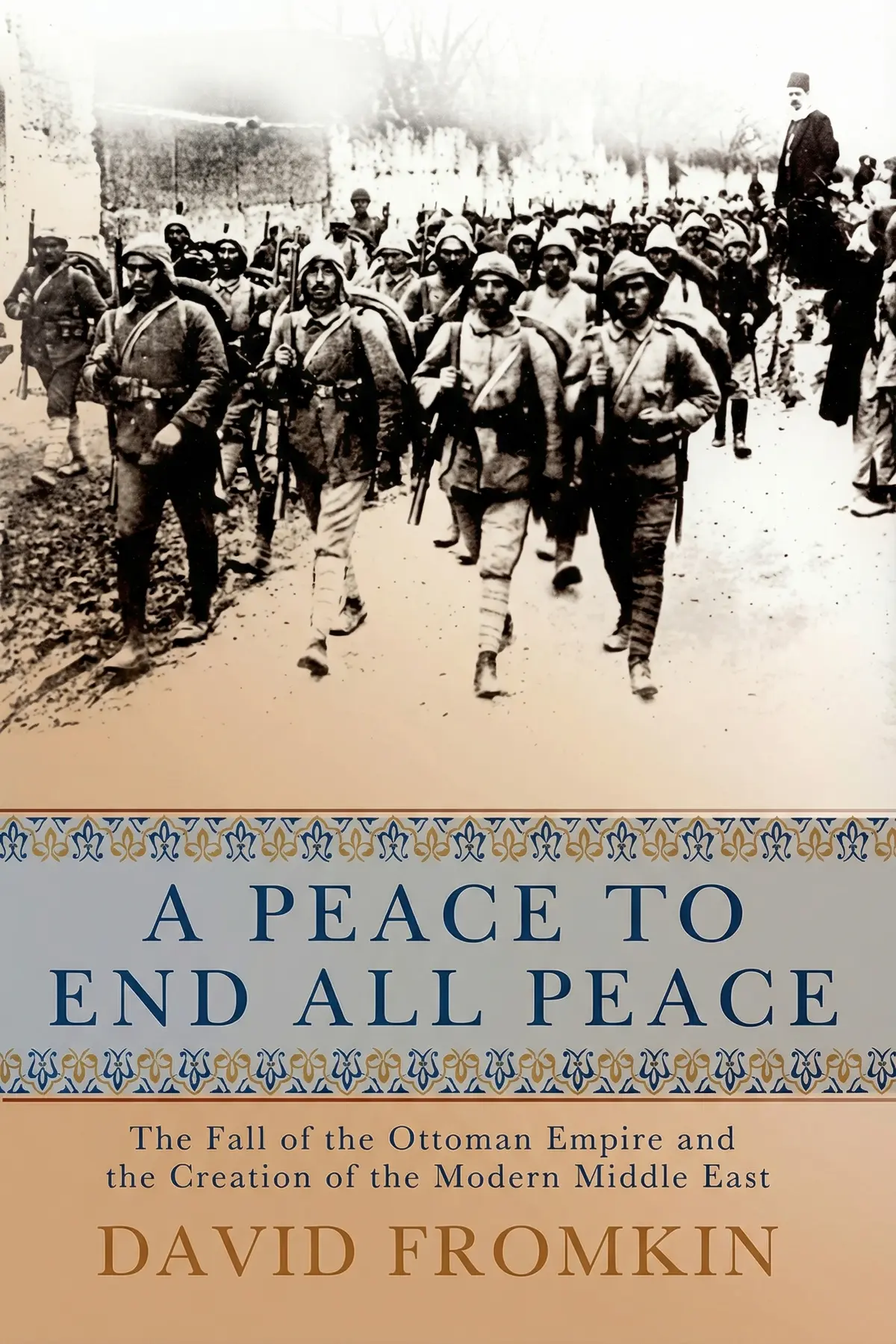
Explore the complex history of how World War I and the subsequent fall of the Ottoman Empire allowed European powers to redraw the Middle East, sparking a century of geopolitical instability.
2 min 03 sec
When we look at a map of the modern Middle East, it is easy to assume that the borders and nations we see have always been there, or at least that they emerged naturally from the people who live there. But the truth is much more complex and, frankly, much more chaotic. The political landscape of today’s Middle East was largely crafted in the backrooms of London and Paris during the early twentieth century, a time when the great Ottoman Empire was crumbling and European superpowers were scrambling to claim the pieces.
In this exploration of David Fromkin’s landmark work, we are going to pull back the curtain on the decision-making processes that reshaped an entire region. We’ll see how a series of misunderstandings, secret treaties, and personal ambitions turned the collapse of an old empire into a global puzzle that has never quite been solved. This isn’t just a story about ancient history; it’s the origin story of the world’s most persistent geopolitical challenges.
At its peak, the Ottoman Empire was a massive, diverse superpower that held sway over territories ranging from the gates of Vienna to the shores of the Indian Ocean. But as the industrial age dawned, this giant found itself lagging behind its Western neighbors. We will follow the thread from the empire’s final years as the ‘sick man of Europe’ through the fires of World War I, and into the murky world of colonial mandates.
By the time we finish, you’ll understand how the modern states of Iraq, Israel, Jordan, Lebanon, and Syria were born out of a volatile mix of wartime desperation and colonial arrogance. We’ll look at the motives of figures like Lord Kitchener and Winston Churchill, the legends of Lawrence of Arabia, and the quiet signatures on documents like the Sykes-Picot Agreement. This is the story of how a peace intended to stabilize the world ended up sowing the seeds of conflict for the next hundred years. It is a journey through a ‘Peace to End All Peace,’ and it begins with the slow decline of an empire that once seemed eternal.
1 min 52 sec
At the dawn of the twentieth century, a massive but stagnating empire struggled to keep pace with a rapidly industrializing and nationalist Europe.
1 min 52 sec
A revolutionary movement aimed at saving the empire inadvertently became the target of a bizarre conspiracy theory that shaped British strategy.
1 min 52 sec
Wartime desperation drove the Ottomans into a secret pact with Germany, forcing Britain to abandon its long-standing policy of imperial preservation.
1 min 41 sec
A single powerful figure’s misconceptions about Arab unity led Britain to pursue a deeply flawed and ambitious puppet-master strategy.
1 min 52 sec
Driven by the failure at Gallipoli, Britain turned to a strategy of internal subversion based on inflated reports of Arab military strength.
1 min 44 sec
While the Arab Revolt provided vital strategic support, it struggled with internal discipline and faced a reality far different from the myth.
1 min 38 sec
Behind the backs of their local allies, Britain and France negotiated a secret deal to carve the Middle East into spheres of colonial influence.
1 min 39 sec
British support for a Jewish homeland in Palestine was a calculated move driven by religious belief and mistaken strategic assumptions.
1 min 45 sec
As the war ended, the reality of European dominance set in, leaving local leaders to fight for relevance in a new, partitioned world.
1 min 43 sec
While much of the Middle East fell under colonial rule, a nationalist movement in Turkey successfully fought back to claim its own sovereignty.
1 min 47 sec
The arbitrary borders and political structures imposed a century ago created a cycle of instability that continues to define the region.
1 min 49 sec
The story of the creation of the modern Middle East is a cautionary tale of what happens when global powers prioritize short-term strategic gains over long-term regional stability. As we have seen through the lens of David Fromkin’s research, the ‘Peace to End All Peace’ was a period characterized by staggering misinformation, imperial arrogance, and a fundamental failure to understand the diverse cultures of the region.
Britain and France, in their scramble to replace the Ottoman ‘sick man’ with their own colonial projects, drew lines on maps that disregarded thousands of years of human geography. They made contradictory promises to different groups, creating a legacy of distrust that persists to this day. They replaced a decentralized, multi-ethnic caliphate with centralized nation-states that often lacked the internal legitimacy to govern effectively without force.
The most important takeaway from this history is the realization that the current conflicts in the Middle East are not simply the result of ‘ancient hatreds.’ Rather, they are the direct consequences of a very modern and very specific set of political choices made a century ago. When we see the ongoing struggles in Syria, the instability in Iraq, or the deep-rooted conflict in Israel and Palestine, we are seeing the unfinished business of the 1914–1922 settlement.
By understanding this throughline, we can better appreciate the complexity of the region. The lessons of this period remain vital for any student of history or international relations: that borders imposed from the outside rarely lead to peace, and that policy built on misinformation is destined to fail. The Ottoman Empire is gone, but the ghost of the peace that replaced it continues to haunt the world today, reminding us that the maps we draw in the present will define the struggles of the future.
A Peace to End All Peace examines the transformative period during and after World War I when the Ottoman Empire collapsed and the modern Middle East was forged. It reveals how British and French colonial interests, guided by misinformation and strategic blunders, created the borders and political structures that define the region today. The book promises a deep dive into the secret deals, personal ambitions, and cultural misunderstandings that replaced a centuries-old caliphate with a series of often-unstable nation-states. It provides essential context for anyone looking to understand why the Middle East remains a focal point of global conflict and why the 'peace' established after the Great War was, in many ways, a precursor to further struggle.
David Fromkin is Professor Emeritus in International Relations at Boston University. Before becoming a historian, he worked as a lawyer and political advisor. His many books include Europe’s Last Summer and The King and the Cowboy.
Listeners view this title as a fundamental resource on the Middle East, providing great depth into history that remains relevant. The prose is widely praised, and listeners admire the all-encompassing narrative style. Reactions to the encyclopedia content are varied; some laud the extensive documentation, but others suggest it omits specific details. Furthermore, the book’s structure and its historical accuracy also receive mixed opinions.
This book should be mandatory reading for every diplomat and military officer before they ever step foot in the Middle East. As someone who served in Iraq, I found Fromkin’s account of how Western powers systematically dismantled the Ottoman Empire to be both gut-wrenching and illuminating. He exposes the blatant arrogance and greed of civic leaders who treated entire nations like pieces on a chessboard. The narrative dives deep into the backdoor dealings and political swings that continue to haunt the region today. Frankly, it shatters any illusions you might have about the quality of international agreements or the wisdom of so-called intellectuals. While the book is dense and requires careful attention to keep track of the rotating cast of characters, the payoff is immense. You begin to see that the chaos we witness on the news isn't new; it’s the predictable result of 1918-era hubris. It is an essential, if sobering, education on the origins of a century of conflict.
Show moreAs a history buff who often wonders why we repeat the same mistakes, Fromkin’s narrative feels like a long-overdue explanation of our modern quagmires. I kept imagining a fantasy scenario where modern politicians sat down for coffee with Professor Fromkin before making fateful decisions in the early 2000s. He masterfully describes the Allied victory in WWI not as a triumph, but as the beginning of a messy, brutal transition. The details regarding the French in Algeria and the fluctuating stance on the Balfour Declaration provide a necessary context for today’s sectarian violence. It is a comprehensive treatment of the origins of the Middle East that proves Santayana’s observation about those who forget the past. The writing quality is top-notch, though the density of the material might intimidate casual readers at first. Not gonna lie, I had to reread several sections just to grasp the level of perfidy involved. This is a masterful work that explains why the 'peace' of the Great War was anything but peaceful.
Show moreWow, the sheer amount of double-crossing and misinformation detailed here is absolutely staggering. I was particularly blown away by the story of Muhammad al-Faruqi, a single man who managed to disorient negotiations between the British and the Arabs just by claiming to represent whoever he wasn't currently talking to. Fromkin pries apart these layers of political gambling with a narrative ease that makes the complex seem clear. He reveals a world of Russo-phobia and paranoia that feels eerily modern in its execution. The way he describes the drawing and redrawing of frontiers based on complete fabrications is both fascinating and terrifying. I found the sections on the Sykes-Picot agreement especially enlightening regarding the gradual disintegration of European allied cooperation. This isn't just a history book; it's a manual on how to accidentally break a region for a century. It’s no wonder this is considered the definitive text on the subject. Every page offers a new revelation about the fragile foundations of our current world order.
Show morePicked this up on a recommendation and I was immediately struck by the blatant disregard the Western powers had for local history. Fromkin’s book is an excellent elucidation of the complex events that led to our current dilemma. He doesn't just list dates; he explores the mindsets of the men in London and Paris who thought they could manage the world from a boardroom. The irony of the title 'A Peace to End All Peace' is present on every page as you read about the festering resentment of foreign domination. I particularly appreciated the focus on how the British changed their minds about the Ottoman Empire’s integrity. The resultant sectarian violence between Sunni and Shia is shown to be a predictable consequence of these poorly divided territories. It is a long read, but the illustrations and the quality of the prose make it manageable for the dedicated reader. I feel much more informed about why the Middle East remains a tinderbox in the 21st century.
Show moreAfter hearing people reference 'Fromkin' for years in political discussions, I finally see what the fuss is about. This book is a brilliant, gut-wrenching account of how the West completely screwed up an entire region through backdoor dealings and sheer incompetence. The author covers everything from the Russian role in eliminating British influence to the specific tragedy of the Balfour Declaration. It’s a dense, 600-page journey, but it’s necessary to understand the deep-seated hatreds that define the area today. I was struck by the comparison to the fall of Rome; it puts our current headlines into a much larger, more terrifying perspective. The sheer luck and silliness of the 'intellectuals' involved is laid bare in a way that is both educational and deeply frustrating. If you want to know why we are still stuck in the same cycles of violence, just read this book. It is a masterful work of history that remains depressingly relevant. Take notes, keep a map handy, and prepare to have your view of international politics forever changed.
Show moreFinally got around to this massive tome, and man, it is a lot to process. David Fromkin has put together a brilliant history that makes sense of how the region became such a tinderbox, though it's certainly not a quick read. I found myself constantly reaching for Google Earth because the book is unfortunately devoid of high-quality, full-page maps for the specific campaigns. If you want to follow the Hejaz operations or the shifting national boundaries of 1918, you'll need external help. The writing is quite good, but the sheer number of tribal warlords and caliphs who appear and disappear can be overwhelming. To be fair, a quick bio of key players at the start would have helped a lot. Despite the lack of cartography, the insights into British struggles to maintain their empire while broke are fascinating. It really highlights how arbitrary the current borders are, drawn with zero regard for longstanding tribal allegiances or the will of the subjects.
Show moreThe chapter on the Young Turks and the bizarre conspiracies regarding 'Gipsy-Jews' and Freemasonry was a complete eye-opener for me. David Fromkin digs into the strange beliefs and misinformation that drove high-level policy in 1914 with incredible detail. It is fascinating to see how much of the Middle East's map was determined by people who were operating on total myths. While the book is very well-written, it does require a high level of concentration to keep the various prejudices and perfidies separate. My only real gripe is that the illustrations, while a welcome break, don't quite make up for the lack of tactical maps. You see the faces of the men who ruined the region, but you don't always see the ground they were fighting over. Still, the account of how the quest for oil played a smaller part than colonialism and religion is quite refreshing. It challenges many of the simplified narratives we are taught in school about the Great War's aftermath.
Show moreTo be fair, I went into this looking for a simple answer to current Middle Eastern conflicts and left with a thousand new questions. Fromkin provides an incredibly comprehensive treatment of the origins of the modern borders, but he doesn't sugarcoat how messy the process was. The book explains the chaos by showing how chiefs of state were placed arbitrarily to head governments without any regard for their subjects. It is a grim look at the failure of the Weimar Republic, the Russian Revolution, and the complicated British involvement in Syria and Afghanistan. The author’s suggestion that it might take 1,500 years for the region to quiet down—similar to Europe after Rome fell—is a haunting thought. The writing is dense, and I'll admit I got confused by the constant shifts in political alliances. However, for anyone trying to understand why Viet Nam-style quagmires keep happening, this is essential reading. It provides factual detail that you simply won't find in general history texts or standard documentaries.
Show moreEver wonder why a 600-page book can feel like a 2,000-page slog? Look, the information in here is clearly vital, but the presentation is so encyclopedic that it frequently lacks a cohesive narrative drive. I found myself bogged down in a never-ending presentation of various minor actors who seem to vanish as quickly as they arrive. The book is well-divided into chapters, yet it remains an incredibly difficult read for anyone who isn't already deeply familiar with the late Ottoman period. I was disappointed by the lack of detailed maps, which makes following the various military campaigns nearly impossible without a laptop open next to you. Truth is, the book excels at documenting the incompetence of Western leaders, but it fails to make the journey particularly engaging for the reader. It’s an impressive feat of documentation that desperately needs better organization. If you aren't prepared to take extensive notes, you might find yourself lost in the morass of names and dates by page 200.
Show moreLook, I really wanted to love this given its reputation, but the lack of decent maps is a massive oversight for a book detailing shifting borders. For a text that claims to be the definitive history of the Middle East, being 'devoid of any maps' for major campaigns is unacceptable. I spent more time looking at my phone trying to find a map of the late Ottoman Empire than I did actually reading the text. The prose is dry and feels like a never-ending list of names that appear for two pages and then vanish forever. Honestly, it feels like it was written for people who already have a PhD in the subject rather than a general audience. The arrogance of the European leaders is well-documented, but the narrative gets lost in the weeds of bureaucratic minutiae. If you’re looking for a clear, engaging history, this probably isn’t it. It’s an impressive research project, but it’s a chore to actually get through. I gave up halfway because the impenetrable morass of characters became too much to track.
Show moreYuval Noah Harari
Pankaj Mishra
Jacinda Ardern
Anthony Pratkanis
Michael Axworthy
James Comey
Tom Standage
Ishmael Beah
AUDIO SUMMARY AVAILABLE
Get the key ideas from A Peace to End All Peace by David Fromkin, plus 5,000+ more titles in English and Thai.







