
17 min 07 sec
Available in:English
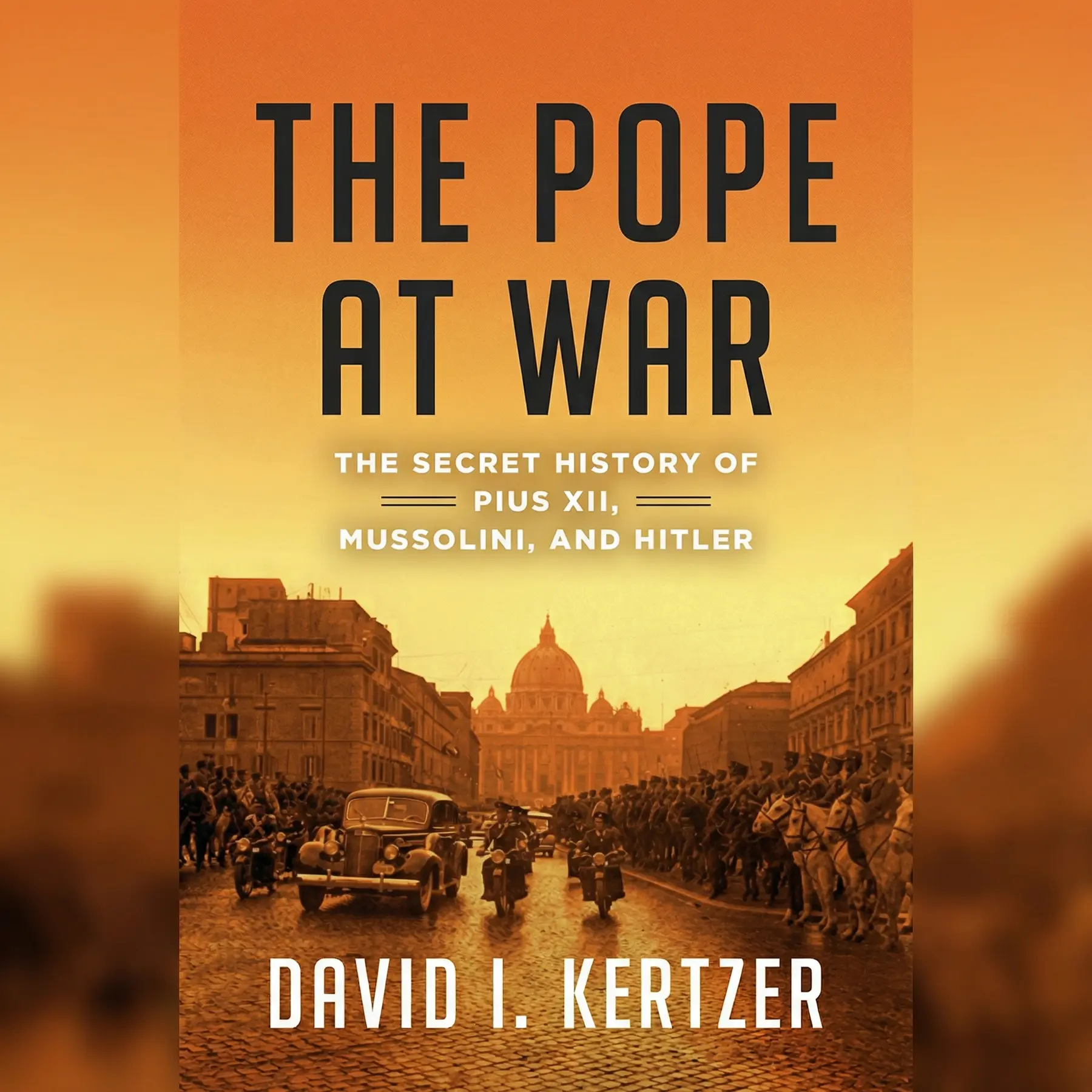
The Pope at War: The Secret History of Pius XII, Mussolini, and Hitler
An investigation into the Vatican’s recently unsealed archives, revealing how Pope Pius XII navigated the horrors of the Second World War through secret negotiations and a controversial policy of public silence.
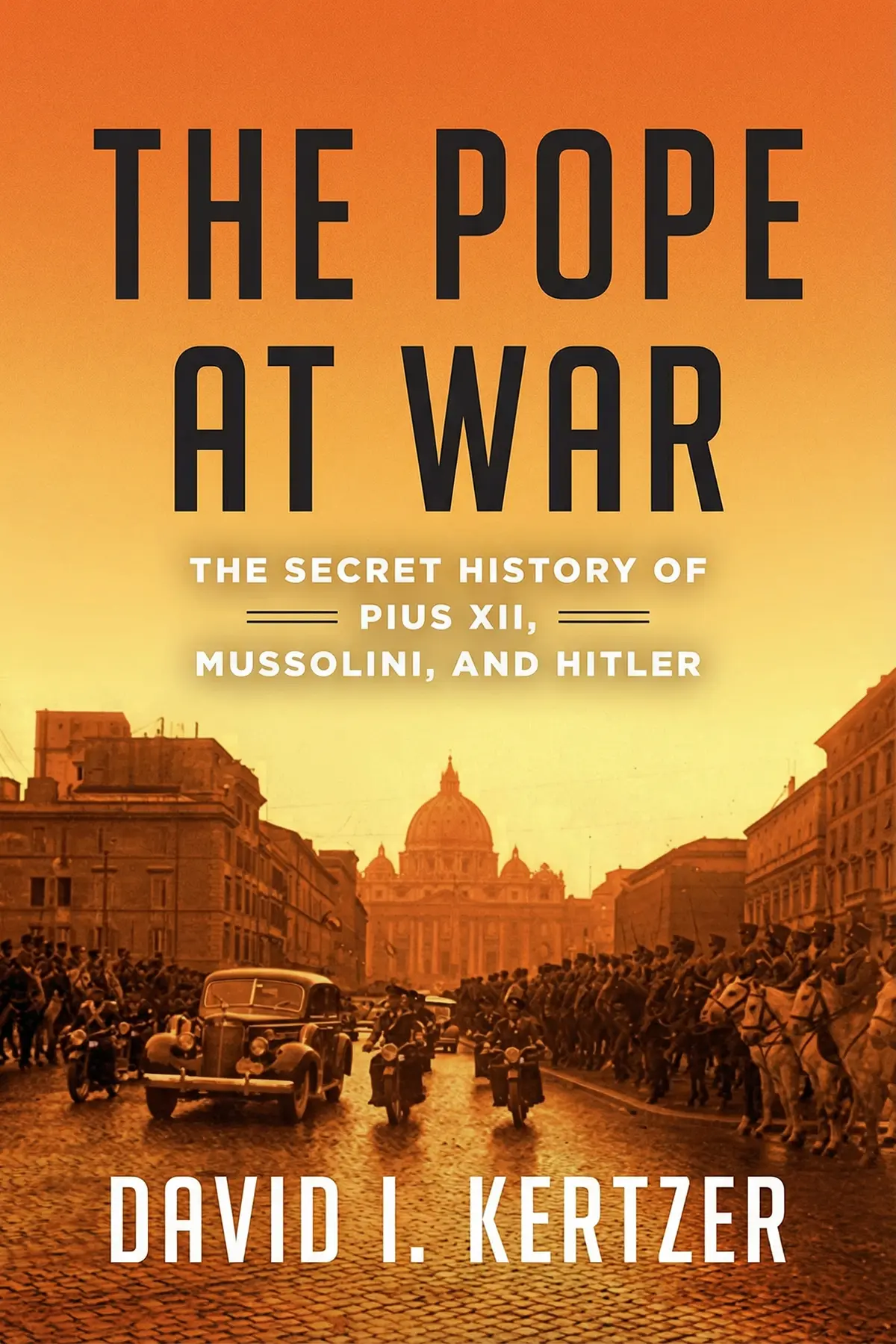
Table of Content
1. Introduction
1 min 43 sec
The figure of Pope Pius XII has long been a subject of intense historical scrutiny, often polarized into two distinct and irreconcilable versions. To some, he was a silent accomplice who failed to raise his voice against the greatest atrocities of the twentieth century. To others, he was a quiet hero, working behind the scenes to protect the vulnerable from the Nazi regime. For years, historians were left to piece together the truth from fragmented records and official Vatican narratives. However, in 2020, a seismic shift occurred in the world of historical research. The Vatican finally unsealed millions of documents from the wartime papacy, offering an unprecedented look at the inner workings of the Church during World War II.
What these documents reveal is far more complex than a simple story of good versus evil. They introduce us to a world of shadow diplomacy, where secret envoys moved between the Vatican and Berlin, and where every public word from the Pope was weighed against the potential for fascist retaliation. We see the throughline of a papacy defined by its commitment to institutional stability, even at the cost of moral clarity. This summary will take us through the pivotal moments of this era, from the death of a more outspoken predecessor to the secret deals that shaped the Church’s response to the Holocaust. We will examine how a man dedicated to being a ‘Pope of Peace’ found himself entangled in a web of complicity, and what the newly opened archives tell us about the ultimate price of silence in the face of tyranny. This is not just a chronicle of a past war, but a deep dive into the psychology of power and the consequences of inaction when the eyes of the world are watching.
2. A Sudden Shift in Leadership and Vision
2 min 17 sec
When the fiery Pope Pius XI passed away, his successor took the papacy in a starkly different direction, prioritizing diplomacy over public confrontation with fascist leaders.
3. The Secret Diplomacy of the Nazi Prince
2 min 17 sec
Hidden within the Vatican archives is the story of a secret channel between the Pope and Hitler, facilitated by a high-ranking intermediary with connections to both worlds.
4. The Illusion of Neutrality and the Cost of Silence
2 min 29 sec
By attempting to stay neutral as the war expanded across Europe, the Vatican inadvertently aided the Axis powers and left millions without a moral champion.
5. A Disconnect Between Global Atrocity and Papal Priorities
2 min 09 sec
While the world was consumed by total war, the Pope often focused his public attention on matters of traditional morality and personal legacy.
6. Evidence of the Holocaust and the Choice of Silence
2 min 27 sec
The unsealed archives provide definitive proof that the Pope was well-informed about the systematic slaughter of Jewish people, yet chose to withhold that information from the world.
7. The Post-War Pivot and the Struggle for Sanctity
2 min 10 sec
As the war ended, the Vatican worked quickly to reshape the narrative of the Pope’s actions, transitioning from a silent observer to a self-proclaimed defender of peace.
8. Conclusion
1 min 35 sec
The story of Pope Pius XII, as revealed through the lens of newly unsealed Vatican archives, is a sobering exploration of the limits of diplomacy in the face of absolute evil. We have seen how the transition from a combative predecessor to a cautious diplomat changed the course of the Church’s wartime history. From secret negotiations with Hitler’s envoys to the deliberate suppression of anti-fascist speeches, the throughline of this papacy was a commitment to institutional survival at any cost. The Pope’s silence was not an accident; it was a calculated strategy, born out of a desire to remain a neutral mediator in a world where neutrality was no longer possible.
This history teaches us that leadership is not merely the absence of malice, but the presence of courage. While Pius XII may have genuinely believed he was protecting the Church and pursuing a path to peace, his refusal to use his immense moral authority to condemn the Holocaust remains a profound failure. The thousands of Roman Jews who were deported while the Vatican stood by are a testament to the fact that quiet diplomacy is often insufficient against systemic murder. As we reflect on this ‘Secret History,’ the actionable takeaway is a renewed understanding of the responsibility that comes with influence. In times of crisis, silence is not a neutral act; it is a choice that has real, and often tragic, consequences. The archives have given us the facts, but history gives us the lesson: that true moral leadership requires speaking truth to power, even when—and especially when—the risks are at their highest.
About this book
What is this book about?
The Pope at War examines one of the most debated figures of the twentieth century, Pope Pius XII, and his actions during the rise of fascism and the subsequent global conflict. For decades, the true extent of the Vatican's involvement with the Axis powers remained hidden behind closed doors. However, with the 2020 opening of millions of secret documents, a new and more detailed picture of the papacy emerges. This account moves beyond the binary of 'saint' or 'villain' to explore a leader deeply concerned with the institutional survival of the Catholic Church. Through these records, we see a man who engaged in back-channel diplomacy with Hitler, managed a tense relationship with Mussolini, and struggled to maintain a stance of neutrality as Europe burned. The promise of this exploration is a clearer understanding of the motivations behind the Pope's silence during the Holocaust. It reveals how tactical choices and a focus on tradition over transformation influenced the course of religious and political history. This is a story about the heavy cost of caution and the lasting legacy of a leader who chose to remain quiet when the world needed a moral outcry.
Book Information
About the Author
David I. Kertzer
David I. Kertzer is an award-winning author, anthropologist, and historian. He is widely recognized for his deep research into the relationship between the Vatican and Italian fascism. His work has earned high critical acclaim, and his book The Pope and Mussolini was awarded the Pulitzer Prize in 2015. Kertzer's scholarship frequently bridges the gap between complex archival research and engaging historical narrative.
Ratings & Reviews
Ratings at a glance
What people think
Listeners find the work to be thoroughly researched and meticulously documented, with one listener noting how it clears up mystery and disinformation. Additionally, the prose earns praise, and listeners view it as an essential read for the Christian community. In contrast, the narrative flow and pacing evoke varied responses, as some call it masterful while others have reservations. Furthermore, listeners have divided opinions regarding the book's emotional depth.
Top reviews
Tuck
Kertzer has truly outdone himself with this exploration of the Vatican's inner workings during the darkest years of the twentieth century. By utilizing newly released archives from 2020, he peels back the layers of myth surrounding Pius XII, revealing a man far more concerned with institutional preservation than moral clarity. The level of detail is staggering, particularly regarding the secret negotiations with Hitler’s representatives. Personally, I found the contrast between the timid Pacelli and his more outspoken predecessor, Pius XI, to be the most revelatory part of the narrative. The writing is lucid and engaging, though the sheer volume of diplomatic cables can occasionally feel overwhelming. It is an essential, if sobering, addition to the history of World War II that refuses to look away from uncomfortable truths.
Show moreSuphan
As a practicing Catholic, this was a painful but necessary read. We often want to believe our leaders are beacons of courage, but the image of Pius XII presented here is one of deep-seated caution and, frankly, moral failure in the face of absolute evil. Kertzer’s research into the Church’s long-standing demonization of Jews and how it inadvertently fueled Nazi propaganda is gut-wrenching. The book is a must-read for Christians because it forces a reckoning with how institutional self-interest can eclipse the very Gospel it claims to protect. I was particularly moved by the stories of local clergy in places like Poland who begged for a word of support from Rome that never came. This isn't just a history book; it's a profound moral warning.
Show moreEnd
The opening of the Vatican archives in 2020 changed everything we thought we knew about this era, and Kertzer is the perfect guide through that newly revealed landscape. This book clears up decades of mystery and disinformation regarding the 'Silent Pope.' Not gonna lie, seeing the evidence of how the Vatican prioritized protecting buildings and movies over human lives is disturbing. The narrative flows with the tension of a political thriller, even when discussing complex diplomatic maneuvers. Kertzer’s ability to weave together personal letters, official decrees, and secret meeting notes is masterful. It is a dense, carefully documented work that stands as a definitive rebuttal to those who have tried to sanitize this period of Church history.
Show moreBun
Deeply unsettling and masterfully documented. This book provides a searing look at how silence can be a form of complicity. Kertzer captures the atmosphere of wartime Rome perfectly, from the fear in the streets to the detached, almost clinical debates happening within the Vatican walls. The fact that Jews were being rounded up just a short distance from the Pope’s windows while he remained silent is an image that will stay with me for a long time. It’s a heavy book, both physically and emotionally, but the writing is so clear that it never feels like a chore to read. If you want to understand the intersection of faith, power, and the failure of leadership, this is the book you need.
Show moreSofia
Finally, we have a clear-eyed look at one of history's most debated figures without the traditional layers of Vatican PR. Kertzer’s 'The Pope at War' is a monumental achievement in historical research. The writing style is accessible enough for a casual reader but detailed enough for a serious historian. I was particularly fascinated by the accounts of how the Vatican tried to protect 'Catholic Jews' while essentially abandoning those who hadn't converted. It's a staggering look at the limits of moral authority when it is tempered by political pragmatism. Every page feels backed by a mountain of evidence. Whether you are a believer or a skeptic, this book demands your attention and challenges everything you think you know about the Church's role in WWII.
Show morePrapaiwan
The comparison between Pius XI and his successor, Pius XII, serves as the backbone of this fascinating historical account. While the former was willing to risk an encyclical against Nazi racial theory, Pacelli’s tenure was defined by a strategic, and ultimately tragic, silence. To be fair, Kertzer acknowledges the immense pressure the Vatican was under, yet he doesn't let the Pope off the hook for his lack of action. One of the most striking sections involves the Pope’s vocal complaints when Rome was bombed, contrasted sharply with his silence when other European cities were leveled. My only minor gripe is that the book occasionally gets bogged down in the minutiae of Italian internal politics. Still, for anyone interested in how religious power interacts with fascist regimes, this is a meticulously documented and valuable resource.
Show morePete
At times, this feels like a dense trek through bureaucratic mud, but the destination is well worth the effort. Kertzer’s account of the Vatican’s 2020 archive opening adds a layer of modern intrigue to the historical narrative. The restriction on researchers—only being allowed five documents a day—makes you realize how much work went into synthesizing this story. Truth is, the book portrays a Vatican that was essentially a bystander to the Holocaust, prioritizing the safety of 'baptized Jews' over the millions of others being deported. The pacing is a bit deliberate, and some chapters move slower than a Roman summer, but the clarity it brings to a previously muddled history is undeniable. It's not a light read, but it is an important one for those who value primary-source history.
Show moreKevin
Why did the Pope stay silent when the trains were literally passing his window? That is the central, haunting question of Kertzer’s latest work. The author does a great job showing that it wasn't just fear of Hitler, but a calculated effort to remain a 'neutral' broker for a peace that never came. Look, the book is incredibly well-researched, but I did find the tone to be a bit unrelenting in its criticism at times. I would have liked a bit more exploration into the actions of the lower-level priests who did risk their lives, which are mentioned but often overshadowed by the focus on Pacelli. Regardless, it’s a vital piece of scholarship that finally brings the light of day to documents that were hidden for eighty years.
Show moreAkira
I wanted to love this, but the narrative style felt a bit dry and repetitive in the middle sections. While the research is clearly top-notch and the access to the 2020 archives is a huge selling point, the book suffers from a bit of an identity crisis. Is it a scholarly text or a popular history? At over 500 pages, the emotional impact is sometimes lost in the endless back-and-forth of diplomatic cables and clerical hierarchies. To be fair, the sections on the occupation of Rome are gripping, but they are separated by long stretches of fairly tedious administrative detail. I appreciate the intellectual rigor Kertzer brings to the table, but I found myself skimming certain chapters just to get back to the main points.
Show moreSawit
While the research is undeniable, I felt the author's tone was occasionally one-sided, bordering on an indictment rather than a balanced history. Kertzer is a brilliant scholar, and his use of the newly opened archives is impressive, but he doesn't seem to give much weight to the genuine fear of a Communist takeover that drove many of the Vatican's decisions. The pacing is also a bit of a mixed bag; the beginning and end are fantastic, but the middle gets lost in the weeds of secondary characters. It’s a valuable book for the facts it uncovers, but I think it should be read alongside other perspectives to get a fuller picture of the impossible choices faced by the papacy during the war.
Show moreReaders also enjoyed
A Splendid Exchange: How Trade Shaped the World
William J. Bernstein
A Spy Among Friends: Philby and the Great Betrayal
Ben Macintyre

1491: New Revelations of the Americas Before Columbus
Charles C. Mann
A Year in the Life of William Shakespeare: 1599
James Shapiro
AUDIO SUMMARY AVAILABLE
Listen to The Pope at War in 15 minutes
Get the key ideas from The Pope at War by David I. Kertzer, plus 5,000+ more titles in English and Thai.
- 5,000+ titles
- Listen as much as you want
- 7-day free trial
- Cancel anytime







