
29 min 37 sec
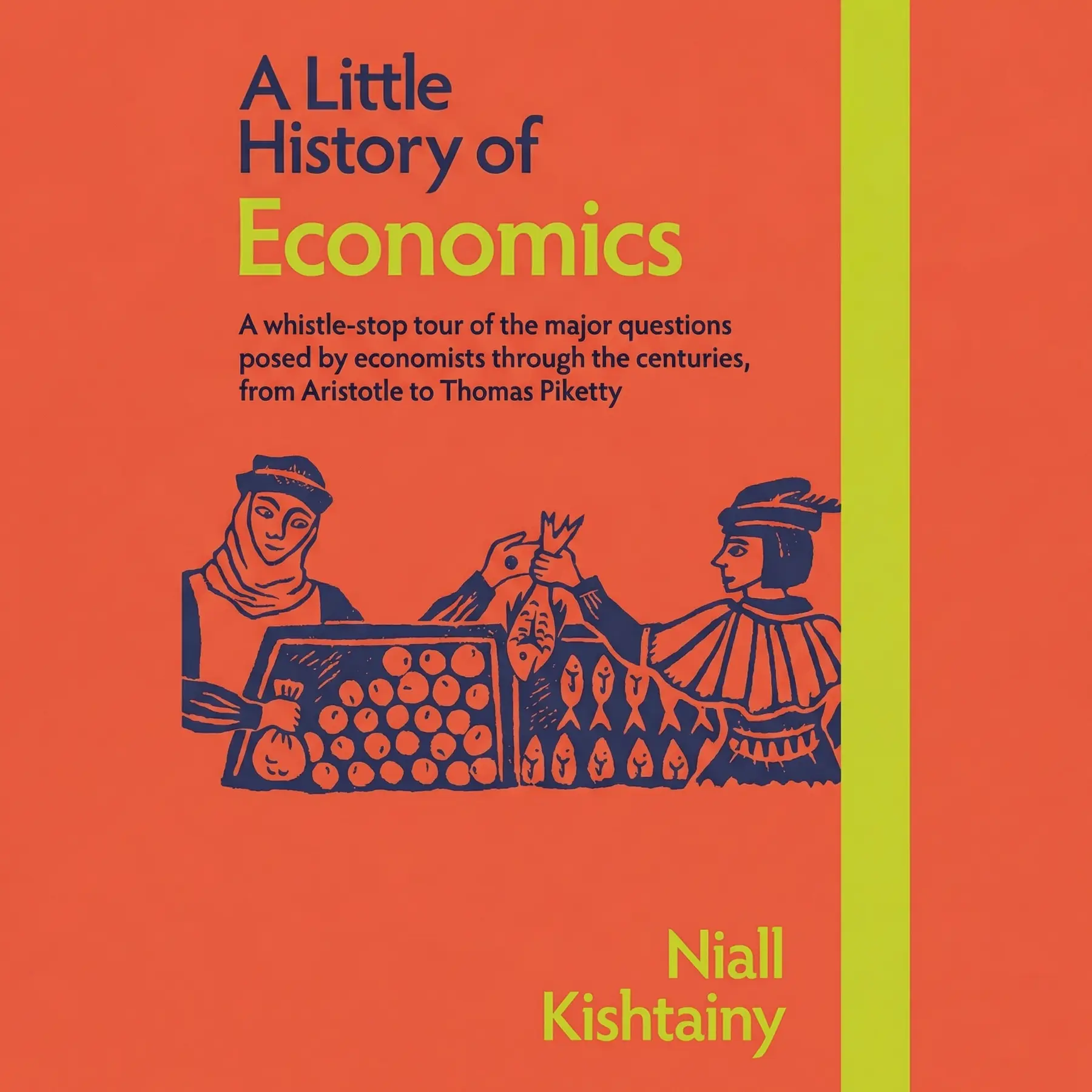
A Little History of Economics
Explore the fascinating evolution of economic thought, from ancient Greek philosophy and medieval trade to modern theories of inequality, global markets, and the recurring cycles of financial crises.
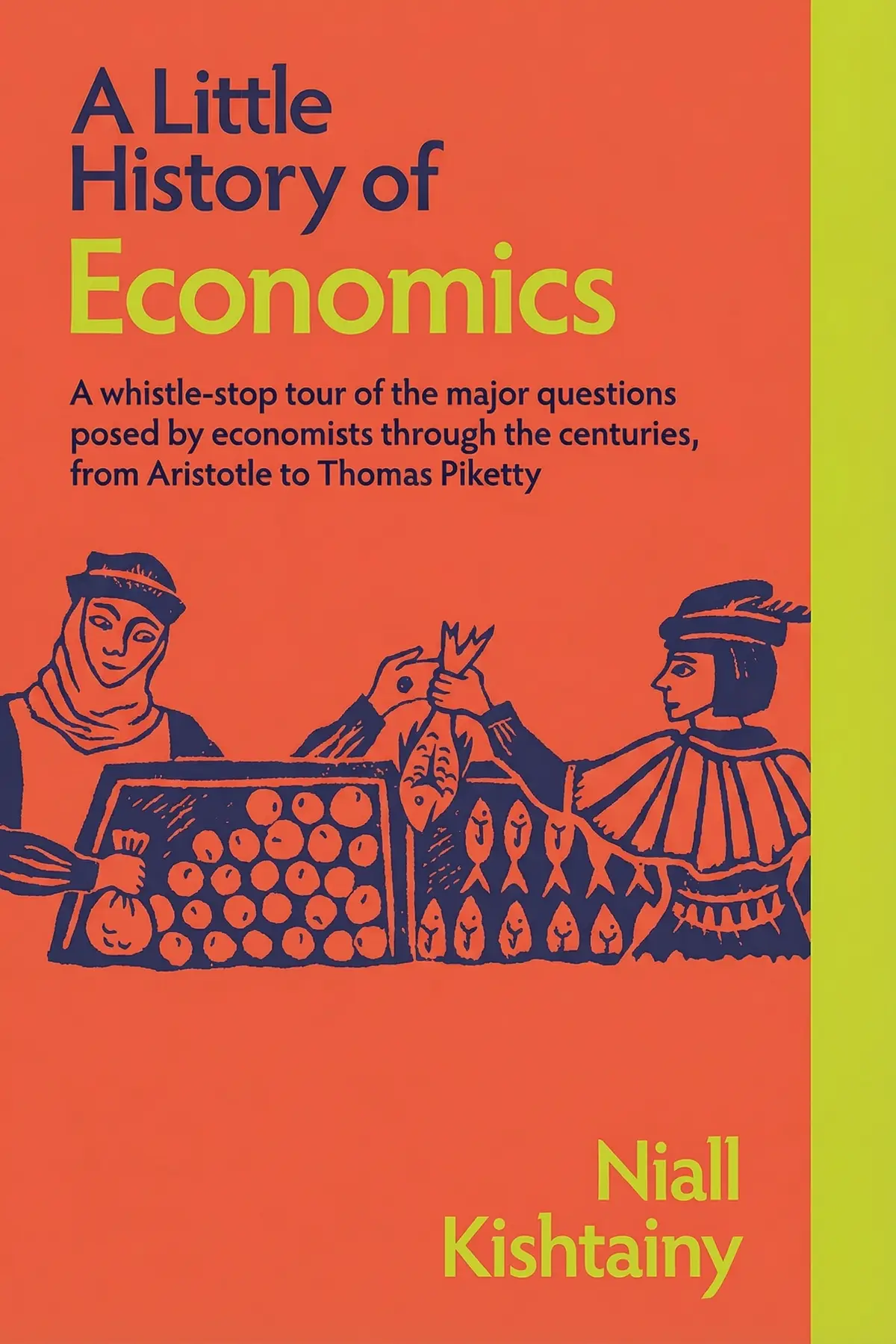
Table of Content
1. Introduction
1 min 54 sec
When we hear the word economics today, our minds often jump to complex spreadsheets, fluctuating stock prices, or the technical jargon of central bank reports. However, the heart of this field is much older and far more human than modern data might suggest. The term itself finds its roots in ancient Greece, where ‘oikos’ and ‘nomos’ combined to mean the laws or management of a household. This original focus—how a small group organizes its resources to survive and thrive—remains the fundamental question of the discipline, even as it has expanded to encompass the entire globe.
But economics is more than just a guidebook for management; it is a lens through which we can view the vast disparities of our world. It asks why certain nations possess the infrastructure, education, and resources to offer their citizens a high standard of living while others remain trapped in cycles of scarcity. It is a field populated by thinkers who, for centuries, have tried to solve the puzzle of human prosperity. By stepping back through time, we can see how the ideas of the past didn’t just explain their own eras—they actively built the world we inhabit today.
In this journey, we will traverse the history of economic thought, moving from the philosophical musings of the fourth century BCE to the high-stakes world of modern finance. We will see how religious doctrine once collided with the realities of trade, how the smoking chimneys of the Industrial Revolution sparked radical new theories about labor, and how the massive collapses of the twentieth and twenty-first centuries forced us to rethink the role of the state. Along the way, we will uncover the biases that have shaped the field and meet the rebels who have tried to make economics about more than just money. By understanding this throughline of thought, we gain a clearer perspective on the choices we face in our own turbulent times.
2. Ancient Ethics and the Early Morality of Money
2 min 34 sec
Ancient philosophers and medieval theologians grappled with the moral implications of profit, questioning whether the pursuit of wealth was a natural human endeavor or a spiritual danger.
3. The Enlightenment Shift Toward Laissez-Faire and Specialization
2 min 29 sec
The dawn of the industrial age brought revolutionary ideas about self-interest and the hidden mechanics that allow a complex society to function without central control.
4. Nineteenth-Century Struggles Over Land, Trade, and Class
2 min 47 sec
The widening gap between the wealthy elite and the working class in the 1800s led to fierce debates over free trade and the inherent contradictions of capitalism.
5. The Great Divide: Central Planning Versus the Power of Prices
2 min 36 sec
The twentieth century became a massive laboratory for economic experimentation, testing whether a government could successfully direct an entire nation’s production.
6. Keynes, Hayek, and the Battle for the Soul of the State
2 min 33 sec
In the wake of the Great Depression, two competing visions emerged regarding how much control a government should exert over the economy to prevent collapse.
7. Game Theory and the Economics of Human Behavior
2 min 41 sec
During the Cold War, economics expanded into the realm of strategy and social behavior, analyzing how individuals and nations make decisions under pressure.
8. The Monetarist Revolution and the Return of the Market
2 min 26 sec
The economic turmoil of the 1970s led to a rejection of government spending and a new focus on controlling the money supply and empowering businesses.
9. Financial Cowboys and the Cycle of Market Bubbles
2 min 36 sec
In the late twentieth century, the deregulation of finance gave rise to a new era of high-stakes speculation and recurring global economic collapses.
10. Human Capabilities and the Hidden Work of Women
2 min 30 sec
Modern economics has begun to look beyond GDP, focusing instead on what people are actually capable of doing and how unpaid labor supports the entire system.
11. The Persistence of Inequality in the Twenty-First Century
2 min 31 sec
Current economic research highlights the historical laws that favor the concentration of wealth, presenting a major challenge for the future of global stability.
12. Conclusion
2 min 00 sec
The history of economics is a long and winding story of how we have tried to make sense of our world’s resources and our relationships with one another. From the ancient Greek philosophers who worried about the corrupting influence of profit to the modern data scientists tracking the flows of global capital, the core objective has always been to understand how we can best organize society. We have seen that economic ideas are never developed in a vacuum; they are reactions to the world as it exists—the smog of factories, the desperation of bread lines, or the volatility of a digital trading floor.
What this journey reveals is that economics is far more than just a set of mathematical rules; it is an evolving conversation about values. It asks whether we prioritize individual liberty above all else, or whether we have a collective responsibility to ensure that no one is left behind. It challenges us to look beyond the simple numbers of growth and to consider the health, education, and dignity of every person. While the debates between the state and the market, or between free trade and protectionism, may never be fully settled, the history of the field gives us a vital toolkit for thinking about these problems more clearly.
As we look toward the future, the lessons of the past are more relevant than ever. The recurring cycles of financial instability and the persistent challenge of deep-seated inequality suggest that we haven’t found all the answers yet. However, by understanding the ‘invisible hand’ of Adam Smith, the ‘road to serfdom’ of Friedrich Hayek, and the ‘capabilities approach’ of Amartya Sen, we are better equipped to participate in the decisions that shape our lives. Economics is the story of our shared human struggle to build a better life, and it is a story that each of us, through our choices and our voices, continues to write today.
About this book
What is this book about?
This summary provides a comprehensive overview of how human societies have attempted to understand wealth, labor, and resource distribution throughout history. It begins with the moral questions posed by ancient thinkers like Aristotle and the religious debates over moneylending in the Middle Ages. As the narrative moves into the Industrial Revolution, it examines the foundational ideas of Adam Smith and the radical critiques of Karl Marx, showing how these theories responded to the massive shifts in how people lived and worked. The exploration continues into the twentieth century, contrasting the rise of state-controlled economies in the Soviet Union with the market-driven philosophies of the West. It covers the pivotal impact of the Great Depression and the subsequent Keynesian revolution, as well as the later pushback from free-market advocates like Milton Friedman. Finally, the summary addresses contemporary issues, including gender biases in economic data, the importance of human capabilities beyond mere income, and the persistent challenges of wealth concentration in the twenty-first century. It promises a clear, narrative-driven understanding of the ideas that continue to govern our global financial reality.
Book Information
About the Author
Niall Kishtainy
Niall Kishtainy is an esteemed academic who has taught at the London School of Economics and the University of Warwick. He holds a deep conviction that examining the history of economic thought is essential for understanding the complexities of the modern era. By looking back at how previous generations tackled financial and social challenges, Kishtainy believes we can find the necessary tools to build a more equitable and prosperous future.
Ratings & Reviews
Ratings at a glance
What people think
Listeners find the work engaging and accessible, offering an excellent introduction to economic principles and their historical development. They value the way it simplifies intricate topics, with one listener highlighting that jargon and terminology are defined before use. The content is considered insightful for its explanations of major economic theorists' ideas, and one listener points out how it effectively places these theories within their contextual space and time. Listeners view the material as straightforward and perfect for newcomers, with one listener noting it is particularly good for high school students.
Top reviews
Kanokwan
Finally got around to reading this gem and it’s easily one of the best introductory texts on my shelf. Instead of a 'routine' academic slog, Kishtainy delivers a vibrant timeline of thinkers that feels more like a series of interconnected biographies than a textbook. The system he uses to link periods and people makes the information incredibly sticky; I can actually remember who said what and why they said it weeks later. To be fair, it’s definitely for beginners—pros might find it a bit light—but for the rest of us, it’s a masterclass in clarity. The author remains relatively neutral throughout, which I appreciated.
Show moreSuwit
As a high school teacher, I’m constantly looking for resources that can make complex global systems feel relevant to a teenager’s life. This book is a goldmine. It puts theories into contextual space and time, showing students that economic ideas didn't just appear out of nowhere; they were reactions to real-world problems like famine, war, or industrialization. The language is simple without being condescending, and the author does a brilliant job of defining jargon right when you need it. It’s the kind of book that turns a 'boring' subject into something my students actually want to discuss in class. Truly an insightful guide for beginners.
Show moreNatalie
Wow, I actually feel smarter after finishing this, and for once, the financial news doesn't look like gibberish. This book serves as a perfect bridge for anyone who dropped economics in school because it felt too dry. Kishtainy defines every bit of terminology before he uses it, which saved me from constant Googling. The way he traces the evolution of money and credit makes you realize how fragile and weird our current system actually is. It’s concise, punchy, and moves at a great pace without ever feeling like it's talking down to the reader. It is genuinely entertaining for such a heavy subject.
Show moreMalee
This book acts like a GPS for the history of ideas, and I've already bought a second copy to keep as a reference. What makes it special is the pallet of thinkers Kishtainy brings to the table—you get the heavy hitters like Keynes, but also forgotten voices that shaped how we view poverty and welfare. It’s a vastly different approach than most summaries; the focus is on the narrative of the idea itself. If you're struggling to make sense of the current economic mélange we're living in, this is an absolute must-read. It’s beautifully rendered, remarkably informative, and surprisingly deep for a 'little' history.
Show moreArt
Economics always felt like a fortress I couldn't breach, guarded by mountains of confusing charts and dry terminology. But this book? It's the total opposite. The author breaks down the history of trade and the development of modern markets into bite-sized stories that actually stick in your brain. I finally understand the difference between the various schools of thought without feeling like my head is going to explode. The narrative is tight, the tone is welcoming, and the chapters are short enough to read one or two before bed. It's easily the most accessible overview of the 'dismal science' I've ever encountered.
Show moreSaowalak
Ever wonder why the world's wealth is distributed so unevenly or why some nations flourish while others stagnate? Kishtainy doesn’t just give you the 'what,' he places every theory into a specific historical context. I particularly loved the discussion on the trade-off between equality and efficiency. It challenged my assumption that high taxes inevitably lead to a sluggish economy by pointing toward the success of Northern European welfare states. The writing is incredibly clear, stripping away the gatekeeping jargon that usually makes finance books so inaccessible. Each chapter is like a miniature lesson that connects the dots between Adam Smith’s invisible hand and the complex digital markets of today.
Show moreDylan
Kishtainy manages a difficult feat here: keeping things neutral while explaining why economics isn't quite the 'hard science' it wants to be. As someone with a background in physics, I often find economic models a bit flimsy because they lack the predictive power of physical laws. However, this book beautifully illustrates that economics is actually a way of thinking about human relationships and resource scarcity rather than just a set of math equations. The author explores how different schools of thought all tried to 'hack' the human experience. It’s a fascinating synthesis that doesn’t take sides, which is rare in this field. Highly recommended for those who prefer logic over dogma.
Show moreTantipat
The structure is solid, providing a chronological map of how we went from ancient barter to modern high-frequency trading. However, I noticed an odd recurring habit where the author specifies the Jewish heritage of certain economists but doesn't do the same for others. It felt like an unnecessary detail that didn't add much to the actual economic theory being discussed. Beyond that, the content is engaging and the short chapters make it easy to digest during a commute. It’s a decent entry-level text, but that specific stylistic choice left me a bit confused about the intended narrative purpose.
Show moreWachira
Personally, I found the later chapters a bit rushed compared to the deep dives into the classical era. While the book claims to cover everything up to our current 2020 model, the sections on modern behavioral economics and recent financial crises felt like they were flying at 100 miles per hour. I would have appreciated a bit more depth on how these new ideas are being implemented right now. That said, it’s still a fantastic primer. It's helpful if you want a broad map of the field, but you'll definitely need a more specialized book if you want to understand the nuances of the 21st-century economy.
Show moreLandon
Not what I expected based on the hype from my colleagues. If you have even a basic undergraduate degree in social sciences, you might find this frustratingly thin on actual data. The author prioritizes storytelling over rigorous analysis, which is great for a casual reader but feels a bit hollow for anyone wanting to sink their teeth into the 'why' behind the 'what.' It’s a breezy read, certainly, but it glosses over the systemic failures of certain models in favor of keeping the tone light and entertaining. Frankly, I wanted more grit and less polish.
Show moreReaders also enjoyed
A Splendid Exchange: How Trade Shaped the World
William J. Bernstein

Adults in The Room: My Battle With Europe’s Deep Establishment
Yanis Varoufakis
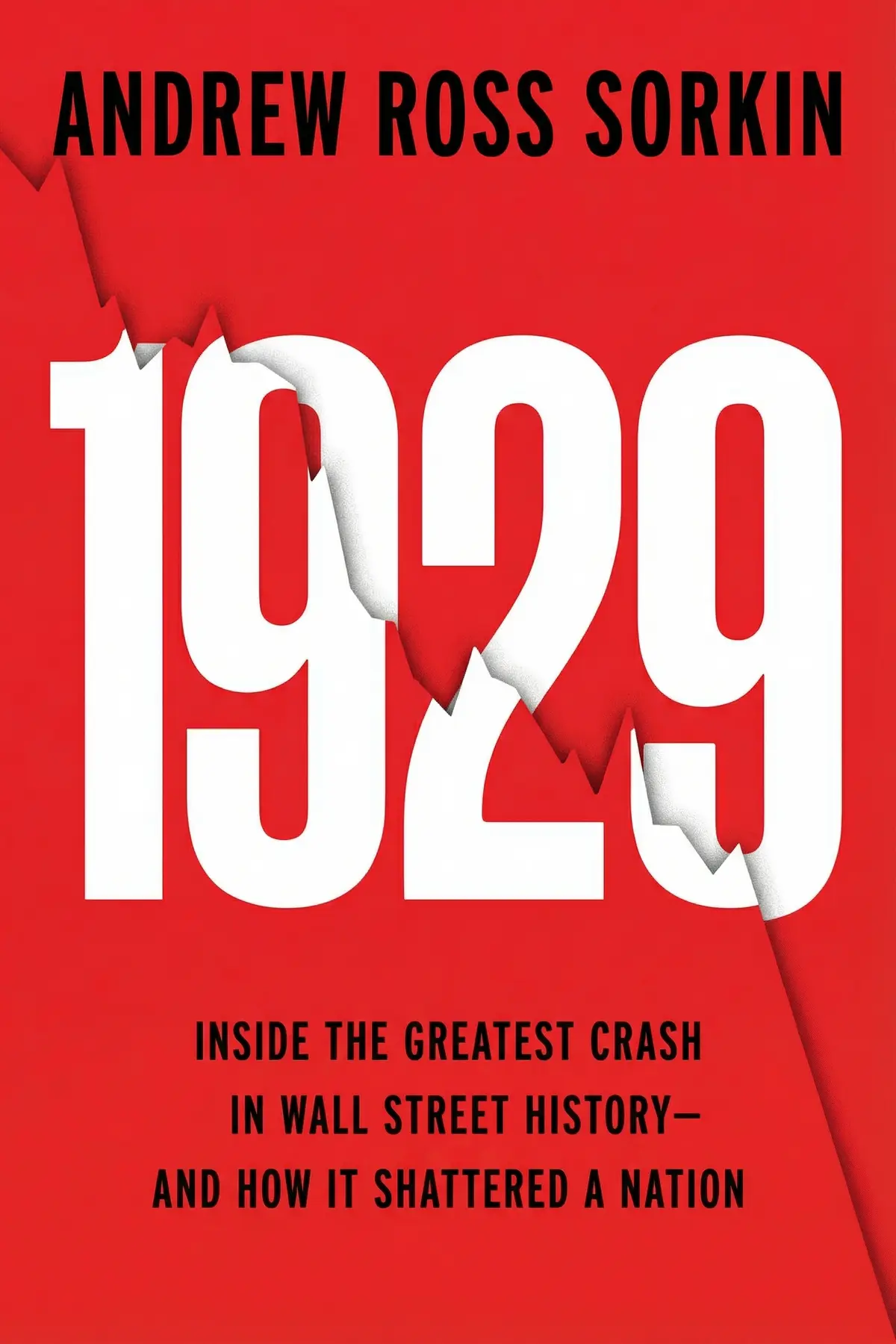
1929: Inside the Greatest Crash in Wall Street History--and How It
Andrew Ross Sorkin
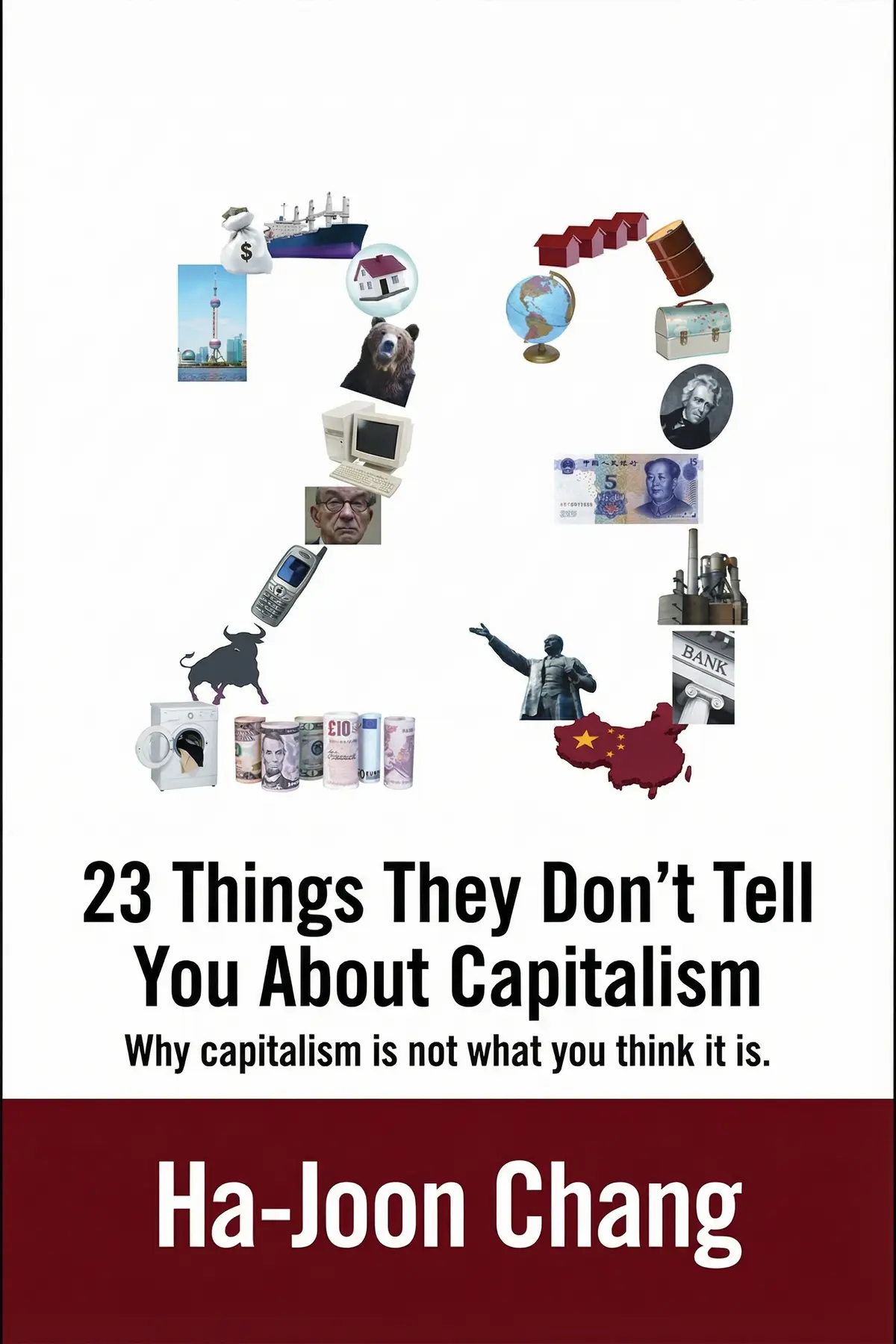
23 Things They Don’t Tell You About Capitalism
Ha-Joon Chang
AUDIO SUMMARY AVAILABLE
Listen to A Little History of Economics in 15 minutes
Get the key ideas from A Little History of Economics by Niall Kishtainy, plus 5,000+ more titles in English and Thai.
- 5,000+ titles
- Listen as much as you want
- 7-day free trial
- Cancel anytime







