
23 min 07 sec
A Little History of Philosophy
Explore the evolution of Western thought through the lives and ideas of history's most influential thinkers. This summary simplifies complex philosophical debates, offering clear insights into reality, morality, and the human condition.
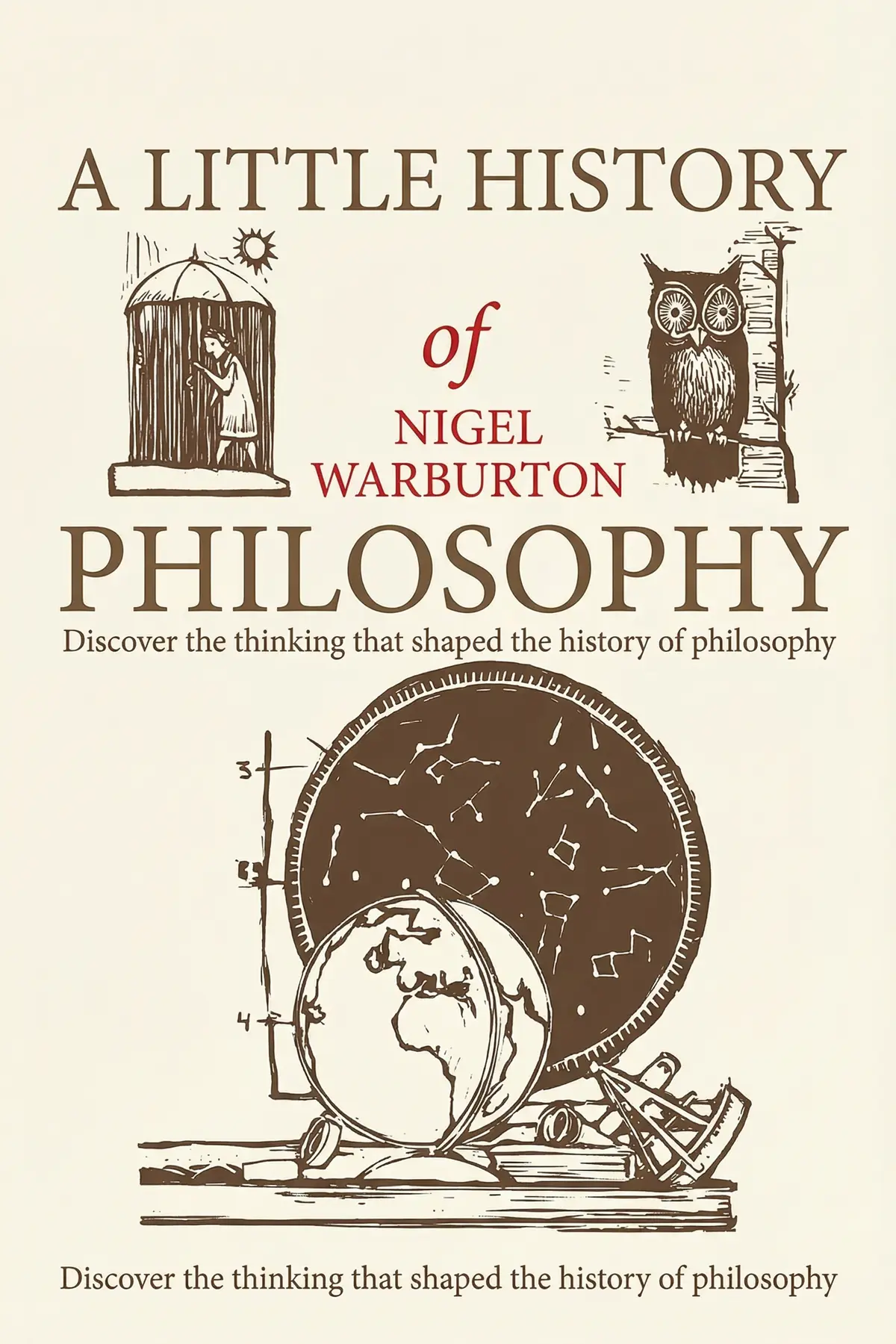
Table of Content
1. Introduction
1 min 49 sec
Every one of us, at some point, has stared at the ceiling in the quiet hours of the night and wondered about the same fundamental mysteries. We ask ourselves what it means to live a truly good life, whether there is a definitive truth out there to be found, or how we should treat the people around us. These aren’t just idle curiosities; they are the gears that drive the human experience. For thousands of years, some of the most brilliant minds in history have dedicated their entire lives to untangling these knots. This pursuit is what we call philosophy.
However, for many of us, the actual writings of these great thinkers feel like a locked room. We hear names like Immanuel Kant or Friedrich Nietzsche and feel a sense of intellectual intimidation. Their books are often filled with dense, technical language and complex references to other thinkers, making the subject feel reserved for academics in ivory towers. It can feel like you need a secret map just to understand the basic premise of their arguments.
That is exactly why we are diving into these ideas today. By stripping away the academic gatekeeping and focusing on the core narratives of Western thought, we can see these philosophers for what they really were: people struggling to make sense of the world, just like us. In this exploration, we will trace a path from the dusty streets of ancient Athens to the radical linguistic shifts of the twentieth century. We will look at why death might not be something to fear, how our social structures can both liberate and enslave us, and why the very words we use might be the source of our deepest confusion. By the end of this journey, you’ll see that philosophy isn’t just a historical record of old ideas—it’s a living, breathing toolkit for understanding your own life.
2. The Foundations of Inquiry in Ancient Athens
2 min 31 sec
Travel back to the origins of Western logic, where a man with no written records and a student with a vision of a higher reality forever changed how we perceive truth.
3. Aristotle and the Art of Flourishing
2 min 45 sec
Discover how a student of Plato turned his gaze from the heavens back to the earth, creating a practical guide for achieving a successful and virtuous life.
4. The Epicurean Path to Peace
2 min 53 sec
Learn why one ancient philosopher believed that the key to happiness was not indulgence, but the removal of fear and the embrace of simple, quiet joys.
5. Rousseau and the Paradox of Modern Freedom
2 min 48 sec
Explore the provocative idea that civilization has corrupted our natural goodness and that true liberty might require us to align with the ‘general will.’
6. Kant’s Universal Moral Compass
2 min 46 sec
Discover a revolutionary way of thinking about right and wrong that focuses entirely on our inner intentions rather than the consequences of our actions.
7. Nietzsche and the Crisis of Values
2 min 59 sec
Uncover the radical critique of a thinker who believed that the ‘death of God’ required us to completely rewrite our understanding of good and evil.
8. Wittgenstein and the Limits of Language
2 min 55 sec
See how a twentieth-century genius argued that most of our biggest problems are actually just misunderstandings of the way we use words.
9. Conclusion
1 min 41 sec
We have traveled from the marketplace of Athens to the linguistic puzzles of the modern age, witnessing a grand conversation that has spanned millennia. We’ve seen how Socrates’ simple act of questioning laid the foundation for everything that followed, and how Plato and Aristotle gave us two different ways of looking at our world—one reaching for the heavens and the other firmly rooted in the earth. We explored the quiet contentment of Epicurus, the social visions of Rousseau, the stern duty of Kant, the radical challenges of Nietzsche, and finally, the linguistic therapy of Wittgenstein.
What is the ‘throughline’ of all these diverse ideas? It is the realization that philosophy is not a destination, but a process. It is the ongoing effort to bring our lives into alignment with our reason. Whether it’s finding the ‘Golden Mean’ in our daily habits or checking our ‘maxims’ to ensure we are treating others with dignity, these ideas provide a framework for navigating a world that often feels chaotic and overwhelming.
The most important takeaway is that you are now a part of this conversation. Philosophy isn’t something that happened in the past; it’s something you do every time you stop to consider why you believe what you believe. As you move forward, carry these thinkers with you. When you feel afraid, remember Epicurus’s logic. When you face a difficult choice, remember Kant’s universal rule. And when you find yourself caught in an argument, remember Wittgenstein’s language games. The history of philosophy is really just a history of human beings learning how to think for themselves—and that is a journey that never truly ends.
About this book
What is this book about?
A Little History of Philosophy serves as a chronological journey through the intellectual milestones that have shaped Western civilization. Starting in Ancient Greece with the foundational questioning of Socrates and the idealistic visions of Plato, it moves through the practical ethics of Aristotle and the liberating perspectives of Epicurus. The narrative then shifts toward the Enlightenment and the modern era, grappling with the social contracts of Rousseau, the strict moral imperatives of Kant, and the radical revaluation of values proposed by Nietzsche. This summary promises to demystify the often-intimidating world of academic philosophy. It strips away technical jargon to reveal the core human struggles behind every major theory: the search for truth, the definition of a good life, and the nature of freedom. By connecting these diverse thinkers into a coherent throughline, listeners gain a deeper understanding of how the questions asked thousands of years ago still influence the way we think, govern, and relate to one another today.
Book Information
About the Author
Nigel Warburton
Nigel Warburton is a highly regarded British philosopher and popularizer of the subject. He is well-known for his ability to make complex ideas accessible to a broad audience, most notably as the host of the long-running podcast Philosophy Bites, which he has presented since 2007. In addition to his work in digital media, Warburton is a prolific columnist and the author of several foundational texts, including Philosophy: The Basics.
Ratings & Reviews
Ratings at a glance
What people think
Listeners find this book to be a perfect starting point for novices, offering effective summaries of individual thinkers while clarifying their fundamental concepts. The writing remains brief, and since it covers 46 philosophers across 40 chapters, it makes for a brisk and entertaining experience. They value the storytelling method, noting that each chapter opens with a story, and feel the material is highly approachable.
Top reviews
Fon
Finally got around to reading this after seeing it everywhere, and it’s genuinely the best primer for anyone intimidated by big thinkers. Warburton manages to condense heavy concepts from Socrates to Peter Singer without losing the core message of their arguments. I particularly loved the narrative hooks at the start of each chapter, which made the theories feel grounded in human experience rather than just abstractions. It’s a brisk read, covering 40 chapters, yet it never felt like it was rushing through the intellectual history of the West. If you want to understand why Descartes mattered or what Bentham was really on about with utility, this is your map. This book is absolute gold for any curious beginners.
Show moreUbolwan
After hearing my professor recommend this as a supplemental text, I was surprised by how much I actually enjoyed the prose style. It isn't just a dry list of dates and 'isms' but a living history that connects the dots between different eras. Warburton’s passion for the subject shines through every page, especially when he’s explaining the 'veil of ignorance' or the nuances of Sartre’s existentialism. It helped me visualize the grand scheme of things in a way that my lecture notes never quite managed. While it doesn't replace the primary texts, it provides the essential context needed to tackle them with confidence. It’s an inviting, warm, and intellectually stimulating journey through the best ideas humanity has ever produced.
Show moreYuki
Who knew existentialism could be this entertaining or that the life of Socrates could read like a suspenseful drama? This book is a masterclass in humanities communication, stripping away the jargon that usually keeps people away from philosophy. Every chapter starts with a story or a specific problem, which instantly engages your curiosity before diving into the abstract reasoning. It’s inclusive, covering female thinkers like Hannah Arendt and Simone de Beauvoir, which is often a rarity in these types of overviews. I finished it in three sittings because the pacing is so well-handled and the tone is consistently encouraging. It’s the perfect gift for that friend who is always asking 'why' but hates thick textbooks.
Show moreManee
Looking for an entry point into the world of big ideas? Nigel Warburton has written a concise, engaging, and genuinely fun guide that proves philosophy doesn't have to be boring. The 40 chapters fly by, and by the end, you’ll have a much better grasp of the intellectual scaffolding of civilization. It’s a refreshing take on the genre that prioritizes understanding over academic posturing. If you want a solid foundation, you should definitely start right here.
Show moreAdam
Warburton does a remarkable job distilling complex worldviews into digestible segments that actually stick in your brain. For someone who struggled through heavy academic texts in college, this felt like a breath of fresh air because of its clarity. The chronological flow is seamless, helping you see how Kant responded to Hume or how the Stoicism of Epictetus evolved over time. My only gripe is that because it covers 46 different philosophers, the depth is sacrificed for breadth, leaving you wanting more on figures like Spinoza. However, as an introductory survey, it succeeds brilliantly by being accessible without being patronizing. It’s the kind of book you keep on the shelf to refresh your memory before diving into original works.
Show moreGin
This book feels like a series of fireside chats with a very smart friend who knows exactly how to explain a problem. I appreciated the inclusion of modern figures like Alan Turing and Philippa Foot, which shows that philosophy isn't just a dead discipline. The writing is snappy and the short chapters make it incredibly easy to pick up for ten minutes and put back down. Some might find the tone a bit too simplistic, but I think that’s the point given the title includes the word 'Little.' Personally, I found the anecdote about Schopenhauer’s grumpy interactions with his neighbor both hilarious and illuminating regarding his pessimistic worldview.
Show moreNutnicha
Listening to the chapters on Audible turned my daily commute into a surprisingly deep meditation on the nature of reality and God. The narrator, Kris Dyer, has a clear voice that pairs perfectly with Warburton’s straightforward and unpretentious writing style. I was particularly fascinated by the sections on Spinoza’s view of nature and how that influenced later scientific minds like Einstein. The book does a great job of highlighting similarities and differences between rivals, like the Epicureans versus the Stoics, which made the concepts easier to categorize. It’s a solid experience that provides just enough information to make you feel smarter without requiring a doctorate.
Show morePooja
Tracking the evolution of ideas from the marketplace of Athens to the modern bioethics of Peter Singer was a fascinating experience. Warburton has a gift for finding the most 'sticky' part of a philosopher's theory and centering the chapter around it. I specifically liked the focus on the 'Experience Machine' and Turing’s tests, which made the book feel relevant to our current age. It isn't an exhaustive encyclopedia, and it shouldn't be judged as one; it's a gateway drug to deeper study. My only minor complaint involves the phrasing of John Rawls's 'veil of ignorance,' which felt slightly clunky in this edition. Regardless, it’s a helpful, lighthearted, and generally well-organized chronological survey.
Show moreAir
The title doesn't lie when it says this is a 'little' history, but sometimes it felt a bit too thin for my liking. Truth is, by the time you start to wrap your head around a philosopher's core thesis, the chapter is already over. It’s a great birds-eye view, but the lack of depth means the information doesn't always stick as well as I’d hoped. I found myself wishing he had spent more time on the 20th-century thinkers like Heidegger, who was barely mentioned despite his massive influence. It’s a fine starting point for a teenager, but if you have a background in humanities, you might find it a bit repetitive.
Show moreOrawan
To be fair, I expected a simplified version, but this felt more like a children’s summary than a serious history of ideas. The author focuses so heavily on the question of God that it overshadows other vital branches of philosophy like aesthetics or logic. Furthermore, skipping over giants like Deleuze or giving Heidegger only a passing sentence feels like a massive oversight for this discipline. It’s clearly marketed with a 'philosophy is fun' sales pitch that feels a bit hollow when the internal depth is sacrificed. If you’re looking for a rigorous introduction, you’d be much better off with Will Durant’s classic works. This is just too much 'snack information' for my personal taste.
Show moreReaders also enjoyed
A Guide to the Good Life: The Ancient Art of Stoic Joy
William B. Irvine
A Theory of Justice
John Rawls
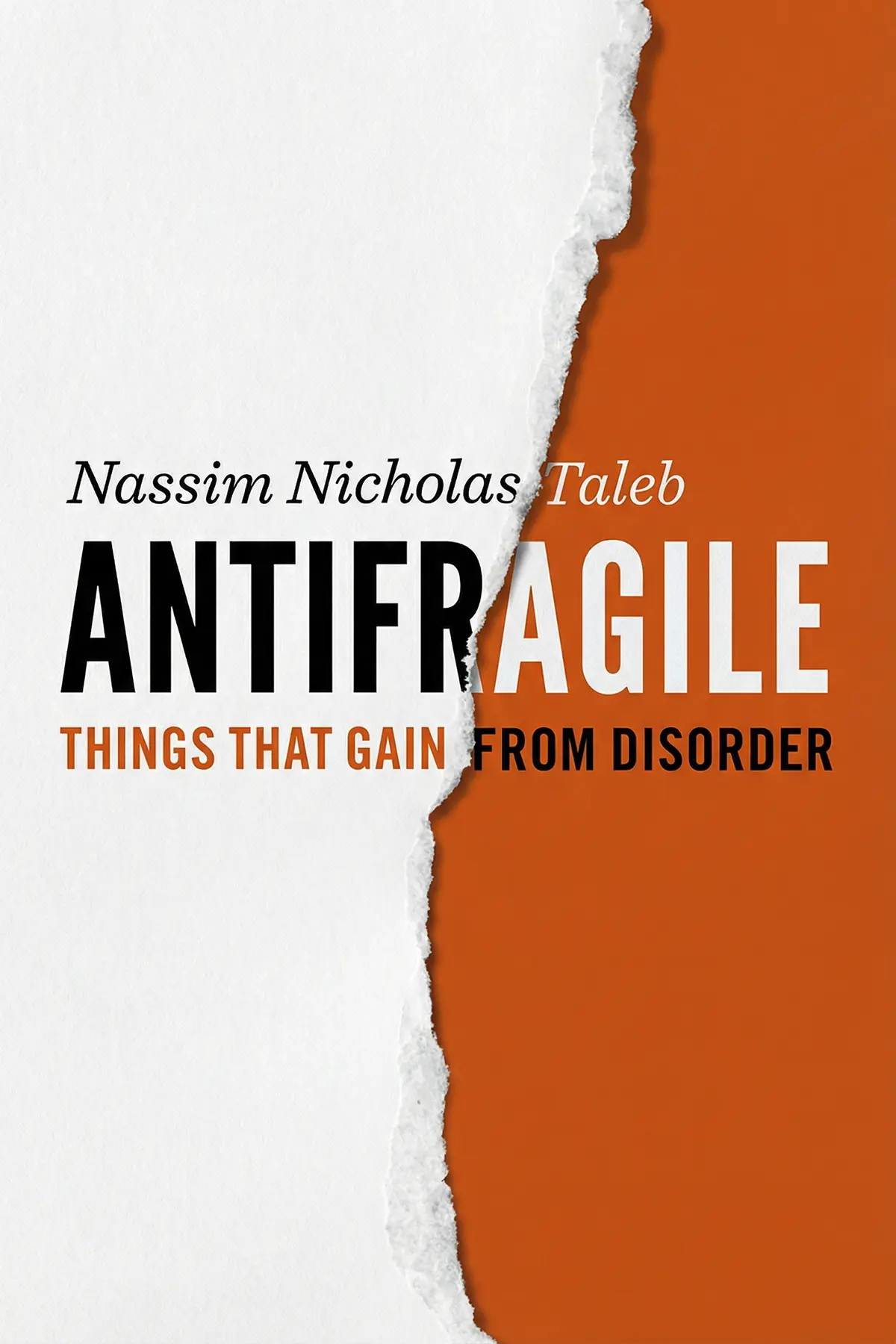
Antifragile: Things That Gain from Disorder
Nassim Nicholas Taleb
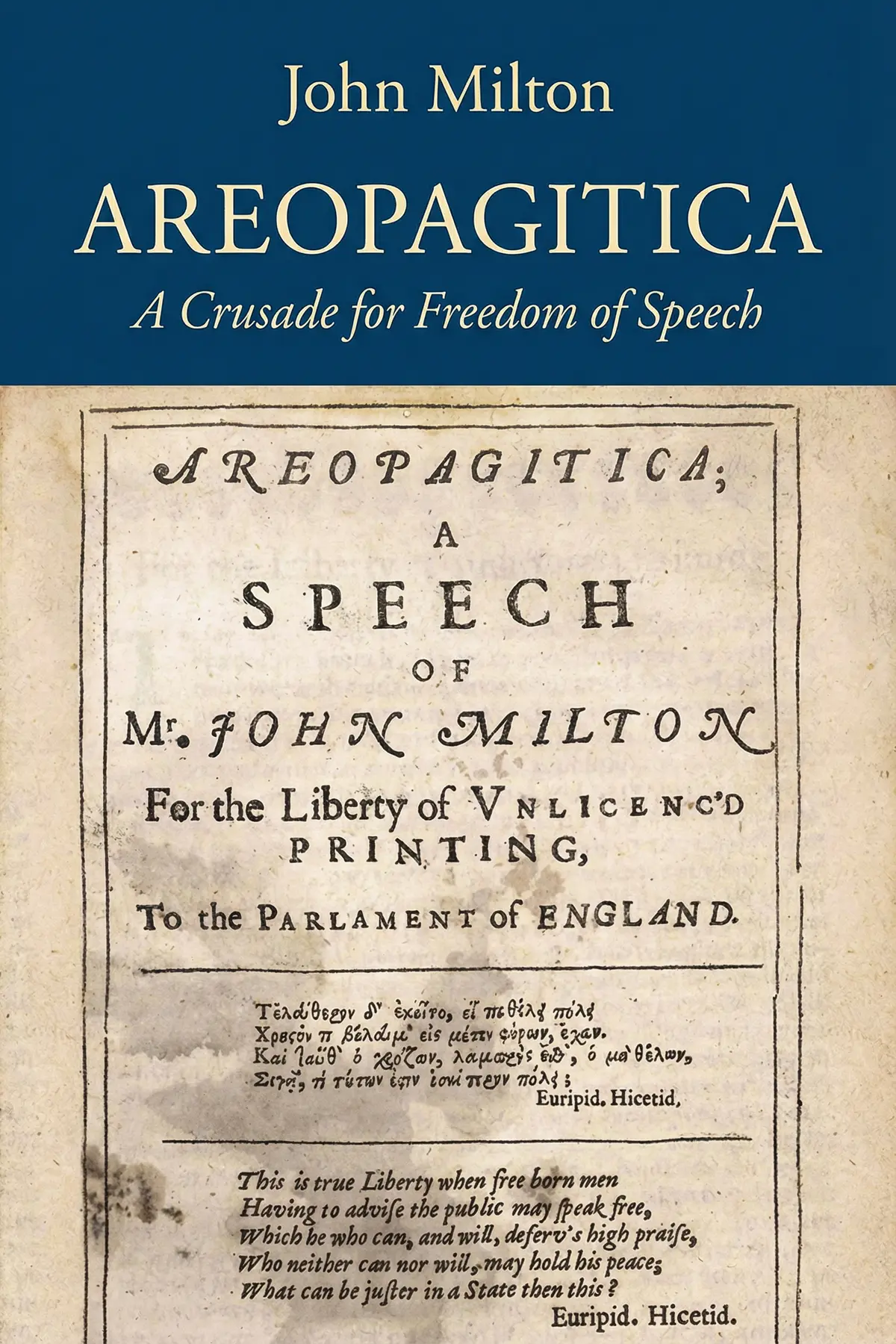
Areopagitica: Philosophy)
John Milton
AUDIO SUMMARY AVAILABLE
Listen to A Little History of Philosophy in 15 minutes
Get the key ideas from A Little History of Philosophy by Nigel Warburton, plus 5,000+ more titles in English and Thai.
- 5,000+ titles
- Listen as much as you want
- 7-day free trial
- Cancel anytime







