
14 min 15 sec
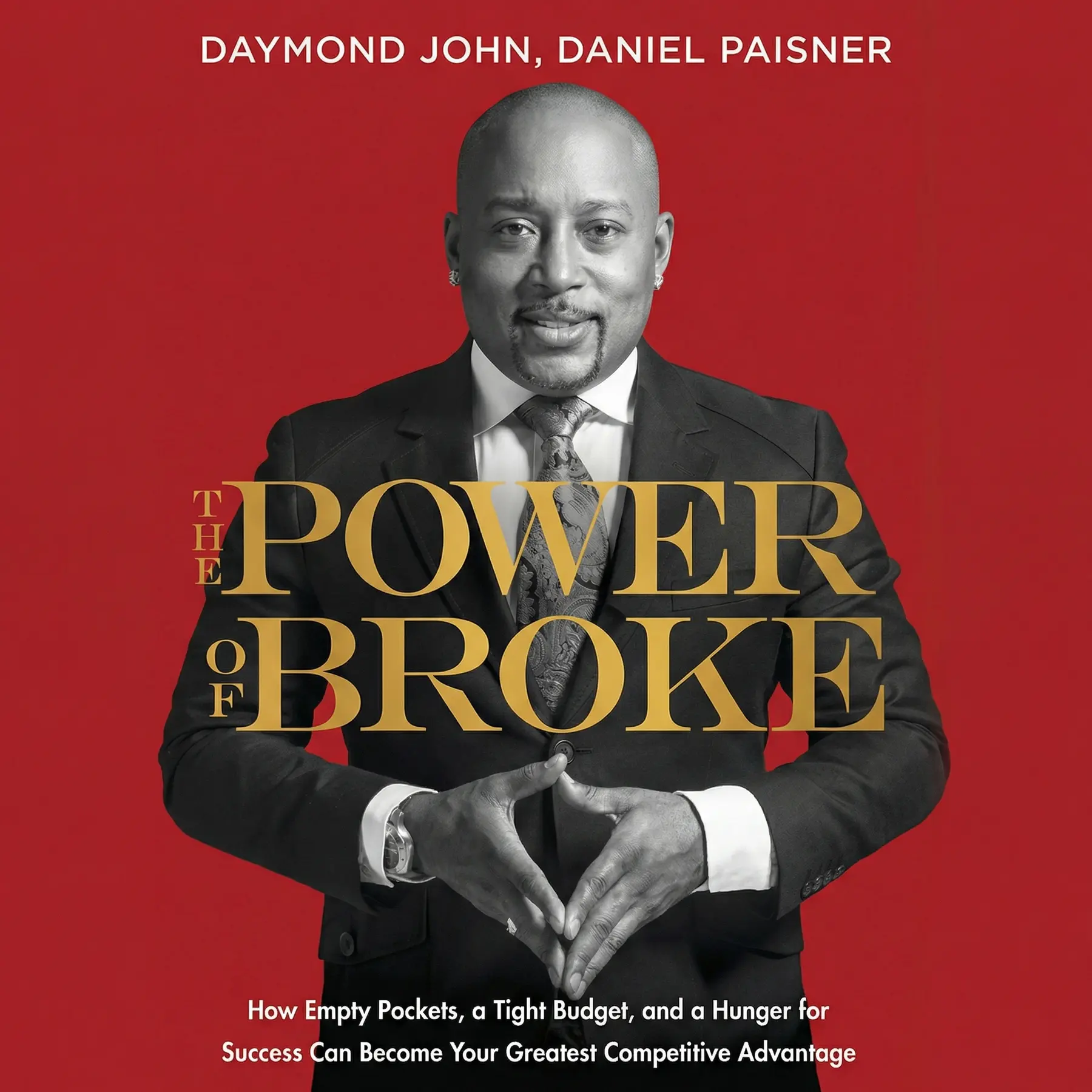
The Power of Broke: How Empty Pockets, a Tight Budget, and a Hunger for Success Can Become Your Greatest Competitive Advantage
Daymond John explains why a lack of capital is actually an entrepreneur's greatest strength, driving innovation and authenticity that money simply can't buy. This summary explores the unique advantage of starting with nothing.
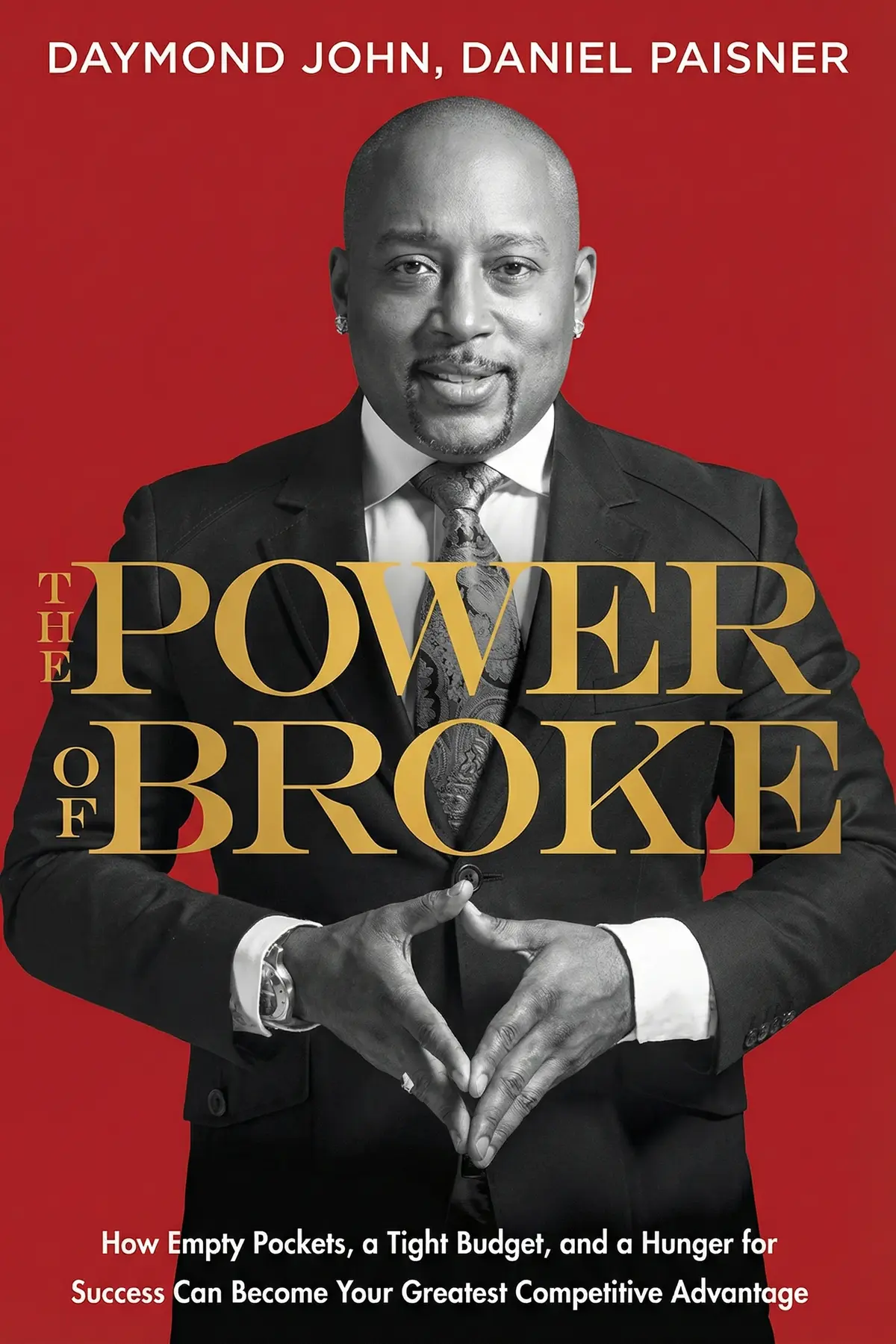
Table of Content
1. Introduction
1 min 41 sec
We live in a world where the prevailing narrative of success often starts with a massive injection of capital. We hear about tech startups securing millions in venture funding before they’ve even sold a single product. We see established corporations throwing billions at research and development. It’s easy to fall into the trap of believing that the only way to compete is to have a deep wallet. But what if that’s actually a disadvantage? What if the very thing we think we need—money—is actually the thing that can make us lazy, unimaginative, and disconnected from our customers?
This is the core premise of the philosophy Daymond John brings to the table. He argues that there is a distinct, undeniable power in being broke. It’s a state of mind that emerges when your back is against the wall and your resources are non-existent. In those moments, you don’t have the luxury of buying your way out of a problem. You have to think your way out. You have to out-hustle, out-maneuver, and out-create everyone else because your survival depends on it.
Throughout this discussion, we are going to explore why having nothing can actually be your greatest asset. We’ll look at how the lack of a traditional budget forces a level of creativity that money simply cannot replicate. We will see how the urgency of a ‘broke’ mindset leads to more authentic connections with your audience and a more resilient business model. Whether you are an aspiring entrepreneur with forty dollars in your pocket or a successful professional looking to regain your competitive edge, the principles of the power of broke are about finding the hunger that fuels long-term greatness. It’s not about the size of your bank account; it’s about the intensity of your drive and the ingenuity of your approach. Let’s dive into how you can turn your perceived limitations into your most significant competitive advantage.
2. The Competitive Advantage of Starting from Zero
1 min 54 sec
Discover why a lack of financial resources can be the ultimate motivator, sparking a unique form of desperation that leads to groundbreaking innovation.
3. Innovation Born from Absolute Necessity
1 min 54 sec
Learn how constraints act as a catalyst for creative breakthroughs, forcing you to find non-traditional paths to success when the front door is locked.
4. The Authentic Foundation of a Grassroots Brand
1 min 50 sec
Explore how the early days of a business, driven by a founder’s personal struggle and passion, create a lasting connection with a loyal audience.
5. Why Excessive Funding Can Be a Liability
1 min 41 sec
Understand the hidden dangers of having too much capital too early, and how it can lead to waste, poor decision-making, and ultimate failure.
6. The Relentless Drive of Sweat Equity
1 min 50 sec
Investigate the importance of personal effort and perseverance as the primary investment in any successful venture.
7. Sustaining the Broke Mindset Amidst Success
1 min 51 sec
Learn why the most successful leaders work to keep their ‘broke’ edge even after they have reached the top of their industries.
8. Conclusion
1 min 34 sec
The Power of Broke is a fundamental shift in how we perceive the relationship between resources and results. Through the lens of Daymond John’s philosophy, we’ve seen that a lack of money isn’t a death sentence for a business; rather, it’s an invitation to tap into a deeper well of creativity, hustle, and resilience. We’ve explored how constraints force us to innovate, how struggle builds an authentic and loyal brand, and how excessive funding can actually lead to the stagnation of a good idea.
The throughline of this entire journey is the idea that the ‘broke’ mindset is a superpower. It’s an internal state of urgency and resourcefulness that allows you to see opportunities where others see obstacles. It’s the drive that keeps you working when others have gone home and the grit that keeps you standing when others have folded. This mindset is what allowed a young entrepreneur to turn a small idea into a global brand like FUBU, and it’s the same mindset that guides the most successful investors on Shark Tank today.
As you move forward in your own endeavors, remember that your greatest asset isn’t your bank balance—it’s your ability to think, act, and persist with the hunger of someone who has everything to gain and nothing to lose. Don’t wait for the perfect conditions or the big investment to start. Start where you are, with what you have. Embrace the constraints. Lean into the hustle. Use your lack of resources as a reason to be more creative than the world ever expected. That is the true power of broke, and it is a power that is available to you right now, regardless of the numbers in your account. The only thing standing between you and your goal is the willingness to let your hunger drive you to greatness.
About this book
What is this book about?
The Power of Broke challenges the widely held belief that massive funding is a prerequisite for business success. Instead, the book argues that being broke is a powerful motivator that forces you to think more creatively, work harder, and find more innovative solutions than your well-funded competitors. Drawing from Daymond John’s personal experiences founding FUBU and his observations as a high-stakes investor, the book demonstrates how limited resources create a unique urgency and authenticity. By examining the intersection of creativity, hustle, and perseverance, the book promises to change how you view obstacles. Rather than seeing a lack of money as a barrier, you will learn to see it as a catalyst for excellence. This perspective is not just for those starting out; it’s a mindset that even the most successful leaders must maintain to keep their competitive edge in a rapidly changing market.
Book Information
About the Author
Daymond John
Daymond John is a world-renowned entrepreneur, investor, and one of the long-standing panelists on the ABC television show, Shark Tank. He is the founder and CEO of FUBU, the hip-hop-inspired clothing line that became a global phenomenon. Daniel Paisner is a prolific collaborator in the publishing world, having cowritten numerous books with high-profile celebrities, politicians, and athletes. He is also an accomplished novelist and the author of several books, including Obit.
Ratings & Reviews
Ratings at a glance
What people think
Listeners find the work captivating and skillfully composed, praising the useful details and hands-on guidance provided throughout. They suggest it is a vital resource for business owners, offering a window into the journeys of prosperous figures. Additionally, listeners are moved by the encouraging tone, with one listener noting how it helped them see their true strengths, while another mentions how it helped them start their business idea.
Top reviews
Naomi
Wow, Daymond John really knows how to light a fire under you with his perspective on the hustle. This book isn't just about being poor; it’s about a specific mentality that stays in your DNA long after you’ve made your first million. I loved hearing about his early days in Queens and how that hunger defined his entire career path. The SHARK points are incredibly useful as a framework for anyone trying to navigate the messy early stages of a startup. Frankly, it’s a must-read for entrepreneurs who feel stuck or overwhelmed by a lack of resources. It definitely helped me see my true strengths in a whole new light.
Show moreMarco
Ever wonder why some people thrive when they have nothing left to lose? This book answers that question through a series of fascinating case studies ranging from world-famous bloggers to local artisans. Daymond John’s writing style is punchy and direct, making the advice feel like a conversation with a mentor. I particularly appreciated the chapter on Tim Ferriss and how he leveraged limited resources to launch a massive platform. The book provided great insight into the lives of successful businesspeople who didn't start with a silver spoon. It’s action-oriented and gave me the courage to finally launch my own side hustle last month.
Show moreWipada
Picked this up during a really low point in my career when I felt like the lack of capital was my biggest hurdle. This book completely shifted my perspective and helped me realize that being broke is actually my greatest asset right now. The lessons on staying laser-focused and being creative with limited resources are absolutely essential for any new business owner. I loved the variety of entrepreneurs featured, from different industries and walks of life, showing that this principle is universal. It’s an engaging, fast-paced read that I’ll likely return to whenever I feel my drive starting to fade. Truly a must-read for anyone with a dream and an empty wallet.
Show moreSirichai
As an aspiring entrepreneur, I found this to be a refreshingly practical guide that flips the script on needing massive capital to start a venture. Daymond John argues that having your back against the wall forces you to be more creative and laser-focused on your goals. While the conversational tone makes it an easy read, I’ll admit he mentions Shark Tank and FUBU a bit too often for my taste. Despite that, the profiles of other successful people were genuinely inspiring and helped me re-evaluate my own business idea. It's a solid 4-star read for anyone who needs a kick in the pants to stop making excuses about money.
Show moreKae
Finally got around to finishing this after seeing Daymond on TV for years, and it was better than I anticipated. The core message is that limited resources actually provide a competitive advantage by forcing you to be more efficient. I found the storytelling to be top-notch, especially when he highlights people from diverse backgrounds and age groups. My only real gripe is that the advice can be a bit 'alpha male' and 'rise-and-grind' for some readers. However, if you are looking for practical lessons on how to scale a business without a massive bank account, this is a winner. The emphasis on staying hungry is a great reminder for any stage of your career.
Show moreMonthon
The SHARK points alone made this purchase worth it for my startup team, as they provide a clear roadmap for focus. Not gonna lie, I was skeptical of a celebrity business book, but the 'power of broke' mentality is actually very grounded. The author explains how money can sometimes be a disadvantage because it allows you to make expensive mistakes without learning from them. I appreciated the grit in the writing and the honest look at the FUBU backstory. It’s not a deep academic study, but it’s a highly motivating read for anyone in the trenches of a new business. I’d recommend it to anyone who needs to see their lack of capital as a strength.
Show moreFilm
Not what I expected from a 'celebrity' business book, as it actually offers some very tangible advice for the modern world. Daymond John breaks down how to use social media and personal branding to bypass traditional gatekeepers. Personally, I found the chapter on how he started selling hats in Queens to be the most compelling part of the narrative. It’s a very conversational book that feels like you’re grabbing coffee with a billionaire who hasn't forgotten where he came from. Even though it gets a little repetitive near the end, the motivational boost is worth the price of admission. It helped me refine my pitch and focus on my core strengths.
Show moreSatit
To be fair, the 'power of broke' is a concept I’ve lived by for years without knowing there was a name for it. The book is engaging and well-written, but it often feels like it could have been a long-form article rather than a full book. I found the repetition a bit grating, as the author tends to circle back to the same three or four points about grit and determination. If you can get past the slightly inflated ego and the frequent self-promotion, there are some real nuggets of wisdom here. It’s a decent motivational tool, but I wish there was more statistical data to back up the anecdotal success stories.
Show moreBrahim
Truth is, I enjoyed the stories of the other entrepreneurs far more than the author’s own interjections throughout the text. Daymond John is a master salesman, and he definitely uses this book to sell his 'shark' persona at every possible opportunity. While the book is an easy read, it often feels like it’s talking down to the reader with simple jargon. There were several quality pointers that I translated for my own use, but they were buried under a lot of filler. If the book were 100 pages shorter, it would have been a five-star masterpiece of business strategy. Still, it’s worth a read for the inspiring bootstrap stories.
Show morePan
Look, I wanted to love this, but it felt like a 200-page sales pitch for Daymond John’s personal brand. Every time a guest entrepreneur started sharing an interesting story, the author would interject with a 'this reminds me of my time on Shark Tank' comment. It got old very quickly and felt a bit like a glossy brochure for his own ego. While the message of being resourceful is valuable, the book lacks any real analysis of why some people fail despite taking huge risks. I ended up skimming the last few chapters because the text was so repetitious. Better to just watch his YouTube clips or check it out from the library.
Show moreReaders also enjoyed

7 Powers: The Foundations of Business Strategy
Hamilton Helmer
Alibaba: The House That Jack Ma Built
Duncan Clark
Bad Blood: Secrets and Lies in a Silicon Valley Startup
John Carreyrou
AUDIO SUMMARY AVAILABLE
Listen to The Power of Broke in 15 minutes
Get the key ideas from The Power of Broke by Daymond John, plus 5,000+ more titles in English and Thai.
- 5,000+ titles
- Listen as much as you want
- 7-day free trial
- Cancel anytime







