
19 min 56 sec
What Great Brands Do: The Seven Brand-Building Principles That Separate the Best from the Rest
Discover why successful branding is an operational strategy, not just a marketing tactic. Learn seven core principles used by iconic companies like Apple and Nike to build lasting emotional connections and market dominance.
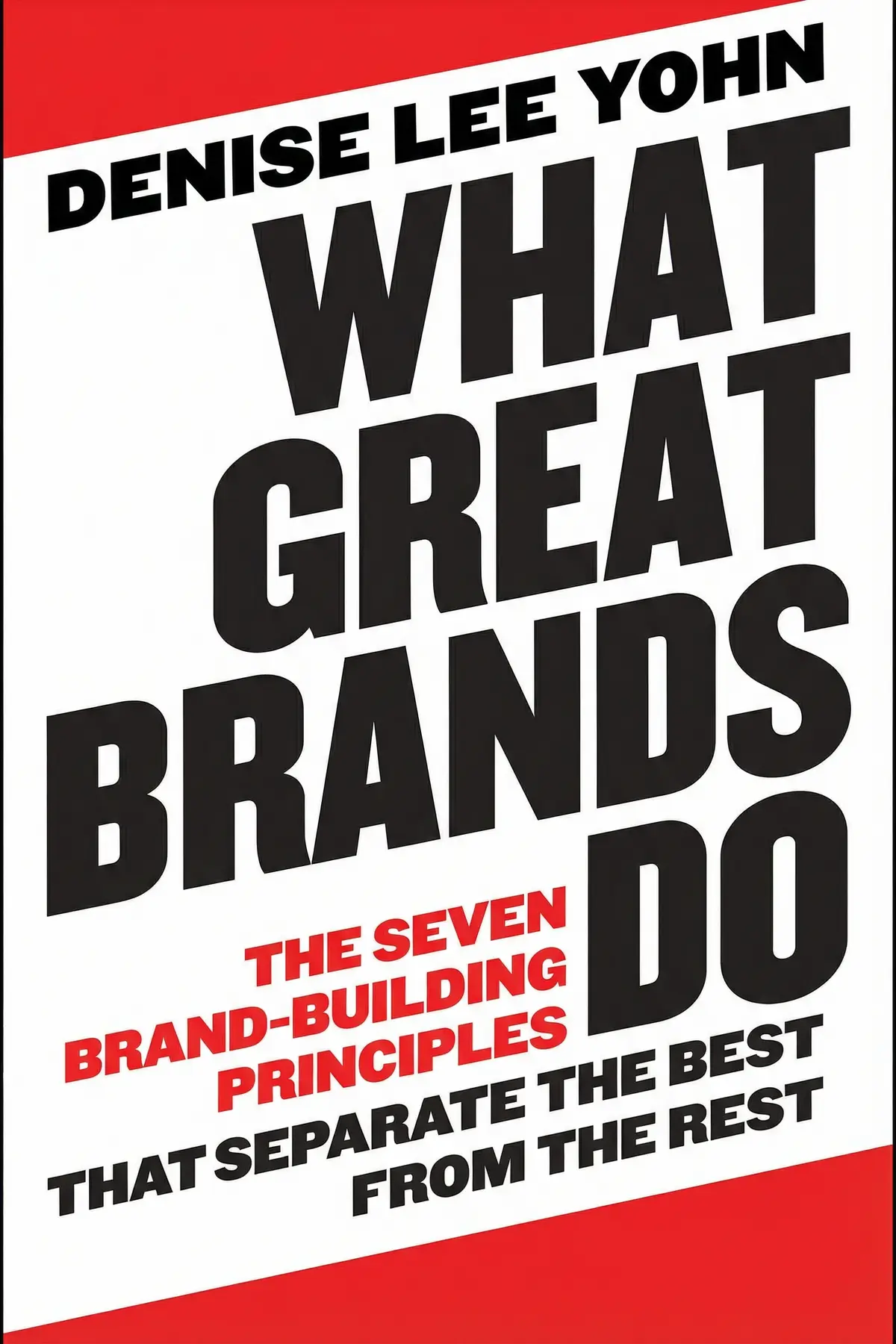
Table of Content
1. Introduction
1 min 30 sec
When we think about a brand, we often think about the surface level. We think about the iconic swoosh on a pair of sneakers, the bitten apple on the back of a laptop, or perhaps a catchy jingle that we can’t get out of our heads. But if you talk to the people who built those giants, they’ll tell you something very different. They’ll tell you that the brand isn’t just the logo; it’s the entire way the business operates.
In What Great Brands Do, we are invited to look past the marketing curtain. The central argument here is that branding is an operational tool. It is the personality of the business, and it should guide every single action a company takes, from how they hire staff to how they design their supply chain. This is a journey through the seven principles that separate the world-beaters from the also-rans.
Throughout this exploration, we will see how companies like Nike and Starbucks have moved beyond selling products to selling values. We’ll look at why chasing every possible customer is actually a recipe for failure, and why the most successful brands are often the ones that have the courage to be divisive. By the time we’re finished, you’ll understand that a brand is not a coat of paint you apply at the end of a project; it is the foundation upon which everything else is built. If you want to move from being just another business to being a brand that defines its category, you have to start by looking inward. Let’s dive into the core strategies that turn a simple company into a cultural icon.
2. The Brand as a Strategic Business Compass
2 min 06 sec
Explore why a brand is much more than a visual identity, acting instead as a core personality that dictates every operational decision and boosts profit margins.
3. Building Your Brand from the Inside Out
2 min 06 sec
Learn why corporate culture is the true foundation of a brand and how internal alignment ensures your message reaches the customer clearly.
4. The Power of Emotional Resonance
2 min 11 sec
Understand why successful branding focuses on ethos and human values rather than technical specifications, creating lasting bonds through empathy.
5. Creating Trends Instead of Following Them
2 min 16 sec
Discover why chasing the latest market fads is a risky strategy and how challenging industry dogmas can lead to true market leadership.
6. The Necessity of Being Selective
2 min 10 sec
Learn why the most successful brands don’t try to please everyone, focusing instead on a core audience even if it means alienating others.
7. Protecting Brand Integrity Over Growth
2 min 00 sec
Examine the danger of prioritizing short-term expansion and learn how to use your core ideology to say no to the wrong opportunities.
8. Orchestrating the Total Customer Journey
1 min 59 sec
See how consistent touchpoints and a focus on sensory details create a theatrical brand experience that reinforces customer loyalty.
9. Practicing Strategic and Relevant Generosity
1 min 56 sec
Explore why corporate responsibility must be deeply connected to your brand’s identity to be authentic and impactful rather than looking like PR.
10. Conclusion
1 min 42 sec
As we have seen, building a great brand is not a project for the marketing team to handle in isolation. It is an all-encompassing operational philosophy. From the way you treat your employees to the way you design your packaging, every action your company takes either strengthens or weakens your brand’s integrity. We’ve explored how the most iconic companies use their brand as a strategic compass, how they prioritize emotional connection over technical specs, and how they have the courage to stand for something specific, even if it means being divisive.
The throughline of all these principles is consistency and authenticity. A great brand doesn’t just say who it is; it proves it through every decision. It avoids the temptation of easy growth and trendy gimmicks in favor of a clear, unwavering ideology. It understands that in a crowded marketplace, the only way to truly stand out is to be remarkably, consistently yourself.
As you move forward, the most important step is to start looking at your own work through the lens of your brand. Whether you are a CEO or an entry-level employee, your actions have an impact. Ask yourself: Does this decision reflect our core values? Does this interaction make the brand light shine brighter for the customer? By operationalizing your brand and letting it guide your daily work, you don’t just build a better business—you build a lasting legacy that people truly care about. The path to greatness isn’t about doing more things; it’s about doing everything with a clear sense of who you are and why you exist.
About this book
What is this book about?
What Great Brands Do challenges the traditional notion that branding is a cosmetic layer applied by marketing teams. Instead, it argues that a brand is the very soul of a business, influencing everything from internal culture to product design and customer service. By examining the world’s most successful organizations, the book reveals seven fundamental principles that allow companies to transcend the competition and build deep, authentic loyalty. You will learn how to align your corporate culture with your brand identity, why it is vital to create trends rather than chase them, and how the most resilient brands have the courage to say no to growth opportunities that threaten their core ideology. The promise of this guide is a total shift in perspective: seeing your brand not as a message you send out, but as a strategic compass that guides every internal decision and external interaction.
Book Information
About the Author
Denise Lee Yohn
Denise Lee Yohn is a recognized brand expert, speaker and writer who specializes in teaching companies how to implement their brands on an operational level.
Ratings & Reviews
Ratings at a glance
What people think
Listeners find this work accessible and logically structured, packed with actionable resources and real-world instances. Furthermore, the content offers novel ideas regarding brand identity, stressing that the process involves much more than marketing efforts alone. Listeners also value the flow and caliber of the writing, with one review highlighting how it fosters intimate relationships with business personalities.
Top reviews
Rosa
Ever wonder why some companies just seem to 'get it' while others struggle to find an identity? Denise Lee Yohn breaks down the 'brand-as-business' ethos in a way that feels both revolutionary and common sense. In my experience, most business books fluff their way through the first half, but this one provides actual tools you can implement on Monday morning. The distinction she makes between marketing tactics and core brand identity is crucial. It’s not just about what you sell; it’s about the DNA of the organization. Truly, this is a blueprint for anyone tired of the surface-level noise in the industry. Highly recommended for leaders who want to move beyond just 'doing marketing' and actually building a lasting legacy.
Show morePat
Wow, I didn't expect a business book to be this engaging, but the writing quality here is top-notch. Yohn has a way of fostering an intimate relationship with these big business personalities, making their decisions feel relatable and actionable. Look, many authors try to simplify branding, but she manages to do it without losing the nuance. The emphasis on 'great brands never have to give back' was a standout concept for me. It challenges the traditional CSR model in a way that makes total sense. This has become a permanent fixture on my desk and a gift for all my consulting clients who want to build something meaningful.
Show moreSamroeng
Great brands don't just happen; they are meticulously crafted through every internal and external action. This book is a masterclass in that philosophy. I’ve read a lot of business literature, but few titles manage to bridge the gap between 'vague strategy' and 'operational reality' as effectively as this one. Denise Lee Yohn is tenacious in her approach, pushing the reader to look at their business as a holistic brand. It’s refreshing to see an author prioritize principles over profit-chasing tactics. I found the sections on 'sweating the small stuff' particularly impactful. Every page feels like it’s pushing you toward higher standards and better business practices.
Show moreDome
Not what I expected, and that’s a good thing! I thought this would be another boring marketing manual, but it’s actually a deep look at organizational excellence. The way she structures the 'Brand-as-Business' framework is incredibly logical and easy to follow. Each chapter builds on the last, providing fresh insights into why some companies thrive while others vanish. Frankly, it’s one of the few books that recognizes the power of purpose-driven leadership in a way that isn't just fluffy. If you’re looking to transform your company’s culture and market presence simultaneously, this is the book you need to buy right now. It truly changes how you see your business.
Show moreOn
The chapter on putting the brand—not the customer—at the center of strategy really flipped my perspective. Most people think 'the customer is always right' is the ultimate rule, but Yohn argues that having a solid internal compass is what actually creates value. Frankly, it’s a refreshing take in an era where brands often lose themselves trying to please everyone at once. The writing is snappy and the organization makes it easy to dip in and out of specific principles. My only minor gripe is that some of the company examples feel like they’re from a different era of the internet. Still, the fundamental logic holds up remarkably well for a book that has been out for a while.
Show moreYuki
Picked this up on a whim and was pleasantly surprised by how well it addresses internal culture. Most people think branding is an external exercise involving logos and slogans, but Yohn insists it starts from within. I love the idea that every employee needs to live the brand for it to be authentic. The book is very well-organized, moving from theory to practice with tools that help you audit your own business. To be honest, I think the pace is perfect for a weekend read. It’s not overly dense, which is great for busy professionals. A few more modern examples would have earned it a fifth star, but the core message is timeless.
Show moreTum
As someone who works in a mid-sized startup, I found the practical checklists at the end of the chapters incredibly helpful. It moves beyond theory and actually tells you what to do to align your operations. The pacing is fast, and the tone is direct, which I appreciate. Gotta say, I was skeptical about the 'avoiding sales' chapter at first, but the logic behind it is sound. Great brands create demand through their identity rather than desperate discounts. My only concern is that it doesn't touch enough on the digital-first era we're currently in. If you can look past the dated tech references, there is a lot of gold to be found here.
Show moreYulia
After hearing so much buzz about this title, I finally sat down with it last week. To be fair, the structure is incredibly clear and the 'Seven Brand-as-Business Principles' provide a solid framework for beginners. However, it’s hard to ignore that the case studies are starting to show their age. We’re looking at a landscape that has shifted significantly since 2014, and some of the 'great' brands mentioned haven't exactly maintained their status. Truth is, if you’ve taken a few high-level marketing courses, you might find yourself skimming through the anecdotes. It’s a decent primer, but it lacks the deep psychological dive I was hoping for to really understand consumer behavior.
Show moreTak
Finally got around to reading this, and it’s a bit of a mixed bag. On one hand, the central thesis—that brand is what you DO, not what you say—is spot on. On the other hand, it feels like a collection of stories you’ve already read in Harvard Business Review or every other marketing blog. In my experience, the book works best as a basic primer for someone new to the field. If you are already a branding veteran, you can probably just read the table of contents and get 80% of the value. It’s a solid enough read, but it lacks the 'aha' moments I was expecting from such a highly-rated book.
Show moreWatcharee
This book is basically an anthology of cherry-picked anecdotes that have aged like milk. Not gonna lie, I found the 'scientific' method she proposes to be mostly ideological nonsense designed to fit a pre-existing narrative. It feels like she looked at successful companies and then retroactively applied her system to explain their success without acknowledging luck or market timing. The prose is full of corporate buzzwords and 'blabla' that doesn't offer any real substance for a modern tech environment. If you want a deep dive into human behavior or actual branding data, look elsewhere. This is just a rehashing of things we've all heard a million times in basic business seminars.
Show moreReaders also enjoyed


AUDIO SUMMARY AVAILABLE
Listen to What Great Brands Do in 15 minutes
Get the key ideas from What Great Brands Do by Denise Lee Yohn, plus 5,000+ more titles in English and Thai.
- 5,000+ titles
- Listen as much as you want
- 7-day free trial
- Cancel anytime







