
A Higher Loyalty: Truth, Lies and Leadership
James Comey
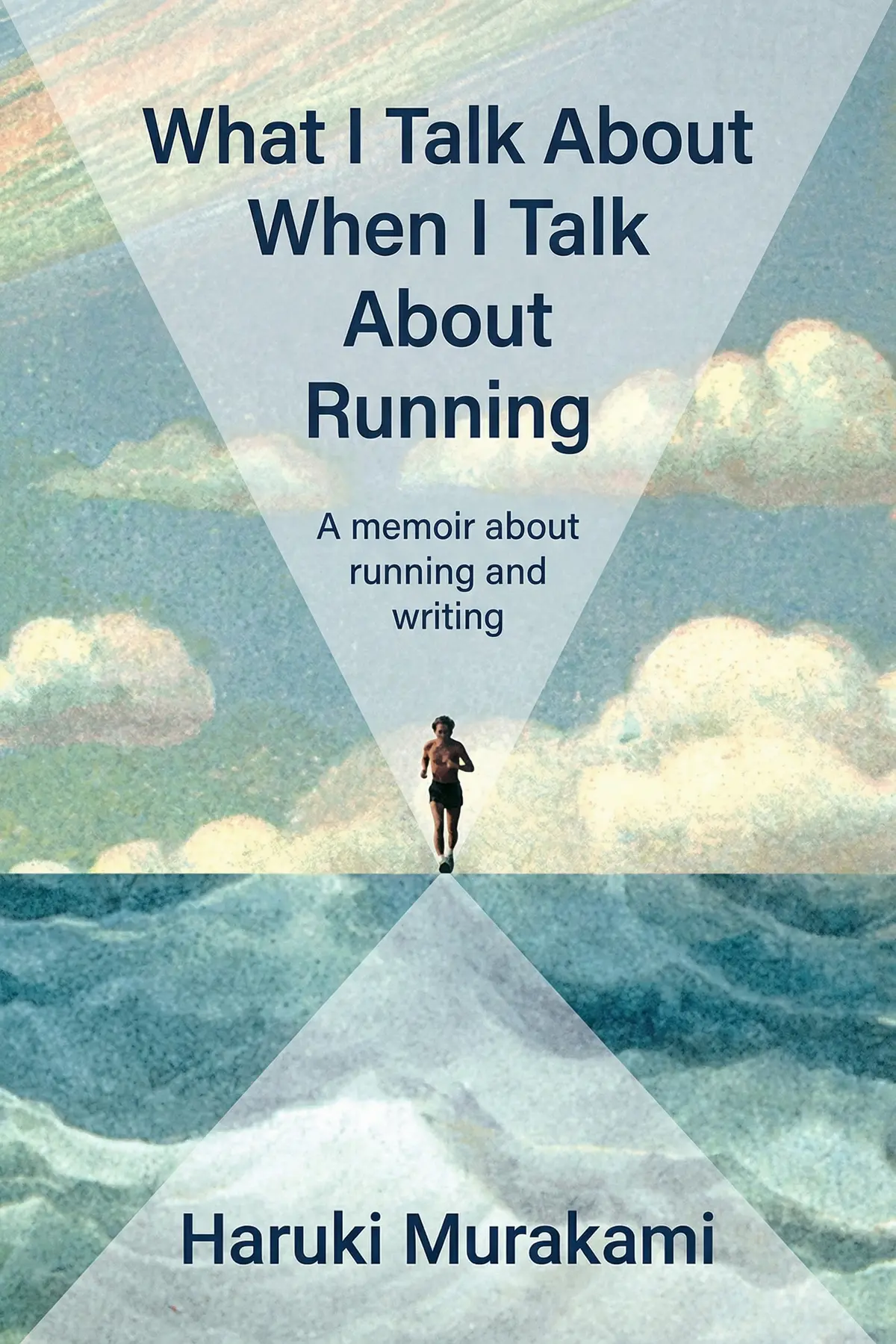
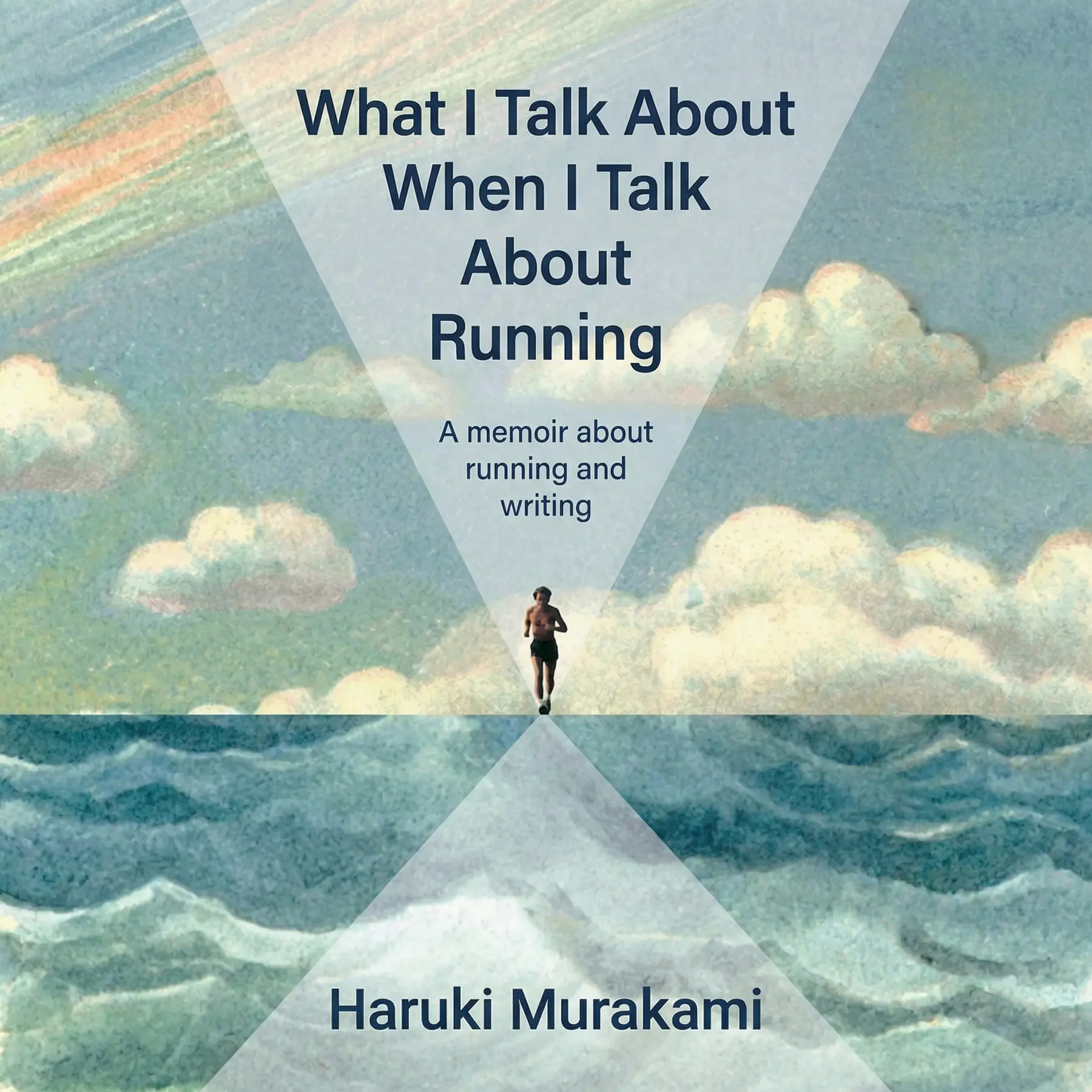
Discover how world-renowned novelist Haruki Murakami balances the solitary rigor of writing with the physical demands of marathon running, revealing how physical discipline fuels the creative spirit and mental clarity.
2 min 01 sec
For many, the image of a world-class novelist is one of a sedentary figure, hunched over a typewriter in a dimly lit room, perhaps fueled by nothing more than caffeine and sheer imagination. But for Haruki Murakami, one of the most celebrated voices in contemporary literature, the creative act is inextricably linked to the physical act of putting one foot in front of the other. Since the early 1980s, Murakami has not only produced a staggering body of surreal and dreamlike fiction but has also maintained a rigorous daily running habit, completing dozens of marathons and even venturing into the grueling world of triathlons and ultramarathons.
In this exploration of his memoir, we dive into a journey that is as much about the mind as it is about the body. This is not a typical how-to guide for athletes, nor is it a standard literary autobiography. Instead, it is a reflection on how the discipline of the road mirrors the discipline of the page. Murakami reveals that the stamina required to finish a marathon is the very same stamina needed to finish a novel. He takes us through his training logs, his moments of physical failure, and his eventual realization that the aging process is not an enemy to be defeated, but a reality to be accepted with grace.
As we walk through these insights, we will see how Murakami transformed from a chain-smoking jazz club owner into a dedicated athlete, and why he believes that the most important competition is the one you have with yourself. We will explore the concept of the “void”—that meditative state where the outside world falls away—and understand why physical health is the only thing that allows a writer to survive the toxic depths of their own imagination. Whether you are a runner, a writer, or simply someone looking for a deeper understanding of persistence, this narrative offers a profound look at what it means to keep moving forward, regardless of the obstacles in your path.
2 min 33 sec
Discover how the solitary act of running allows a writer to access a unique mental state where thoughts disappear and true internal peace begins to take hold.
2 min 24 sec
Explore the dramatic transformation from a late-night jazz bar proprietor to a disciplined early-rising athlete and what this shift reveals about personal change.
2 min 33 sec
Learn why the physical limits of the body are not failures, but lessons that teach the importance of rigorous preparation and mental grit.
2 min 24 sec
Uncover the essential qualities shared by successful novelists and long-distance runners, and why talent alone is never enough for the long haul.
2 min 13 sec
Understand why a healthy body is the only thing that can protect an artist from the ‘toxic’ emotions required to create profound work.
2 min 10 sec
Relive the surreal experience of a sixty-two-mile ultramarathon and discover what happens to the spirit when the body reaches its absolute limit.
2 min 15 sec
How to handle the slow decline of physical performance with grace and the realization that personal satisfaction matters more than the clock.
2 min 23 sec
Discover how a triathlon helped an author overcome a deep-seated fear and prove that even later in life, we can still find hidden strengths.
1 min 43 sec
In the end, What I Talk About When I Talk About Running is far more than a memoir of a hobby; it is a manifesto for a life lived with intention and discipline. Haruki Murakami shows us that the secret to a long and productive creative career is not a sudden flash of brilliance, but the steady, rhythmic application of effort. By weaving together the narratives of his writing life and his running life, he illustrates that our physical and mental selves are not separate entities, but partners that must be nurtured in tandem.
The throughline of Murakami’s philosophy is the importance of individual standards. In a world that constantly compares us to others, he reminds us that the only competition that truly matters is the one we have with the person we were yesterday. Whether it is finishing a difficult chapter or crossing the finish line of a marathon, the reward is the personal satisfaction of knowing you did not give up. He encourages us to find our own version of the “void”—that space where we can escape the noise of the world and find clarity.
As we close this summary, consider what your own “running” might be. What is the one thing you do that requires your focus, builds your endurance, and keeps you grounded? Perhaps it’s a physical sport, a creative pursuit, or a professional goal. Whatever it is, Murakami’s experience suggests that the key to success is simply to keep showing up. Accept your limits, respect your body, and never stop moving toward your next goal. Even when the road gets steep and your legs get heavy, remember that the act of continuing is, in itself, a victory.
This memoir provides an intimate look into the daily habits and inner thoughts of one of the world’s most celebrated authors. Rather than focusing solely on literary theory, Haruki Murakami explores his decades-long dedication to long-distance running and how this physical pursuit is inextricably linked to his creative process. It is a story about the transition from a late-night lifestyle to the disciplined rhythm of an athlete, demonstrating how physical health supports the mental strain of producing fiction. The promise of the book is a unique philosophy on aging, persistence, and the craft of writing. Listeners will gain insight into how to build endurance, the importance of individual standards over public competition, and the ways in which physical activity can help navigate the dark, difficult emotions that often accompany creative work. Ultimately, it is a reflection on finding one's limits and moving past them through steady, persistent effort.
Haruki Murakami is a Japanese author best known for his quirky and cerebral fiction including best-selling novels like Norwegian Wood, The Wind-Up Bird Chronicle, and Kafka on the Shore. In addition, he has published several works of nonfiction including Underground and Portraits in Jazz.
Listeners find this work to be a marvelous experience that feels like an athlete's journal, featuring exceptional prose that weaves together reflections on the crafts of running and writing. Furthermore, they value the book’s motivating nature, suggesting it for dedicated runners and finding it packed with insight. Listeners also commend the storytelling, with one listener highlighting the way it captures the highs and lows of training, and its deep themes, with one mentioning how it guides the audience through a process of self-discovery.
There is a profound, quiet strength in how Murakami describes his transition from a jazz club owner to a world-renowned novelist. The story of him deciding to write his first book while watching a baseball game in 1978 feels almost like a myth now. Truth is, this book reads more like a series of intimate diary entries than a formal memoir, which makes the wisdom feel earned rather than preached. I loved the way he describes the 'runner's high' and the necessity of solitude for an artist. For those of us who juggle multiple passions, his focus on prioritizing time and energy as we age is incredibly grounding. It’s an inspirational must-read for anyone who values the slow, steady process of self-improvement over quick results.
Show moreThis isn't just a book about exercise; it's a blueprint for a disciplined life. As a runner myself, I felt seen by his descriptions of the 'unavoidable reality' of pain during those final miles of a marathon. He captures the essence of the sport—the loneliness, the internal monologue, and the strange satisfaction of competing only against your former self. The way he balances his training schedule with the demands of producing high-level literature is nothing short of heroic. Frankly, I’ve started thinking of his mantras whenever I feel like quitting my own morning workouts. It’s a beautiful, humble, and deeply philosophical look at how we choose to spend the limited time we have on this planet.
Show moreReading this felt like sitting in a quiet room with a mentor who isn't trying to impress you. Murakami doesn't sugarcoat the difficulty of his lifestyle, but he makes the case that the struggle itself is what gives life its flavor. Got to say, his description of the 1978 baseball game where he suddenly realized he could write a novel is one of my favorite anecdotes in any biography. It’s a testament to the power of intuition and the courage it takes to change your life's path on a whim. This book helped me realize that being 'slow and steady' is actually a superpower in a world obsessed with instant gratification. It is a spectacular journey of self-discovery that I’ll likely revisit whenever I feel my focus wavering.
Show morePicking this up as a non-runner was a gamble, yet Murakami’s reflections on discipline transcend the sport entirely. He treats the act of putting one foot in front of the other as a metaphor for the grueling labor of crafting a novel. Personally, I found the connection between physical stamina and mental focus to be the most revelatory part of the entire narrative. To be fair, some sections drag when he gets deep into the technicalities of his race times, but his humility is refreshing. It’s a slim volume that feels like a private conversation about what it means to commit to a craft for the long haul. If you are struggling with a creative project, his 'pain is inevitable, suffering is optional' mantra might be exactly the kick in the pants you need.
Show moreEver wonder what goes through a novelist's head during those empty hours of silence? This book provides a fascinating window into the ritualistic nature of Murakami’s daily life and his refusal to succumb to the 'tortured artist' trope. He argues that a writer needs physical strength just as much as talent, a perspective that is rarely discussed in literary circles. I found the descriptions of his early morning runs in the heat of a Greek summer to be particularly vivid and well-written. While he occasionally slips into some strange comments about women that feel out of place, the overall message of perseverance is powerful. It’s a thoughtful meditation on the relationship between the body and the mind.
Show moreThe chapter on the 62-mile ultra-marathon is worth the price of admission alone. Murakami describes the physical and mental breakdown that occurs after fifty miles with such raw honesty that I felt exhausted just reading it. It’s a luridly fascinating look at the limits of human endurance and the 'runner’s high' that eventually follows the agony. To be fair, the translation occasionally feels a bit stiff, which made me wonder if I was missing some of the nuances of the original Japanese. Still, the book serves as a great companion for anyone who enjoys a solitary lifestyle. It reminded me that the most important battles are the ones we fight within ourselves every single day.
Show moreFinally finished this short memoir after hearing so much about it. It’s a unique hybrid of a sports diary and a literary manifesto that works surprisingly well despite its repetitive nature. Murakami treats running as a form of meditation, a way to clear the 'clouds in the sky' of his mind so he can focus on his characters. I appreciated his honesty about not being the most naturally gifted writer and having to rely on sheer grit and concentration instead. The book feels very authentic to his persona—modest, slightly eccentric, and fiercely independent. While it might not be his most essential work, it offers a lot of wisdom for anyone trying to build a sustainable creative life.
Show moreMurakami’s prose is as smooth as ever, but the structure of this book is all over the place. One moment he’s in Hawaii, and the next he’s flashing back to a grueling race in Greece with very little transition. Not gonna lie, I got a bit bored during the triathlon sections because the technical details about bike maintenance didn't interest me at all. However, his thoughts on aging and the physical decline of the body are genuinely moving and relatable for anyone over thirty. It’s a decent enough read for a lazy Sunday, though it definitely lacks the magical realism that makes his novels so captivating. Good for fans, but maybe skip it if you're looking for a tight, cohesive narrative.
Show moreLook, I love his novels, but I’m a bit baffled by how a non-runner could stay engaged with this for two hundred pages. It’s essentially a very well-written training log where he talks about his shoes, his diet, and his exact race times in various cities. In my experience, the best parts are when he drifts away from the pavement and talks about his creative process and the transition from his thirties to his fifties. Those moments of self-realization are gold, but they are buried under a lot of talk about shin splints and humidity. It’s a cozy read, but the appeal is definitely limited to a specific niche of people who enjoy slogging through miles.
Show moreI really wanted to like this, but frankly, it felt largely pointless and repetitive. While I enjoy his fiction, this memoir highlights some of his most frustrating habits, including a weirdly detached way of describing people that borders on objectifying. It seems like if you aren’t already a distance runner or a die-hard fan of his bibliography, there isn't much here to hold your attention. The chronological jumps are confusing, and I found myself checking how many pages were left during the long descriptions of his training log. Maybe I’m just not the target audience, but the 'wisdom' felt like stuff you’d find on a generic motivational poster. It was a chore to finish.
Show moreJames Comey
Philip Freeman
Jonathan Eig
J. Craig Venter

Ishmael Beah

James Herriot

Barack Obama
AUDIO SUMMARY AVAILABLE
Get the key ideas from What I Talk About When I Talk About Running by Haruki Murakami, plus 5,000+ more titles in English and Thai.







