
18 min 34 sec
7 Strategies for Wealth and Happiness: Power Ideas from America's Foremost Business Philosopher
By Jim Rohn
A comprehensive guide to personal development, outlining how intentional goal setting, disciplined financial management, and refined social circles can transform a life of stagnation into one of prosperity and fulfillment.
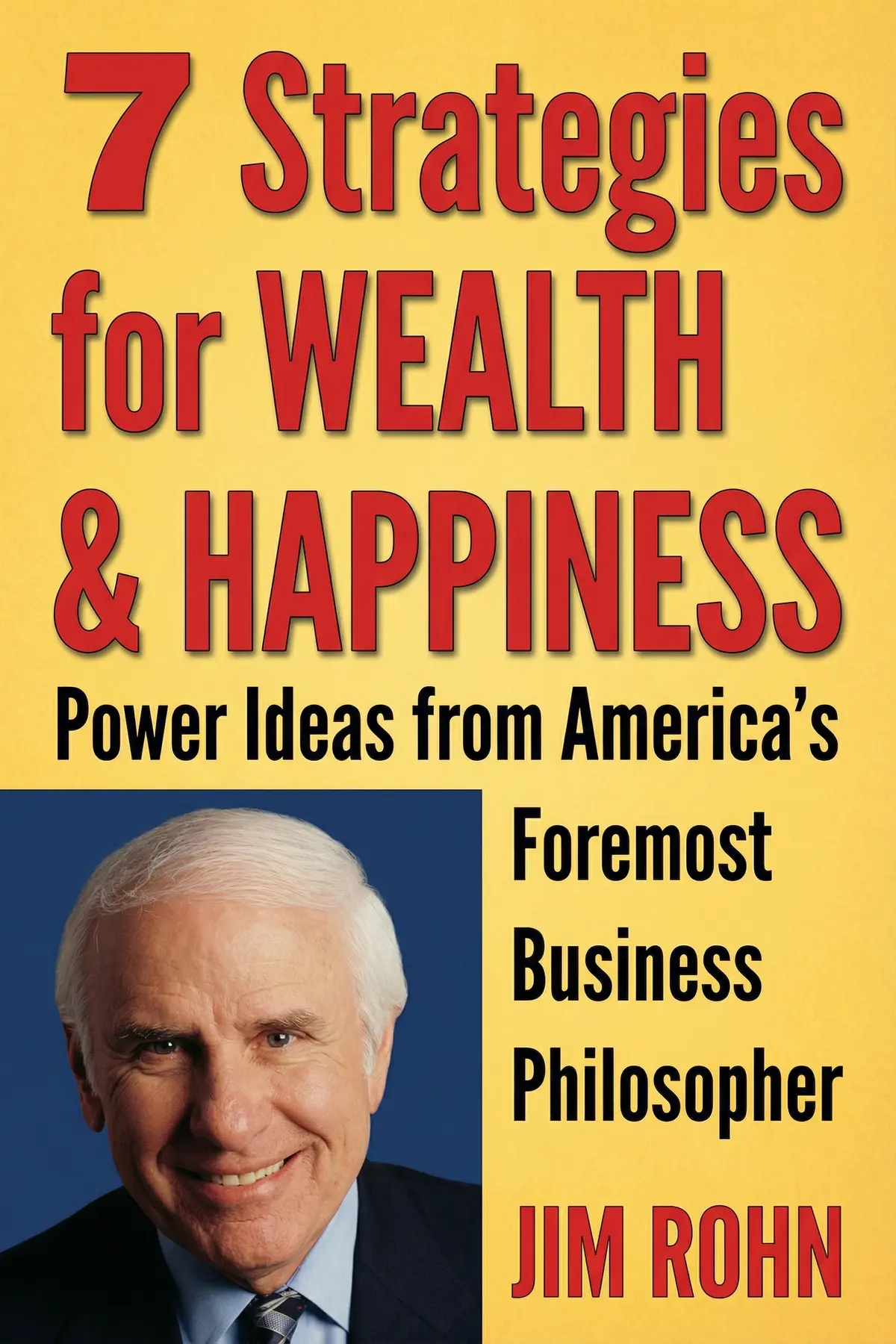
Table of Content
1. Introduction
1 min 39 sec
Have you ever felt like you’re running on a treadmill, putting in immense effort but never actually moving forward? Many of us look at the lives of the wealthy and successful as if they exist in a separate dimension—a place reserved for the lucky or the gifted. But what if success wasn’t a matter of chance? What if it was the result of a specific set of strategies that anyone could implement with enough discipline?
Jim Rohn, the author of this work, wasn’t always the world-renowned philosopher we know today. There was a time when he was just a college dropout working as a human resource manager, struggling to make ends meet and feeling the weight of six years of stagnation. Despite his hard work, his salary and his status remained frozen. Everything changed, however, when he met a mentor named Earl Shoaff. Under Shoaff’s tutelage, Rohn discovered that wealth is built on a foundation of concentrated effort and self-mastery. By the time he was thirty-one, he had reached the milestone of being a millionaire.
In the following segments, we aren’t just looking at how to get rich. We are exploring how to live a life of design rather than a life of drift. We will examine how something as simple as taking a mentor to dinner can be a life-changing investment, why your attitude toward paying taxes might be the secret to your financial freedom, and how to audit the people in your life to ensure they are lifting you up rather than holding you back. This is about more than just money; it’s about the philosophy of happiness and the power of individual responsibility. Let’s dive into these strategies and see how they can provide the structure you need to achieve your own version of success.
2. The Power of Concrete Goal-Setting
2 min 24 sec
Discover how a simple journaling exercise and a clear understanding of your ‘why’ can turn vague dreams into a structured roadmap for your future.
3. Investing in Self-Led Education
2 min 14 sec
Learn why formal education makes you a living, but self-education makes you a fortune, and how to extract wisdom from every experience.
4. Increasing Your Value Through Personal Growth
2 min 04 sec
Explore why the key to a higher income isn’t asking for more money, but becoming a person who is worth more to the marketplace.
5. A New Philosophy for Financial Freedom
2 min 10 sec
Master the 70/30 rule and learn how a positive attitude toward expenditures can shift your internal frequency from lack to abundance.
6. Mastering the Art of Time Management
2 min 18 sec
Moving beyond the extremes of the workaholic and the drifter, learn how to organize your life with a project book and intentional ‘white space.’
7. Auditing Your Social Environment
2 min 00 sec
Understand the profound influence of your associations and learn the three ways to manage your relationships for maximum growth.
8. Cultivating a Mindset of Abundance
2 min 06 sec
Discover why money is merely a magnifier of character and how adopting a ‘two-quarter’ mentality can make you feel wealthy long before you are.
9. Conclusion
1 min 39 sec
As we wrap up our exploration of these seven strategies, it’s important to remember that wealth and happiness are not accidental occurrences. They are the predictable results of a lifestyle built on discipline, planning, and personal growth. We’ve seen how concrete goals provide a roadmap, how self-led education keeps us sharp, and how managing our associations protects our mental environment. We’ve also seen that financial freedom is as much about our attitude toward circulation and giving as it is about saving.
The throughline in all of Jim Rohn’s teaching is the concept of individual responsibility. You are the architect of your own life. If you want things to change, you have to change. If you want things to get better, you have to get better. This might sound daunting, but it’s actually the most empowering realization you can have, because it means your future is in your hands.
To put these ideas into immediate action, try creating a comprehensive ‘game plan’ for your upcoming week. Take a piece of graph paper and create columns for each day. On the left, list every activity and project you need to move forward. Mark the deadlines and block out the specific hours you will dedicate to each task. Be sure to include time for learning and time for rest. This isn’t just a to-do list; it’s a visual representation of your commitment to your goals. When you see your week laid out with intention, you move from a state of reaction to a state of action. Start small, stay consistent, and watch as these strategies begin to reshape your world.
About this book
What is this book about?
This summary explores the foundational principles of achievement as taught by one of America's most respected business philosophers. It shifts the focus from luck and external circumstances to the internal traits and daily habits that dictate long-term success. By following a structured path of personal evolution, listeners can learn to master their time, their money, and their mindset. Through practical exercises like the fifty-goal list and the seventy-thirty rule for income, the book promises a clear roadmap for anyone looking to escape financial struggle. It emphasizes that wealth is not just about the numbers in a bank account, but about the person you become in the process of reaching your targets.
Book Information
About the Author
Jim Rohn
Jim Rohn was a renowned entrepreneur, motivational speaker, and business philosopher. After finding great success in the direct sales industry, he spent decades conducting seminars and workshops globally. He authored several influential self-help books, including The Power of Achievement and The Art of Exceptional Living.
Ratings & Reviews
Ratings at a glance
What people think
Listeners find this title to be a vital listen that presents seven simple strategies for attaining wealth and joy. The material is skillfully written, clearly expressed, and accessible, with one listener calling it a step-by-step guide to achieving the good life. Listeners prize the book’s insights and its power to motivate goal attainment, with one pointing out its masterful breakdown of the process of overcoming self.
Top reviews
Aroon
Picked this up after hearing a mentor quote Rohn during a quarterly planning session, and it proved to be a refreshing reality check. His core axiom that income rarely outpaces personal development hit me square between the eyes. Through endearing anecdotes about his early failures and the guidance of Mr. Shoaff, Rohn avoids the patronizing tone common among self-help writers. Instead, he outlines an approachable framework grounded in character building, proactive study, and quiet discipline. You realize quickly that your external circumstances are merely mirrors reflecting your internal habits. It took me two sittings to finish, but the insights on restructuring my daily routine will stick with me for years.
Show moreTaw
As someone who typically approaches motivational literature with extreme skepticism, I was genuinely caught off guard by how much I loved this. Rohn does not traffic in hollow affirmations or get-rich-quick fantasies. His strategy on unleashing the power of goals forces you to answer uncomfortable, precise questions about who you want to become, where you want to travel, and what you intend to share. The metaphor comparing our struggles to the natural seasons—learning to survive winter so you can plant diligently in spring—brought me immense peace during a career transition. It is direct, humane, and deeply encouraging.
Show moreWan
Why did nobody hand me this text a decade ago? Rohn’s advice on time mastery—specifically the commandment to never begin a day or a week until it is completely mapped on paper—has revolutionized how I operate. He treats life design as an intentional craft rather than a frantic game of catch-up. His concept of the 'enlightened' planner shows you that disciplined output creates space for authentic joy. The chapters move swiftly, packed with punchy observations that demand underlining. If you feel disorganized or adrift in your professional pursuits, this slim volume provides immediate compass bearings.
Show moreChatri
Jim Rohn delivers foundational life principles without the performative fluff modern influencers love to peddle. He insists that wealth and contentment are not accidental lottery winnings but the cumulative byproduct of small daily disciplines practiced consistently. His instruction to treat success like an academic subject—to deliberately read, observe, and study those you admire—completely reframed my perspective on continuing education. Rohn writes like an attentive uncle sharing hard-earned truths across the kitchen table. The guidance is actionable, morally upright, and refreshingly devoid of toxic hustle culture. Every young professional entering the workforce should read this.
Show moreNoi
After years of hearing snippets of Rohn's seminars, diving into his written prose felt like discovering a wellspring of sanity. The seven strategies are laid out with zero pretension, walking the reader from visionary goal construction straight into financial hygiene and lifestyle sophistication. His 70/30 economic principle completely reorganized my family’s monthly cash flow, stripping away the anxiety that usually surrounds investing. What distinguishes Rohn from his peers is his insistence that financial accumulation without emotional balance and generosity is an utter failure. It is an uplifting, beautifully constructed roadmap for building a life of substance.
Show moreSuthida
Success leaves clear breadcrumbs, and Rohn systematically arranges them into an accessible roadmap. This book is less about accumulating massive bank accounts and far more about conquering internal inertia and self-doubt. His explanation of why you should strive to earn a million dollars—not for the paper wealth, but for what the process forces you to become—has permanently altered my internal drive. The prose is clean, economical, and memorable. You can easily polish off the entire volume over a weekend, but the reflective exercises will keep you occupied for months. Truly essential reading.
Show moreStella
There is an elegant, unassuming clarity to Rohn’s philosophical blueprint. He strips away modern corporate buzzwords and replaces them with durable habits, most notably his pragmatic 70/30 formula for capital distribution. Allocating seventy percent to living expenses while dividing the remaining thirty across charity, enterprise, and savings is remarkably practical for everyday budgeting. Frankly, parts of the prose reflect the mid-1980s era in which it was penned, particularly a few dated workplace illustrations. Nevertheless, his insistence that genuine wealth encompasses internal refinement alongside material accumulation makes this an exceptional, grounded guide. It bridges tactical time management and moral philosophy better than modern equivalents.
Show moreRafael
The section breaking down the four seasons of life alone justified the purchase. Rohn’s reminder that winters are inevitable, and that our task is not to complain about cold winds but to grow stronger and wiser, provided perspective I desperately needed. His financial breakdown and goal categories are equally sensible. My only critique is that his perspective on relationships can occasionally come across as transactional, particularly when discussing trimming away unproductive acquaintances. That said, his overarching message to work harder on your personal capabilities than on your primary occupation remains pure gold. A remarkably sturdy classic.
Show moreRania
Few books manage to condense lifelong achievement into digestible, practical tenets quite like this one. In my experience, most success manuals could be summarized in an essay, and while Rohn occasionally circles back onto the same points, his conversational rhythm keeps things engaging. The emphasis on carefully curating your inner circle struck a chord with me; you truly absorb the habits and outlooks of those you spend the most time around. It is a concise, thoughtful manifesto on self-reliance that holds up admirably despite being decades old.
Show morePatcharaporn
A historic blueprint, certainly, but modern readers might struggle with how familiar it all sounds. Because modern motivational speakers borrowed nearly every core concept from Rohn, reading this today produces constant déjà vu. The tenets regarding peer association, daily journaling, and rigorous time auditing are fundamentally sound. However, the pacing drags around the middle chapters, and several passages border on repetitive cheerleading. If you have already read classic success literature, you will find few genuine surprises here. Still, to be fair, returning to the primary source of these philosophies has historical merit, even if the delivery feels somewhat antiquarian.
Show moreReaders also enjoyed

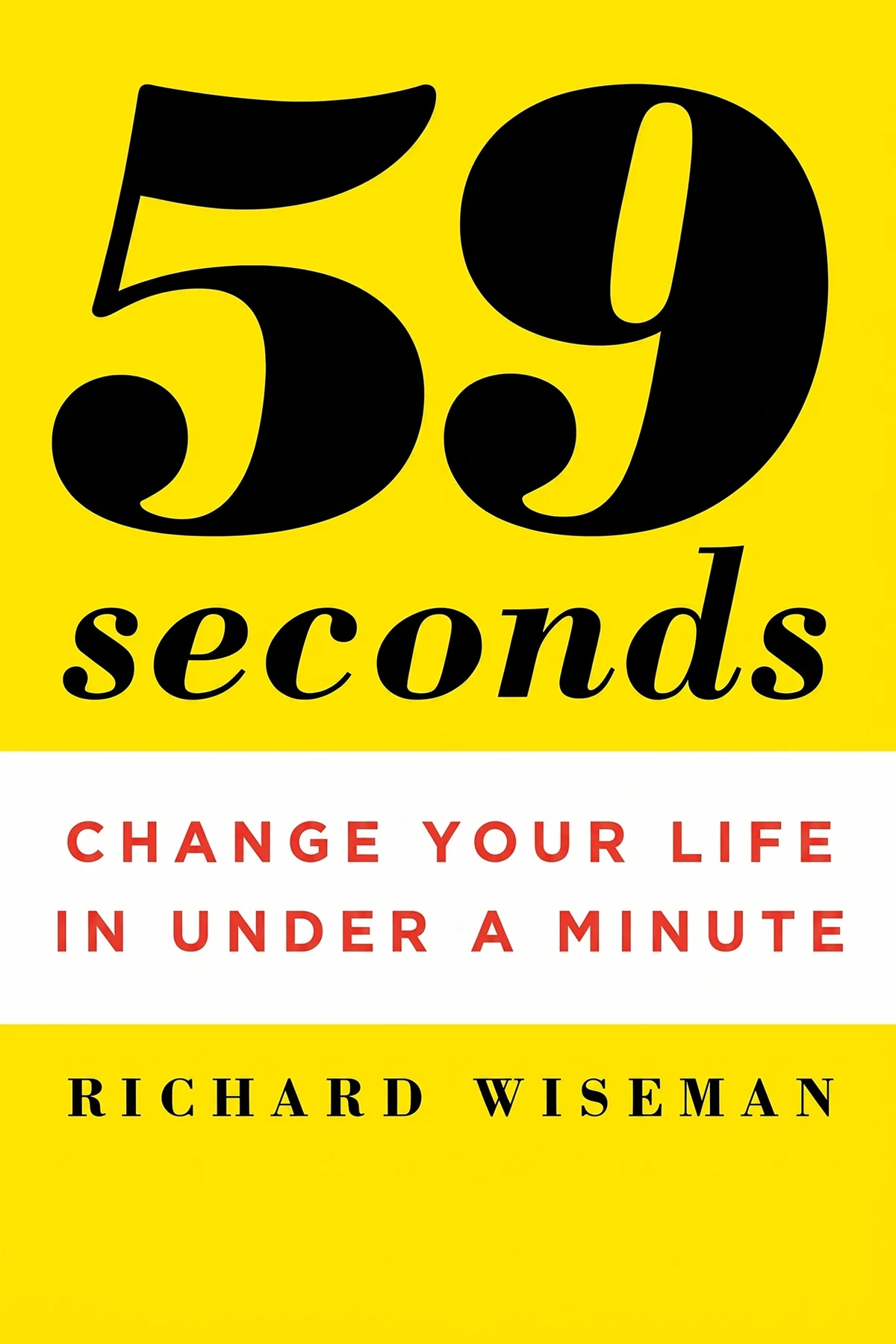
59 Seconds: Change Your Life in Under a Minute
Richard Wiseman
A Guide to the Good Life: The Ancient Art of Stoic Joy
William B. Irvine
AUDIO SUMMARY AVAILABLE
Listen to 7 Strategies for Wealth and Happiness in 15 minutes
Get the key ideas from 7 Strategies for Wealth and Happiness by Jim Rohn, plus 5,000+ more titles in English and Thai.
- 5,000+ titles
- Listen as much as you want
- 7-day free trial
- Cancel anytime







