
17 min 38 sec
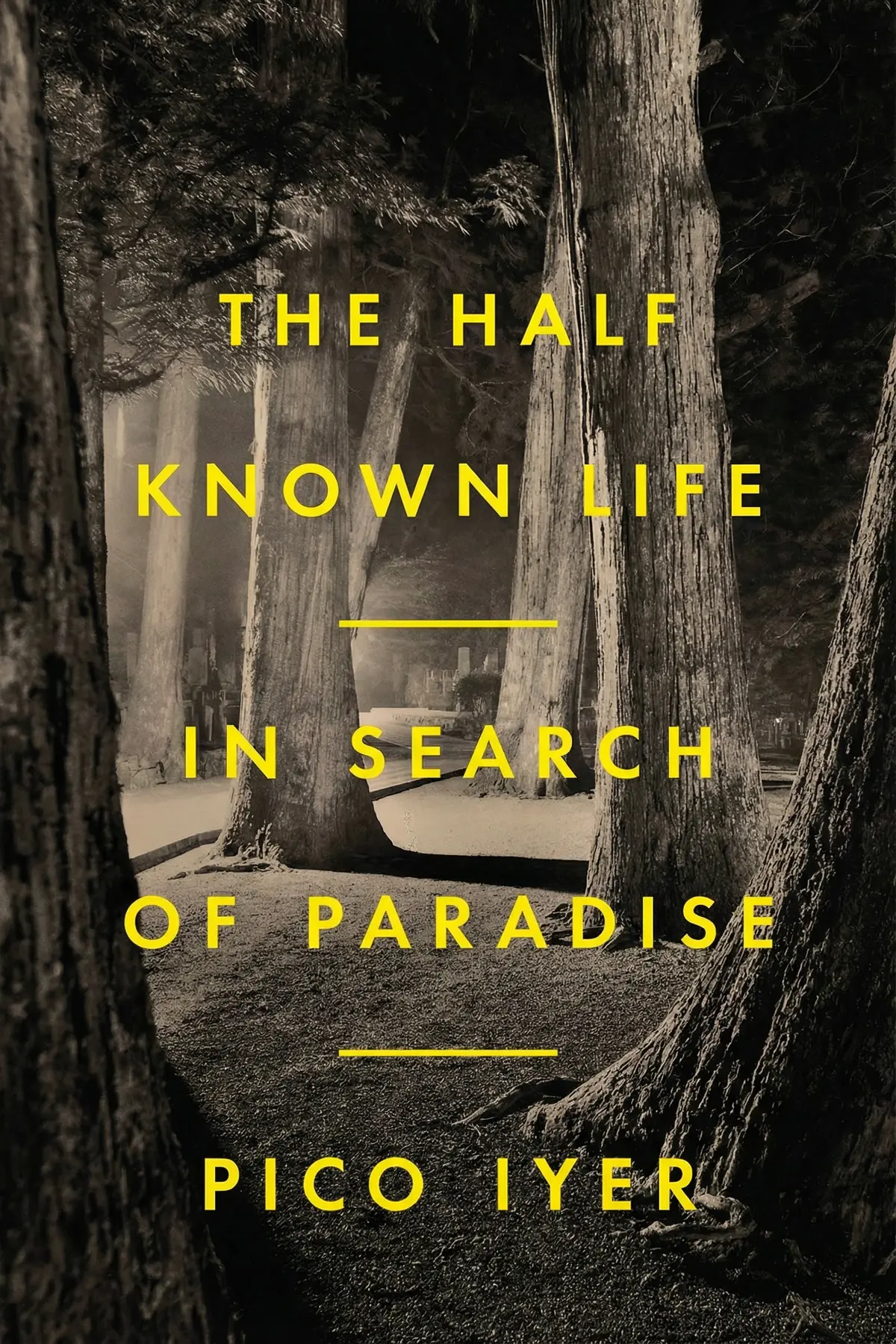
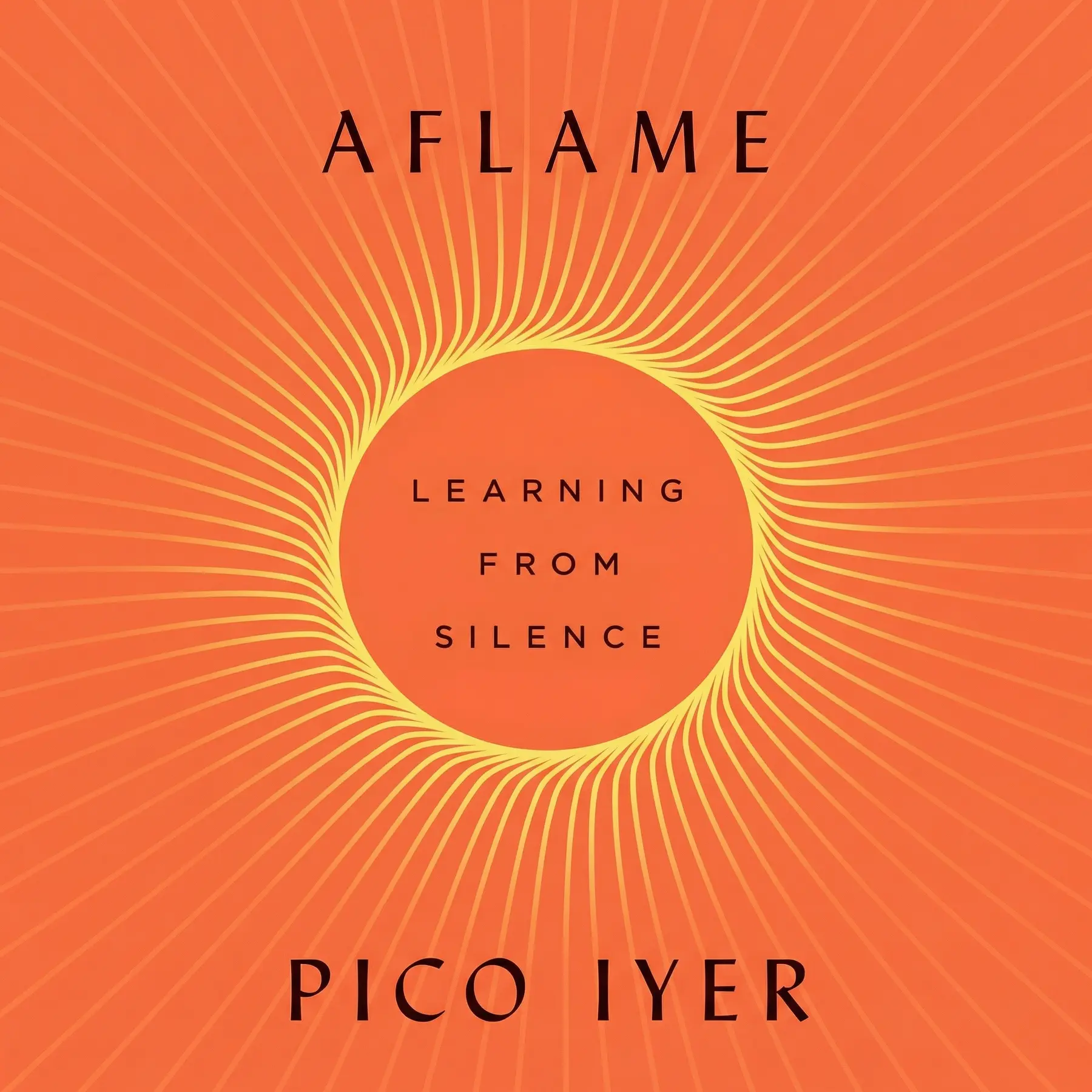
Aflame: Learning from Silence
By Pico Iyer
Aflame explores the transformative power of silence and monastic wisdom. Pico Iyer reflects on how retreating from the world’s noise can lead to a more profound, compassionate connection with reality.
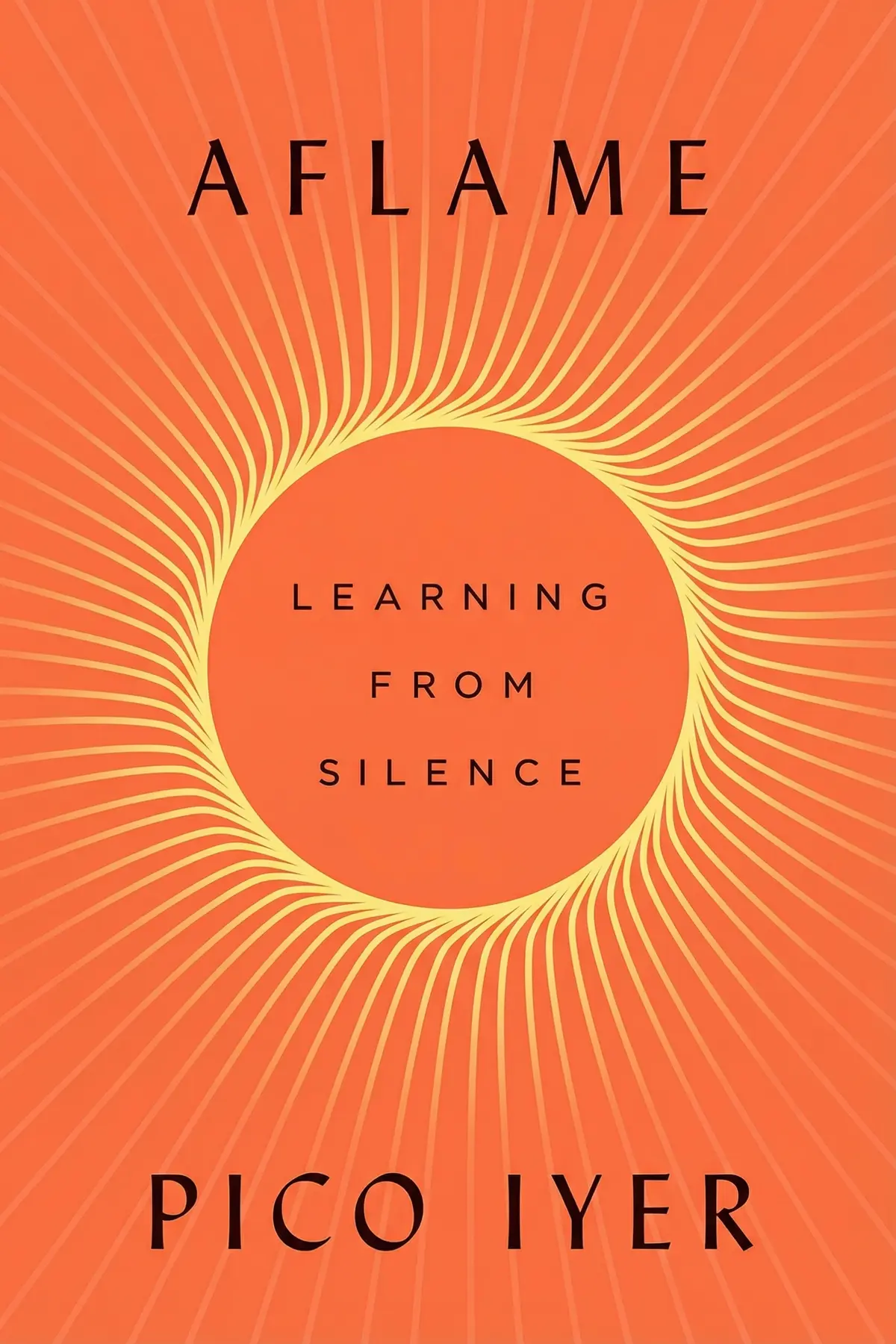
Table of Content
1. Introduction
1 min 36 sec
In a world that seems to never stop shouting, the idea of stepping away into total silence can feel like a radical, perhaps even impossible, act. We are conditioned to equate movement with progress and noise with productivity. But what happens when the external world is suddenly stripped away? This is the starting point for Pico Iyer, a man whose career has been defined by global travel and constant motion, yet who found his most profound insights in the stillness of a monastery overlooking the Pacific Ocean.
Iyer’s journey into the heart of silence wasn’t a planned career shift or a religious conversion. It was born out of a literal trial by fire. When his family home was reduced to ash, he was forced to confront the transience of material things. This loss opened a door to the Camaldoli Hermitage, a Benedictine retreat in Big Sur, California. Here, among the redwoods and the crashing waves, he began to understand that silence isn’t just the lack of noise—it is a vibrant, active space that allows the soul to breathe.
In the pages that follow, we will explore the lessons Iyer gathered over decades of visits to this quiet sanctuary. We will look at how silence transforms our relationship with others, how it helps us face the inevitable ‘predicament of life,’ and how it provides a steady flame within us even when the world outside feels like it’s burning. This isn’t just a summary of monastic life; it’s a guide to finding a sanctuary within yourself, no matter where you are. Through the wisdom of monks, poets, and world leaders, we’ll see how the practice of being still can actually make us more alive, more compassionate, and more resilient. So, let’s begin this exploration of what it means to be fully present and truly awake.
2. Finding Stillness in the Wake of Loss
2 min 06 sec
When a devastating wildfire takes everything away, a new path emerges. Discover how physical loss can become the catalyst for an internal discovery of quietude.
3. Silence as an Active Presence
2 min 01 sec
Silence is often misunderstood as a void, but it is actually a crowded space where the most important conversations happen with oneself.
4. The Paradox of the Solitary Life
1 min 58 sec
Is retreating to a monastery a selfish act? Explore why stepping away from society is actually the best way to serve it.
5. Finding Peace in the Predicament of Life
2 min 03 sec
Through the lives of Leonard Cohen and the Dalai Lama, learn how silence helps us rest in a landscape free from the need for absolute answers.
6. The Daily Rituals of Monastic Wisdom
2 min 05 sec
Behind the stone walls, monastic life is less about floating in bliss and more about the gritty, beautiful work of being human.
7. Bringing the Monastery Home
2 min 03 sec
How do you maintain a sense of stillness when you return to a crowded city? Iyer explains the art of ‘sitting in the world.’
8. Resilience in an Unfinished World
2 min 04 sec
In the face of aging, pandemics, and environmental threats, silence provides the resilience to stay steady when everything else is in flux.
9. Conclusion
1 min 42 sec
As we conclude this exploration of Pico Iyer’s Aflame, we find ourselves back where we started—perhaps in a noisy room or a busy street—but hopefully with a new understanding of the silence that lies just beneath the surface. Iyer’s journey shows us that stillness is not a retreat from reality, but a more profound engagement with it. By stepping back from the constant motion of our lives, we gain the ‘clear eyes’ necessary to see the world as it truly is, in all its beauty and its heartbreak.
The throughline of this work is the idea that our deepest purpose is found not in what we achieve or accumulate, but in our ability to be fully present. Whether it’s through the disciplined life of a monk, the poetic reflections of a songwriter like Leonard Cohen, or the simple act of taking a quiet walk during a pandemic, we see that silence is the tool that allows us to cultivate compassion and resilience. It teaches us that luxury is defined by what we can do without, and that freedom comes from embracing our limits rather than constantly trying to escape them.
The final takeaway is both a challenge and a comfort: you don’t need a trailer in Big Sur to find your own hermitage. The qualities that Iyer found at the monastery—attentiveness, gratitude, and a willingness to face the shadows—are available to all of us, right now. By creating even a small space for quiet in your daily routine, you can begin to nurture that inner flame. In doing so, you may find that you are better equipped to meet the world, and the people in it, with a heart that is wide open and a mind that is finally at peace. Thank you for joining us on this journey into the heart of silence.
About this book
What is this book about?
What does it mean to truly be present? In Aflame, travel writer Pico Iyer moves away from the constant motion of his professional life to explore the stillness of the Camaldoli Hermitage in Big Sur. This book is a poetic examination of what happens when we strip away the distractions of modern existence and face the quiet. The promise of this work is not an escape from life, but a deeper immersion into it. By drawing on his experiences with Benedictine monks and his friendships with spiritual figures like the Dalai Lama and Leonard Cohen, Iyer demonstrates that silence is not an absence of sound, but a presence of clarity. Readers will discover how solitude can actually foster a greater sense of community and how internal stillness provides the resilience needed to face a world often characterized by chaos and loss.
Book Information
About the Author
Pico Iyer
Pico Iyer is a British-born essayist and travel writer known for his deep reflections on movement, stillness, and the search for meaning across cultures. Having spent much of his life between California, Japan, and the wider world, he brings a gentle, observant voice to questions of home, identity, and spiritual exploration. His books, including The Art of Stillness and The Half Known Life, invite people to slow down and see the world – and themselves – with fresh, quiet attention.
Ratings & Reviews
Ratings at a glance
What people think
Listeners find this work deeply reflective, with one listener describing it as a meditative masterpiece. The book's pacing is captivating, and listeners value its emphasis on pursuing holiness through quietude. Additionally, one listener remarks on the author's use of fire as a metaphor for life.
Top reviews
Naomi
A profound invitation to look at the world differently, this book serves as a luminous guide to the interior landscape. Pico Iyer manages to transform the tragic loss of his home in a California wildfire into a powerful metaphor for shedding the non-essential. The pursuit of holiness through quietude is not just a theme here; it is the very pulse of the writing. I found his reflections on the Benedictine monks of Big Sur to be incredibly moving, especially the way he frames silence as a presence rather than a void. Truth is, we all need this kind of recalibration in an age of constant noise. The pacing is deliberate and engaging, mirroring the slow rhythm of the Hermitage itself. It is truly a meditative masterpiece that asks us to value presence over possessions. I will likely return to these pages whenever the world feels a bit too loud.
Show moreChee
Ever wonder if your life is just too loud? This book provides the perfect antidote to the cacophony of the 21st century. Pico Iyer writes with such grace about the simple acts of living—cooking, walking, and being still—that turn ordinary life into something radiant. I loved the connection between Leonard Cohen’s later music and his time in the monastery; it added a layer of depth to the theme of acceptance. The pursuit of holiness through silence is explored with such humility that it never feels preachy. In my experience, very few books actually manage to make you feel the stillness they describe, but this one does. The metaphor of the fire is handled with great sensitivity, showing how we can find gain in our greatest losses. It’s a short read, but one that demands you stop and breathe between every few pages. Absolutely luminous.
Show moreLuckana
What a quiet, luminous masterpiece this turned out to be. Pico Iyer captures the subtle power of stillness better than almost anyone else writing today. His reflections on how joy is the opposite of pleasure, and how freedom arises from embracing limits, are lessons I will carry with me for a long time. The pursuit of holiness is a heavy topic, but he handles it with a lightness of touch that is incredibly refreshing. I was particularly moved by the stories of the monks and their ability to find sacredness in ordinary tasks. The fire that destroyed his home serves as a hauntingly beautiful backdrop to his journey toward inner peace. Every sentence feels intentional, despite what some critics might say about the organization. If you’re looking for a book that offers a genuine sense of renewal and clarity, this is it. It’s a beautiful, fragile flame of a book that deserves to be read slowly.
Show moreFang
Finally got around to finishing this, and I’m still letting the silence sink in. Iyer captures the essence of the Camaldoli Hermitage with such specific, sensory detail—you can almost smell the lavender and hear the sea against the Big Sur cliffs. The way he describes the monks’ daily rituals highlights a kind of simple devotion that is rare today. My favorite sections were those where he admits he is not a monk himself but finds a home in their stillness regardless. Personally, I found the fire metaphor particularly poignant, showing how destruction can plant seeds of new hope. Some chapters, especially 'Into the Boiler Room,' were a bit of a slog to navigate, but the overall message resonates. It's a quiet book that demands a quiet mind. If you are looking for a fast-paced narrative, this isn't it, but for those seeking internal clarity, it’s a beautiful resource.
Show morePruet
The way Iyer uses the destruction of his family home to explore what truly matters is stunning. He moves away from traditional travel writing to explore the landscapes of the soul, and the result is a thought-provoking study on minimalism. I was fascinated by the contrast between the chaotic modern world and the blue-and-gold silence of the monastery. Not gonna lie, the name-dropping of famous friends can be a bit much at times, but the core message about the pursuit of holiness remains intact. The book highlights how silence is not just an absence of noise, but a way of sharpening our ability to serve others. I particularly liked the sections on how solitude actually makes us less self-centered in the long run. It’s a gentle, rhythmic read that encourages a slower pace of life. A few sections felt a bit too abstract, but the emotional core is very strong.
Show moreRungtip
Pico Iyer has always been a master of travel, but here he travels into the soul. This isn't a book about destinations; it's about the destination we find when we stop moving. I was struck by his observations of the monks in Big Sur and how their silence creates a safe space for empathy to bloom. Gotta say, the section about listening to Bach in a quiet corner of an airport really hit home for me. It’s about finding those small pockets of peace amidst the chaos of travel and responsibility. While the writing style is a bit fragmented, it mirrors the way we often experience memory and reflection. There are moments of 'tell, don't show' that can be a bit frustrating, but the insights into solitude are worth it. It’s a book that rewards a slow, patient reader. Definitely an engaging exploration of what it means to be truly present.
Show moreSakura
Picked this up on a whim after seeing it mentioned in the New Yorker, and I found it surprisingly moving. The theme of fire as a metaphor for rebirth is woven throughout the narrative in a way that feels both personal and universal. Iyer’s time at the Hermitage sounds like an absolute dream, and he describes the environment with a poet’s eye for detail. I did find the non-linear structure a bit confusing at first, but once I settled into the rhythm, it started to make sense. It’s less of a story and more of a series of meditations on what we lose when we don't make space for silence. To be fair, some of the interactions with 'famous' figures felt a little out of place, but they didn't ruin the overall experience. It’s a thoughtful, engaging book that makes you want to turn off your phone and just sit for a while. A solid 4-star read.
Show moreTod
Look, I appreciate the sentiment, but the middle sections felt like a total slog. Pico Iyer is undoubtedly a talented writer, yet here he seems to be 'telling' rather than 'showing' us the value of his experiences. While his descriptions of flowers as blueberry ice cream are charming, other parts of the book feel repetitive and unusually slow. There is a lot of focus on his 30-year history of retreats, but I didn't always feel like I was learning alongside him. To be fair, his interactions with the monks are interesting, and the book succeeds as an unintentional ethnography of monastic life. However, the fragmented structure made it difficult to stay grounded in the narrative. I enjoyed the themes of surrendering to 'not knowing,' but I wish the editing had been tighter. It’s a decent read if you have the patience, though it won't be for everyone.
Show moreGoy
Is it just me, or is this incredibly disjointed? I wanted to love a book about the power of stillness, but the actual execution felt like an amateur year-end letter filled with humble-brags. The constant name-dropping of figures like Leonard Cohen and the Dalai Lama felt less like spiritual insight and more like an attempt to elevate his own status. Frankly, the writing is far too non-linear for my taste, leaving me flummoxed by sentences that seem to strive for profundity but land on 'fake deep' instead. It’s essentially 'Eat, Pray, Love' without the engaging plot or the relatable growth. For a book that champions silence, it sure spends a lot of time talking about the author’s elite social circle. I struggled to see the relevance of the random, unnamed acquaintances interjected throughout the text. It just felt pompous and poorly edited.
Show moreWit
To be fair, I expected a lot more from a writer of Iyer’s stature. This book felt like a jumbled mess of half-formed thoughts and random anecdotes that never quite coalesced into a meaningful story. He talks about silence while constantly filling the pages with the noise of his own ego and elite connections. As a former monk myself, I found his portrayal of the Benedictine lifestyle to be somewhat superficial and even slightly mocking at times. He benefits from the monks' hospitality but doesn't seem to truly engage with the depth of their Rule or philosophy. The writing is incredibly non-linear, which makes it feel like he’s just searching for pages rather than providing profoundness. Even the editing felt sloppy—some sentences were so awkward they pulled me right out of the meditation. It’s a thirty-dollar book that could have been a short essay. Disappointing.
Show moreFeatured in
Readers also enjoyed

Alcoholics Anonymous
Alcoholics Anonymous World Services
A New Earth: Awakening to Your Life’s Purpose
Eckhart Tolle

A Force for Good: The Dalai Lama's Vision for Our World
Daniel Goleman

A Return to Love: Reflections on the Principles of a Course in Miracles
Marianne Williamson
Abundance: The Inner Path to Wealth
Deepak Chopra

All My Knotted-Up Life: A Memoir
Beth Moore
AUDIO SUMMARY AVAILABLE
Listen to Aflame in 15 minutes
Get the key ideas from Aflame by Pico Iyer, plus 5,000+ more titles in English and Thai.
- 5,000+ titles
- Listen as much as you want
- 7-day free trial
- Cancel anytime







