
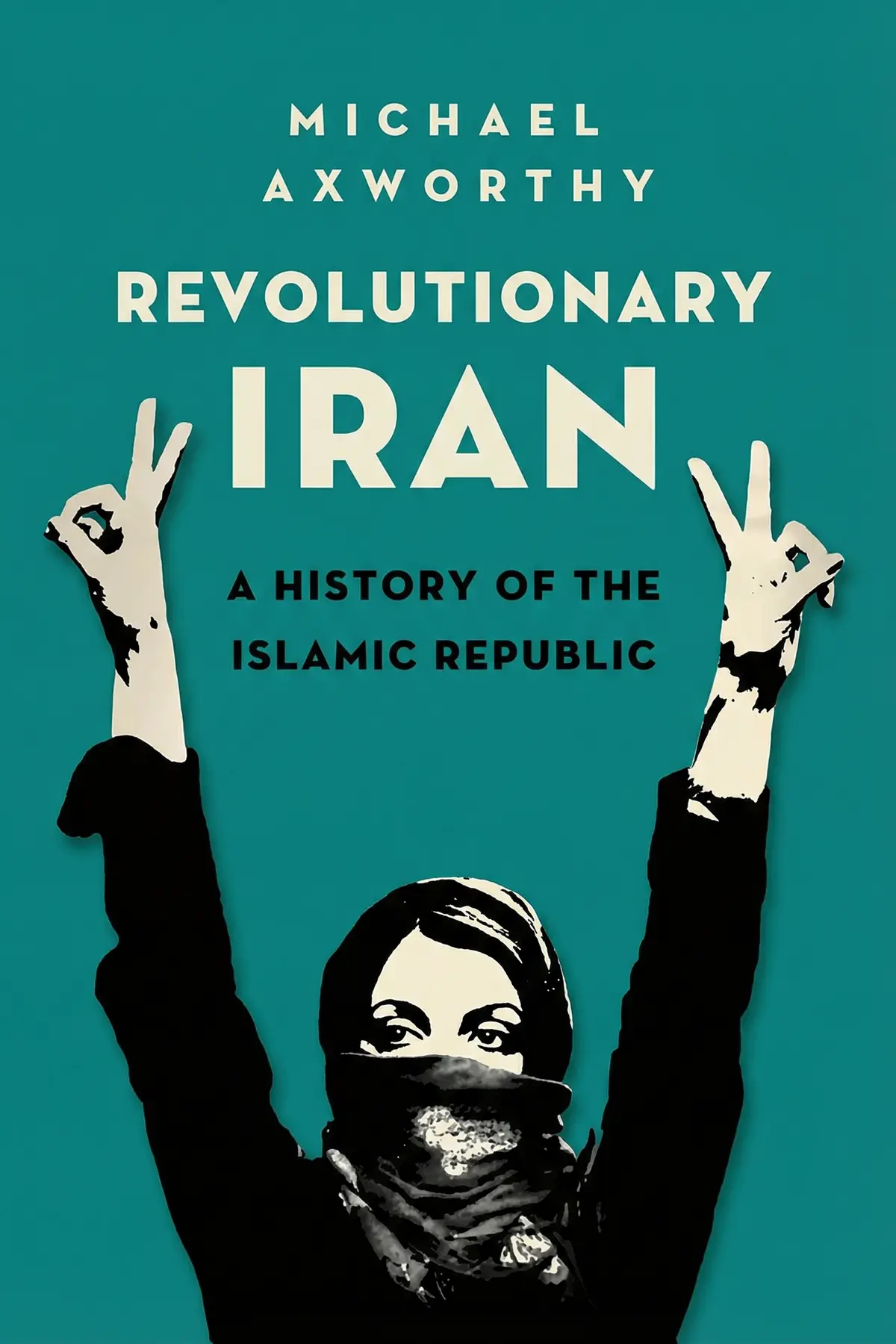
Revolutionary Iran: A History of the Islamic Republic
Michael Axworthy
A History of Iran explores the deep cultural resilience and complex political evolution of a nation often misunderstood by the West, tracing its journey from ancient empires to the modern Islamic Republic.
1 min 28 sec
When we look at the modern headlines, Iran often appears as a source of tension or a mystery to be solved. We see fragments of its political defiance and its religious fervor, but these snapshots rarely capture the full story of one of the world’s most enduring civilizations. To truly understand Iran, we have to look past the contemporary friction and peer into a history that spans over two and a half millennia. This is not just a story of kings and battles, but a narrative of cultural survival.
In this exploration of Iranian history, we will see a recurring pattern: a nation that has been conquered by foreign armies time and again, only to culturally conquer its invaders in return. This is what makes Iran unique. It is a place where ancient traditions and modern aspirations are constantly in dialogue, sometimes creating harmony and other times resulting in explosive conflict.
As we journey through the rise and fall of great dynasties and the shift toward a modern republic, we will uncover the “throughline” of Iranian identity. It is a thread woven from a deep sense of justice, a commitment to intellectual life, and an unyielding desire for national dignity. By the end of this journey, you will see how the ghosts of the past—from the ancient King Cyrus to the 1953 CIA-led coup—continue to shape the decisions made in Tehran today. Let’s begin at the very beginning, on the high plateaus where the Persian identity first took root.
2 min 09 sec
Discover how ancient migrations and a revolutionary faith established the moral compass of a nation long before the modern era began.
1 min 55 sec
Explore a time when Iranian leadership set the global standard for intellectual curiosity and administrative genius through two powerful dynasties.
2 min 05 sec
Learn how a culture survived total military defeat by converting its conquerors through the power of language, poetry, and administrative skill.
2 min 01 sec
Follow the dramatic rise of the Safavid dynasty and the strategic conversion that gave modern Iran its unique religious identity.
2 min 05 sec
Witness the birth of modern political activism as a nation fights to protect its resources from foreign monopolies and imperial rivalries.
1 min 59 sec
Trace the high-speed reforms of the Pahlavi dynasty and the pivotal coup that changed the course of US-Iran relations forever.
2 min 03 sec
Uncover the roots of the 1979 revolution and the complex state that rose from the ashes of monarchy.
1 min 50 sec
Reflect on the recurring patterns of Iranian history and why the struggle for justice continues to define the nation’s future.
1 min 44 sec
As we conclude this journey through A History of Iran, we are left with a picture of a nation that is far more complex than the one usually presented in the media. We have seen how the Iranian plateau became a crucible for a unique form of cultural resilience, where the power of the mind and the beauty of the word often proved more durable than the strength of any army. From the tolerance of Cyrus the Great to the intellectual heights of the Sassanid court, Iran set early standards for how a civilization can flourish through diversity and justice.
Yet, we have also seen the scars left by foreign interference and the long shadow of the Great Game. The traumas of the 20th century, particularly the 1953 coup and the subsequent decades of authoritarian rule, explain the deep-seated desire for independence that drives Iranian policy today. The 1979 revolution was not just a religious event, but a profound expression of a people’s search for a way to be both modern and authentic to their own traditions. While that search continues to face immense challenges and internal repression, the Iranian spirit remains undiminished.
The most important takeaway is that Iran’s history is a cycle of renewal. Time and again, when the country seemed lost to conquest or internal decay, it found a way to reinvent itself. Today’s tensions are merely the latest episode in a long-running epic. For those watching from the outside, the lesson is clear: to engage with Iran is to engage with a proud and ancient civilization that will always prioritize its own dignity and sovereignty. By understanding where this nation has been, we are better prepared to understand where it—and the rest of the world—might be going.
This summary provides a sweeping narrative of the Iranian plateau, examining how its people consistently transformed conquerors through intellectual and cultural power. It delves into the foundational role of Zoroastrianism and Shi’ism in shaping the national character, while also detailing the modern struggles for sovereignty and democracy against a backdrop of foreign intervention. Listeners will gain a profound understanding of why historical grievances continue to influence contemporary geopolitics. From the administrative genius of the Sassanids to the traumatic 1953 coup and the 1979 revolution, this script reveals the recurring themes of justice, independence, and resilience that define the Iranian experience. It promises to move beyond the headlines to uncover the "empire of the mind" that has endured for millennia.
Michael Axworthy was a distinguished British historian and diplomat who became a preeminent Western authority on the history and politics of Iran. His professional background included leading the Iran section at the British Foreign & Commonwealth Office. Later, he shared his expertise as a senior lecturer at the Institute of Arab and Islamic Studies at Exeter University. His influential body of work includes titles such as The Sword of Persia, Empire of the Mind, and Revolutionary Iran.
Michael Axworthy
Listeners find this work provides an excellent survey of Iranian history, beginning in the prehistoric era while remaining historically precise throughout. Furthermore, they value its accessible prose and engaging style, as one listener points out that it manages a fine middle ground between scholarly and mainstream historical writing. The text also skillfully integrates diverse cultural themes, with one review praising its equilibrium between political developments and cultural heritage. Listeners particularly like the segments on poetry, and one mentions that the book encompasses the majority of significant occurrences.
Never have I felt so immersed in the soul of a nation through a history book as I did with this one. Axworthy doesn't just list kings; he explores the philosophy of Rumi, Hafez, and the ancient Zoroastrian roots that still pulse beneath the surface of modern Tehran. The way he connects Saint Augustine’s theology back to the Persian prophet Mani was a genuine 'lightbulb' moment for me. It’s rare to find a historian who treats poetry with the same weight as military conquests, but here it works perfectly. This book treats Iran as a civilization of immense depth rather than just a headline in a news cycle. Truly a masterpiece of cultural synthesis that avoids the typical Western tropes. I especially loved the focus on Shiraz and the intellectual vibrancy of the Safavid period.
Show moreWhat a sweeping, beautiful narrative that finally gives Iran the credit it deserves as a pillar of human civilization. Axworthy writes with a palpable affection for the Iranian people, which makes the chapters on the 20th-century famines and the Iran-Iraq war truly heartbreaking. The contrast between the ancient grandeur of Persepolis and the modern streets of Shiraz is handled with great sensitivity and historical depth. I especially loved the focus on the ‘hidden’ history of women and their evolving roles in society before and after the revolution. This isn't just a book about wars and treaties; it's a book about how a culture survives against all odds. If you’ve ever felt like your education was too Eurocentric, this will definitely fix that perspective. Absolutely loved every page of this cultural history.
Show moreAxworthy manages to bridge the gap between a dense academic textbook and a narrative for the casual reader. He flows from the Achaemenids to the 1979 Revolution with a grace that most historians lack, focusing on the ‘Empire of the Mind’ rather than just dates. I appreciated how he integrated Persian poetry into the political timeline, showing that culture isn't just a side dish but the main course of Iranian identity. It’s accessible, though sometimes he gets a bit too bogged down in the intricacies of Safavid harem politics. If you want to understand why Iranians view themselves differently than their neighbors, this is where you start. The writing is elegant and rarely feels dry, even during the long stretches of foreign rule. It strikes a great balance between political history and the arts.
Show morePicked this up on a whim because I realized I knew nothing about Iran besides the standard 'Axis of Evil' rhetoric. I was pleasantly surprised by how readable Axworthy’s prose is, as he avoids the stuffy tone usually found in these kinds of broad surveys. The transition from the Safavids to the Qajars was particularly enlightening, especially the parts detailing the British and Russian meddling. It’s infuriating to see how much outside influence shaped the country’s modern struggles. My only real gripe is that he occasionally lets his own biases show through, particularly when discussing Western ‘guilt’ or recent nuclear politics. Still, the book serves as a vital reminder that Iran has been a center of global culture for millennia. Definitely worth your time if you want to look past the modern headlines.
Show moreThe sections on Zoroastrianism and Mani were easily the highlight of this entire volume for me. Axworthy does a brilliant job explaining how Iranian ideas of good and evil migrated west and influenced the very foundations of Christian thought. It is fascinating to see the parallels between the martyrdom of Hosein and the passion of Christ, which really helps a Westerner understand the Shi'a perspective. The book stays historically accurate while managing to keep the narrative moving at a brisk pace. I did think some of the critiques of modern figures like Ahmadinejad felt a little dated, given when it was published. However, as an overview of the 'Long History,' it succeeds in giving a voice to a frequently misunderstood people. It’s an essential read for anyone interested in the intersection of religion and statecraft.
Show moreTo understand the modern Islamic Republic, one must first understand the millennia of trauma and triumph that preceded it, and Axworthy provides that roadmap. He captures the resilience of Persian culture—how it absorbed its conquerors, from the Arabs to the Mongols, and turned them into patrons of its own arts. The analysis of the 1906 Constitutional Revolution was particularly strong, highlighting a side of Iranian political desire that the West often ignores. I found the inclusion of Naser od-Din Shah’s poetry to be a charming, if slightly eccentric, addition to the historical record. It’s a balanced look at a complex region, even if the author sometimes relies on a ‘great man’ theory of history. A very solid four-star effort that respects the intelligence of the reader throughout.
Show moreAfter finishing this, I feel much better equipped to follow current news coming out of the Middle East. Axworthy strikes a fine balance between academic rigor and popular history, making complex religious schisms feel understandable for a general audience. The narrative flows logically, though it can get a bit name-heavy during the various succession crises of the 18th century. It’s a tragedy that the author passed away, as his voice was a much-needed bridge between the West and the Persian world. The book successfully humanizes a nation that is too often depicted as a monolith of religious extremism in our media. It’s not a perfect text, but it is an essential piece of the puzzle for anyone curious about the world beyond their own borders. A really informative and engaging journey.
Show moreWhile this is a solid primer for anyone new to Middle Eastern history, it struggles with some strange editorial choices. I found the author’s parenthetical jabs at Richard Dawkins and Alexander the Great to be completely unnecessary and distracting from the actual history. He also uses some odd transcriptions for Turkic words that might annoy specialists who are used to more standard Latinized forms. To be fair, the final chapters on the nuclear program and the Pahlavi dynasty are incredibly clear and provide much-needed context for current events. It is a decent middle-of-the-road option, but it definitely feels like it was written from a very specific British diplomatic perspective. Take some of the political interpretations with a grain of salt, as the author's own biases do occasionally peek through the narrative.
Show moreIs this the definitive history of Persia? Probably not, but it’s a functional introduction that hits most of the major milestones without becoming too overwhelming for a novice. I felt the middle section, covering the period from 1000 to 1900, was a bit of a slog compared to the vibrant opening and the tense finale. The author sometimes skips over tribal complexities that I think are vital to understanding the inner workings of the various dynasties. Also, the frequent use of untranslated terms like ‘Majlis’ felt like an attempt to make the subject matter seem more ‘exotic’ than it actually is. It’s an okay read if you have the patience, but keep a dictionary nearby for some of the more specialized vocabulary. Not bad, just a bit uneven in its pacing across the centuries.
Show moreFrankly, the author’s tendency to use his own idiosyncratic transcriptions for common terms made this a frustrating experience. Why use 'q' where everyone else uses 'k' unless you’re just trying to look more sophisticated than the average reader? Beyond that, the book is riddled with weird asides—do we really need the author’s snarky opinion on Alexander’s personal life or Richard Dawkins in a history of the Persian state? It feels less like a rigorous history and more like a collection of a diplomat’s favorite anecdotes and poems. The lack of focus on the actual tribal makeup of the population is a glaring omission for a book claiming to be a comprehensive history. I'd recommend looking for a more objective text that doesn't try so hard to be 'literary' at the expense of clarity and accuracy.
Show more
William J. Bernstein

Ben Macintyre



James Shapiro
Charles C. Mann
Pankaj Mishra
Andrew Ross Sorkin
AUDIO SUMMARY AVAILABLE
Get the key ideas from A History of Iran by Michael Axworthy, plus 5,000+ more titles in English and Thai.







