
Aflame: Learning from Silence
Pico Iyer
Pico Iyer takes readers on a profound global journey to find paradise. From war-torn cities to sacred rivers, he explores how humanity seeks peace and transcendence amidst the chaos of our world.
1 min 39 sec
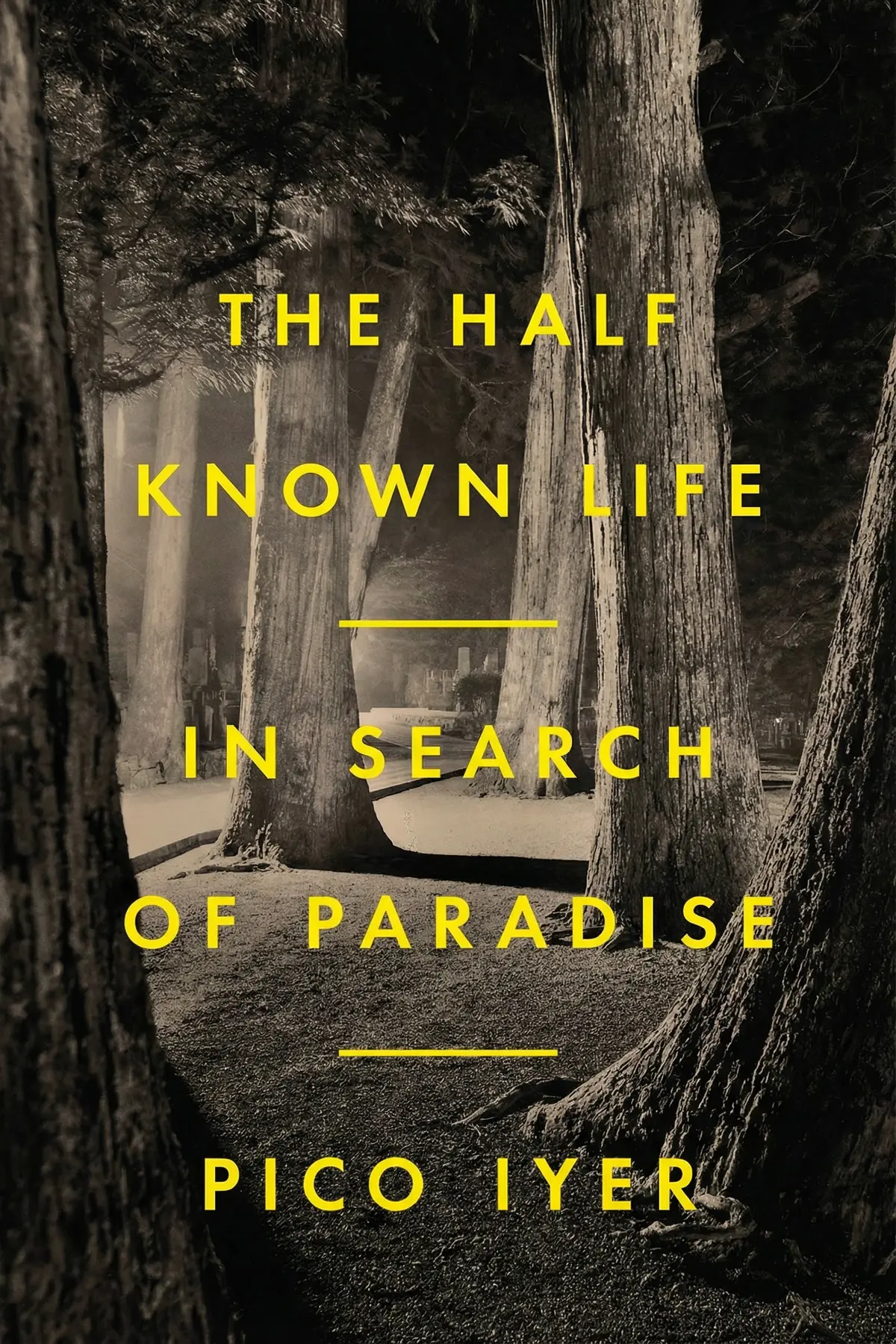
What does it mean to find paradise? For most of us, the word conjures images of a distant, untouched landscape—a place where the stresses of modern life simply evaporate. We imagine white sand beaches, silent mountain peaks, or lush, walled gardens where the thorns of reality cannot reach us. But as Pico Iyer explores in this deeply meditative journey, the quest for paradise is rarely about finding a perfect destination. Instead, it is about how we navigate the messy, fractured, and often contradictory world we already inhabit.
In this exploration, we aren’t just looking at travel brochures; we are looking at the human soul’s persistent need for a sanctuary. We will travel from the strict, guarded borders of Iran to the heights of the Himalayas, and from the crowded, holy shrines of Jerusalem to the smoky riverbanks of India. Along the way, we’ll see that the places the world calls ‘paradise’ are often the very places where history is the heaviest and conflict is the most visible.
This isn’t a guide on where to go for your next vacation. It’s a reflection on the ‘half-known’ nature of our existence. We live in a world that is partially revealed and partially hidden, much like the gardens of old. By looking at how different cultures have tried to build heaven on earth, we can start to see a new throughline: that peace isn’t the absence of struggle, but the ability to find stillness right in the middle of it. As we embark on this narrative journey, keep in mind that the ‘walled garden’ is both a physical place and a state of mind. We are searching for a way to live with the beauty we crave and the reality we cannot escape.
2 min 32 sec
Ancient Persian traditions gave us our literal word for paradise, but modern Iran reveals a complex tension between external restrictions and the vibrant, hidden life of its people.
2 min 12 sec
Kashmir and Tibet represent a breathtaking vision of earthly beauty, yet their history is a reminder of how easily paradise can be caught in the crossfire of politics.
2 min 15 sec
Jerusalem is perhaps the most intensely sought-after ‘promised land,’ where the overlap of competing faiths creates a unique kind of spiritual energy and earthly chaos.
2 min 13 sec
In Sri Lanka, the image of a tropical eden is constantly challenged by the brutal forces of civil war and the overwhelming power of the natural world.
2 min 23 sec
Varanasi shifts our focus from the physical world to the spiritual, suggesting that the ultimate paradise is found by letting go of earthly attachments entirely.
2 min 02 sec
As we conclude this journey through the world’s most famous and contested ‘paradises,’ we are left with a very different understanding of what that word means. Pico Iyer’s exploration shows us that the search for a perfect, painless world is a misunderstanding of the human condition. Whether it’s the hidden interiors of Iran, the militarized valleys of Kashmir, the crowded shrines of Jerusalem, or the smoky banks of the Ganges, the ‘heaven’ we seek is always intertwined with the reality of ‘earth.’
The ‘half-known life’ is the life we all lead—a life where we see glimpses of the divine or the perfect, but where we must also contend with the mundane and the tragic. We have seen that the most beautiful places are often the ones that require the most vigilance, and that the most sacred places are often the ones where we are most forced to confront our differences.
So, what is the actionable takeaway from these reflections? It is to stop looking for a sanctuary that is entirely free of conflict. Instead, look for the ‘walled garden’ within yourself. Find the practices, the memories, and the connections that allow you to maintain a sense of inner stillness even when the world outside is in turmoil. Paradise is not a destination you reach at the end of a long flight; it is a way of seeing. It is the ability to find the ‘lotus in the mud’—to recognize beauty and meaning in the very places where life is most complicated.
By embracing the half-known nature of our world—accepting that we will never have all the answers and that no place is perfectly safe—we can actually find a deeper, more resilient kind of peace. We don’t need a map to a hidden eden. We need the courage to look at the world as it is, with all its smoke and light, and decide to be present within it. Thank you for walking these ancient streets and modern valleys with us. May you find your own version of the garden, wherever you happen to be.
This summary explores the intersection of travel, philosophy, and spirituality. It follows Pico Iyer as he visits locations traditionally viewed as paradise on earth—from the ancient gardens of Iran to the holy streets of Jerusalem and the funeral pyres of Varanasi. Along the way, it challenges the idea that paradise is a static, perfect place. Instead, it suggests that true peace is found within the half-known realities of our lives, where beauty and conflict often coexist. Listeners will gain a deeper understanding of how different cultures conceptualize utopia and how we might find our own sense of sanctuary in an unpredictable world. It promises a meditative look at the human condition and our eternal search for meaning, illustrating that the places we call holy are often the most contested. Ultimately, the book serves as a guide for finding tranquility not by escaping the world, but by looking more closely at its complexities.
Pico Iyer is an essayist and novelist best known for his travel writing and books on Asian culture like Video Night in Kathmandu and The Global Soul. He has won a number of awards over the course of his career, including a prestigious Guggenheim Fellowship in 1997.
Pico Iyer
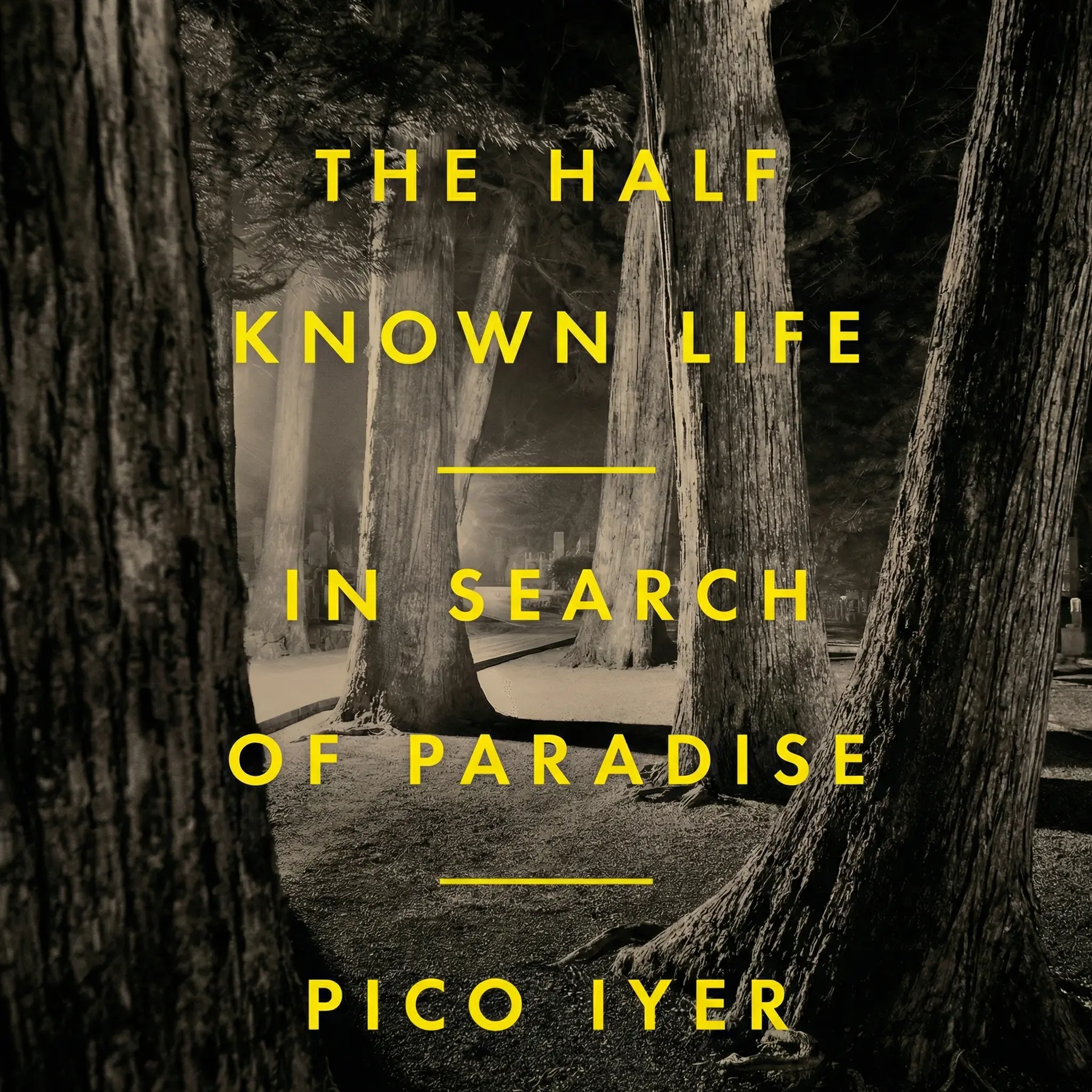
Listeners find this work to be a remarkable experience featuring exquisite prose, with one review characterizing the book as a literary masterpiece. Furthermore, they value the spiritual depth, as one listener mentions how the text leads toward transcendence and enlightenment, while another emphasizes its illuminating historical background. The rhythm of the narrative earns praise as well, with one listener pointing out the fluid combination of personal stories and universal themes. On the other hand, listeners hold differing opinions regarding the emotional content, and some note that pages were absent from their particular copies.
Wow, this is exactly the kind of soul-searching literature the world needs right now. Iyer moves beyond simple travel writing to touch on the metaphysical, asking how we can possibly find a 'heaven within' when the world outside is in such turmoil. The way he references Rumi and the concept of a walled garden really resonated with my own spiritual journey. His writing is almost poetic, shimmering with a vulnerability that feels both personal and universal. It’s not just a book about places; it’s an invitation to transcend our daily anxieties through stillness and observation. This is a literary masterpiece that I will likely return to every few years.
Show moreAs someone who has always been fascinated by the intersection of travel and philosophy, this book felt like a gift. Iyer’s visit to Iran is particularly striking, capturing the way poetry acts as a bridge between fact and fiction in a country so often misunderstood by the West. He has this incredible ability to be an observant traveler who doesn't need to be the focus of the camera. Instead, he focuses on the spiritual beauty that persists even under political repression or cultural change. The prose is distilled and elegant, guiding the reader toward a sense of enlightenment and transcendence. It’s a hopeful book for a divided age, and I found it deeply moving.
Show morePicked this up hoping for a standard travelogue, but it's really more of a spiritual inquiry disguised as a map. Iyer's exploration of Kashmir feels particularly poignant, blending 17th-century history with a modern sense of displacement and conflict. Truth is, the prose is incredibly elegant, though some might find the lack of a traditional narrative arc a bit frustrating. I appreciated how he connects the physical landscape to an internal state of being. It’s a smart, humble piece of writing that stays with you long after you close the cover. While the pacing occasionally meanders, the insights into finding peace amid world conflict are worth the slower journey.
Show moreEver wonder why the most 'holy' places on Earth are often the most contested and violent? Iyer takes us to Jerusalem, the 'center of a thousand clashing pasts,' and explores this exact paradox with a historian’s eye and a traveler’s heart. I loved the anecdote about being scolded at the Church of the Holy Sepulchre for standing with his hands behind his back; it perfectly illustrates how even our attempts at piety can create friction. The book is incredibly smart and illuminating, though I’ll admit some of the sections on Iran felt a bit dense for a casual reader. Still, the message about simplicity conferring a freedom that complexity cannot is something I'm still chewing on.
Show moreJust a quick warning for potential buyers: my copy actually had several missing pages in the middle of the Jerusalem chapter! Aside from that physical defect, the content itself is quite compelling, especially the parts focusing on the paradox of seeking paradise. Iyer manages to blend regional customs and religious history into a narrative that feels both vast and intimate. Not gonna lie, the dizzying amount of detail can be a bit much at times, but the core message remains powerful. He suggests that the search for a perfect world might actually aggravate our differences, which is a bold and necessary take. It’s a 4-star book for the writing, even if the production quality was lacking.
Show moreThe chapter on Ladakh really opened my eyes to how we project our own illusions of 'purity' onto remote cultures. Pico Iyer dismantles the idea of a magically preserved Buddhist province, showing instead a complex region living off foreign influences and navigating its own internal conflicts. This kind of nuanced reporting is where he really shines, blending the roles of historian and memoirist seamlessly. I did find some of the musings on death and suffering to be a bit repetitive by the end of the book. However, his conclusion about letting life come in all its 'happy confusion' is a beautiful sentiment to leave the reader with. It’s a considerate, thoughtful piece of work.
Show moreAfter listening to an interview with the author, I was eager to dive into his perspective on the 'paradise' found in conflict zones. Pico Iyer spent decades talking with the Dalai Lama, and those sections are easily the highlight of this memoir for me. However, the pacing is quite uneven, jumping from North Korea to the Himalayas with a dizzying speed that makes it hard to ground yourself. You get these flashes of brilliance about the 'half-known life,' yet they often dissolve before a deeper understanding can take root. It’s a solid three-star read—interesting enough to finish, but lacking the profound clarity I’ve come to expect from his travel writing.
Show moreFinally got around to finishing this, and I have to say, my feelings are pretty mixed. While Iyer is undoubtedly a gifted wordsmith, this particular volume felt a bit too fragmented for my liking. One minute we’re in Varanasi, the next we’re in a Japanese suburb, and the transition often feels jarringly abrupt. In my experience, the book works better if you treat it as a series of standalone essays rather than a continuous narrative. I also noticed that the emotional depth varies wildly from chapter to chapter, leaving me feeling somewhat detached during certain segments. It’s a beautiful look at the world, but it lacks the focus that made his previous work so iconic.
Show moreThis book was a massive letdown compared to his earlier, more focused works. It feels like a collection of disjointed musings rather than a cohesive exploration of a central theme. Frankly, the constant name-dropping of famous intellectuals and authors becomes grating after a while, serving more as a distraction than a source of depth. He assumes the reader is already intimately familiar with every destination, leaving many of the cultural observations feeling half-formed and superficial. To be fair, there are a few beautiful sentences scattered throughout, but they aren't enough to save a project that feels rushed. It almost seems like the editors were pushing for a deadline rather than polished content.
Show moreNot what I expected at all, and unfortunately, not in a good way. The writing is incredibly tedious, meandering from one exotic location to another without any clear purpose or destination in mind. He spends so much time quoting better-known authors that his own voice starts to feel like an afterthought in his own memoir. I found myself skimming through the parts about Ladakh because the 'writerly observations' felt more like pretension than genuine insight. Look, I’ve enjoyed better work from Iyer, and this just felt like a collection of leftover notes that didn't quite make the cut for a stronger book. It was extremely missable and didn't offer the spiritual fulfillment it promised.
Show more
Daniel Goleman
Eckhart Tolle
Marianne Williamson
Deepak Chopra
Pico Iyer

Alcoholics Anonymous World Services
Ram Dass

AUDIO SUMMARY AVAILABLE
Get the key ideas from The Half Known Life by Pico Iyer, plus 5,000+ more titles in English and Thai.







